
Town · Spain
Luarca
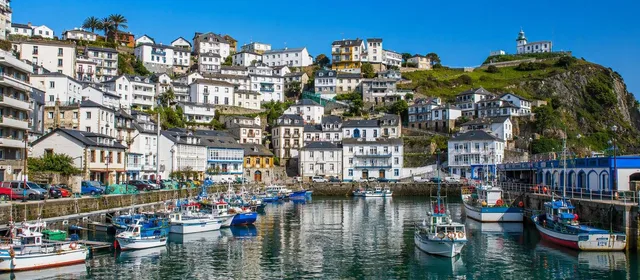
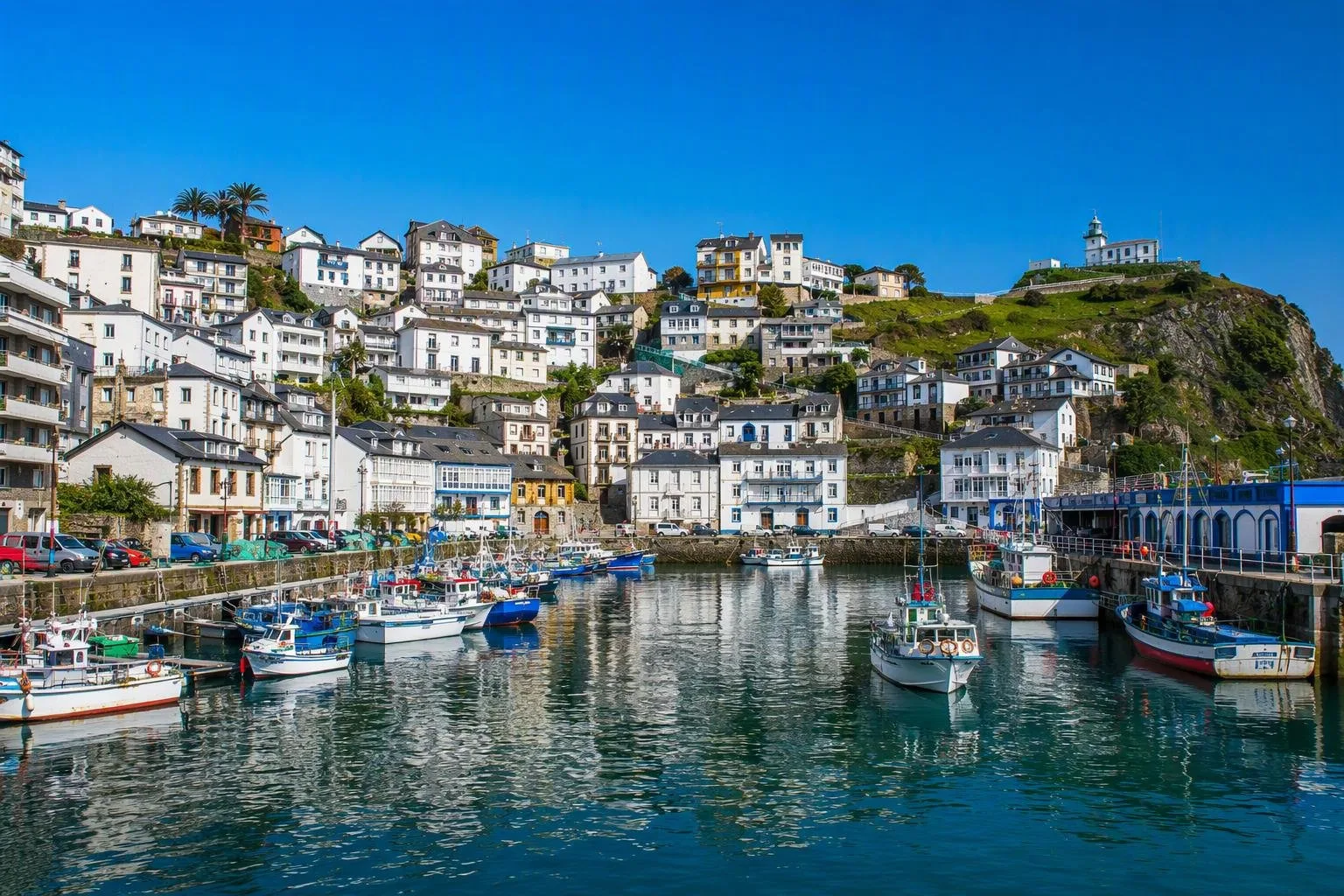
Luarca is a fishing town on Asturias’s western Cantabrian coast, where the Río Negro reaches a sheltered harbour. White houses, old seafaring quarters and a clifftop lighthouse give the compact town its distinct shape.
Read the town from water to headland
Luarca is arranged around the last bends of the Río Negro and its harbour. The river runs through the centre and is crossed by seven bridges, linking the lower streets and the slopes above. Start at the waterfront: it is the clearest place to see how the harbour, river mouth and whitewashed housing fit together.
The historic fishing quarters of El Cambaral, La Pescadería and La Carril climb around the port. Their narrow lanes and gradients are part of the visit, not a detour. On the opposite side, Villar has houses built by indianos—Asturians who returned from the Americas with fortunes.
Harbour and old quarters
The harbour remains both a fishing port and marina. Walk the quays without blocking working areas, then follow the river through the centre. The best-known crossing is the Puente del Beso; its story of the pirate Cambaral and the governor’s daughter belongs to local legend, rather than established history.
Above El Cambaral, pause at the Mesa de Mareantes y Navegantes. This memorial recalls the seafaring guild and uses remains of the former defensive site. Its ceramic panels set out episodes from Luarca’s history.
La Atalaya: lighthouse and cemetery
Climb to La Atalaya, the eastern headland above the harbour. The Luarca Lighthouse stands at Punta Focicón beside the Chapel of La Blanca, the cemetery and fragments of a 16th-century defensive wall. Before the lighthouse, lights here helped guide vessels into port.
The cemetery faces the Cantabrian Sea and contains the grave of Luarca-born Nobel laureate Severo Ochoa. Treat it as an active burial place: keep voices low, stay on paths and do not use graves as viewpoints or photo props.
Getting there and getting around
Luarca lies on Asturias’s western coast in the municipality of Valdés. By road, use the A-8, N-632 or N-634; the town also has rail connections from central Asturias and Galicia. The compact centre works best on foot, but expect steep lanes and steps between the harbour and La Atalaya. Wear shoes with grip when surfaces are wet.
For an efficient first circuit, connect the harbour, river bridges and El Cambaral before making the climb to La Atalaya. The headland brings the town’s key elements—port, white houses, coastline and maritime history—into one view.
From the magazine
Stories about Luarca
Editorial stories linked directly to Luarca.
No stories about Luarca have been published yet.
Routes from our editors
Travel through Luarca
Editorial routes connecting Luarca with other countries, cities and hotspots.
No routes through Luarca have been published yet.
More in Spain
Related hotspots
Other cities, nature areas and places within Spain.
Asturias
2 linked stories and routes
Manises: City of Ceramics
1 linked stories and routes
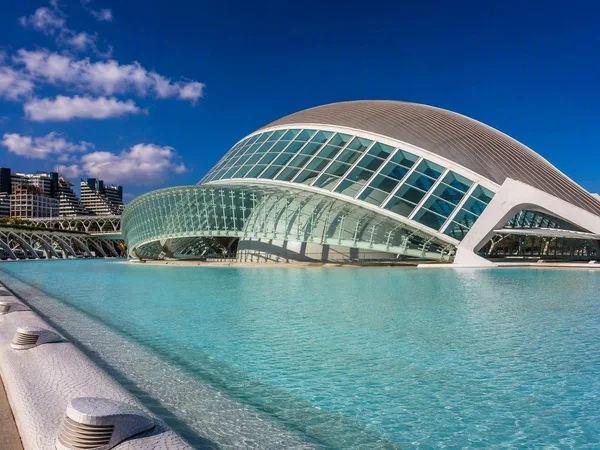
Valencia
1 linked stories and routes
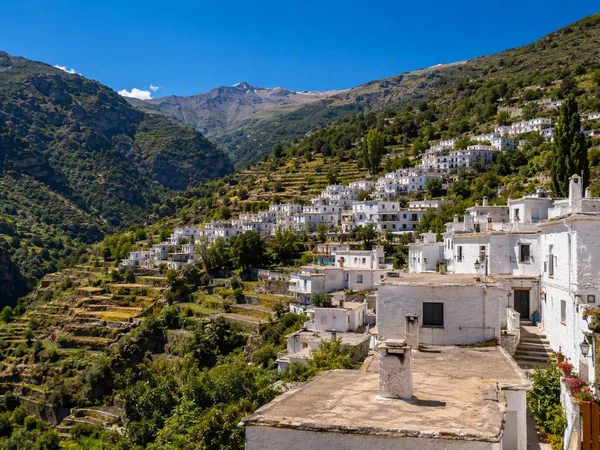
Alpujarras
1 linked stories and routes
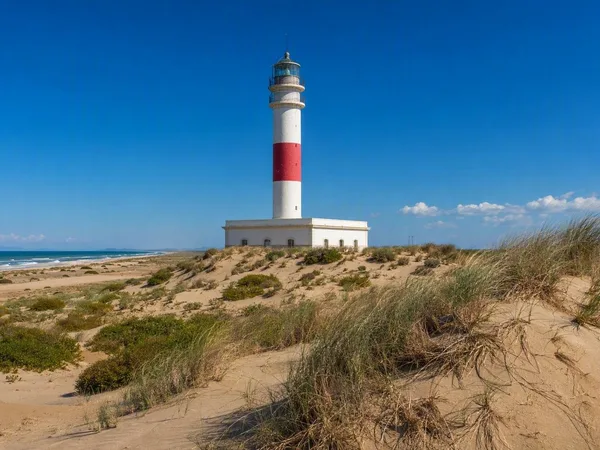
Ebro Delta
1 linked stories and routes
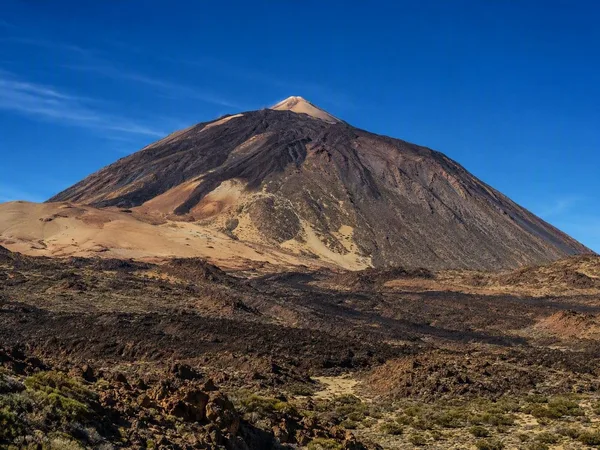
Teide
1 linked stories and routes
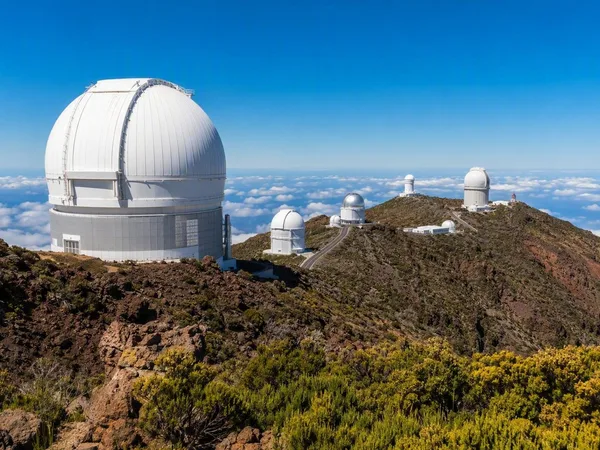
La Palma
1 linked stories and routes
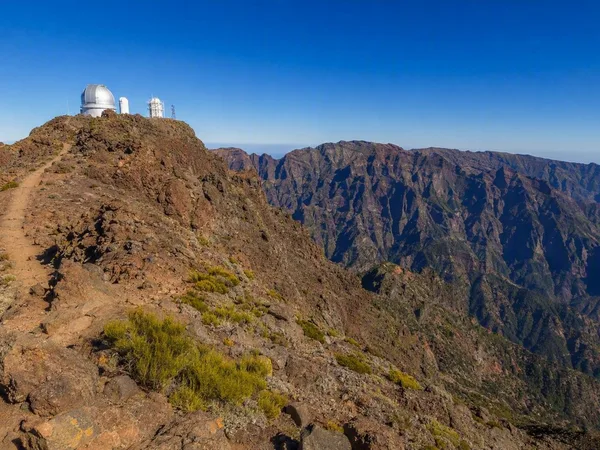
Roque de los Muchachos
1 linked stories and routes
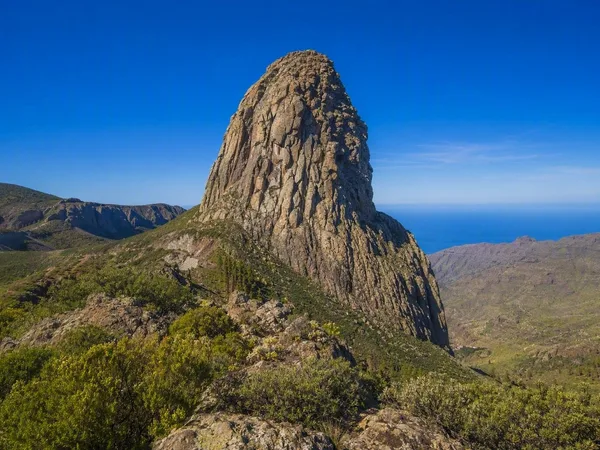
La Gomera
1 linked stories and routes
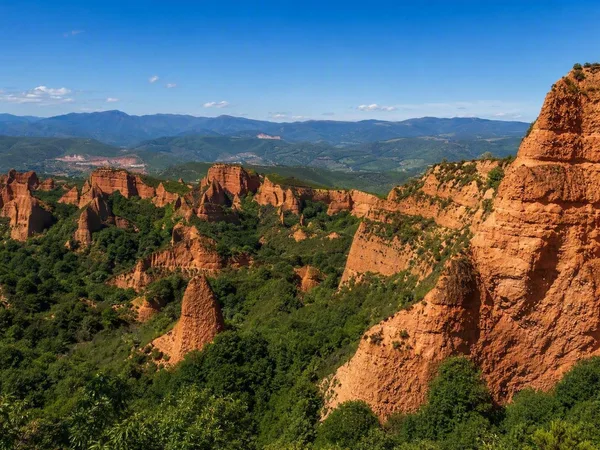
Las Médulas
1 linked stories and routes
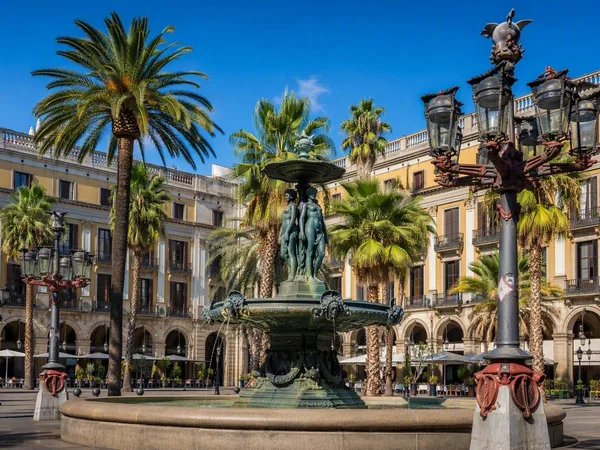
Plaça Reial
1 linked stories and routes
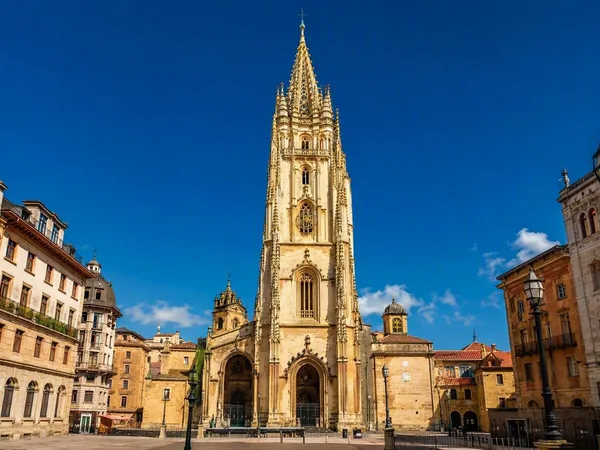
Oviedo
1 linked stories and routes
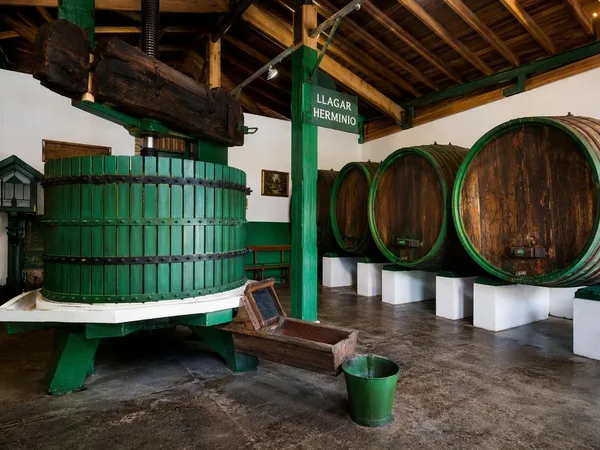
Colloto
1 linked stories and routes
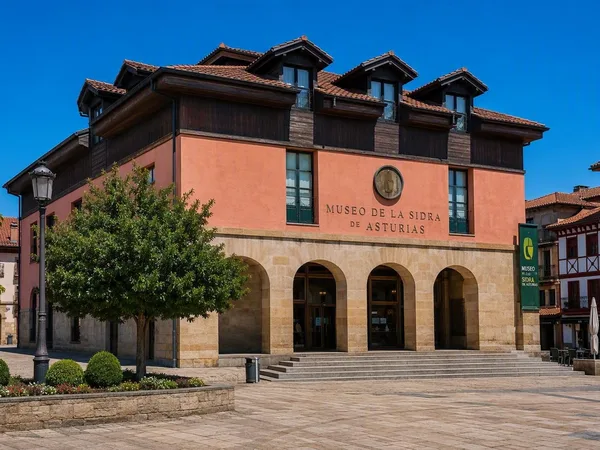
Nava
1 linked stories and routes
Villaviciosa
1 linked stories and routes
Castro Urdiales
1 linked stories and routes
Santander
1 linked stories and routes
Comillas
1 linked stories and routes
Llanes
1 linked stories and routes
Picos de Europa National Park
1 linked stories and routes
Ribadesella
1 linked stories and routes
Cudillero
1 linked stories and routes
Bilbao
1 linked stories and routes
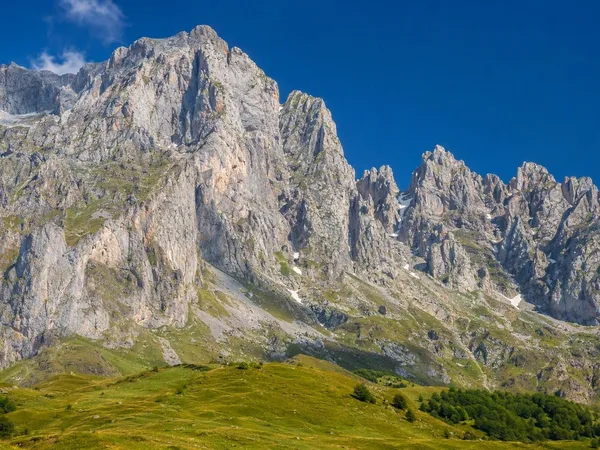
Cantabria
1 linked stories and routes
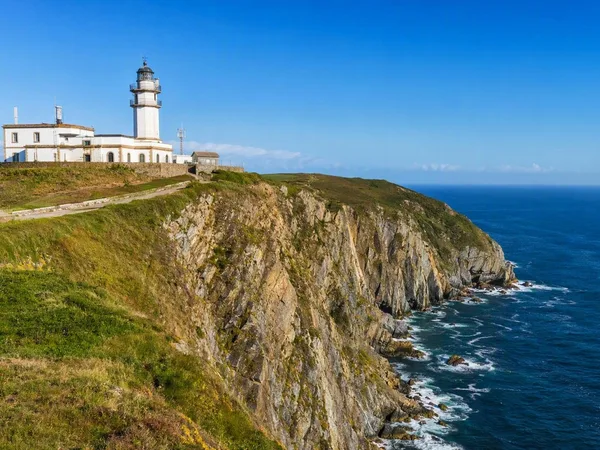
Cabo Vidio, Asturias
1 linked stories and routes
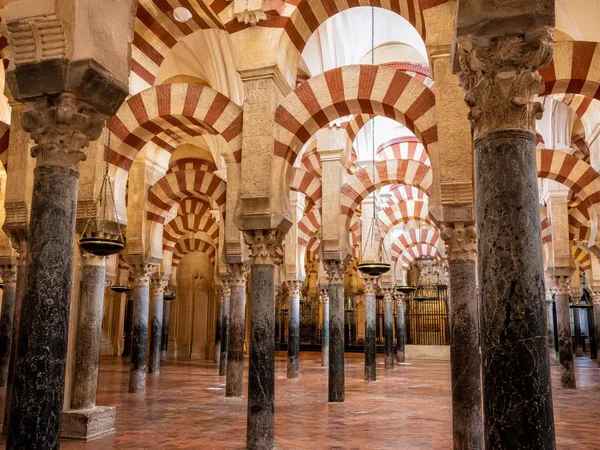
Córdoba
1 linked stories and routes
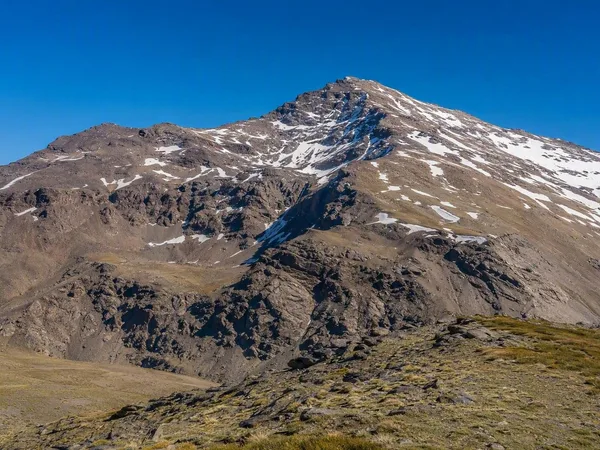
Sierra Nevada
0 linked stories and routes
Trevélez
0 linked stories and routes
Barcelona
0 linked stories and routes
Lastres
0 linked stories and routes