City · Montenegro
Kotor
Kotor is a fortified historic city at the inner end of Montenegro’s Bay of Kotor. Its compact Old Town sits between the water and the limestone slope climbed by the walls of San Giovanni.
Why Kotor matters
Kotor’s natural harbour made it an important medieval centre of trade, art and seafaring. The city’s built fabric still explains that role: Romanesque churches, Venetian-era palaces, defensive gates and stone lanes occupy a tightly contained Old Town below St John’s Hill.
The Old Town and its setting form part of the UNESCO-listed Natural and Culturo-Historical Region of Kotor. The 1979 earthquake damaged many monuments and walls; the restored town remains a working historic centre rather than a museum precinct.
Get oriented
Enter the pedestrian Old Town through the Sea Gate from the waterfront. It opens directly onto Square of Arms (Trg od Oružja), the main square, where the clock tower provides a useful meeting point.
From there, the core is easily covered on foot. Do not try to impose a rigid route on the alleys; use the cathedral and the main squares to reset your bearings.
- Cathedral of St Tryphon: Romanesque cathedral consecrated in 1166, standing on its own small square.
- Maritime Museum: housed in Grgurina Palace; a concise stop for Kotor’s seafaring history.
- North/River Gate: a quieter exit by the Škurda River and the northern walls.
The walls and San Giovanni
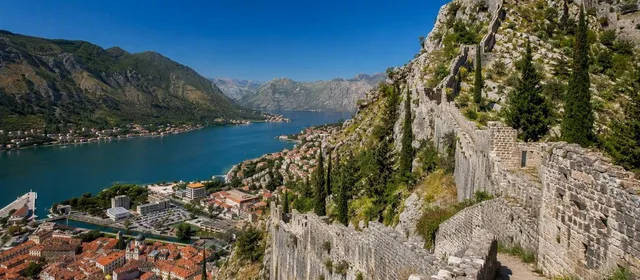
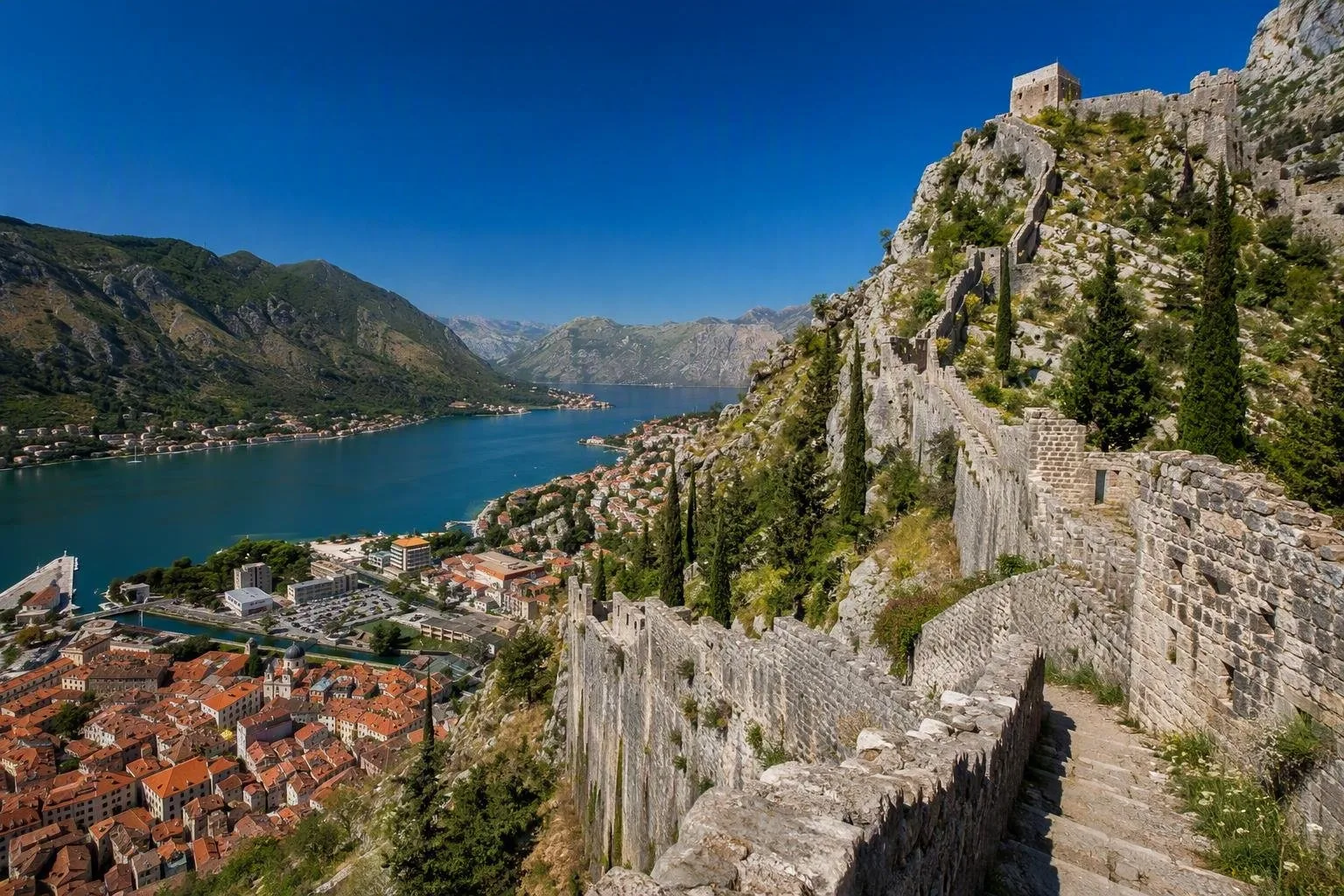
Kotor’s defining structure is not merely a town wall. The defensive circuit runs for about 4.5 kilometres and climbs the mountain to San Giovanni (St John’s) Fortress, roughly 260 metres above the town. Its present form was substantially shaped during Venetian rule.
The official ascent starts inside the Old Town and follows a marked, ticketed route. Allow 1.5 to 2.5 hours return, including pauses. The stone stairway has around 1,350 steps; the Church of Our Lady of Remedy is the sensible midpoint and a valid turnaround if the heat or exposure is too much.
The upper route is uneven, steep and exposed. Wear closed shoes with grip, carry water, and skip it in rain, thunderstorms or poor visibility. Do not use gaps in the masonry as shortcuts; follow the signed access route and barriers.
Timing and access
The Old Town itself is free to enter and entirely walkable; the fortress climb has separate admission. Park outside the walls if arriving by car, then continue on foot. The bus station is also a short walk from the historic core.
In summer, walk the Old Town and climb early, before heat and day-trip traffic build. The walls have little shade, and worn limestone becomes slippery when wet. Late afternoon can work in cooler weather, but leave enough time to descend in daylight.
Read the city, not just the view
At street level, look for the relationship between defence and daily life: gates controlling access, squares framed by civic buildings, and churches set into a dense urban plan. From the walls, that plan becomes clear—the red-roofed town pressed between the bay and the mountain, with fortifications using the steep limestone as part of their defence.
From the magazine
Stories about Kotor
Editorial stories linked directly to Kotor.
Routes from our editors
Travel through Kotor
Editorial routes connecting Kotor with other countries, cities and hotspots.
No routes through Kotor have been published yet.
More in Montenegro
Related hotspots
Other cities, nature areas and places within Montenegro.