City · Montenegro
Podgorica
Podgorica is Montenegro’s capital, set on the Zeta Plain where the Ribnica meets the Morača. It is a compact city of Ottoman remnants, postwar boulevards and riverfront landmarks.
Orientation
Podgorica is Montenegro’s administrative capital and its main transport hub. The centre lies on a mostly flat plain, with the Morača cutting through the city and the Ribnica joining it near the old core. Most central sights sit within a short urban radius, but the city’s character comes from the contrast between Ottoman lanes, Yugoslav-era planning and newer civic architecture.
Use Stara varoš for the historic quarter, Nova varoš and Independence Square for the central grid, and the Morača crossings to orient yourself.
Start with the old city
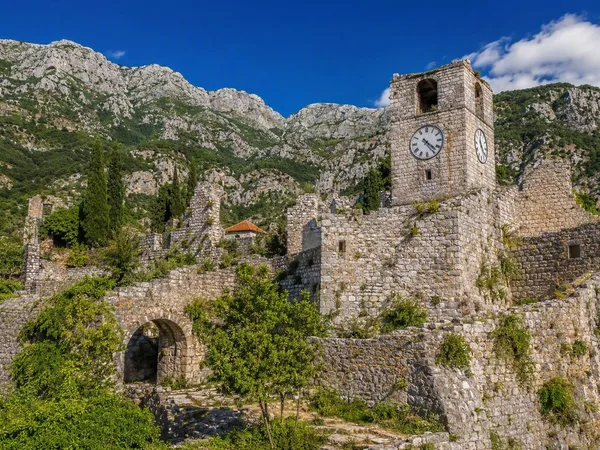
Stara varoš preserves the clearest surviving traces of Ottoman Podgorica. Walk its narrow streets to Sahat kula, the stone Clock Tower, one of the few Ottoman structures to survive the Second World War.
Continue to Sastavci, the confluence of the Ribnica and Morača. The nearby remains of Ribnica Fortress and the old stone bridge make this the most legible historic riverside stop in the city. It is close enough to combine with Stara varoš on foot.
Modern Podgorica and green space
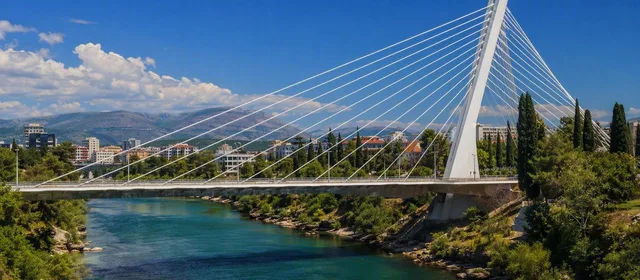
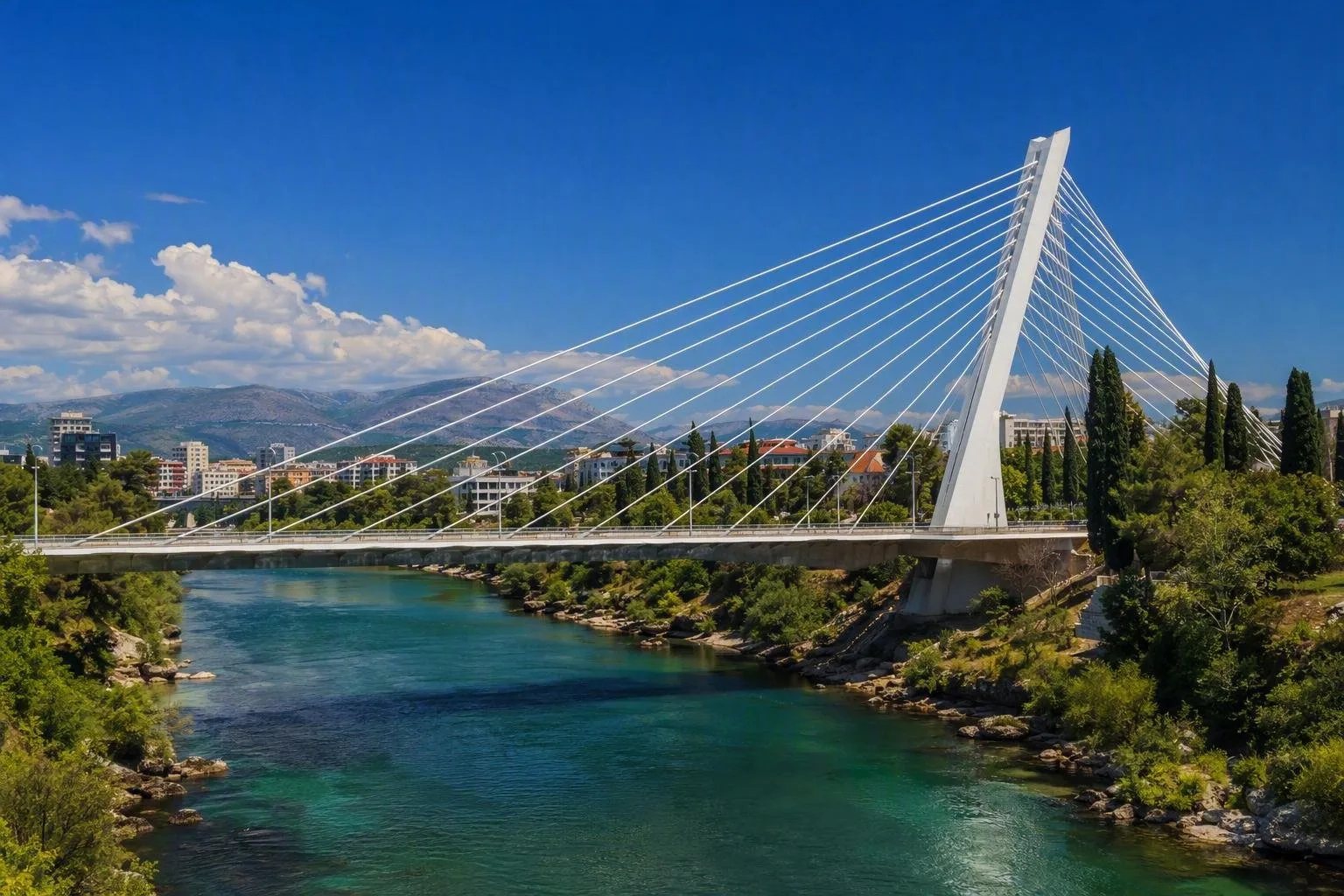
The Millennium Bridge is the city’s defining contemporary landmark: a cable-stayed crossing over the Morača with a sharply angled pylon. Cross it on foot to understand the divide between the central grid and the newer districts beyond the river.
For a different scale, head to Gorica Park, on the hill above the centre. Its paths and city views offer a useful break from wide streets and summer heat. The Cathedral of the Resurrection of Christ stands in the modern city and is notable for its large stone exterior and richly decorated interior.
Ancient layer and culture
The Roman ruins of Duklja (Doclea) lie about 4 km from the centre. This is a separate archaeological stop rather than part of a central walking loop; combine it with the Podgorica City Museum if you want context for the city’s Roman and Illyrian material.
Kruševac Park adds a cultural option: Petrović Palace houses the Centre for Contemporary Art, with permanent and changing exhibitions.
Getting there and timing
Podgorica Airport is about 12 km from the centre. The city is also a rail junction: the Belgrade–Bar line runs through Podgorica, placing it directly on the route between Montenegro’s northern mountains and the Adriatic port of Bar.
Central streets and river crossings suit walking; use a taxi or local transport for Duklja and outer districts. Summer heat is serious and temperatures can exceed 40°C, so schedule long walks for early morning or late afternoon. Spring and early autumn are more comfortable for city walks and Gorica Park.
From the magazine
Stories about Podgorica
Editorial stories linked directly to Podgorica.
No stories about Podgorica have been published yet.
Routes from our editors
Travel through Podgorica
Editorial routes connecting Podgorica with other countries, cities and hotspots.
No routes through Podgorica have been published yet.
More in Montenegro
Related hotspots
Other cities, nature areas and places within Montenegro.