Europe’s 10 Most Atmospheric Small Places, Ranked
This is an editorial, deliberately subjective ranking. Rock, water and relief carry most weight, followed by the coherence of the buildings and the ordinary life still visible among them.
The order measures two things: how firmly landscape shapes a settlement, and how much lived-in character remains in its lanes, homes and public spaces. Architecture, scale and the approach break close calls. Number ten is still a fine place to spend an afternoon; number one makes the land and settlement almost impossible to separate.
10. Grožnjan, Croatia
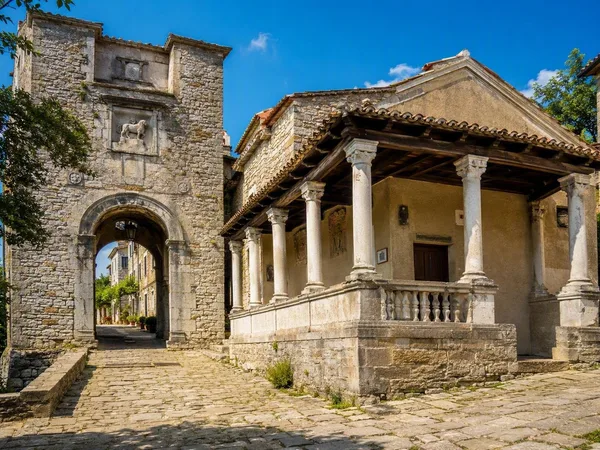
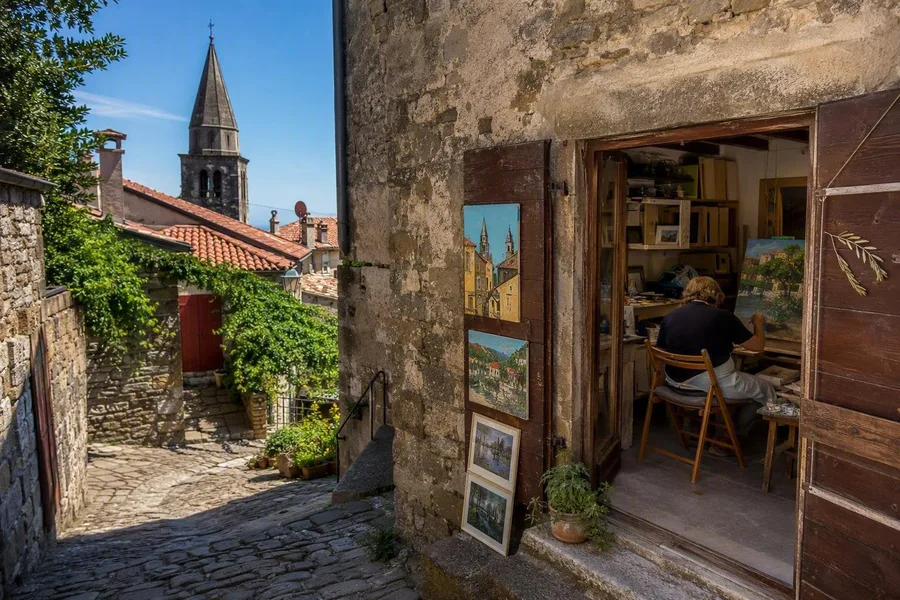 Artists work in old stone-house studios in Grožnjan, Croatia.
Grožnjan occupies a compact hilltop 228 metres above Istria’s Mirna Valley. Its gate, loggia and former administrative buildings recall its Venetian role as a fortified border place.
Since 1965, artists have used old houses as studios and galleries. From May, music academies and workshops bring rehearsals, painting, dance and theatre to the small streets and squares. That seasonal activity gives the stone core its particular character. The valley views are broad, but the landscape has less force here than at the places above it.
9. Alberobello, Italy
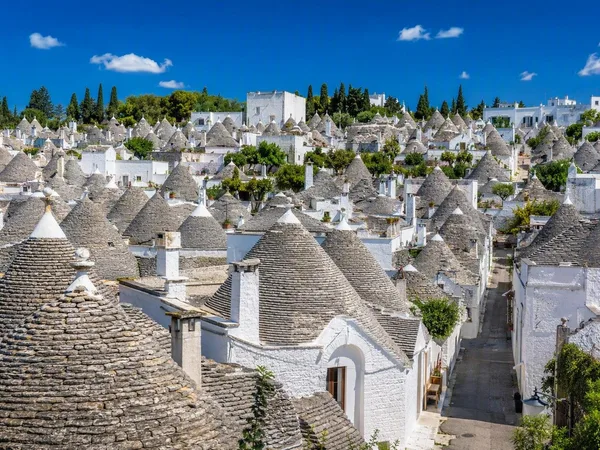
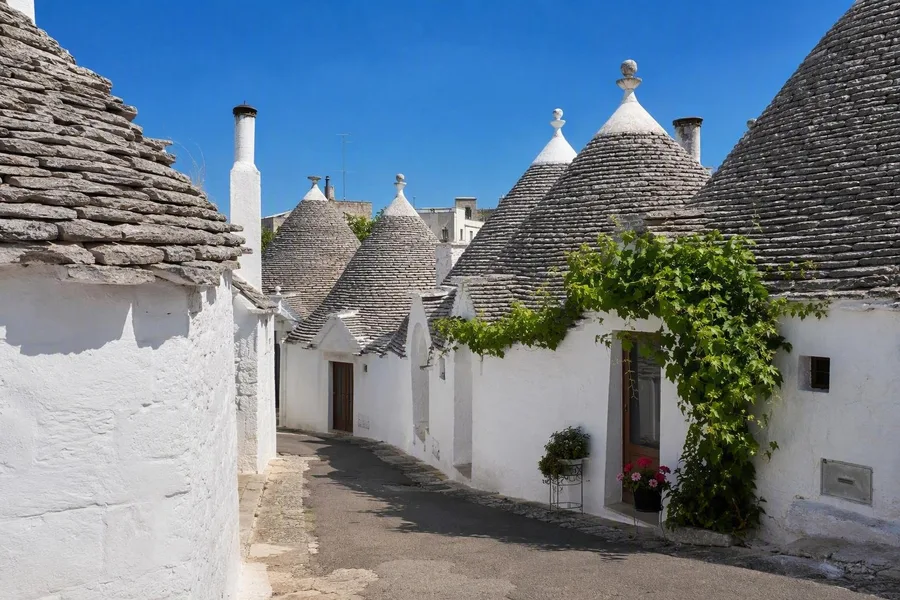 Whitewashed trulli with layered conical roofs line residential streets in Alberobello’s Aia Piccola.
More than 1,500 trulli fill Alberobello’s Rione Monti and Aia Piccola districts. Builders used local limestone without mortar, then topped the thick whitewashed walls with layered conical, domed or pyramidal roofs.
These buildings served farmers and small landowners as shelter, storage and permanent homes. Shops and places to eat now occupy many trulli in Rione Monti, while Aia Piccola retains more residential streets. The low slopes of the Itria Valley provide a gentle setting. The tightly packed roofscape does the heavier lifting.
8. Berat, Albania
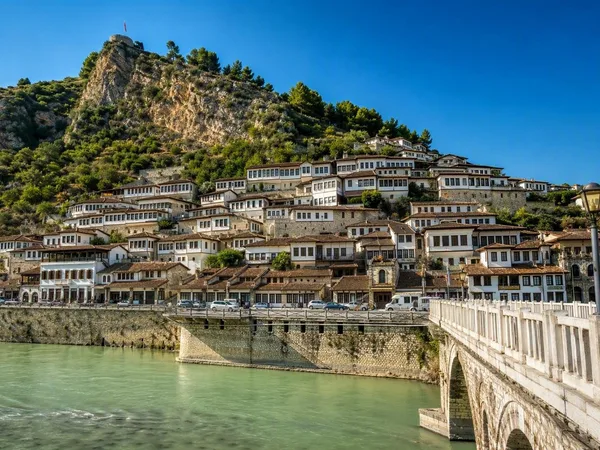
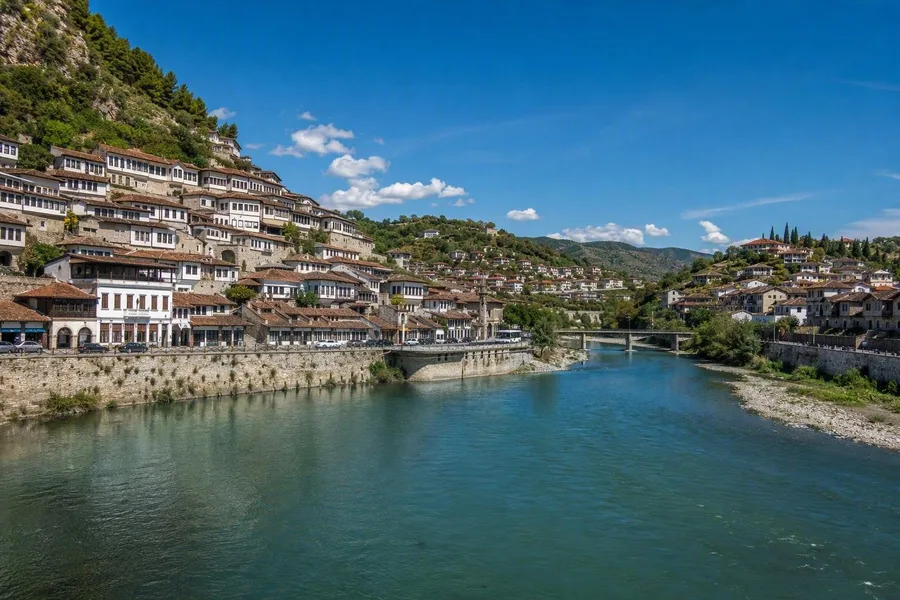 The Osum divides Berat’s Mangalem hillside houses from Gorica on the opposite bank.
The Osum divides Berat’s old quarters beneath the citadel. White Ottoman houses rise in tiers across the Mangalem hillside, their broad wooden windows facing Gorica on the opposite bank.
Berat developed as a fortified centre of trade and crafts. Families still live inside the Kala among houses, gardens, churches and ramparts, while Byzantine churches stand beside mosques from the Ottoman period. That use keeps the citadel from becoming a sealed-off monument. The river, the hillside of windows and the walls make a lucid whole, though Berat has a broader urban spread than the villages higher up this list.
7. Štanjel, Slovenia
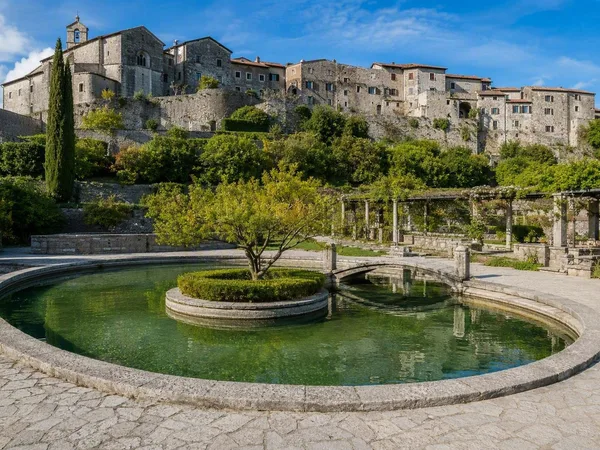
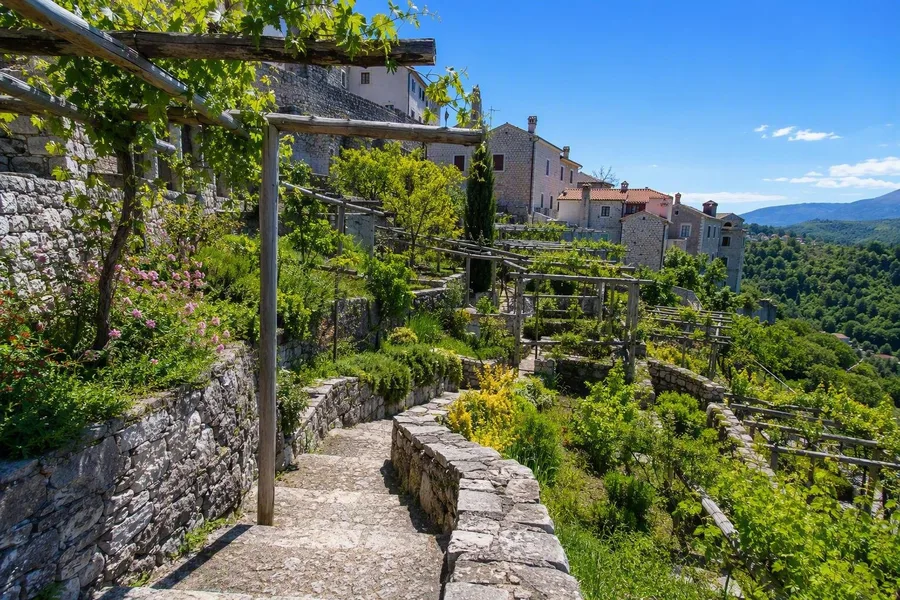 Stone steps and pergolas descend through the Ferrari Garden beside Štanjel’s Karst stone village.
Štanjel steps up Turn Hill in terraces of Karst stone. Medieval lanes run between retaining walls, houses, a castle and the Church of Saint Daniel, marked by its lemon-shaped spire.
Architect Maks Fabiani added another layer in the early twentieth century. His Ferrari Garden, made for Villa Ferrari, uses steps, pergolas, ponds and planted terraces beside the hard stone village. Galleries, restaurants and a wine shop now occupy parts of the old core. A station less than a kilometre below the village also makes a rare, pleasingly unhurried arrival by train possible.
6. Monsanto, Portugal
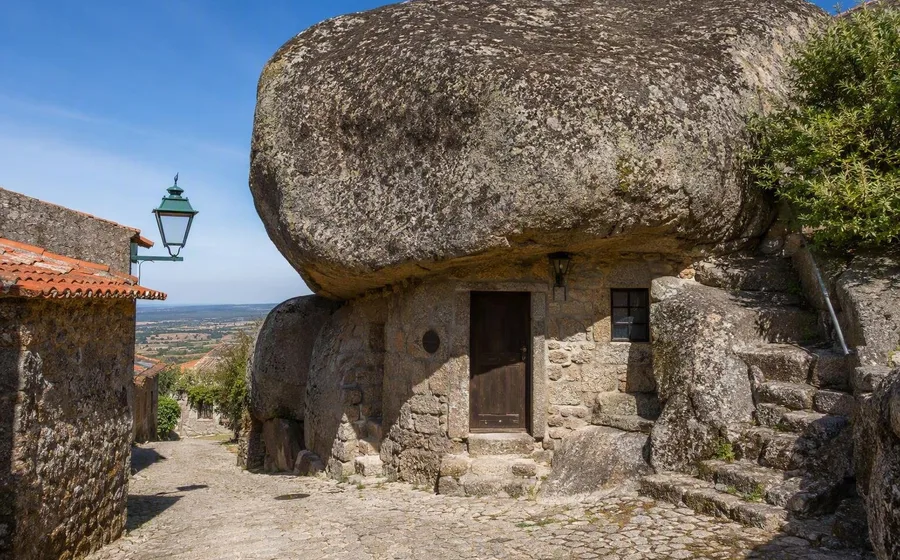
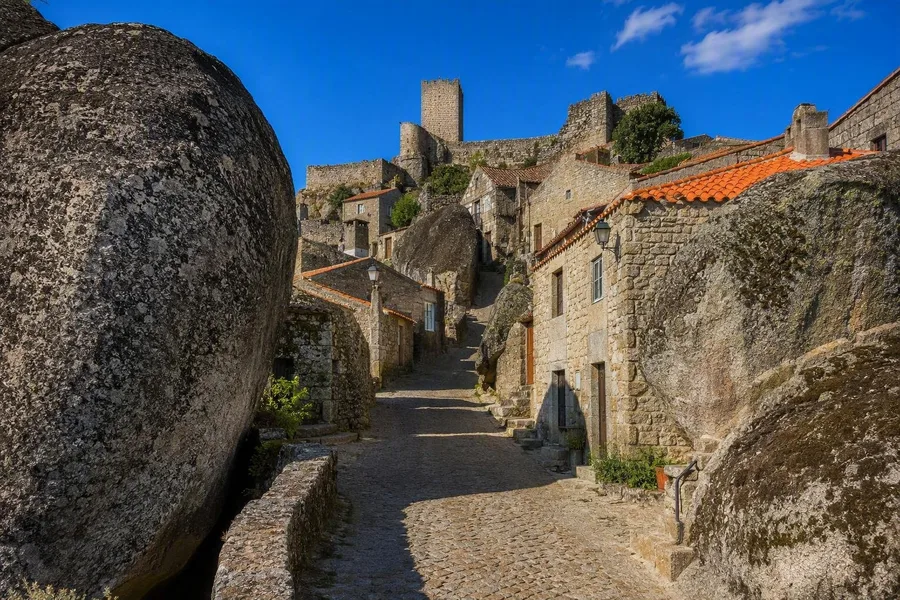 A paved lane climbs between granite boulders and rock-bound houses in Monsanto.
Monsanto stands high on a granite hill above the Beira Interior plains. Residents built homes beneath, against and between immense boulders, using the rock at times as a wall or roof. Narrow paved lanes climb towards the castle ruins and open short views across the plains.
Markets, pilgrimages and the May Festa da Divina Santa Cruz bring local products, music and processions into the streets. Granite sets the terms here. The village feels less like a composed townscape than a route threaded through a rock formation, which is precisely why it lands so high.
5. Motovun, Croatia
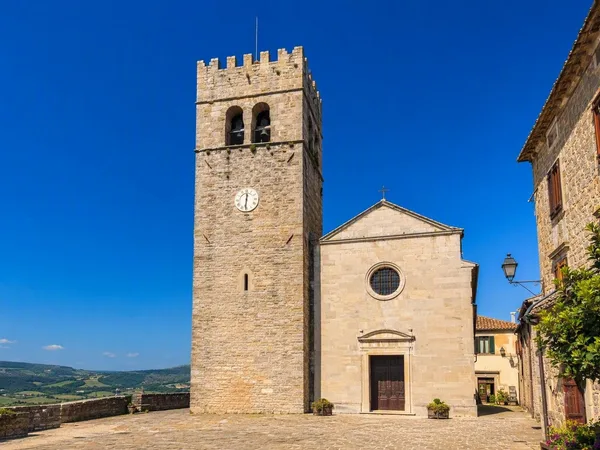
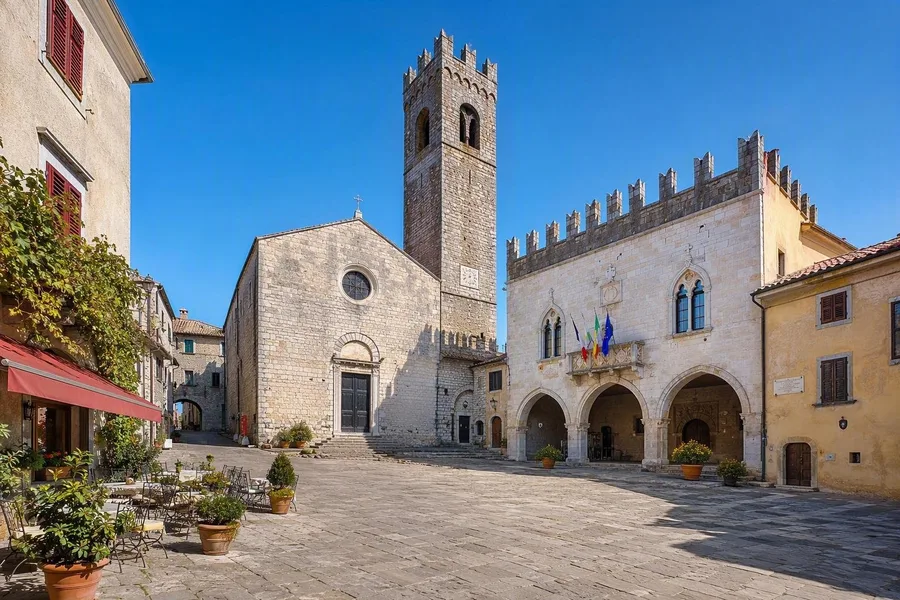 Motovun’s central square gathers its bell tower, Saint Stephen’s Church and Romanesque town hall.
Medieval walls enclose Motovun on a flat-topped hill above the Mirna Valley. A crenellated bell tower, Saint Stephen’s Church and the Romanesque town hall give the central square its vertical accents. Beyond the walls, the ground drops towards the valley floor.
A prehistoric hill fort preceded the present settlement, and later gates, palaces and defensive walls made full use of the defensible site. Nearby woods underpin the town’s association with timber and truffles; autumn events bring truffle tasting and Teran wine inside the walls. Monsanto has stranger rock. Motovun has the more complete outline.
4. Kotor, Montenegro
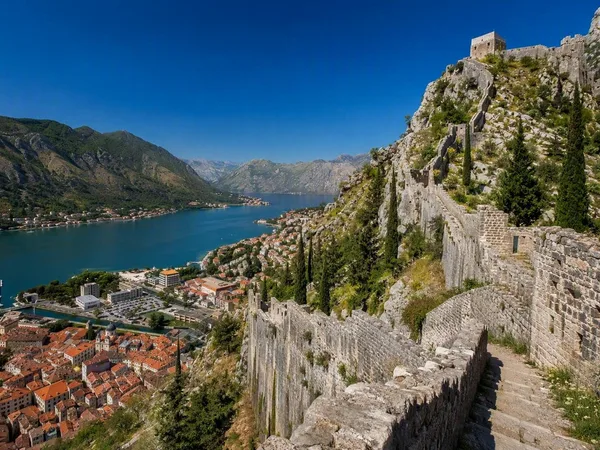
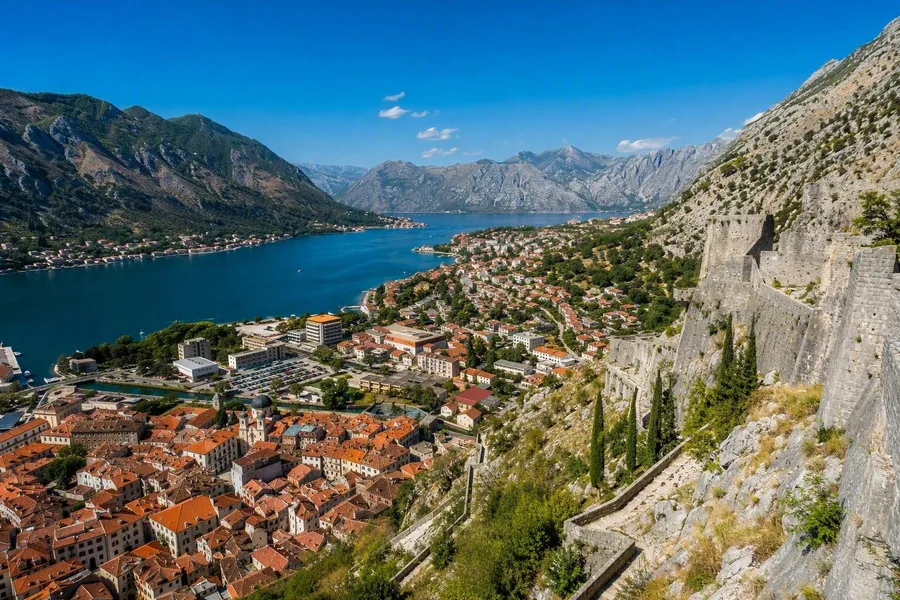 Kotor’s old town, bay and hillside fortifications share the same immediate frame.
Kotor lies between the water of its enclosed bay and a steep mountain slope. Fortifications climb towards San Giovanni above red roofs, while paved lanes link Romanesque churches, Baroque palaces and small squares below.
The natural harbour supported a medieval centre for trade, stone carving and icon painting. Venetian captains, merchants and administrators left palaces, churches and walls; restoration followed the 1979 earthquake. Summer cruise traffic can pack the compact centre during the day, while cafés, squares and side streets settle back into a more local rhythm before and after the ships’ visits. Few places put harbour, wall and mountain in the same immediate frame.
3. Piódão, Portugal
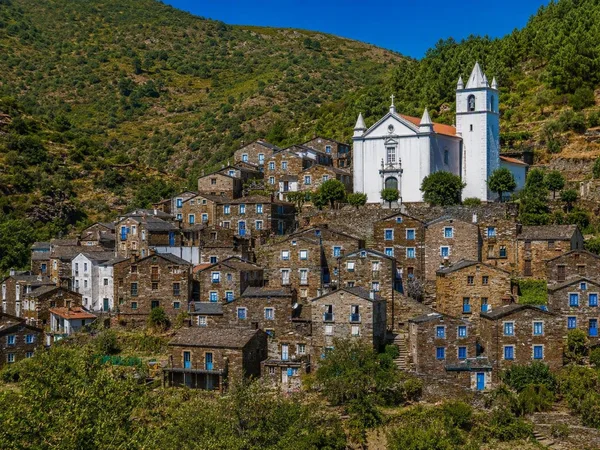
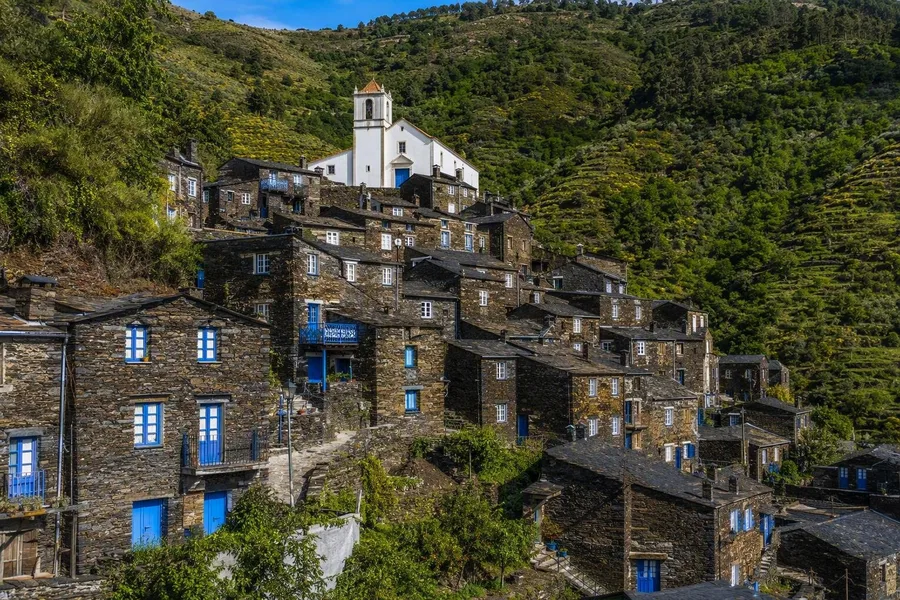 Piódão’s dark schist houses climb the Serra do Açor slope beneath its white church.
Piódão gathers against a Serra do Açor slope in the shape of a small amphitheatre. Local schist covers the walls, roofs and winding lanes. Blue doors and window frames break the dark stone, while a white church from the early nineteenth century stands above the houses.
Isolation helped preserve this unusually consistent mountain settlement. The alleys lead directly into walking paths, and in warmer months those paths continue towards the natural bathing place at Foz d’Égua, where two streams meet. Stone, gradient and the occasional blue shutter all belong to the same sharp composition.
2. Civita di Bagnoregio, Italy
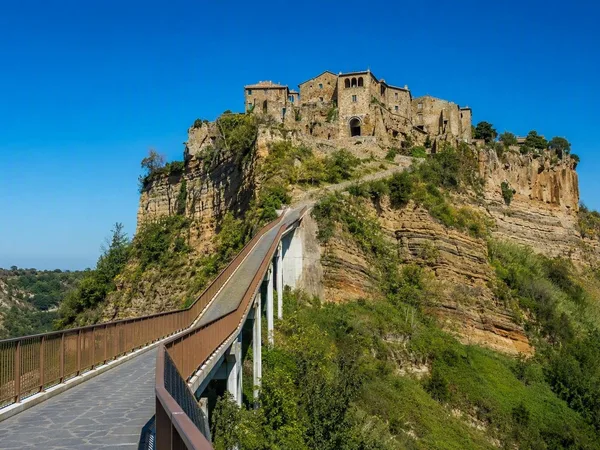
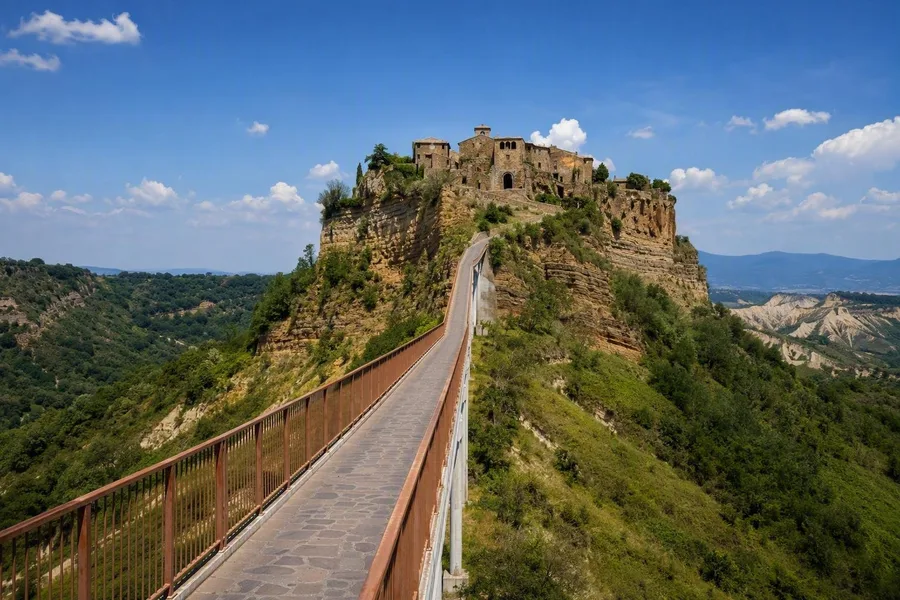 The 300-metre footbridge leads toward Civita above the eroded Valle dei Calanchi.
Civita stands on volcanic tuff above the pale, folded gullies of the Valle dei Calanchi. Rain, streams and landslides have eroded the rock and removed parts of the settlement over centuries. A 300-metre footbridge provides the only access.
The bridge leads straight towards Porta Santa Maria and holds the eye on the compact group of stone houses and red roofs. Inside, narrow lanes run to Piazza San Donato, small shops and lookout points. The approach makes the village’s precarious position plain without needing a signboard to explain it.
Practicalities in brief
Piódão and Monsanto are easiest by car, then on foot through their historic lanes. Alberobello has a rail connection from Bari, and Štanjel’s station lies below the village. For Grožnjan and Motovun, park below the old centres. Civita charges for footbridge access; Kotor’s old town is free, while the upper fortifications require a separate ticket. In the warmer season, guesthouses can arrange shared minibuses from Shkodër to Theth; snow can close the mountain approach in winter. Berat’s citadel is reachable on foot from Mangalem or by a short taxi ride to its gate.
1. Theth, Albania
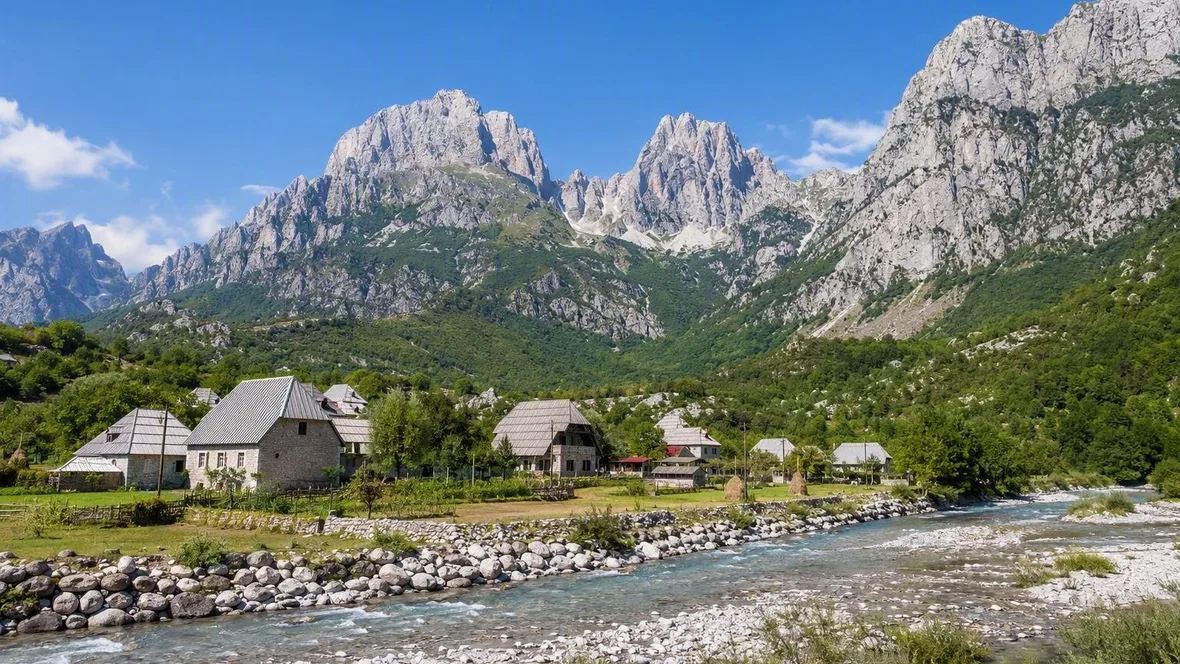
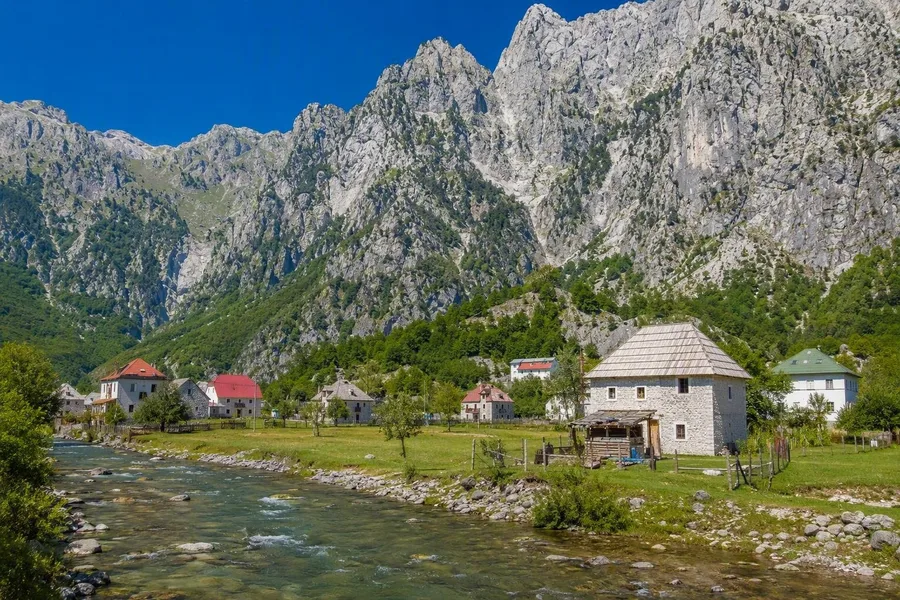 Stone houses stand beside the river beneath limestone walls in Theth’s glacial valley.
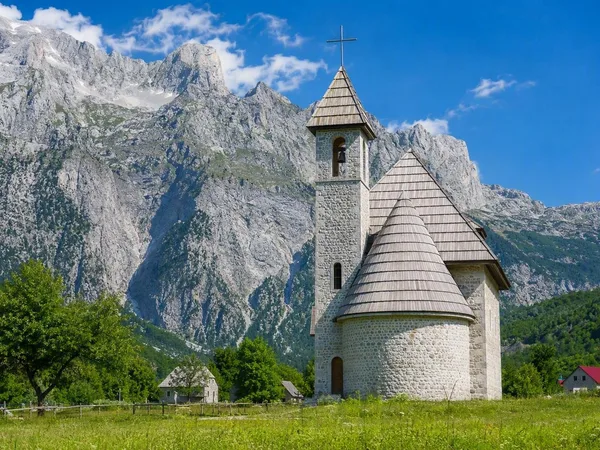
Theth has no compact historic centre. Stone houses, farms and family guesthouses lie across a glacial valley in the Albanian Alps, between meadows, beech woods and steep limestone peaks. A river fed by springs and snowmelt crosses the valley, and paths lead towards a waterfall, gorge and blue spring.
A late nineteenth-century stone church and the thick-walled Lock-in Tower provide human landmarks in the open ground. The tower recalls the Kanun and shelter during blood feuds. Family guesthouses now feed and accommodate walkers heading into the mountains.
The mountain road eventually opens onto the valley floor. Low stone houses sit in grass beside the river, and pale limestone walls rise immediately behind them.
Keep exploring
Places in this story
Europe
10 landen en gebieden
Croatia
Grožnjan
Alberobello
Berat
Štanjel
Monsanto
Monsanto is a historic granite village in the municipality of Idanha-a-Nova, in eastern-central Portugal. Its houses, lanes and hilltop castle are fitted around massive boulders above the Beira Interior plains.
Motovun
Kotor
Piódão
Civita di Bagnoregio