Town · Croatia
Grožnjan
Grožnjan is a compact historic hill town in northwestern Istria, Croatia, above the Mirna Valley. Its Venetian-built core is now known for artists’ studios, galleries and summer music programmes.
Orientation
Grožnjan—also known by its Italian name, Grisignana—stands on a hill above the Mirna Valley, about 7 km southeast of Buje. It is a small place: come for the stone-built centre, the valley outlook and a deliberate wander rather than a checklist of major monuments.
The town’s hilltop position was defensive. Venice took control in 1358 and strengthened the walls; fragments of the fortifications and one of the old gates survive. The compact lanes still follow the medieval settlement pattern.
Walk the historic core
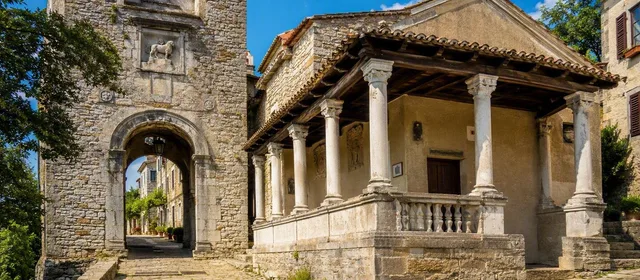
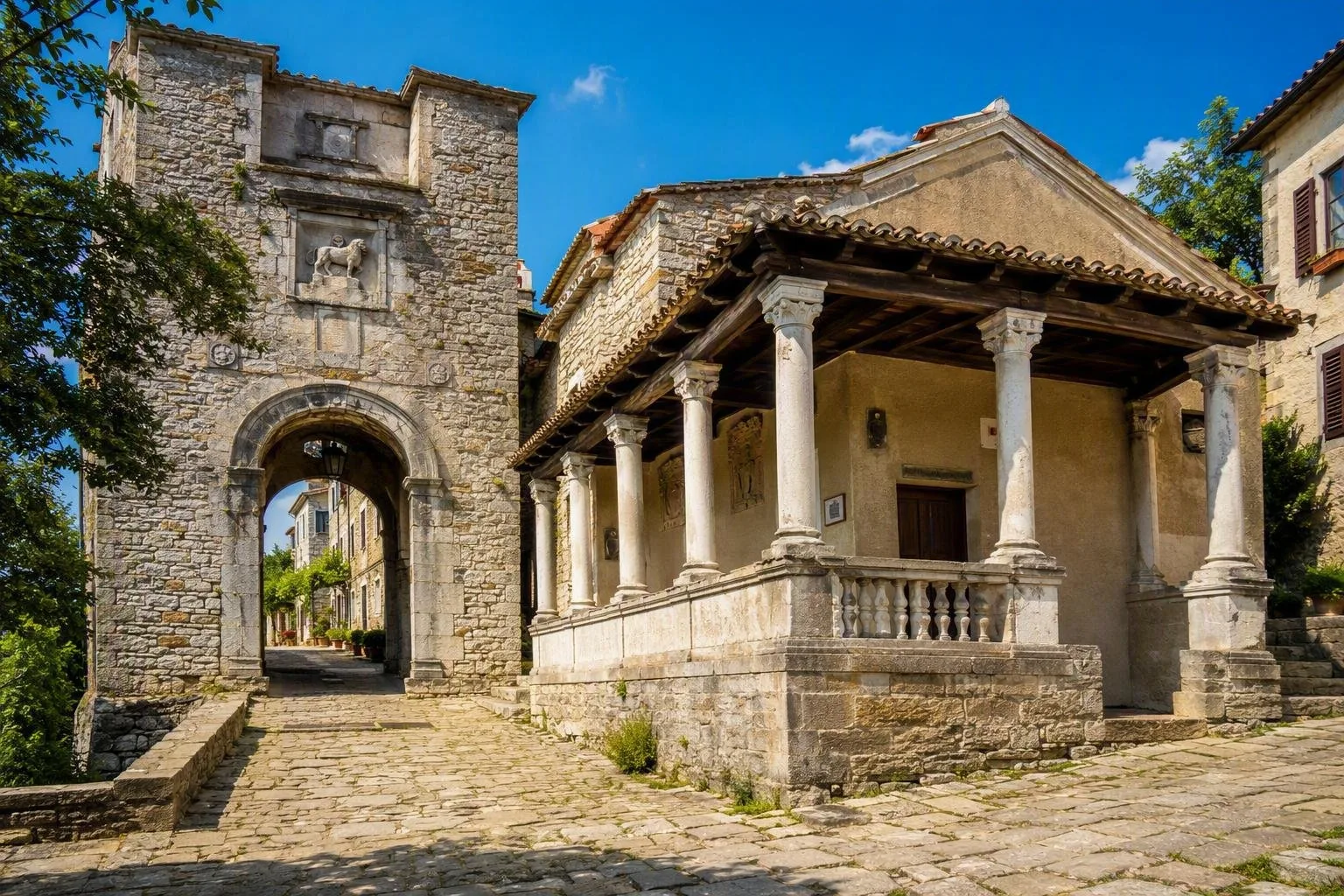
Enter through the Great Gate, the surviving former entrance to the fortified town. Inside is the Renaissance loggia of 1587, built beside the former grain store. This is the clearest architectural statement of Grožnjan’s Venetian period.
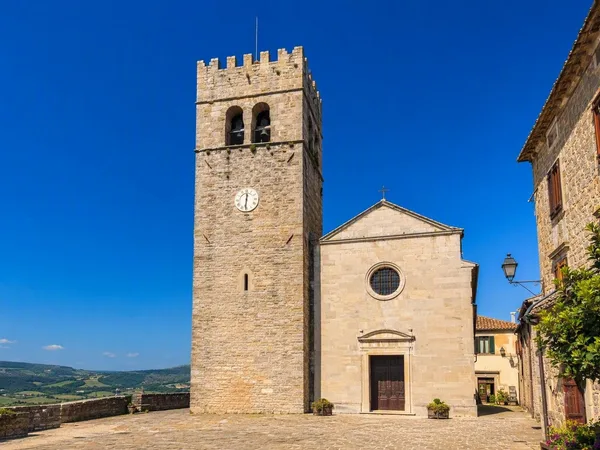
Continue through the lanes to the parish church of St Vitus, Modestus and Crescentia. Built in 1600 and thoroughly renewed in 1770, it is the main Baroque landmark. Look out, too, for the smaller medieval churches of St Roch and St Martin within the old walls.
The outer edges of the centre open towards the Mirna Valley. Keep walking beyond the obvious square; the views are part of the town’s logic, not a separate attraction.
The artists’ town
Grožnjan was revived as a town of artists in 1965, when visual artists began using its underused buildings as summer workspaces. Studios, workshops and galleries remain central to the identity of the old town.
Fonticus, the municipal gallery, presents contemporary projects by Croatian and international artists. Treat open ateliers as working spaces: enter when the door is open, browse, and ask before photographing work.
Since 1969, the International Cultural Centre of Jeunesses Musicales Croatia has brought courses and workshops to Grožnjan. In the main season, the programme can include exhibitions, performances and concerts; July and August are the strongest months for hearing music in the streets.
Timing and practical access
Late spring through early autumn is the most useful period for galleries and cultural activity. Jazz is Back! BP is held annually in July, while Ex Tempore brings painters to work on site in late September.
Arrive by car or bicycle and leave the car below the historic centre. The old town is best handled on foot: its lanes are narrow, uneven and occasionally steep. Allow two to three hours for the core, longer if you are visiting galleries or attending a performance.
Beyond the walls
The former Parenzana narrow-gauge railway ran through the Grožnjan area from 1902 and is now associated with walking and cycling routes. It is a practical way to connect the town with Istria’s rolling inland landscape.
For food, focus on straightforward Istrian staples: local olive oil, wine, pasta and seasonal produce. Keep the distinction clear: Grožnjan itself is the hill town; the vineyards, farms and trails belong to the surrounding countryside.
From the magazine
Stories about Grožnjan
Editorial stories linked directly to Grožnjan.
Routes from our editors
Travel through Grožnjan
Editorial routes connecting Grožnjan with other countries, cities and hotspots.
No routes through Grožnjan have been published yet.
More in Croatia
Related hotspots
Other cities, nature areas and places within Croatia.