City · Croatia
Zagreb
Zagreb is Croatia’s capital, set between the slopes of Medvednica and the Sava plain. Its centre pairs the medieval Upper Town with a planned 19th-century Lower Town of parks, museums and tram-lined streets.
Read the city centre
Start at Trg bana Jelačića, the central square and main tram interchange. From here, Zagreb divides neatly. North is the hillier, older city: Dolac market, Kaptol and Gradec, collectively known as the Upper Town (Gornji grad). South is the Lower Town (Donji grad), a 19th-century grid of broad streets, formal squares and cultural institutions.
The core is compact enough to cover on foot. Treat the change in level seriously, though: the climb to the Upper Town is short but steep in places. The funicular from Tomićeva Street makes the link in 64 seconds; it runs between Lower and Upper Town and is also a protected piece of city transport heritage.
Upper Town: the historic walk
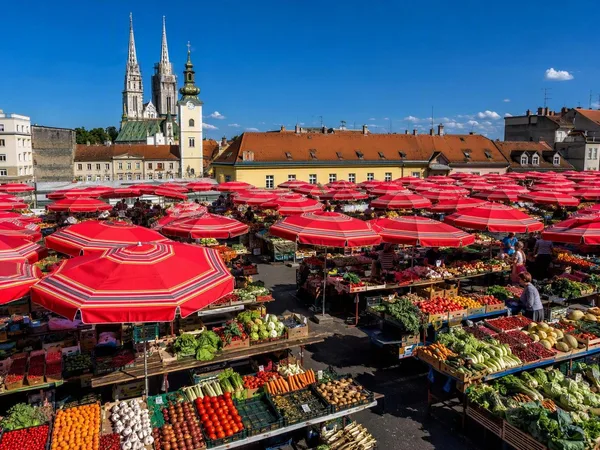
Work uphill through Dolac Market in the morning, then continue through the lanes between Kaptol and Gradec. Dolac’s upper terrace is recognisable for its red umbrellas and fruit, vegetable and flower stalls; the covered levels contain fish, meat and dairy. It is at its fullest early, and trading is mainly a morning affair.
Continue to these essentials:
- Stone Gate (Kamenita vrata): the surviving medieval gate of Gradec, now a quiet devotional passage. Keep voices low and do not obstruct worshippers.
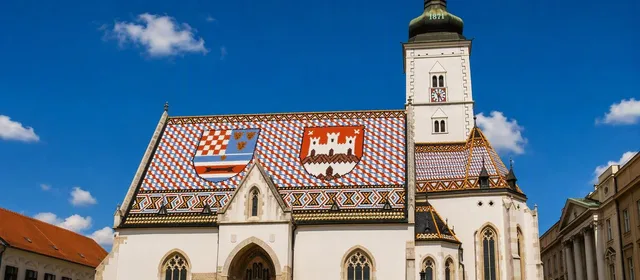
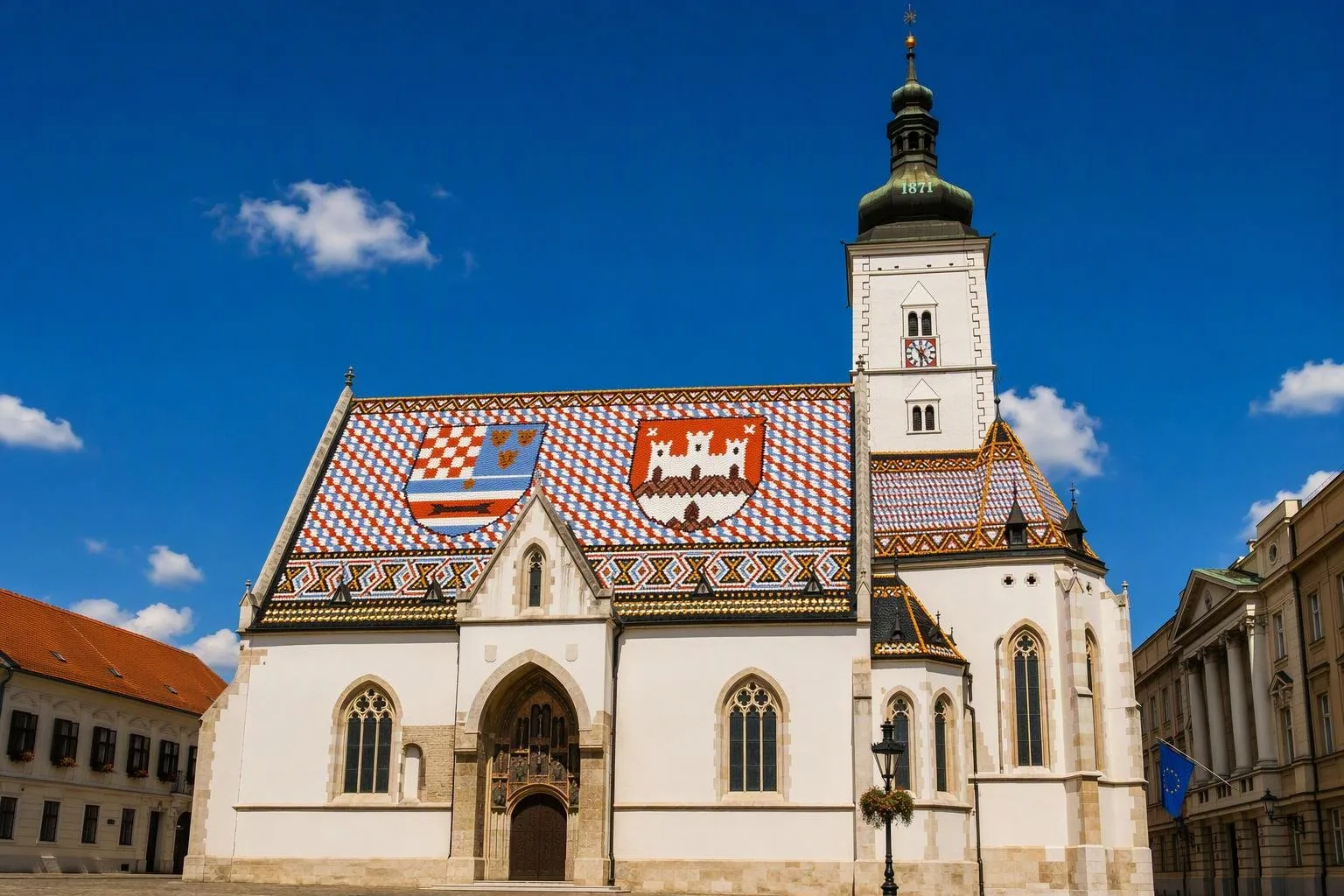
- St Mark’s Church: see its steep tiled roof, carrying the arms of Croatia and Zagreb, from the square outside. The surrounding buildings are national government institutions.
- Lotrščak Tower and Strossmayer Promenade: take the terrace for broad Lower Town views. A cannon is fired from the tower at noon each day; the report is loud at close range.
- Grič Tunnel: a pedestrian passage beneath the hill, useful for returning towards the centre.
Lower Town: parks and collections
The Lower Town is best understood through the Green Horseshoe, a connected sequence of squares and parks. Walk south from Zrinjevac through Strossmayer Square and King Tomislav Square towards the Botanical Garden, then west past the Croatian National Theatre. This is the city’s strongest district for a museum stop: choose one collection rather than trying to cover several in a day.
For a focused Upper Town museum, the Museum of Broken Relationships presents donated objects and personal accounts. It is a distinctly different experience from the city-history and art collections below the hill.
Food, trams and extra space
Use Dolac for market produce, local cheese and a quick look at everyday Zagreb food. For a simple local lunch, look for gablec, the city’s name for a hot midday meal; štrukli, dough filled with fresh cheese, is another useful order.
Trams handle longer hops beyond the centre. Take them for Maksimir, a large park of lakes and paths, or for the wider city rather than spending time walking arterial roads. Mirogoj Cemetery, with Hermann Bollé’s arcades and domes, is another worthwhile outing north of the core.
The Upper Town’s cobbles, steps and slopes can be awkward for wheels. Use the funicular or the elevator at Dolac when mobility matters.
From the magazine
Stories about Zagreb
Editorial stories linked directly to Zagreb.
No stories about Zagreb have been published yet.
Routes from our editors
Travel through Zagreb
Editorial routes connecting Zagreb with other countries, cities and hotspots.
No routes through Zagreb have been published yet.
More in Croatia
Related hotspots
Other cities, nature areas and places within Croatia.