Region · Croatia
Dalmatia, Croatia
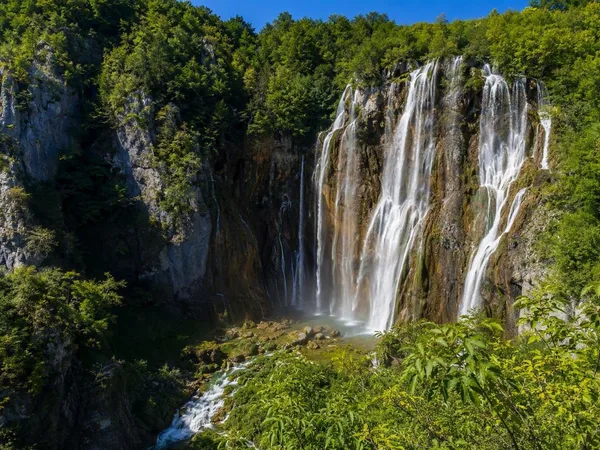
Dalmatia is Croatia’s long Adriatic region, running from the Zadar area to the Montenegrin border. It combines limestone islands, historic port cities and a rugged inland karst landscape.
Get your bearings
Dalmatia stretches for about 400km along southern Croatia’s Adriatic coast and reaches up to 70km inland. It is a geographical and historical region rather than a single administrative unit. Zadar and Šibenik anchor the north, Split the centre, and Dubrovnik the south.
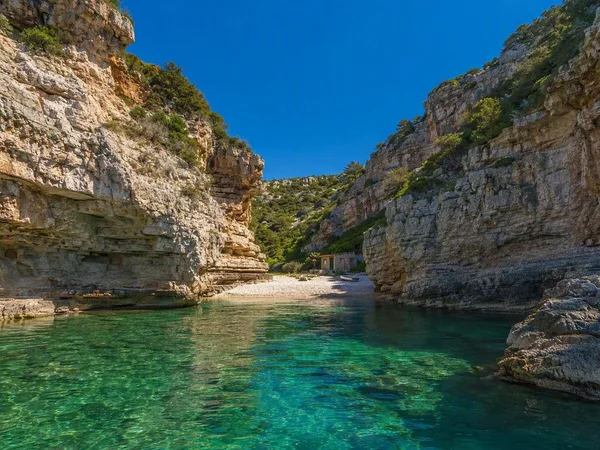
Its defining layout is simple: coast, islands and inland mountains run parallel from northwest to southeast. The mainland is largely limestone and dolomite karst; the sea side breaks into long islands, channels and coves. Dalmatian Zagora is the inland counterpart: a drier, higher landscape behind the coastal mountain barrier.
Build a route around three bases
Trying to cover the whole region from one hotel wastes time. Use a sequence of bases.
- Zadar or Šibenik: northern Dalmatia, the Kornati island group and the Krka River area.
- Split: the principal central hub for Roman-era Split, Trogir, the Cetina valley and ferries to Brač, Hvar, Šolta and Vis.
- Dubrovnik: southern Dalmatia, its walled city, the Pelješac peninsula and southern islands.
For a shorter trip, choose one section rather than treating Dalmatia as a checklist. Split works best for a first island-and-city combination; Zadar and Šibenik suit a north-coast and national-park route; Dubrovnik suits the far south.
Stone, sea and old cities
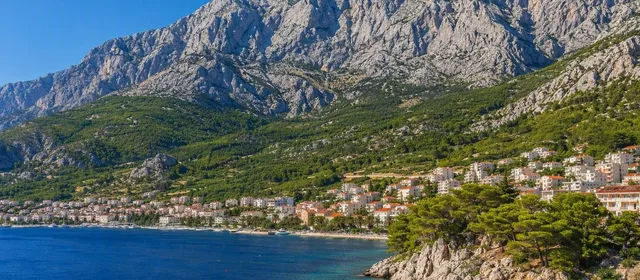
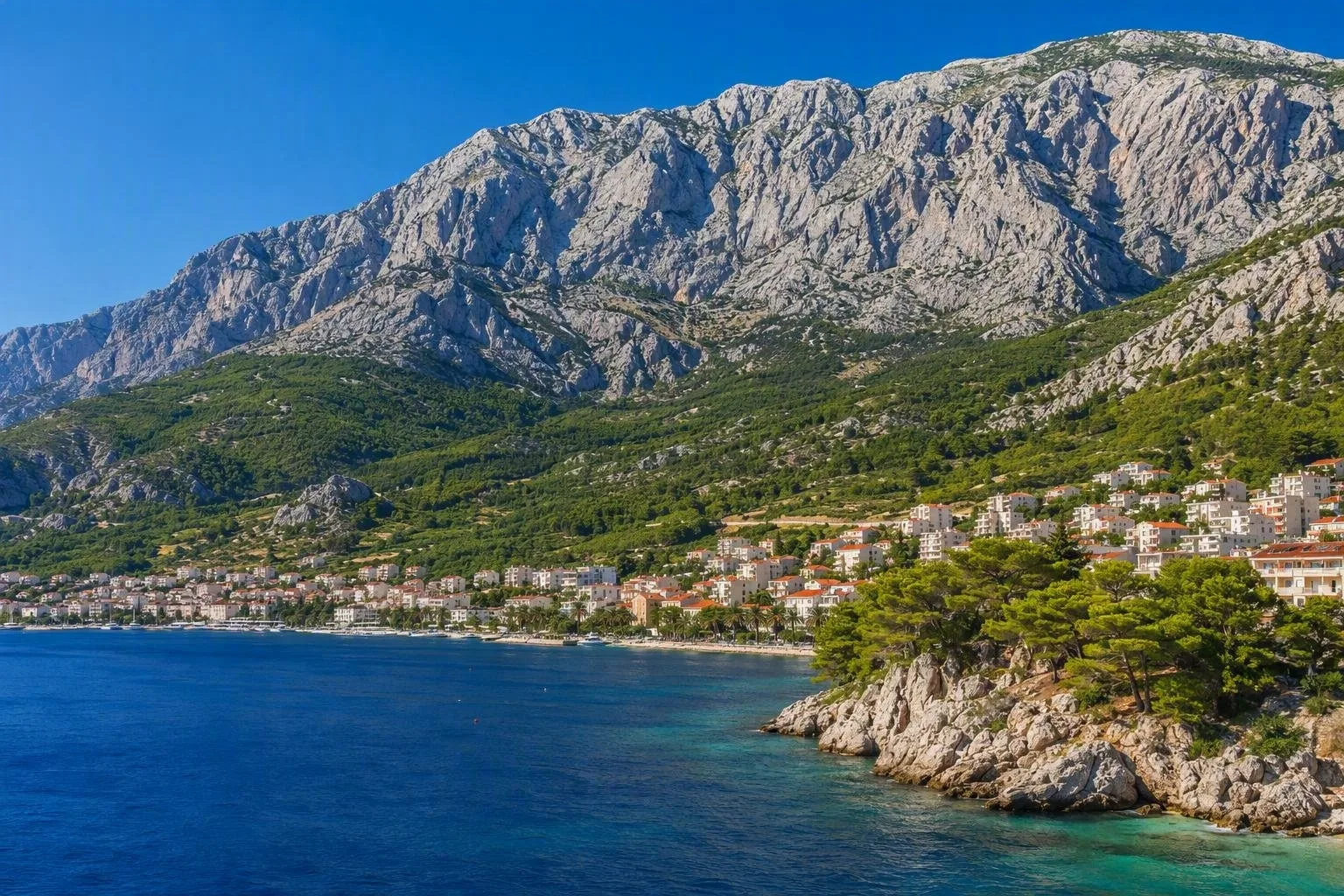
Start with the geography, not just the waterfronts. On the Makarska Riviera, the Biokovo range rises directly behind the shore. On the islands, dry-stone walls, olive groves, vines and pale rock explain why settlements cluster around sheltered harbours.
The cities show the region’s long maritime history. Split grew around Diocletian’s Palace; Trogir’s compact historic core sits on a small island; Zadar, Šibenik and Dubrovnik are major coastal centres in their own right. Allow time for the old streets early or late in the day, when heat and cruise-day traffic are less intrusive.
Islands: choose, don’t chase
Dalmatia includes almost all Croatian Adriatic islands except the Kvarner islands. The largest include Brač, Hvar, Pag, Korčula, Dugi otok and Mljet; the Kornati are a dense group of 140 islands.
Choose an island for a clear reason: Brač for stone villages and Vidova Gora; Hvar for Stari Grad and vineyard landscapes; Vis for its remote position and coves; Korčula for a fortified old town; Mljet for forest and saltwater lakes. A day trip shows a harbour; an overnight stay gives you the island after ferry traffic has gone.
Transport and timing
Zadar, Split and Dubrovnik have airports, while Zadar, Šibenik, Split, Ploče and Dubrovnik are the principal ports. The coastal road is useful for mainland legs, but ferries determine island itineraries. Summer brings the fullest sailing network and the strongest demand, especially for vehicle places.
Best balance: late spring and September offer easier town walking and sea time. July and August are for swimming and long ferry timetables, but plan fewer stops and reserve vehicle crossings early. Carry footwear for hot stone and pebble beaches; water is essential on exposed island and mountain paths.
From the magazine
Stories about Dalmatia, Croatia
Editorial stories linked directly to Dalmatia, Croatia.
Routes from our editors
Travel through Dalmatia, Croatia
Editorial routes connecting Dalmatia, Croatia with other countries, cities and hotspots.
No routes through Dalmatia, Croatia have been published yet.
More in Croatia
Related hotspots
Other cities, nature areas and places within Croatia.