
Sight · Chile
Ahu Nau Nau
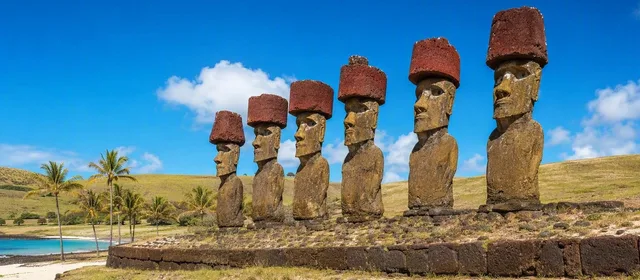
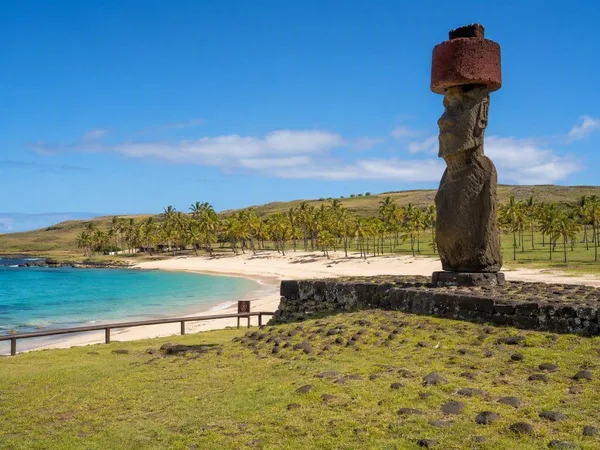
Ahu Nau Nau is Anakena’s principal ceremonial platform on Rapa Nui, Chile. Its restored line of moai stands just inland from the island’s best-known sandy beach.
What you are looking at
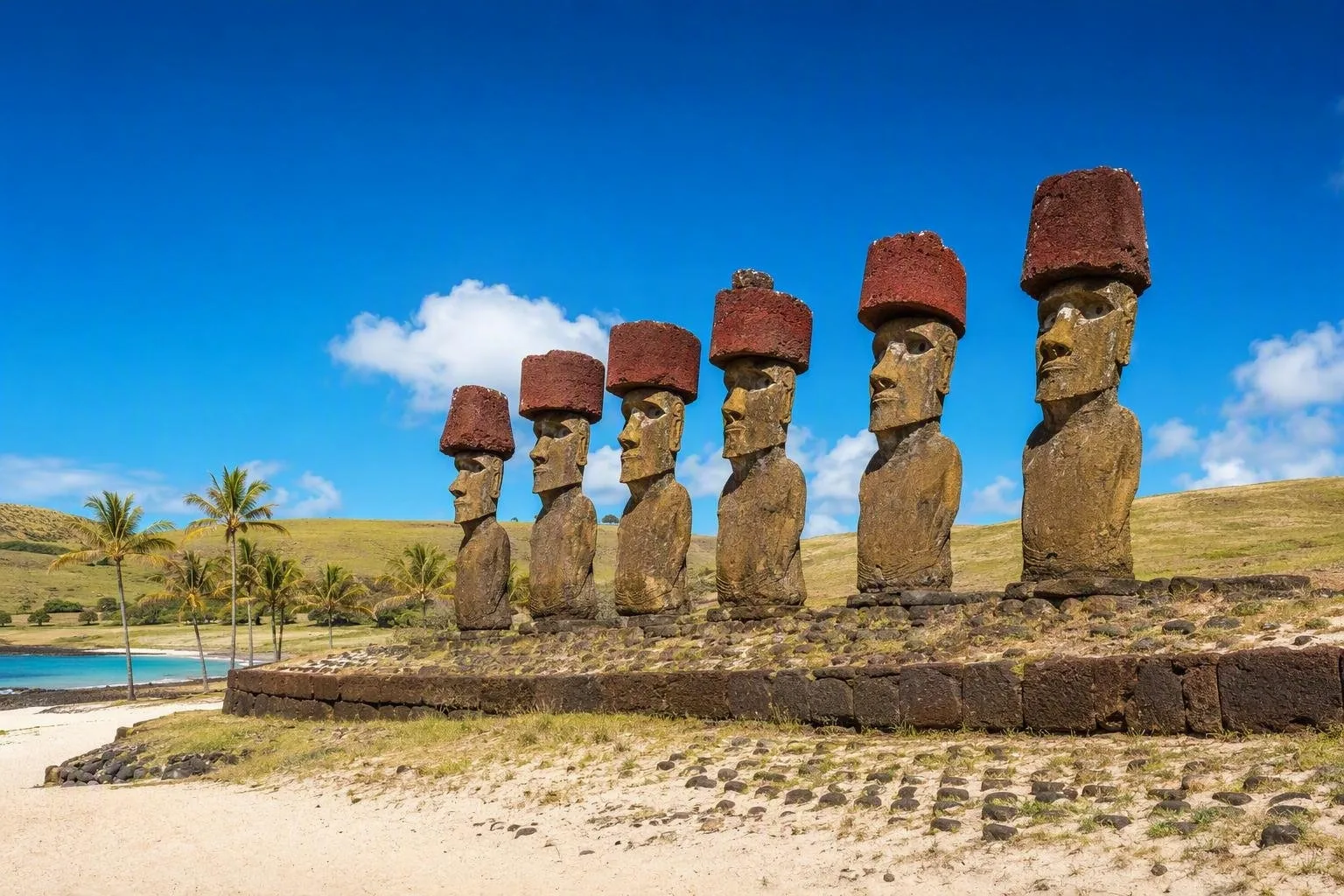
Ahu Nau Nau is a stone ceremonial platform, or ahu, at Anakena on the northeast coast of Rapa Nui. Seven moai stand on its restored platform, facing inland rather than out to sea. This is the defining archaeological sight at Anakena, separate from the beach but only a short walk behind it.
The present arrangement follows restoration led by Rapa Nui archaeologist Sergio Rapu in 1978. Several statues retain unusually crisp carved features because they lay partly buried beneath Anakena’s coral sand after being toppled; the sand reduced exposure to wind and rain.
Read the moai
Start with the line of statues rather than trying to photograph the entire beach at once. The first four moai from the left retain red pukao: cylindrical headdresses made from red volcanic scoria from Puna Pau. The fifth has no pukao; the final two are incomplete.
Look for the refinement in the faces, ears, hands and torsos. Some backs also preserve geometric reliefs. These details make Ahu Nau Nau one of the clearest places on Rapa Nui to examine the carving itself, not just the monumental silhouette.
Platform and setting
The visible platform belongs to the latest of at least three construction phases, dating broadly from about 1100 to 1400 CE. Its scale and repeated rebuilding show that this was an enduring ceremonial site, not a single construction episode.
Ahu Nau Nau stands roughly 150 metres inland from Anakena’s shoreline. The white sand, palms and bathing area are part of the immediate setting, but the monument is the focus here. Walk around only on designated routes and take time to view the rear wall, where reused stone and carved elements can be seen from permitted viewpoints.
Getting there and visiting well
Anakena lies about 18 km northeast of Hanga Roa, reached by road by rental vehicle, taxi or organised excursion. Parking, toilets and food stalls are at the beach area; the walk from there to Ahu Nau Nau is short and level.
Bring your Rapa Nui National Park entry pass when visiting archaeological areas. Keep clear of the platform and statues, do not touch the moai or climb on stonework, and do not remove sand or stones. Early morning gives frontal light on the faces and usually makes the carved details easier to see.
Why it matters
In Rapa Nui tradition, ahu were elevated ceremonial structures for moai representing ancestors. Anakena is also associated in oral tradition with the arrival of Hotu Matu'a. Ahu Nau Nau therefore combines a well-preserved monument with one of the island’s key ancestral landscapes.
During the 1978 restoration excavations, fragments of a white-coral moai eye with a red-scoria pupil were found here. The discovery demonstrated that erected moai could have had inset eyes, changing the modern understanding of their original appearance.
From the magazine
Stories about Ahu Nau Nau
Editorial stories linked directly to Ahu Nau Nau.
No stories about Ahu Nau Nau have been published yet.
Routes from our editors
Travel through Ahu Nau Nau
Editorial routes connecting Ahu Nau Nau with other countries, cities and hotspots.
No routes through Ahu Nau Nau have been published yet.
More in Chile
Related hotspots
Other cities, nature areas and places within Chile.
Atacama
2 linked stories and routes

Valparaíso
1 linked stories and routes

Cerro Alegre
1 linked stories and routes

Cerro Concepción
1 linked stories and routes

Ascensor Reina Victoria
1 linked stories and routes

Paseo Dimalow
1 linked stories and routes
Rapa Nui
1 linked stories and routes
Anakena
1 linked stories and routes

Ascensor Concepción
0 linked stories and routes