
Sight · Colombia
Plaza de Bolívar
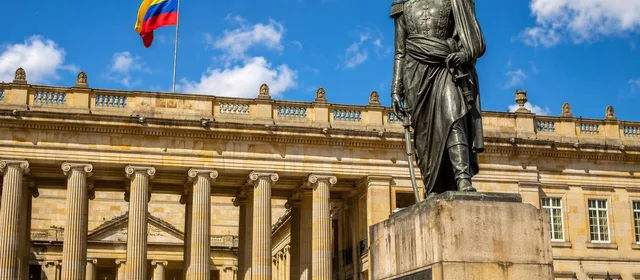
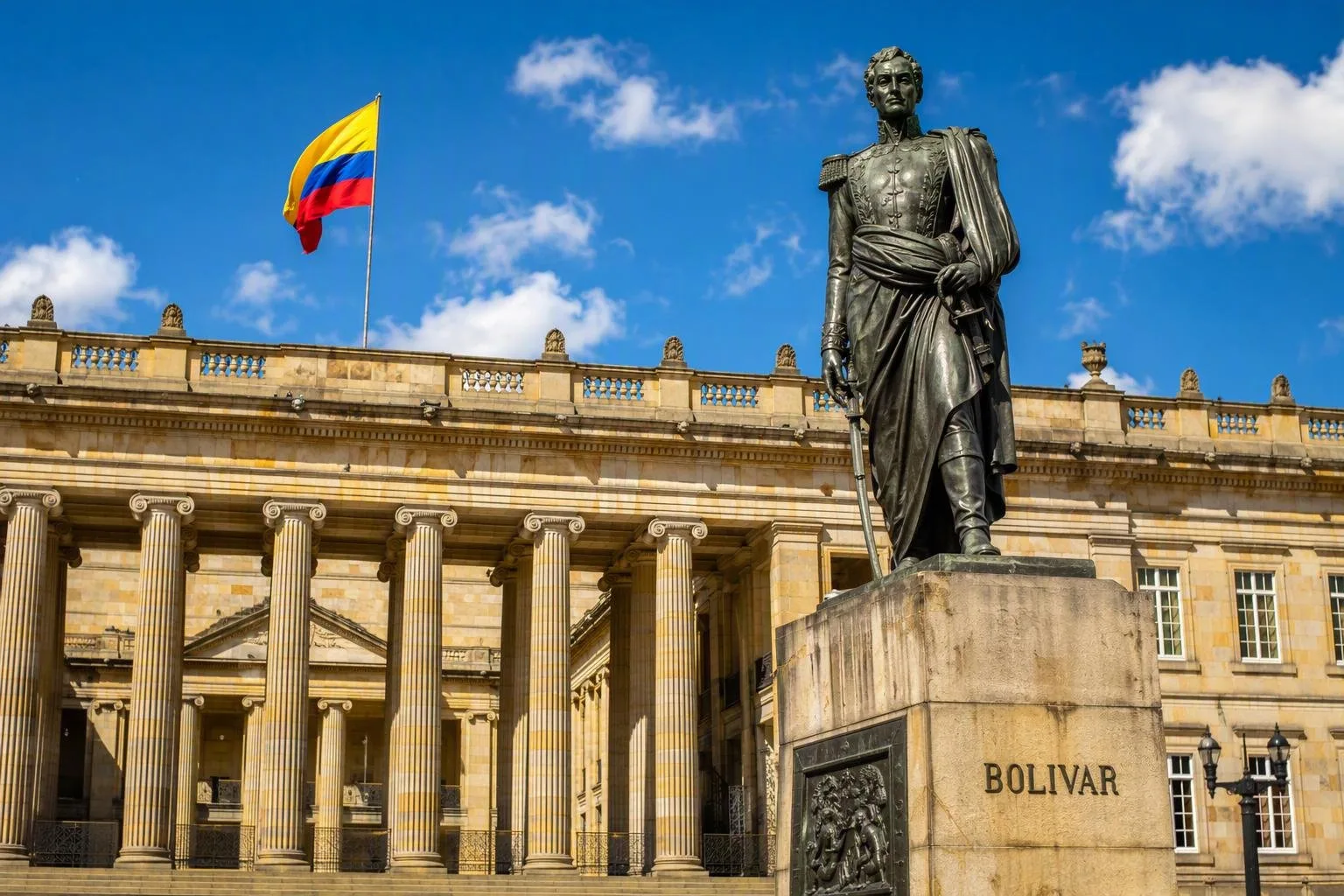
Plaza de Bolívar is Bogotá’s principal civic square, in La Candelaria between Calle 10 and Calle 11. The National Capitol, cathedral, Palace of Justice and city hall frame this large stone-paved public space.
Get your bearings
Plaza de Bolívar occupies the historic core of Bogotá, bounded by Calle 10 to the south, Calle 11 to the north, Carrera 7 to the east and Carrera 8 to the west. It is a broad, open square rather than a garden or a compact colonial plaza. The bronze statue of Simón Bolívar at its centre is the easiest reference point.
The square is a working civic space as well as a landmark. Demonstrations, official events and temporary installations can alter access or sightlines at short notice.
Read the edges
Stand near the centre and use the surrounding buildings as a quick map of Colombian public life:
- South: the National Capitol, seat of Colombia’s Congress, with its long neoclassical façade.
- East: the Cathedral Primada and the adjoining Chapel of the Sagrario.
- North: the Palace of Justice.
- West: Palacio Liévano, Bogotá City Hall.
This arrangement makes the plaza unusually legible: legislature, religion, justice and city government share one square. The cathedral’s present building was designed in the early 19th century; the Capitol’s construction began in the 19th century and the building remains an active institution.
From Plaza Mayor to Plaza de Bolívar
The square began as Bogotá’s Plaza Mayor, the centre of the Spanish colonial city. It served in turn as a market, a venue for ceremonies and public punishments, and a setting for civic and religious gatherings. After independence it was called Plaza de la Constitución; it has borne the name Plaza de Bolívar since 1846.
The current character comes largely from the 1960 redesign, which removed gardens and fountains to create the open paved plane seen today. Do not expect a preserved colonial streetscape around every side: the square records several periods of Bogotá’s history in one view.
Walk onward through La Candelaria
Plaza de Bolívar is best used as a starting point for the historic centre. Walk east along Calle 11 toward the Museo de la Independencia–Casa del Florero, or continue into La Candelaria’s narrower streets. Calle 10 leads east toward museums, university buildings and the uphill lanes below the eastern hills.
The TransMilenio station at Museo del Oro is a practical arrival point, followed by a walk through the historic centre. The square itself is flat and easy to cross; surrounding streets can be steep or uneven.
Useful access notes
The plaza is public space, but its government buildings have separate entry and security rules. For the National Capitol, guided visits are organised in advance; the main entrance is on the square’s south side. Do not treat the Capitol as a walk-in museum.
If a march or major event is underway, keep the visit flexible and use the surrounding streets to continue your route. The plaza remains most useful as an orientation point even when its centre is occupied.
From the magazine
Stories about Plaza de Bolívar
Editorial stories linked directly to Plaza de Bolívar.
No stories about Plaza de Bolívar have been published yet.
Routes from our editors
Travel through Plaza de Bolívar
Editorial routes connecting Plaza de Bolívar with other countries, cities and hotspots.
No routes through Plaza de Bolívar have been published yet.
More in Colombia
Related hotspots
Other cities, nature areas and places within Colombia.
Bogotá
3 linked stories and routes
Mercado de Paloquemao
2 linked stories and routes

Sabana de Bogotá
1 linked stories and routes
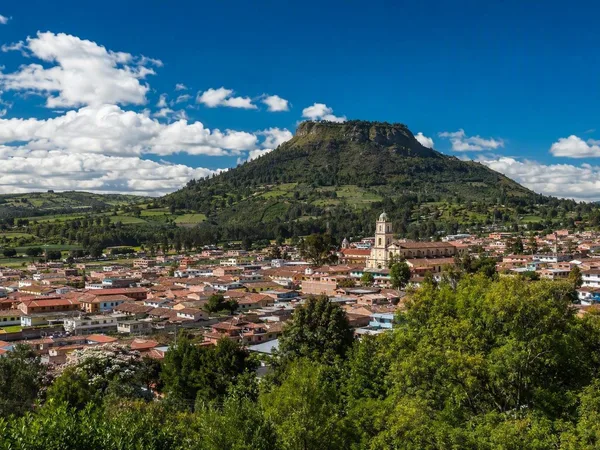
Cota, Cundinamarca
1 linked stories and routes
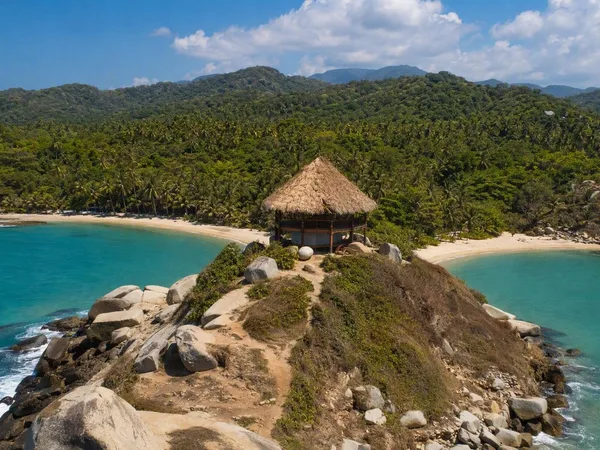
Cabo San Juan del Guía
1 linked stories and routes
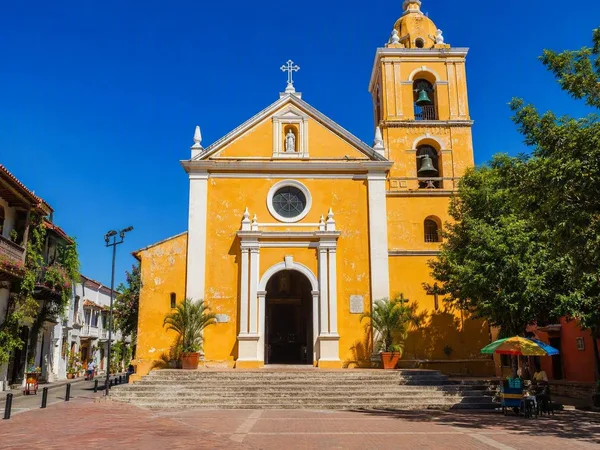
Plaza de la Trinidad, Cartagena
1 linked stories and routes
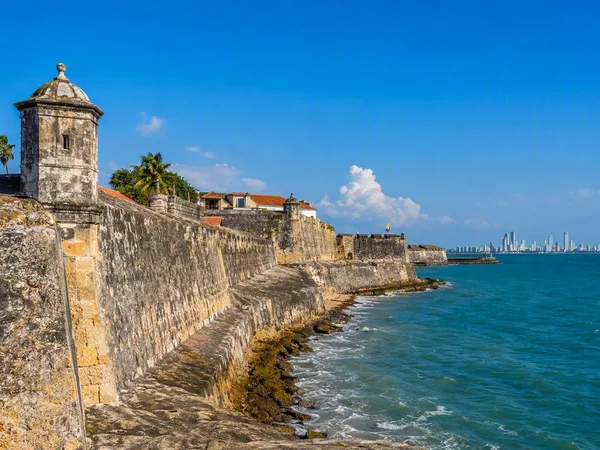
Cartagena
1 linked stories and routes
Medellín
1 linked stories and routes
Comuna 13, Medellín
1 linked stories and routes
Las Independencias, Comuna 13
1 linked stories and routes
Veinte de Julio, Medellín
1 linked stories and routes
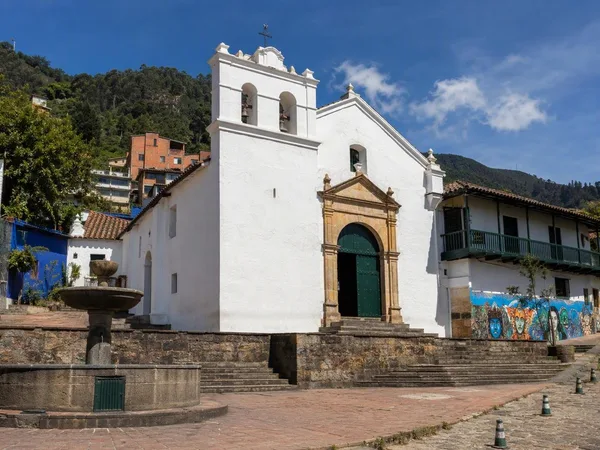
Chorro de Quevedo
1 linked stories and routes
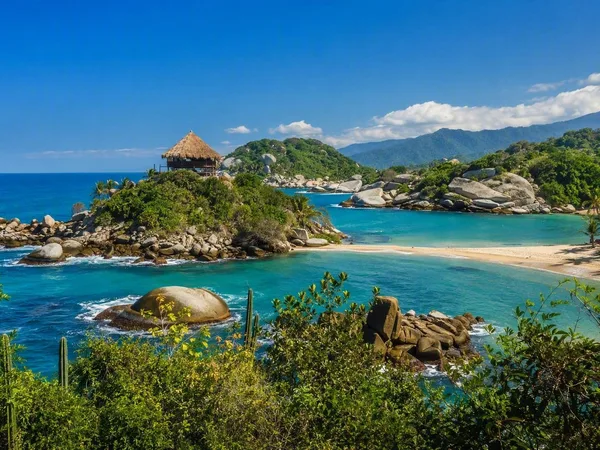
Tayrona National Natural Park
0 linked stories and routes
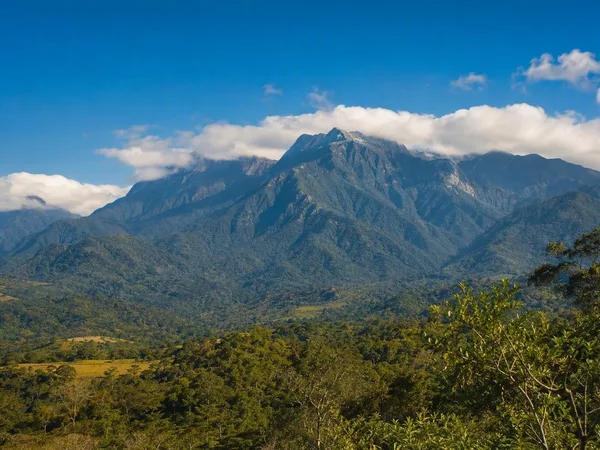
Línea Negra, Sierra Nevada de Santa Marta
0 linked stories and routes
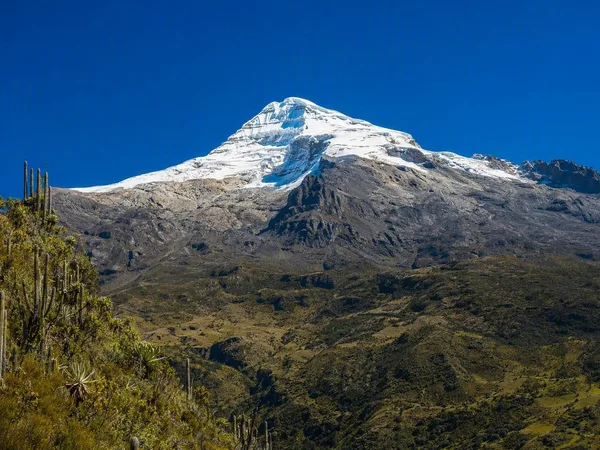
Sierra Nevada de Santa Marta
0 linked stories and routes