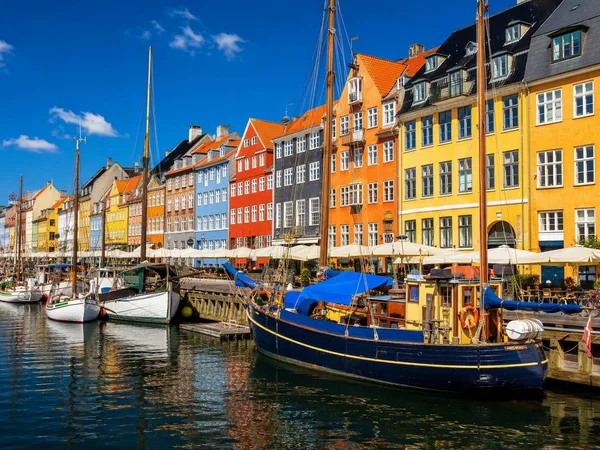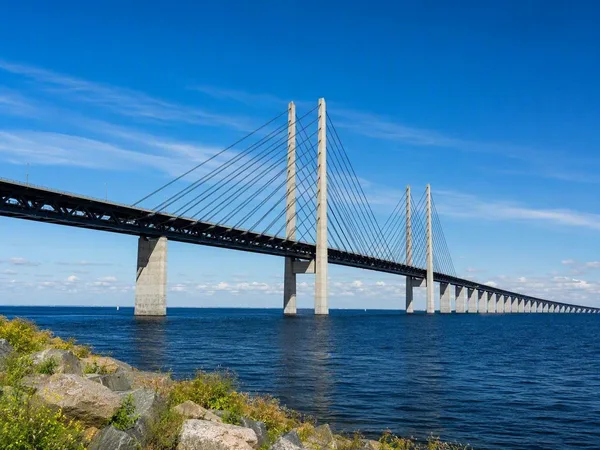
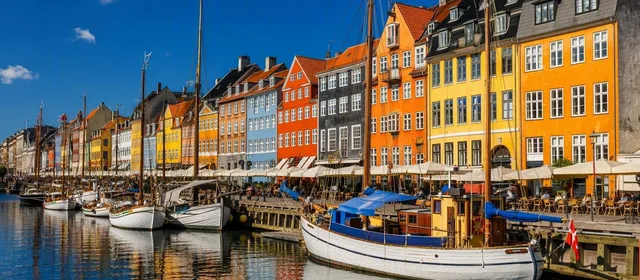
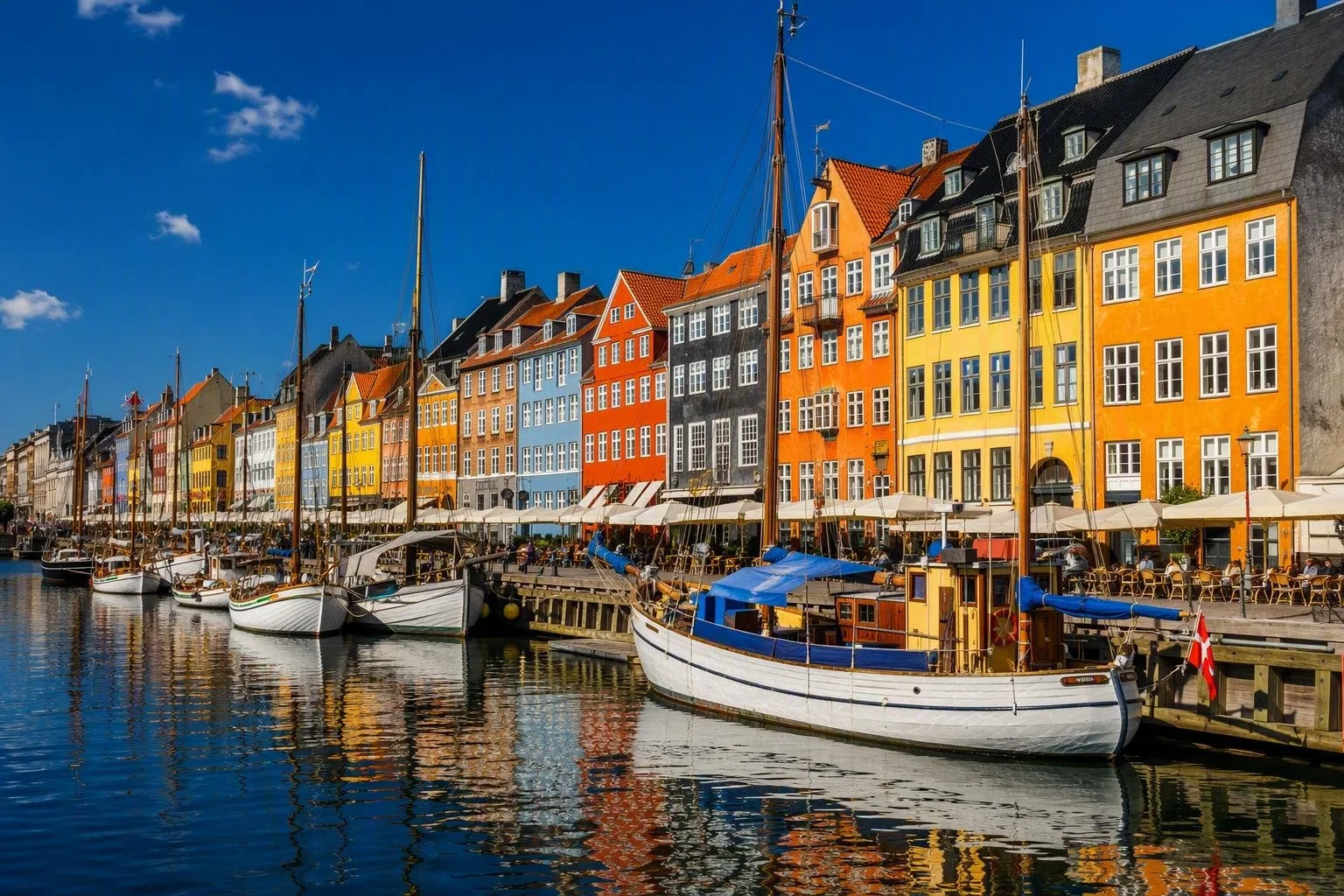
Look beyond Copenhagen’s painted houses and harbour baths, and Denmark quickly opens out into a country of islands, beaches and small cities. In the capital, cyclists cross bridges past the copper roofs of Christianshavn, while wooden boats sit along the quay at Nyhavn. A train, bridge or ferry soon leads to a different setting: fields between whitewashed churches, fishing harbours on the Jutland coast, or the chalk face of Møns Klint above the Baltic.
History sits in plain view without taking over the day. At Roskilde Cathedral, medieval kings and queens lie buried beneath tall brick vaults. Down by the fjord, the Viking Ship Museum displays vessels recovered from the water. In North Jutland, sand has swallowed much of the old church at Skagen, and the beaches stretch towards the point where the Skagerrak and Kattegat meet.
Aarhus offers a useful contrast to Copenhagen. Its waterfront has new buildings and busy cafés, while Den Gamle By recreates streets and homes from earlier Danish towns. Food often begins with rye bread, herring and smørrebrød, then moves through bakeries, market halls and modern dining rooms supplied by nearby farms and fisheries. Danish design appears in everyday places too: station signs, lamps, chairs and well-used cycle lanes. Take time for the capital, but leave room for a ferry crossing, a coastal walk and an unhurried meal in a smaller town.