
Sight · Vietnam
Dong Xuan Market
Dong Xuan Market is Hanoi Old Quarter’s principal covered wholesale market, at the northern edge of the quarter. Its three-storey hall combines working trade in clothing, textiles and household goods with food lanes behind the building.
What it is
Dong Xuan Market is a working market, not a polished retail arcade. It occupies a large, covered hall between Dong Xuan Street, Hang Khoai Street and Cau Dong Street at the northern edge of Hanoi Old Quarter. Much of its trade is wholesale, supplying small retailers and buyers beyond the quarter; individual shoppers can still buy from many stalls.
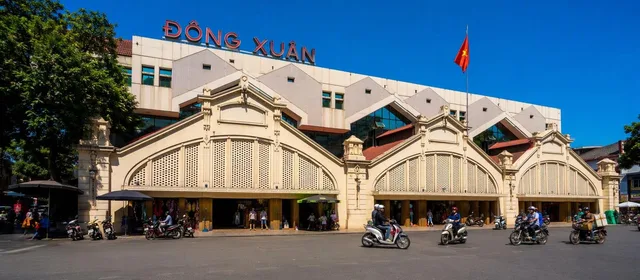
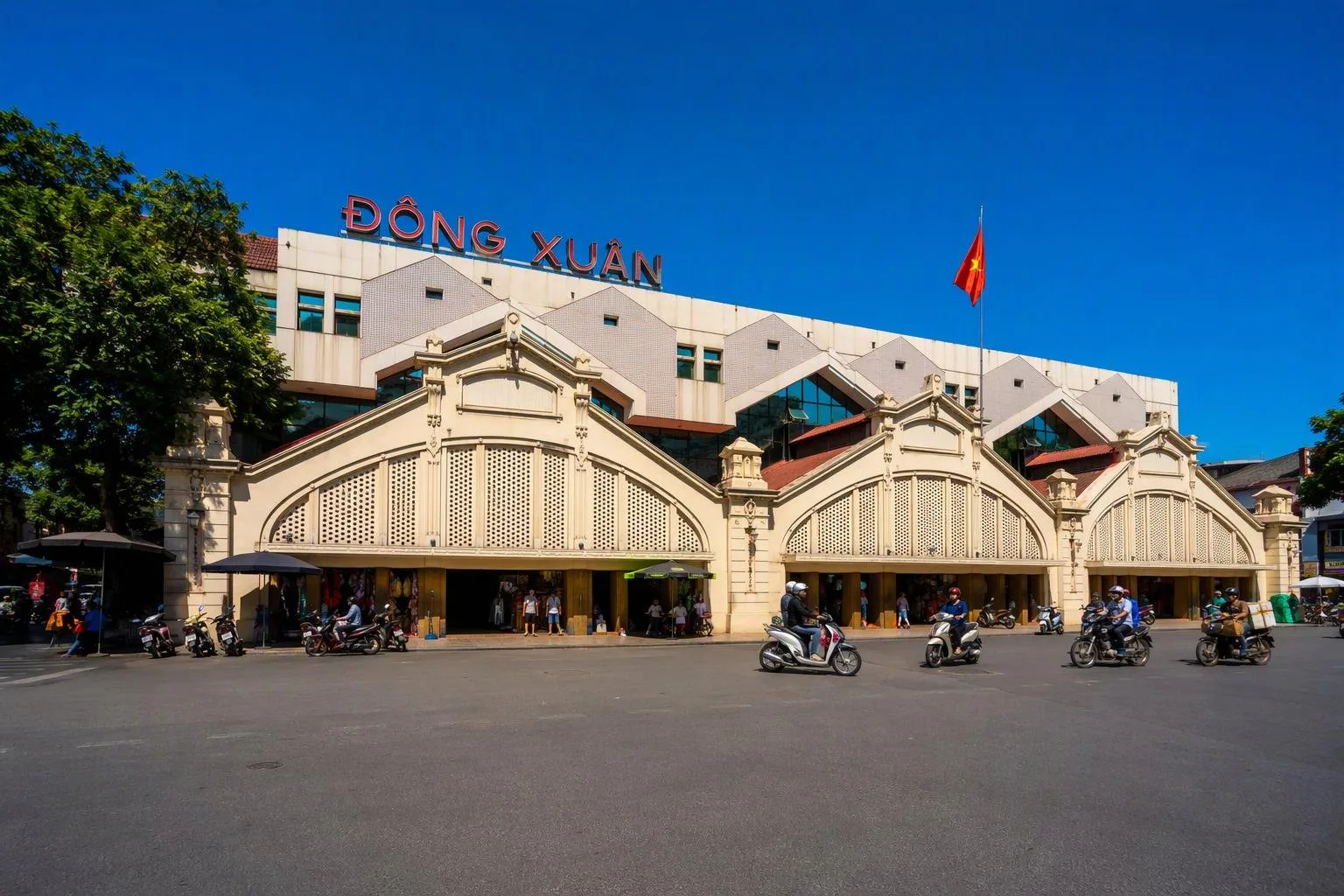
The market was created in 1889 when colonial authorities consolidated the older Bach Ma and Cau Dong markets after nearby waterways were filled. The original complex had five iron-framed halls. Fire badly damaged the market in 1994; the present three-storey building retains the characteristic arched front.
Read the building
Pause outside on Dong Xuan Street to see the market’s five-part facade: tall triangular gables, perforated panels and arched bays are the surviving visual signature of the historic market.
Inside, expect narrow passages, stacked stock and a functional layout rather than clear sightseeing routes. The broad pattern is useful:
- Ground level: clothing, shoes, bags, accessories and everyday goods.
- Upper levels: adult clothing, fabrics and textiles; children’s and baby goods occupy another level.
- Behind the main hall: Bac Qua market concentrates dry foods and food stalls.
Stall arrangements can change, so treat floor categories as a guide rather than a fixed directory.
Shopping with purpose
Come for the scale of Hanoi’s trade as much as for souvenirs. Fabric, ready-made clothing, household items and small accessories are the core offer. Wholesale sellers may quote by quantity or prefer bulk orders, while retail prices and product quality vary sharply between stalls.
For clothing, textiles and non-food goods, compare like-for-like items before settling on a price. Bargaining is normal, but keep it concise and courteous. Carry Vietnamese dong in small notes: cash remains the practical default at many stalls. Inspect stitching, fabric weight and electronics before paying; the market is built for trade, not warranties.
Food and the surrounding lanes
The main building is only part of the stop. Bac Qua behind the market handles dry goods, while the lanes around Dong Xuan bring together small food stalls and casual eating. Look for Hanoi staples such as bánh tôm (shrimp fritters), bún ốc (snail noodles), grilled pork with vermicelli, rib porridge and sweet chè.
Eat here as a simple market meal rather than a formal food tour. Choose a stall once you know what it serves and its price; food prices are generally less negotiable than merchandise.
Timing and access
The indoor market generally operates by day, roughly from early morning to early evening. Early hours show the market at its most commercial, with wholesale deliveries and buyers; later morning is easier for a slower browse. Entry is free.
From Hoan Kiem Lake, walk north through the Old Quarter in roughly 15 minutes. Long Bien rail station is close by, and buses on Tran Nhat Duat stop within a short walk. On Friday, Saturday and Sunday evenings, the Old Quarter night-market route runs towards Dong Xuan; this is a separate, street-based shopping scene and is much more crowded.
Practical warning: keep phones and bags secure in dense aisles, and ask before making close photographs of vendors or their stalls.
From the magazine
Stories about Dong Xuan Market
Editorial stories linked directly to Dong Xuan Market.
No stories about Dong Xuan Market have been published yet.
Routes from our editors
Travel through Dong Xuan Market
Editorial routes connecting Dong Xuan Market with other countries, cities and hotspots.
No routes through Dong Xuan Market have been published yet.
More in Vietnam
Related hotspots
Other cities, nature areas and places within Vietnam.

Hanoi
4 linked stories and routes
Hanoi Old Quarter
4 linked stories and routes
Sapa
1 linked stories and routes
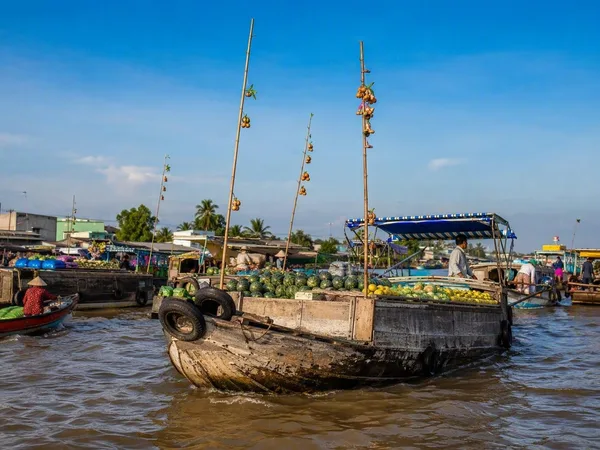
Mekong Delta
1 linked stories and routes
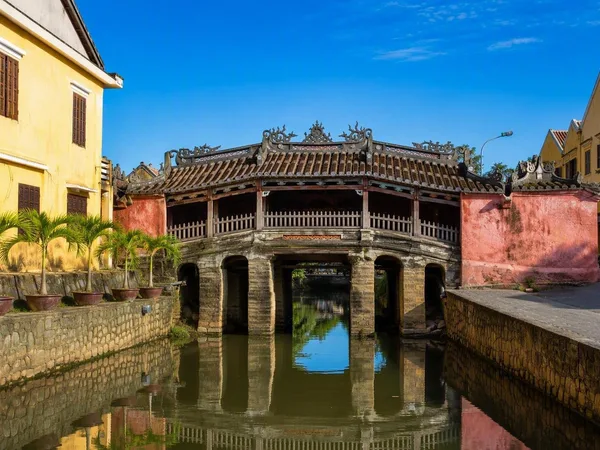
Hoi An
1 linked stories and routes
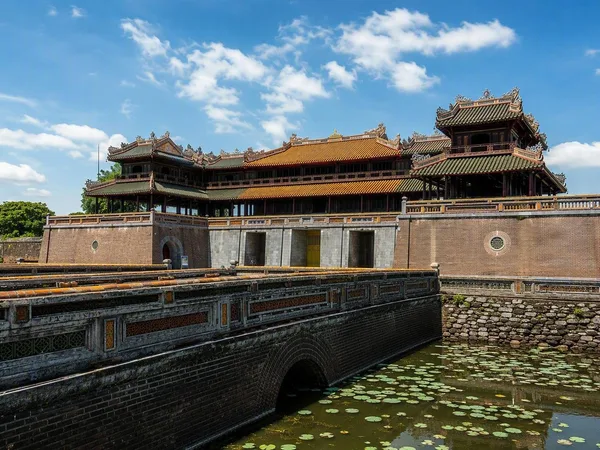
Huế
1 linked stories and routes
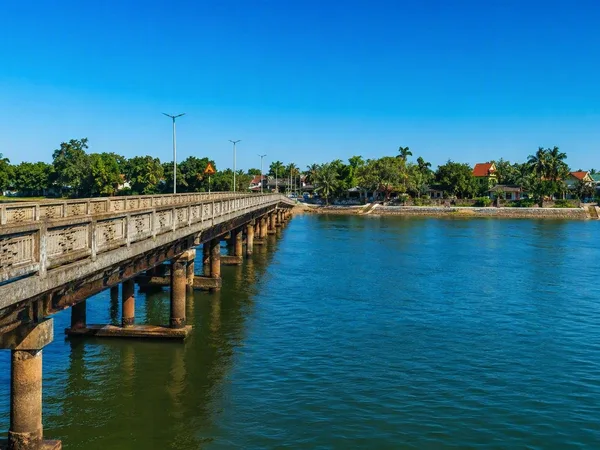
Cồn Hến, Huế
1 linked stories and routes
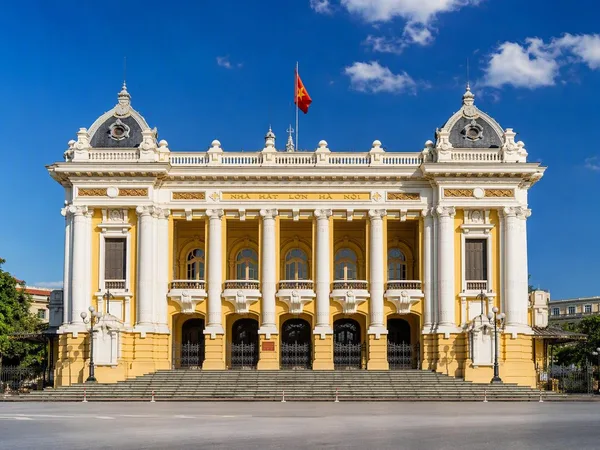
Hanoi Opera House
1 linked stories and routes
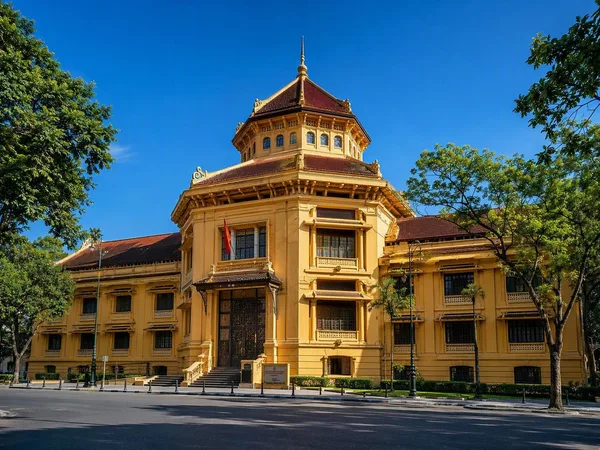
Vietnam National Museum of History
1 linked stories and routes
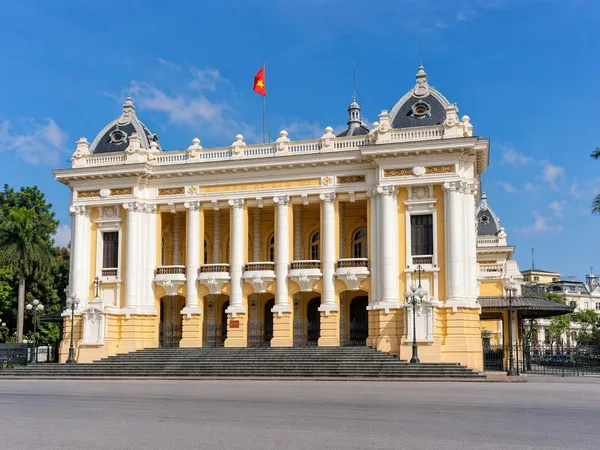
August Revolution Square
1 linked stories and routes

Hoàn Kiếm Lake
1 linked stories and routes
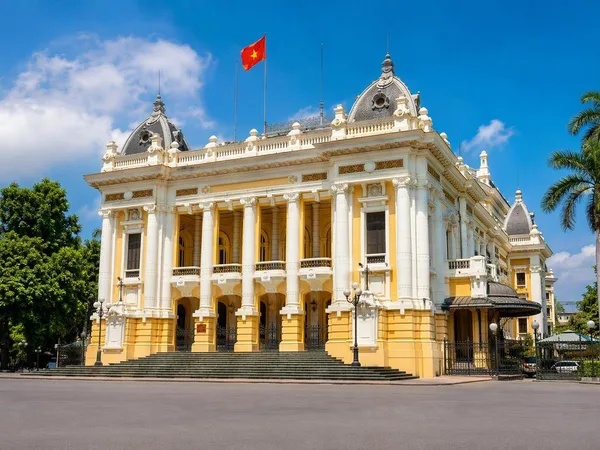
French Quarter, Hanoi
1 linked stories and routes
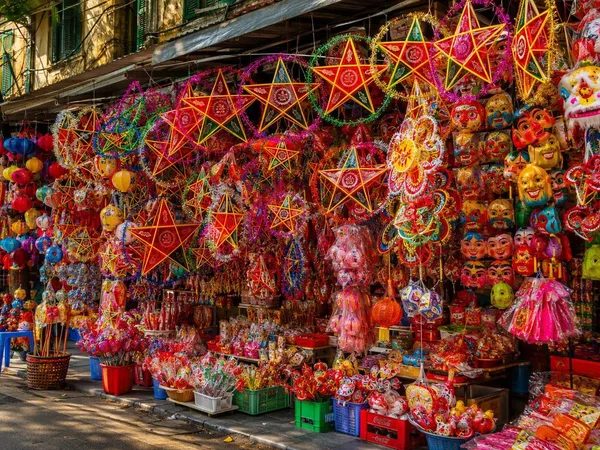
Hàng Mã
1 linked stories and routes
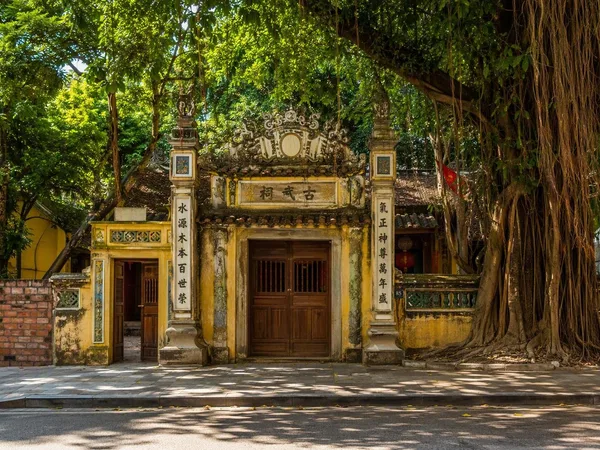
Hàng Gai, Hanoi Silk Street
1 linked stories and routes
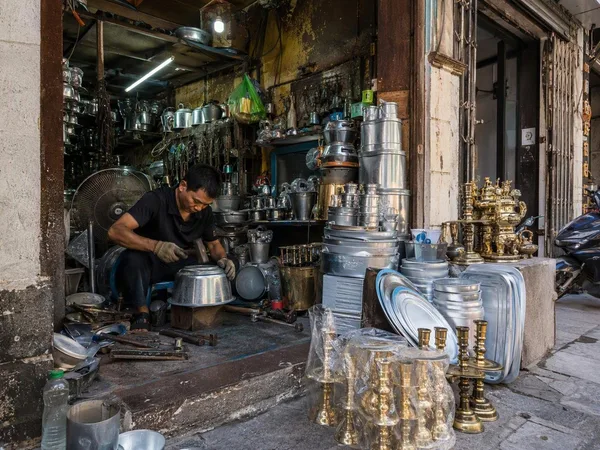
Hàng Thiếc, Hanoi
1 linked stories and routes
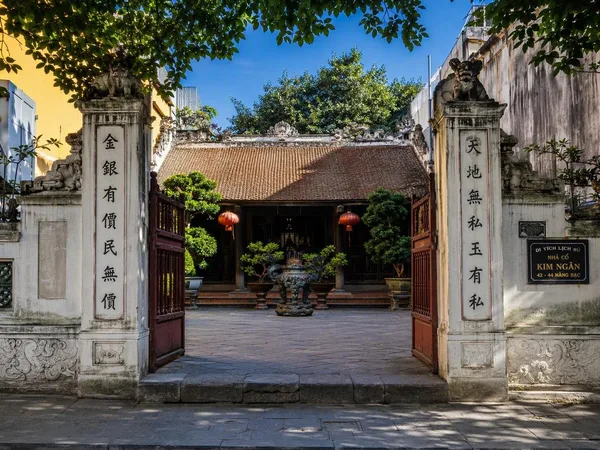
Hàng Bạc (Silver Street)
1 linked stories and routes
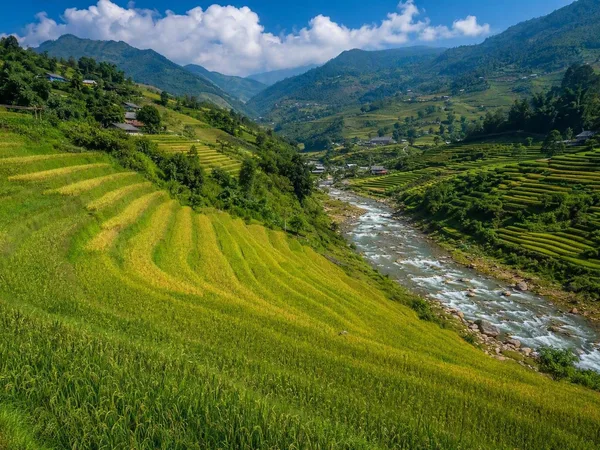
Mường Hoa valley
0 linked stories and routes
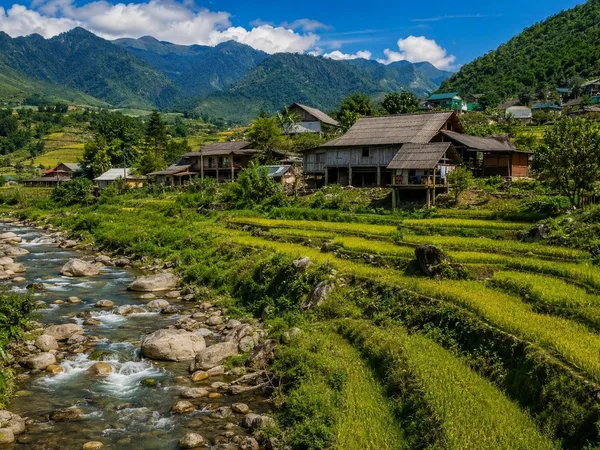
Ta Van Village
0 linked stories and routes
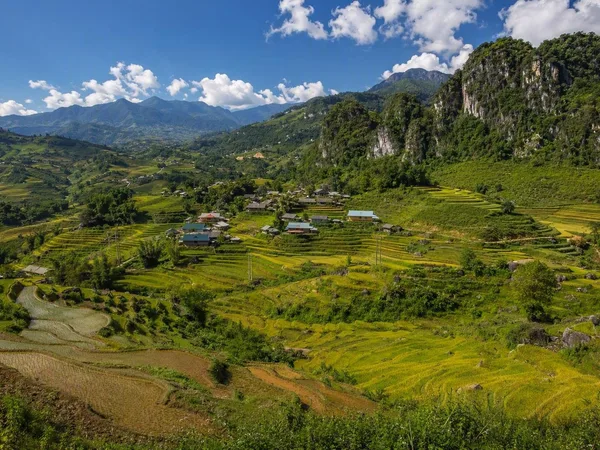
Ta Phin
0 linked stories and routes