City · Vietnam
Hoi An
Hoi An is a historic river-port city in central Vietnam, on the north bank near the mouth of the Thu Bồn River. Its compact Ancient Town preserves the street plan, timber houses and communal buildings of a trading port active from the 15th to the 19th centuries.
Why Hoi An matters
Hoi An’s Ancient Town is a World Heritage site because it remains an unusually intact Southeast Asian trading port. From the 15th to the 19th centuries, it connected inland and maritime trade, drawing Chinese, Japanese and later European influences into a distinctly Vietnamese townscape.
The historic core is small: narrow streets run parallel to the river, crossed by short lanes and alleys. Merchant houses typically face the street for customers, while their rear doors open towards the river—the working layout of a former port.
Read the town on foot
Walk the old town rather than treating it as a checklist. The essential fabric is the continuous line of tiled, timber-framed shop-houses, courtyards, assembly halls, shrines and riverfront quays.
Use this simple route:
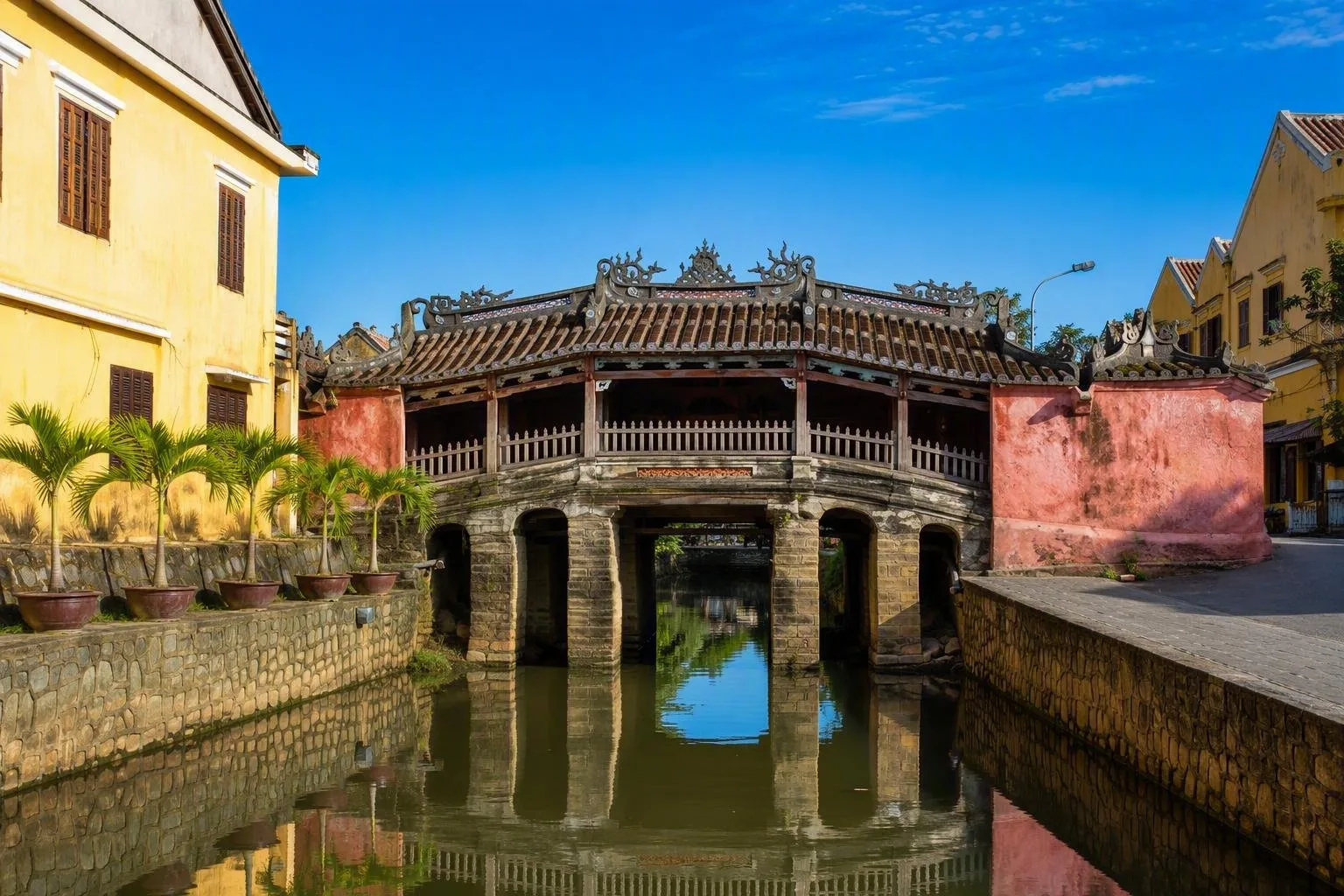
- Start at the Japanese Covered Bridge at the western end of Trần Phú Street.
- Follow Trần Phú for old houses and Chinese assembly halls.
- Continue to the riverside and Hoi An Market, then return through the parallel lanes.
The public streets are walkable without entering every monument. A heritage ticket is required for selected historic houses, assembly halls, museums and the bridge interior; choose the buildings that best match your interests rather than rushing through them.
Key buildings and details
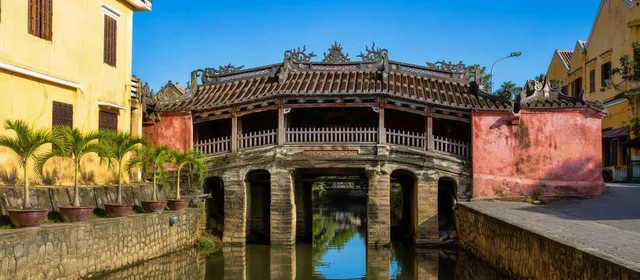
The Japanese Covered Bridge is the town’s clearest reminder of its Japanese trading community. Its timber passage, tiled roof and small shrine span a canal between the former Japanese and Chinese quarters. View it from the street, then look closely at the structure if you use a ticket to cross.
For the Chinese mercantile legacy, enter an assembly hall such as the Fujian Assembly Hall. These were community institutions as well as places of worship. In the old houses, look for the long, narrow plan: shopfront, living space, open courtyard and rear section. Carved beams, tiled roofs and raised thresholds are part of the architecture, not decorative backdrop.
Timing, access and conditions
Come early for clearer streets and better time to examine façades; late afternoon into evening combines the heritage core with the lantern-lit riverfront. The centre is compact and best handled on foot. Motor traffic is restricted in the pedestrian core, so arrive by taxi, car, bicycle or scooter at its edge and continue walking.
Hoi An is low-lying beside the Thu Bồn system. Heavy rain, storms and flooding can affect access, particularly in the wetter months. In wet conditions, use solid footwear and allow extra time: old paving, thresholds and riverside edges can be slippery.
Food and riverfront
Keep meals within the town’s working geography. Hoi An Market is useful by day for local produce and prepared food, while the riverfront becomes the natural place for an evening walk. Look for cao lầu, the local noodle dish, and white rose dumplings.
The riverside is not an add-on: it explains the whole settlement. End there after walking the inland streets and the back-of-house river doors will make sense.
From the magazine
Stories about Hoi An
Editorial stories linked directly to Hoi An.
Routes from our editors
Travel through Hoi An
Editorial routes connecting Hoi An with other countries, cities and hotspots.
No routes through Hoi An have been published yet.
More in Vietnam
Related hotspots
Other cities, nature areas and places within Vietnam.