
Sight · Vietnam
Hanoi Opera House
Hanoi Opera House is a French colonial-era theatre at August Revolution Square, at the eastern end of Tràng Tiền Street in central Hanoi. Completed in 1911, it remains a defining landmark of the city’s French Quarter and a major performance venue.
Orientation
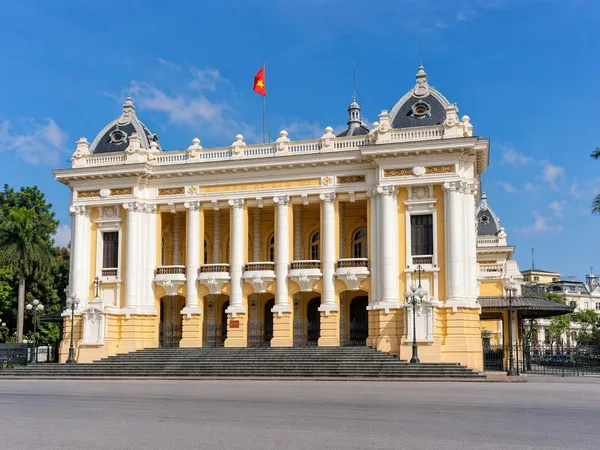
Hanoi Opera House stands at 1 Tràng Tiền Street, facing August Revolution Square, a short walk east of Hoàn Kiếm Lake. Its formal façade anchors the French Quarter’s wider streets and provides the clearest public view of the building. The square is public; the theatre itself is a working venue rather than a walk-in museum.
Why it matters
The French colonial administration built the theatre between 1901 and 1911 for European-style opera, theatre and concerts, initially serving a largely French audience. Its later history is equally important: the square was a key gathering place during the August Revolution of 1945, and the building hosted early sessions of Vietnam’s National Assembly in 1946.
This shift—from a colonial cultural project to a national political and artistic landmark—is central to reading the site. A major restoration in 1995–97 returned the building to use while retaining its historic character.
Architecture to notice
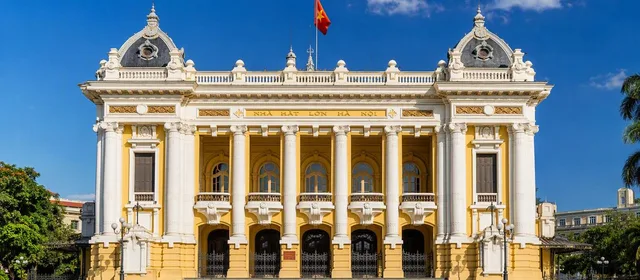
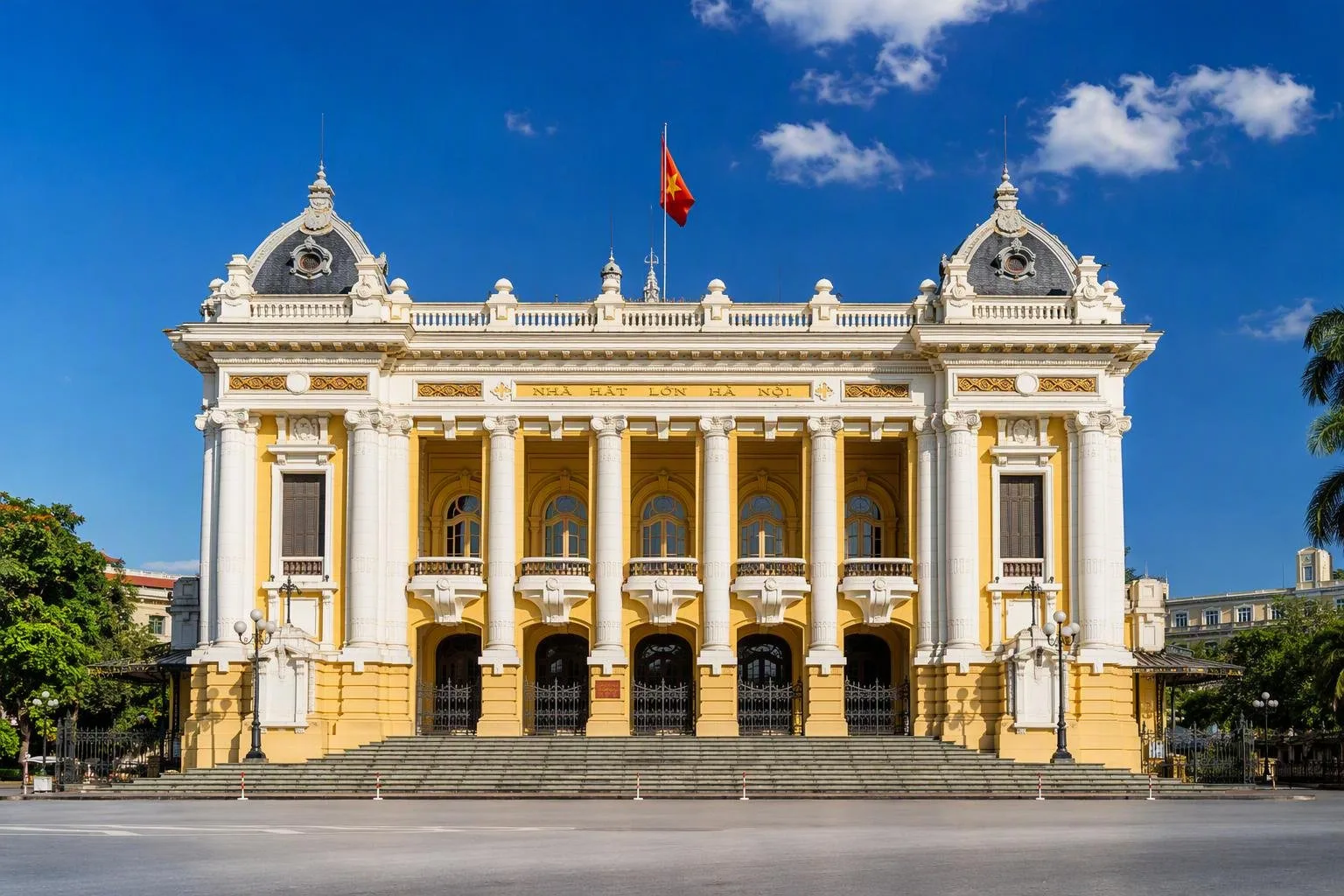
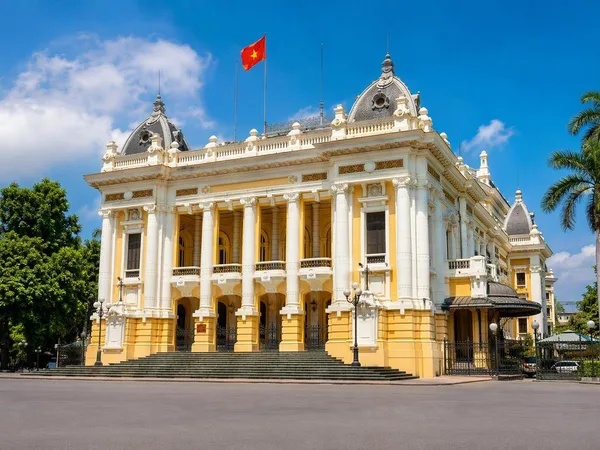
The design takes the Paris Opéra, the Palais Garnier, as its starting point, on a smaller scale and adapted to Hanoi. From the square, look for:
- The central portico: a ceremonial colonnaded entrance above the main steps.
- Balconies and arched windows: their ironwork and ornament give the façade its layered, European theatrical character.
- The roofline: a dark tiled roof and decorative upper storey complete the neoclassical composition.
When interior access is available, the principal rooms are the T-shaped staircase hall, the Mirror Room with its large mirrors and reception décor, and the horseshoe auditorium. The theatre has three seating levels and a capacity of 598.
Seeing it well
The exterior needs little time: cross the square for a full frontal view, then walk along Tràng Tiền to see how the theatre terminates the street. Early morning gives the clearest view before traffic and groups build; the lit façade is more dramatic after dark.
Interior entry is normally tied to a scheduled guided visit or a ticketed performance, not casual access. Programmes can include opera, ballet, orchestral music and Vietnamese performing arts. If attending an evening show, arrive before the stated start time and dress smart-casual. Photography rules inside depend on the event.
Getting there
From Hoàn Kiếm Lake, walk east along Tràng Tiền Street. Taxis and ride-hailing cars can drop passengers nearby, but traffic around the square is busy; use marked crossings and allow extra time at peak hours.
From the magazine
Stories about Hanoi Opera House
Editorial stories linked directly to Hanoi Opera House.
No stories about Hanoi Opera House have been published yet.
Routes from our editors
Travel through Hanoi Opera House
Editorial routes connecting Hanoi Opera House with other countries, cities and hotspots.
No routes through Hanoi Opera House have been published yet.
More in Vietnam
Related hotspots
Other cities, nature areas and places within Vietnam.

Hanoi
3 linked stories and routes
Hanoi Old Quarter
3 linked stories and routes

Sapa
1 linked stories and routes
Mekong Delta
1 linked stories and routes
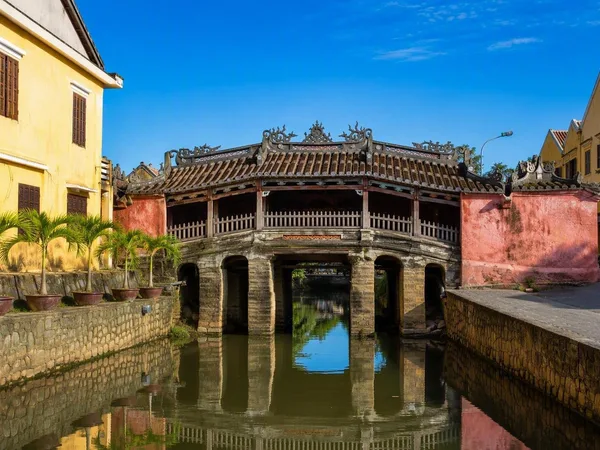
Hoi An
1 linked stories and routes
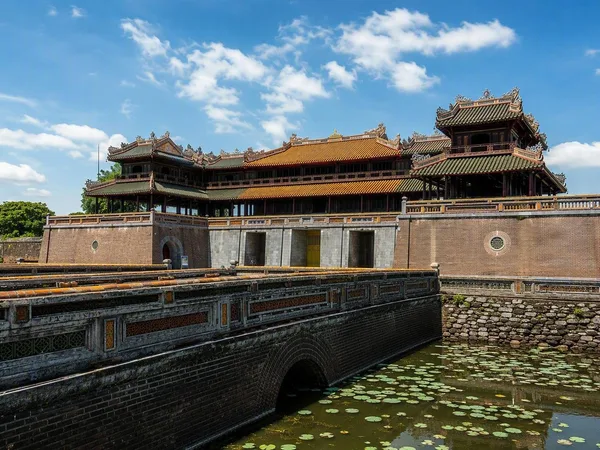
Huế
1 linked stories and routes
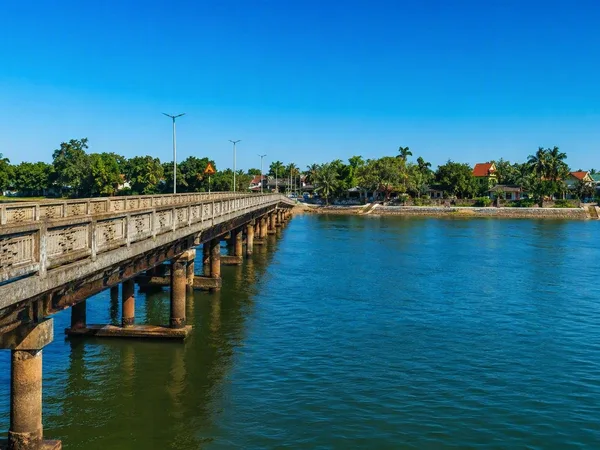
Cồn Hến, Huế
1 linked stories and routes
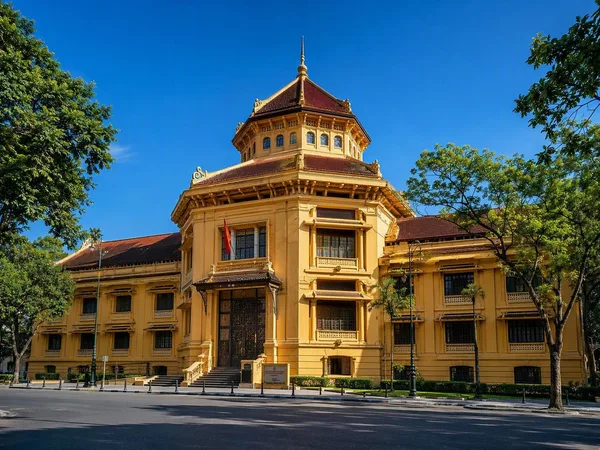
Vietnam National Museum of History
1 linked stories and routes
August Revolution Square
1 linked stories and routes

Hoàn Kiếm Lake
1 linked stories and routes
French Quarter, Hanoi
1 linked stories and routes

Mường Hoa valley
0 linked stories and routes

Ta Van Village
0 linked stories and routes

Ta Phin
0 linked stories and routes