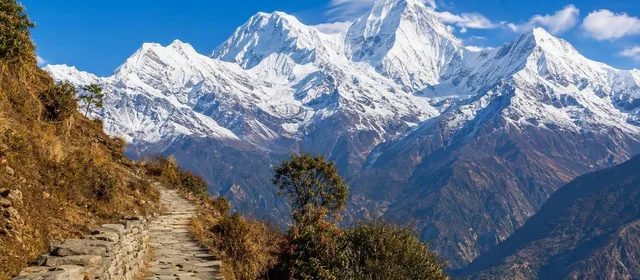
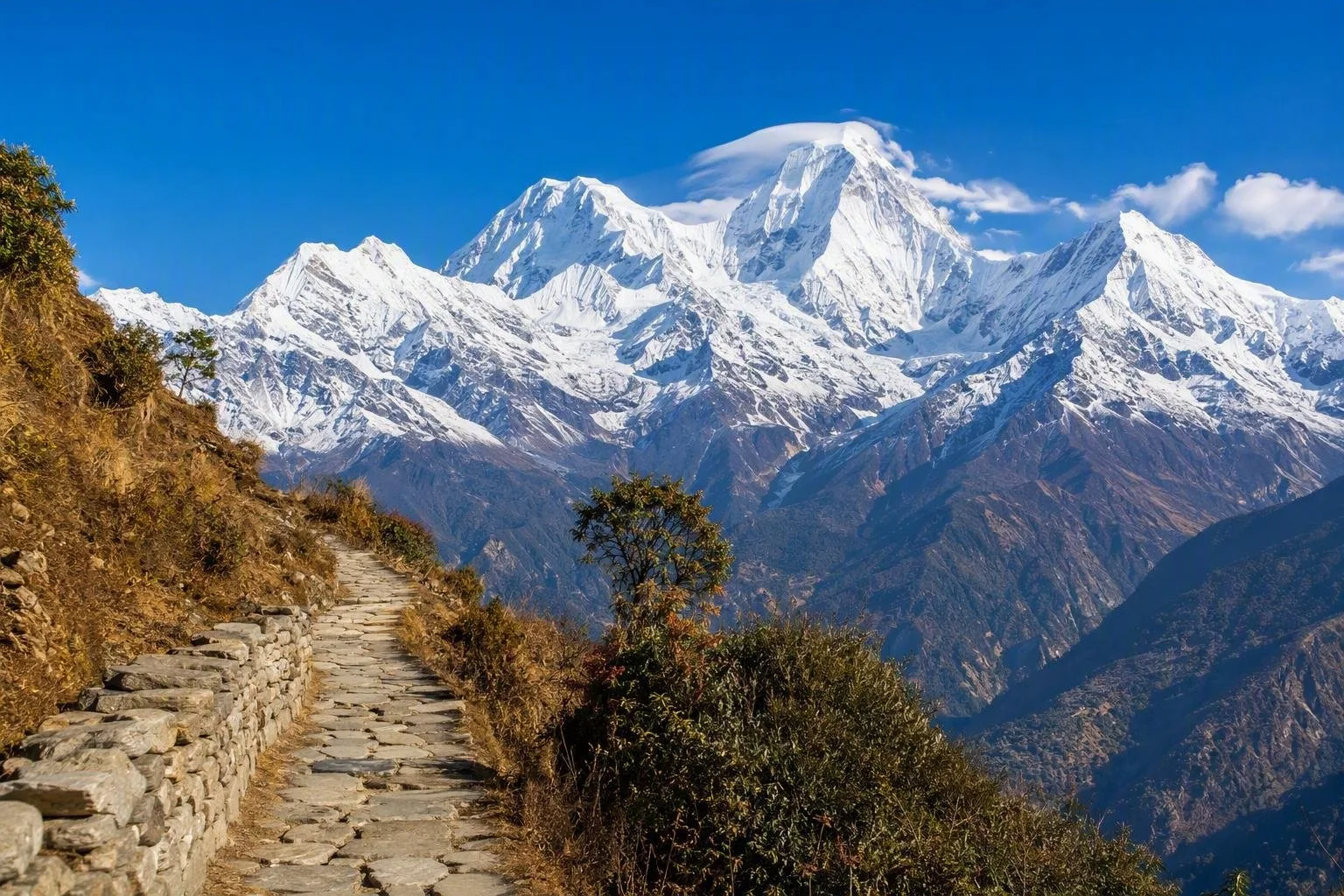
Look beyond Nepal’s snow peaks and the country becomes far more varied. Stone paths run through the Annapurna foothills past terraced fields and village houses, then climb towards high passes. In the Terai, sal forest, grassland and rice fields spread across the warmer southern plains. Rivers fed by Himalayan glaciers cut steep valleys as they run south towards India. These changes in height and climate bring mountain settlements, farming communities and old trading towns close together.
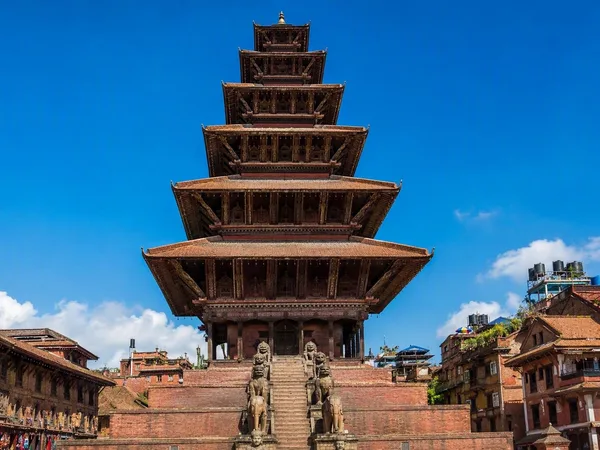
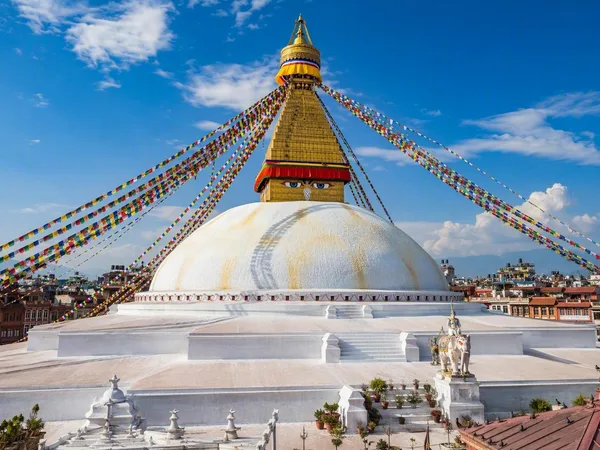
In the Kathmandu Valley, Newar craftspeople have built brick courtyards, tiered temples and palaces with carved timber windows for generations. Kathmandu, Patan and Bhaktapur each have old royal squares where workshops, shrines and rest houses stand among the monuments. At Swayambhunath, Hindu shrines sit beside Buddhist monuments. Pilgrims circle Boudhanath’s white stupa, while worshippers gather at Pashupatinath beside the Bagmati River.
Food gives daily life a steady rhythm. Dal bhat—rice, lentils, vegetables and pickles—appears at tables across the country. Newar cooks make bara lentil pancakes and spiced buffalo dishes, and momo dumplings are widely eaten. Further south, Lumbini marks the Buddha’s birthplace, while Chitwan’s river plains shelter one-horned rhinoceroses. Stay beyond the mountain viewpoints, and Nepal offers craft, farming, faith and generous food alongside its high trails.