
Sight · Nepal
Mangal Bahudwar (Tashi Gomang Stupa)
Mangal Bahudwar is a 19th-century Buddhist caitya in the Swayambhu complex in Kathmandu, Nepal, just southwest of the main stupa. Also called Tashi Gomang, it is a working shrine rebuilt after the 2015 earthquake.
Orientation
Mangal Bahudwar is a compact but unusually dense monument on the southwest side of Swayambhu Mahachaitya. Its Tibetan name, Tashi Gomang, identifies it as a stupa of many niches. Do not confuse it with the great white dome at the centre of the complex: this is a separate 19th-century caitya within the same sacred precinct.
The monument is worth seeking out for its form as much as its recovery story. It remains a place of worship, rather than an archaeological display.
What to look for
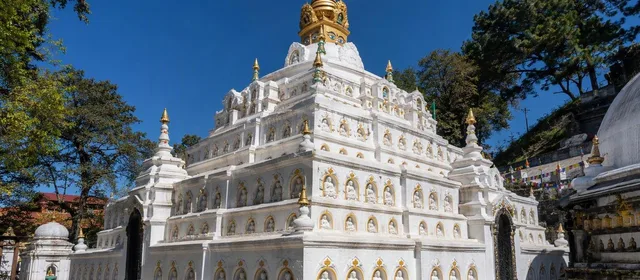
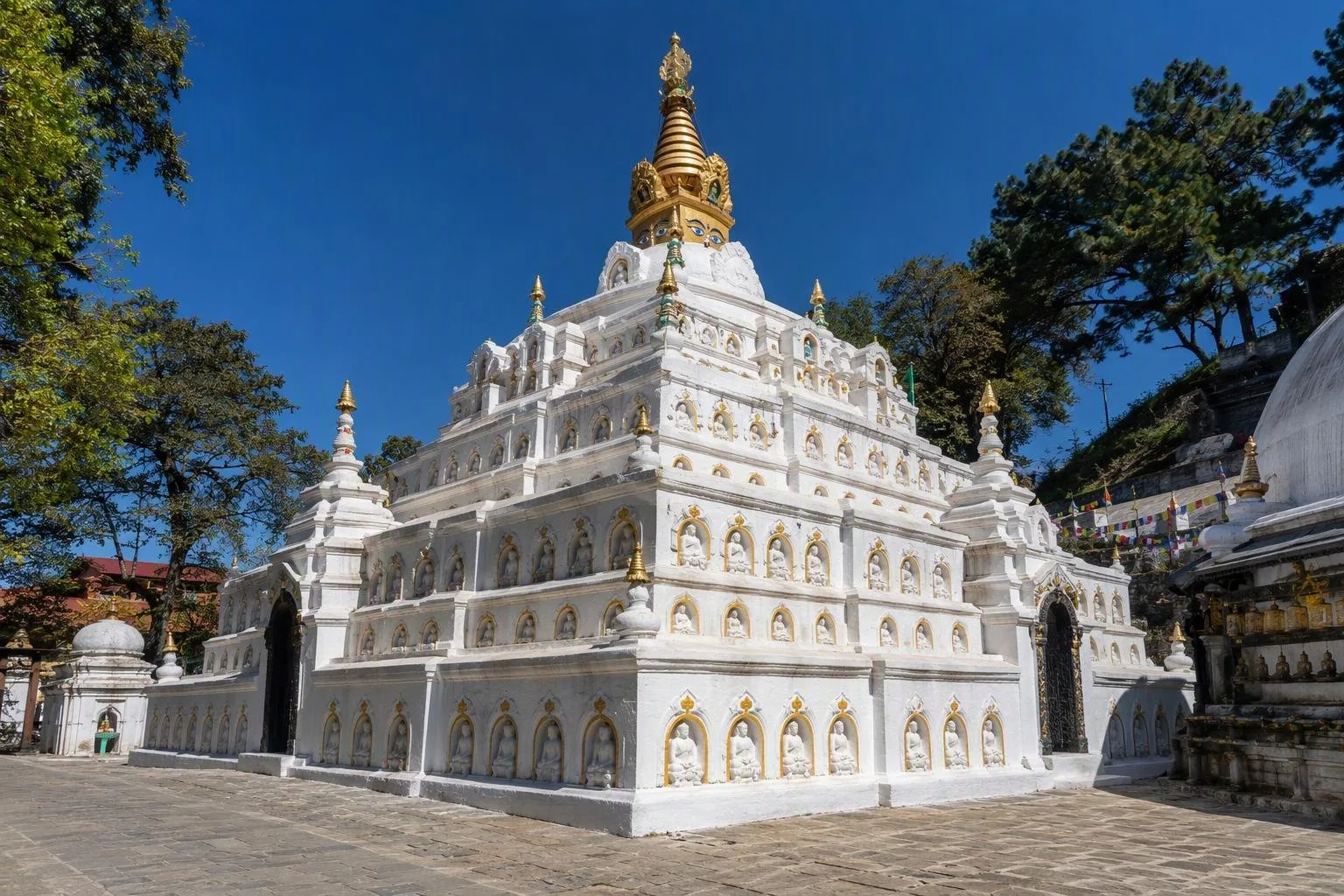
Walk around the exterior slowly. The rebuilt white stupa is organized around recessed niches containing an extensive iconographic programme; research recorded 124 niches across its façades. Look for the repeated rhythm of the small shrines, stone images and the gilded upper finish rather than trying to identify every deity at a glance.
Its design reflects a Tibeto-Newar connection: a Tibetan Tashi Gomang stupa type interpreted in Swayambhu’s Newar Buddhist setting. The abundance of niches gives the building a far more intricate surface than the main stupa nearby.
Collapse and reconstruction
The 2015 earthquakes caused Mangal Bahudwar to collapse completely. The debris contained more than 100,000 miniature votive stupas, known as tsha-tsha, alongside several hundred sacred and valuable objects, including stone images, beads, small bronze caityas, coins and a reliquary.
Each recoverable object was photographed, inventoried and conserved before being returned during reconstruction. The rebuilding was completed in December 2017. A Jeev-Nyas Puja on 23 August 2018 marked the return of the stupa’s divinity and its restoration to ritual use.
That process explains why this modest-sized shrine matters: its fabric is a carefully reassembled religious deposit, not a simplified replacement.
Finding it within Swayambhu
From the main Swayambhu stupa platform, head southwest and look for the niche-covered white caitya rather than following the main circuit toward the large dome. It sits within the busy shrine landscape, close enough to combine with a circuit of the central monument but distinct enough to merit a deliberate stop.
Keep clear of worshippers and offerings, and treat the niches and sculptures as religious objects. A slow exterior circuit is the useful way to see the monument; its important recovered contents are enclosed within the rebuilt caitya.
Best way to read the site
View Mangal Bahudwar in two passes. First, stand back to take in the stupa’s overall stepped silhouette and gilt finial. Then circle it to examine the patterned walls of niches. The contrast between its concentrated sculptural façade and the broad, smooth dome of Swayambhu Mahachaitya makes its specialized Tashi Gomang form immediately legible.
From the magazine
Stories about Mangal Bahudwar (Tashi Gomang Stupa)
Editorial stories linked directly to Mangal Bahudwar (Tashi Gomang Stupa).
No stories about Mangal Bahudwar (Tashi Gomang Stupa) have been published yet.
Routes from our editors
Travel through Mangal Bahudwar (Tashi Gomang Stupa)
Editorial routes connecting Mangal Bahudwar (Tashi Gomang Stupa) with other countries, cities and hotspots.
No routes through Mangal Bahudwar (Tashi Gomang Stupa) have been published yet.
More in Nepal
Related hotspots
Other cities, nature areas and places within Nepal.
Durbar Square, Kathmandu
3 linked stories and routes
Kathmandu
2 linked stories and routes
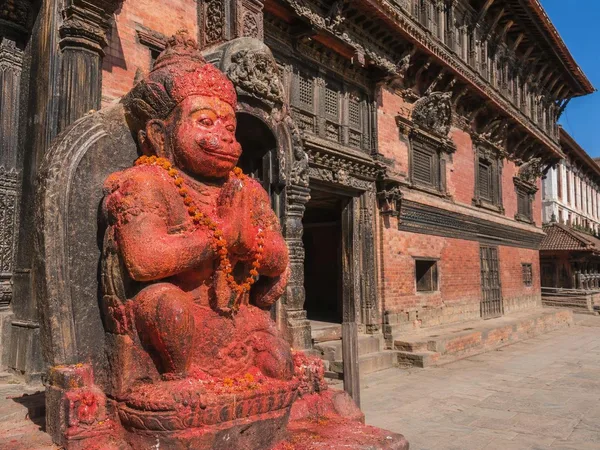
Hanuman Dhoka Durbar Square
2 linked stories and routes
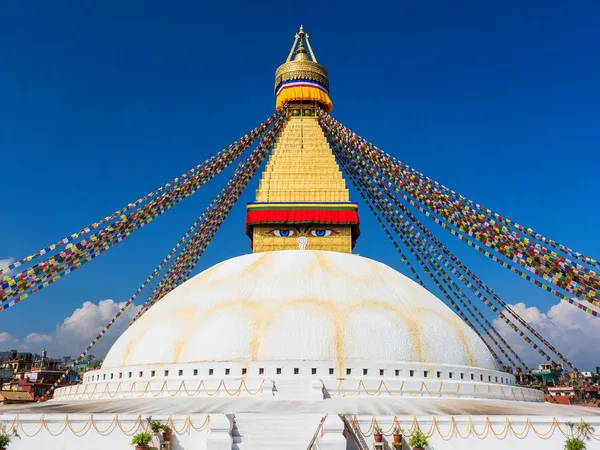
Boudhanath
1 linked stories and routes
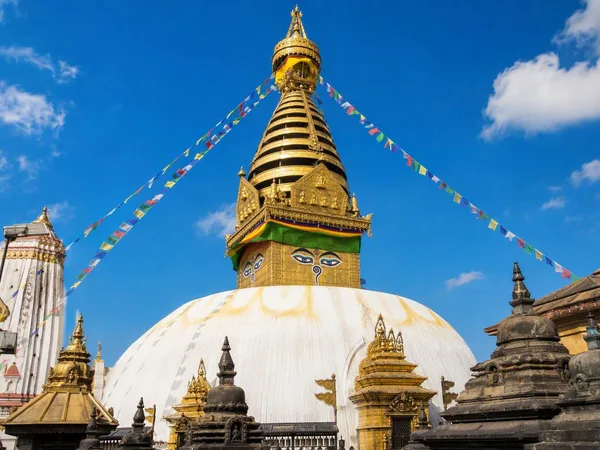
Swayambhunath Stupa
1 linked stories and routes
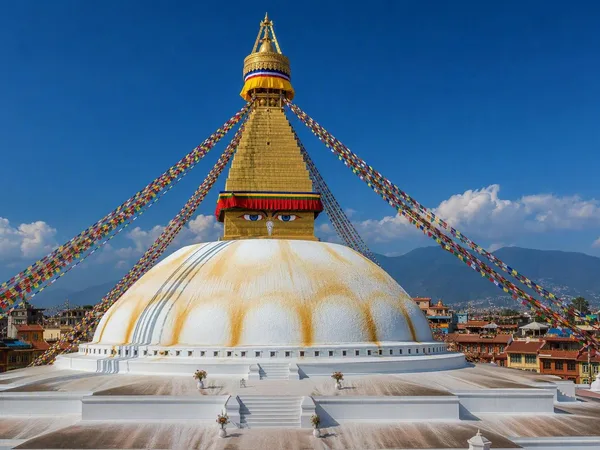
Kathmandu Valley
1 linked stories and routes
Kasthamandap
1 linked stories and routes