
Sight · Nepal
Boudhanath
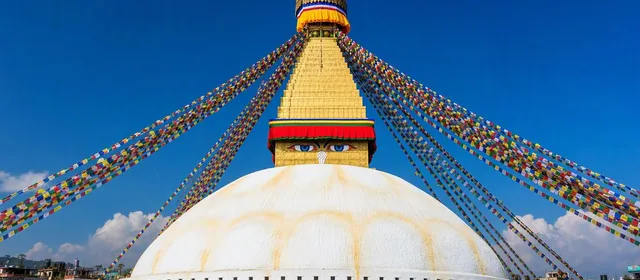
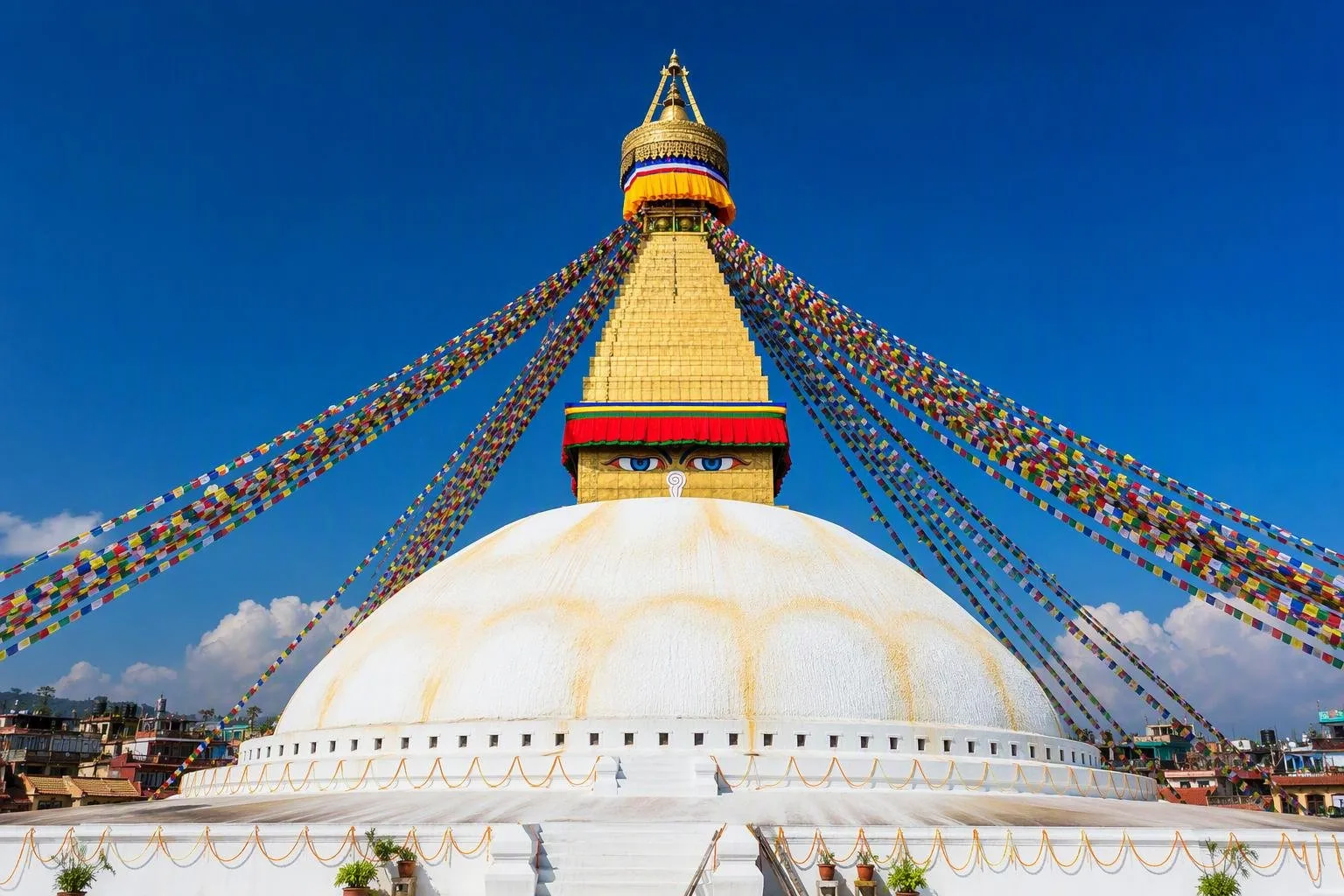
Boudhanath is Kathmandu’s great Buddhist stupa, in the Boudha district about 8 km east of the city centre. Its white dome, gilded spire and circular pilgrimage path anchor Nepal’s principal centre of Himalayan Buddhism.
Read the monument
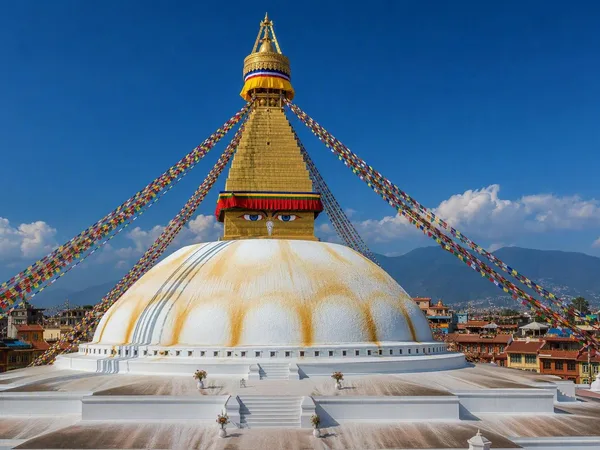
Boudhanath is the largest stupa in the Kathmandu Valley and one of the seven monument zones of the Kathmandu Valley World Heritage property. Its architecture is deliberately legible: a broad, whitewashed hemisphere carries a gilded square harmika, painted on each face with Buddha eyes, and a tapering spire of thirteen tiers.
The stepped base is conceived as a three-dimensional mandala. Look closely along the perimeter for the rows of prayer wheels, then step back into the surrounding square to take in the monument’s full scale. The stupa stands on the historic route towards Tibet; the lanes around it remain a centre of Tibetan Buddhist life, with monasteries woven into the neighbourhood.
Walk the kora
The essential experience is the kora, the circumambulation route around the stupa. Join the flow and keep the monument on your right: the direction is clockwise. Prayer wheels are turned in the same direction.
- Walk steadily and move to the inside edge before stopping.
- Keep voices low around worshippers and butter-lamp areas.
- Ask before taking close photographs of monks, pilgrims or ceremonies.
- Dress modestly for monastery visits; remove shoes where required at shrines or terraces.
This is an active religious site, not an architectural backdrop. Do not climb on sacred structures or obstruct the circuit.
The restored spire
The 2015 earthquake badly damaged the gilded upper structure, while the dome largely survived. The cracked spire was dismantled, rebuilt using traditional materials including brick, limestone and surkhi mortar, then regilded. Boudhanath reopened in 2016.
That restoration explains the crisp contrast between the white dome and the gold upper tiers. The most recognisable details for a close look are the four pairs of eyes, the gilded rings rising above them and the prayer flags radiating from the summit.
Arrival, entry and timing
Boudhanath lies in eastern Kathmandu, roughly 8 km from the centre. Take a taxi or local bus to Boudha, then enter the pedestrian-focused stupa square on foot. Allow at least 90 minutes for one unhurried circuit and time in the surrounding lanes.
Entry: foreign visitors pay NPR 400; SAARC nationals pay NPR 100. Nepali visitors and children under ten enter free. Pay at the entry point and keep the ticket with you.
The site is listed as accessible 24 hours. Early morning and late afternoon are the most useful times to see the kora in motion and to avoid the harshest midday light. Monasteries keep their own opening arrangements, so treat them as working religious institutions rather than guaranteed attractions.
From the magazine
Stories about Boudhanath
Editorial stories linked directly to Boudhanath.
No stories about Boudhanath have been published yet.
Routes from our editors
Travel through Boudhanath
Editorial routes connecting Boudhanath with other countries, cities and hotspots.
No routes through Boudhanath have been published yet.
More in Nepal
Related hotspots
Other cities, nature areas and places within Nepal.
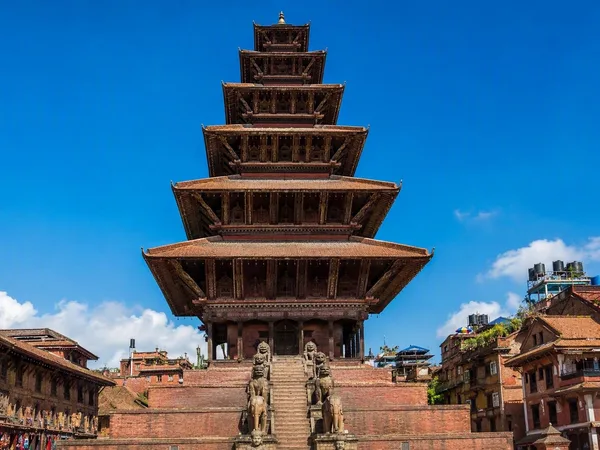
Durbar Square, Kathmandu
3 linked stories and routes
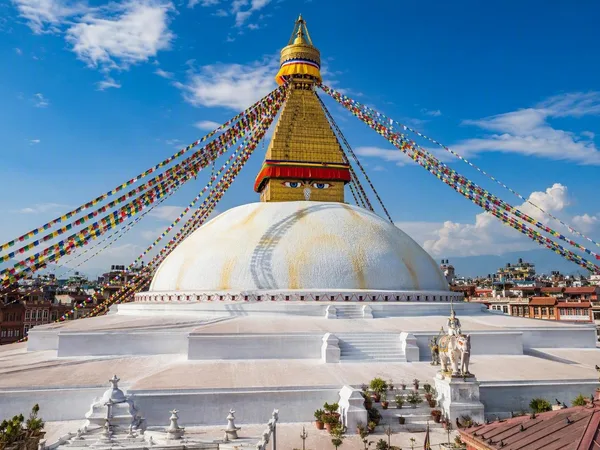
Kathmandu
2 linked stories and routes
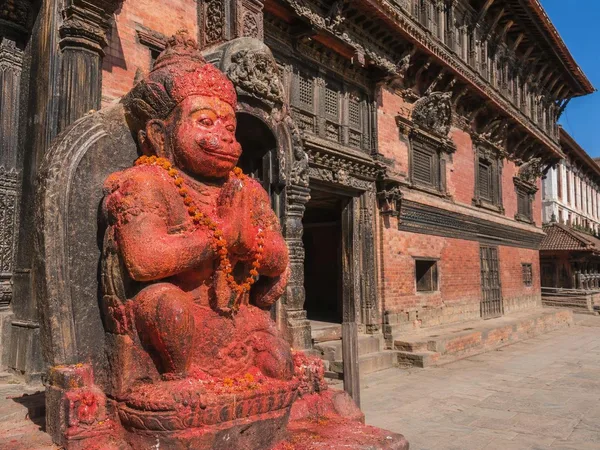
Hanuman Dhoka Durbar Square
2 linked stories and routes
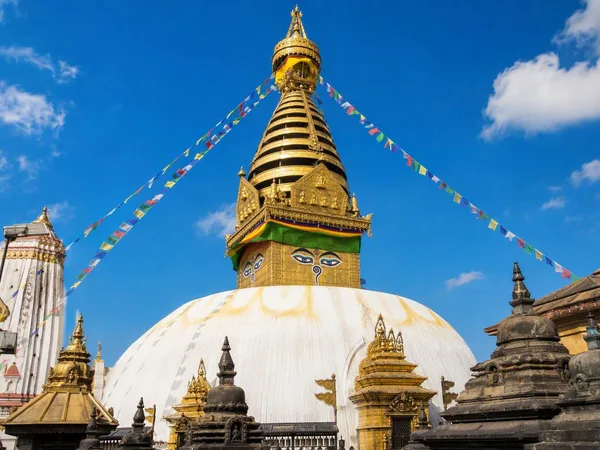
Swayambhunath Stupa
1 linked stories and routes
Kathmandu Valley
1 linked stories and routes
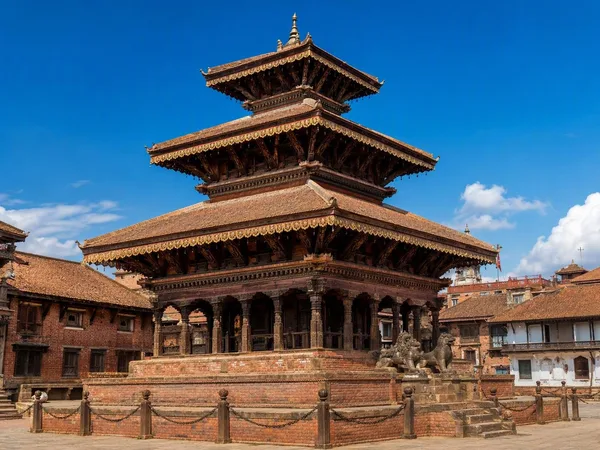
Kasthamandap
1 linked stories and routes
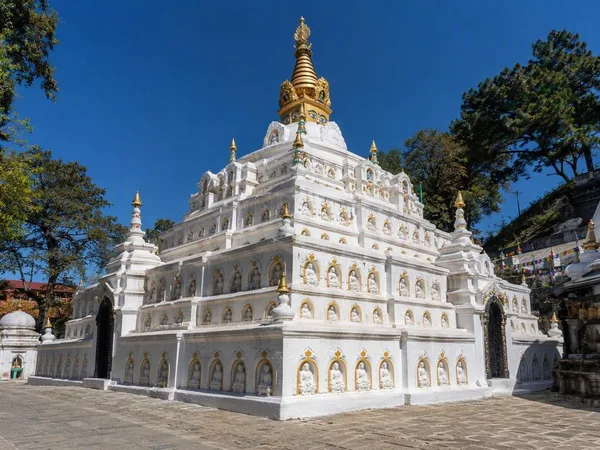
Mangal Bahudwar (Tashi Gomang Stupa)
1 linked stories and routes