
Sight · Nepal
Swayambhunath Stupa
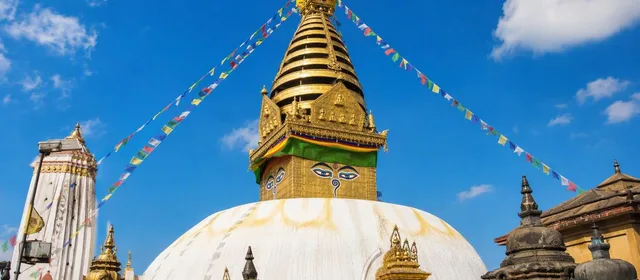
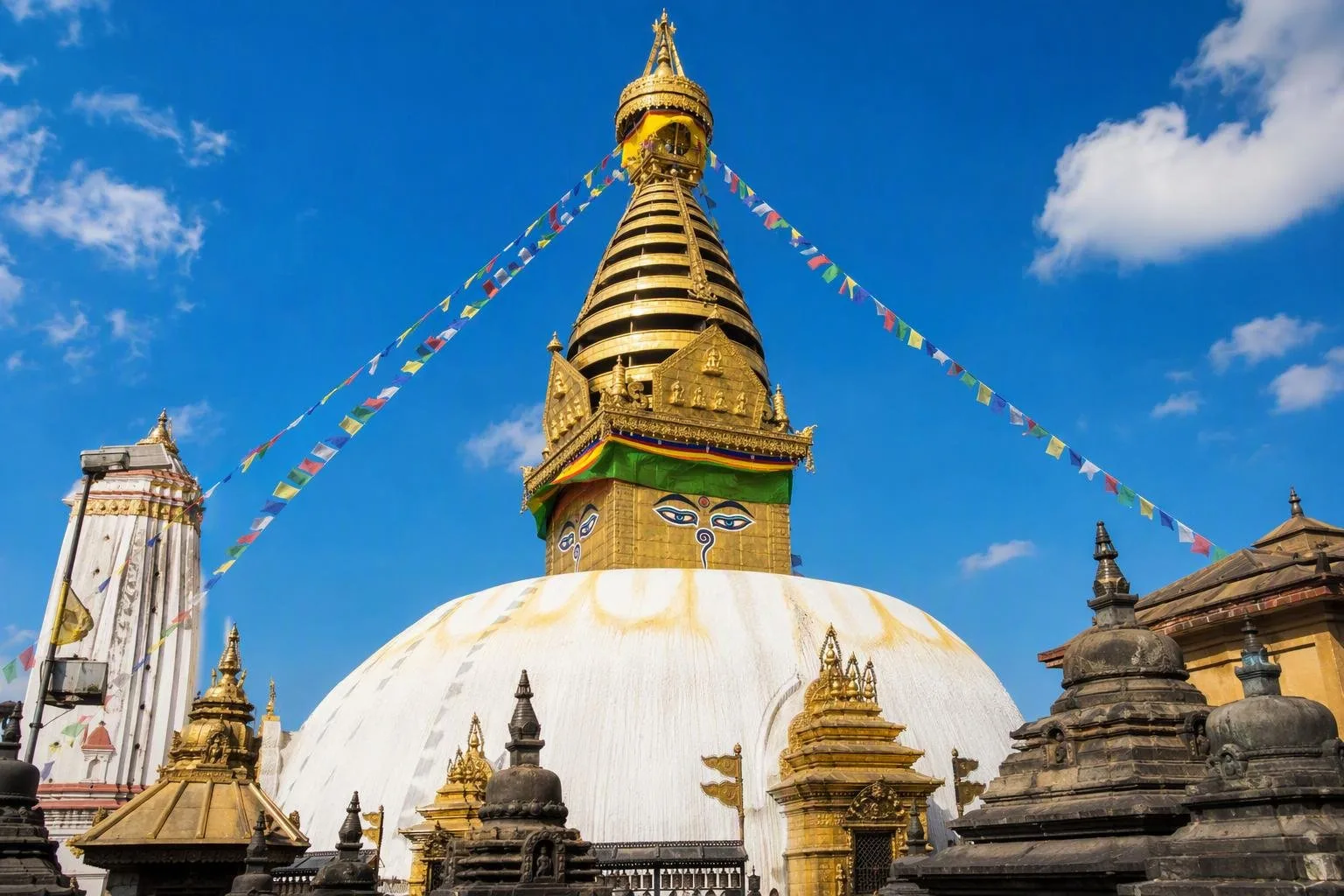
Swayambhunath is an ancient Buddhist stupa on a hill 3 km west of Kathmandu, Nepal. Its white dome, gilded eyes and dense ring of shrines form the oldest Buddhist monument in the Kathmandu Valley.
The hilltop stupa
Swayambhunath—also called Swayambhu, meaning “self-existent”—stands on a wooded hill above western Kathmandu. It is one of the seven monument zones of the Kathmandu Valley World Heritage Site and a working pilgrimage place for both Buddhists and Hindus.
The central stupa is the essential sight: a whitewashed hemisphere supports a gilded cube painted with Buddha eyes on all four sides, then a tapering stack of thirteen gilded rings. The hilltop also gives a broad view across Kathmandu and its surrounding ridges.
What to see
Start with the main stupa and walk around it clockwise, following the direction used by worshippers. Prayer wheels ring the base; turn them gently in the same direction if you take part.
Make time for these features around the summit:
- Great Vajra: the large gilded ritual thunderbolt at the head of the eastern stairway.
- Harati Temple: a pagoda shrine to the protector of children, showing the site’s intertwined Buddhist and Hindu traditions.
- Shrines and monasteries: small chaityas, images and religious buildings fill the terraces rather than sitting apart in a formal museum layout.
- Valley outlook: step to the edges of the hilltop terrace for the city panorama.
The 2015 earthquake damaged several monuments in the complex, and restoration returned many of its smaller structures as well as its ritual routes.
Getting up the hill
Swayambhunath is about 3 km west of Kathmandu. A taxi is the direct option from central districts.
There are two useful approaches:
- Eastern steps: the traditional, steep stone ascent. It delivers you beside the Great Vajra and is the more dramatic arrival.
- Western motor road: vehicles can go almost to the top, leaving a short walk. Use it if steep stairs are unsuitable, or take the road up and walk down the eastern side.
Entry is paid at the site. The listed rate for non-SAARC foreign visitors is NPR 200; SAARC nationals pay NPR 50, while Nepali visitors and children under ten enter free.
Visiting respectfully
This is a religious site, not a backdrop. Keep clear of worshippers, avoid touching offerings and follow any photography restrictions at individual shrines. The hill is known for its resident monkeys; they are wild animals. Keep food and loose items secured, do not feed or approach them, and give them space on the stairs.
Buddha’s birthday, usually in May, brings the largest crowds. Earlier in the day is practical for a cooler climb and clearer views before haze builds over the valley.
From the magazine
Stories about Swayambhunath Stupa
Editorial stories linked directly to Swayambhunath Stupa.
No stories about Swayambhunath Stupa have been published yet.
Routes from our editors
Travel through Swayambhunath Stupa
Editorial routes connecting Swayambhunath Stupa with other countries, cities and hotspots.
No routes through Swayambhunath Stupa have been published yet.
More in Nepal
Related hotspots
Other cities, nature areas and places within Nepal.
Durbar Square, Kathmandu
3 linked stories and routes
Kathmandu
2 linked stories and routes
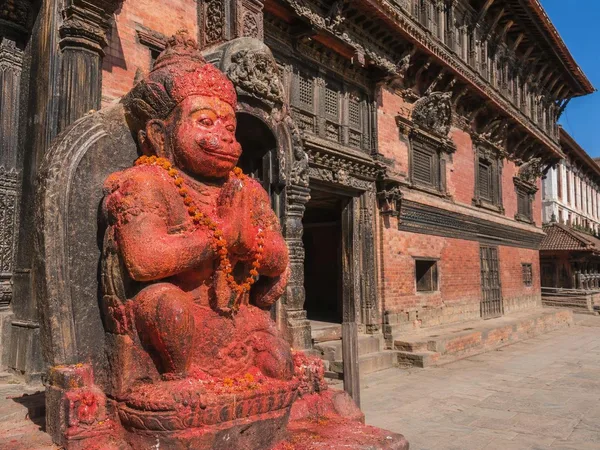
Hanuman Dhoka Durbar Square
2 linked stories and routes
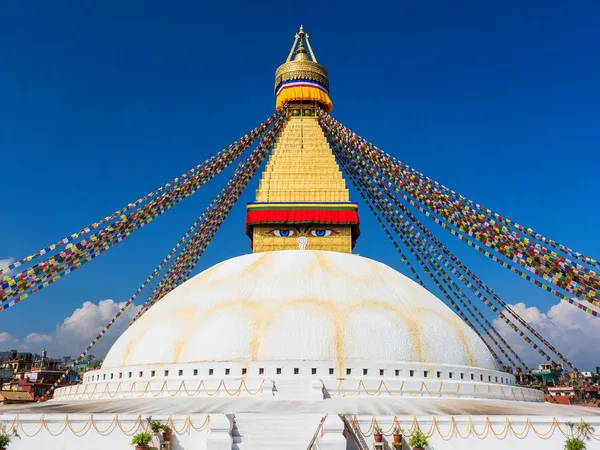
Boudhanath
1 linked stories and routes
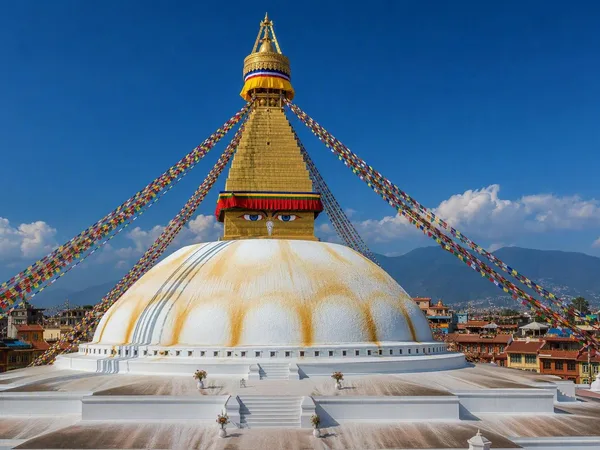
Kathmandu Valley
1 linked stories and routes
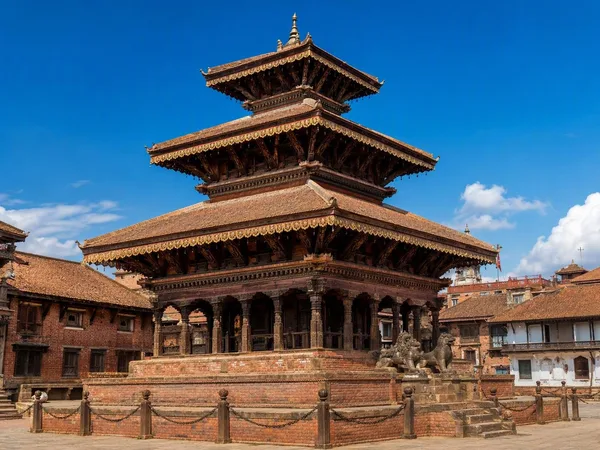
Kasthamandap
1 linked stories and routes
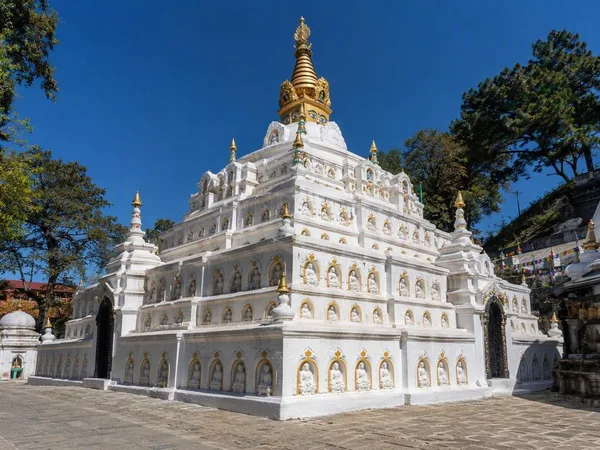
Mangal Bahudwar (Tashi Gomang Stupa)
1 linked stories and routes