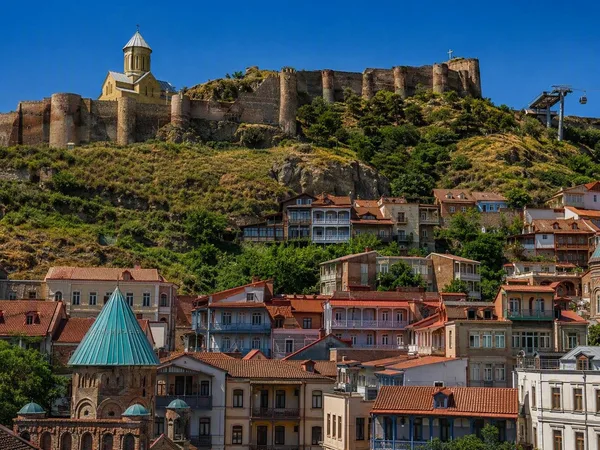
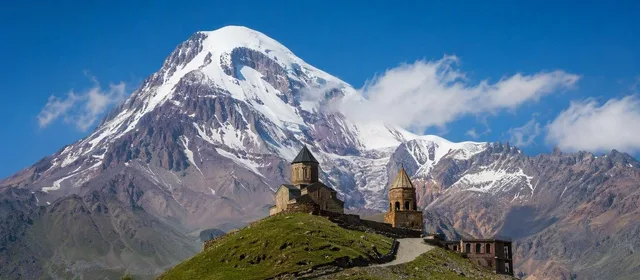
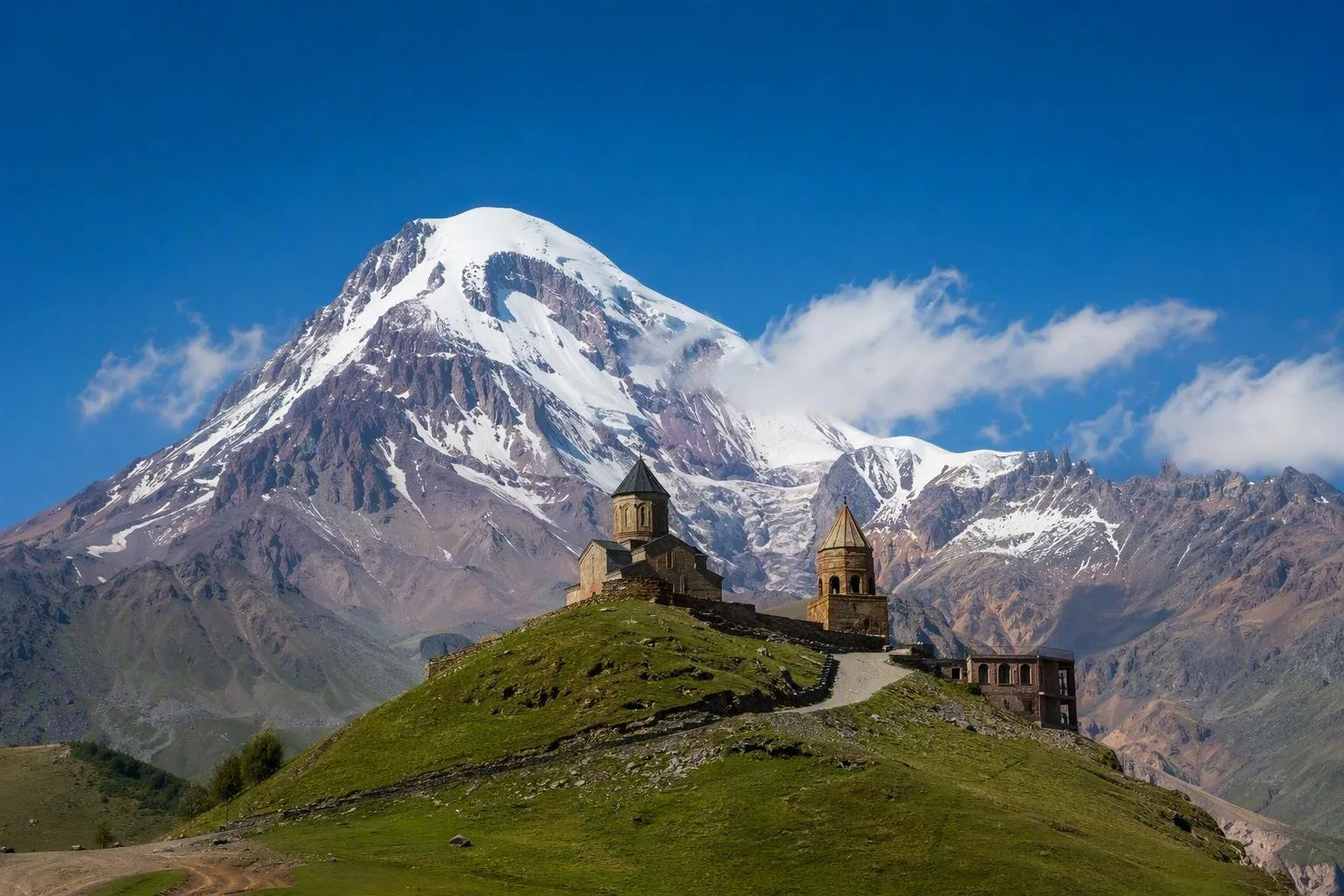
Look beyond Tbilisi and Georgia quickly changes shape. The Greater Caucasus rises above the northern valleys, where Gergeti Trinity Church stands on a ridge below Mount Kazbek and Svaneti villages cluster around medieval stone towers. In the capital, wooden balconies lean over old lanes, bathhouses line the sulphur district, and Soviet apartment blocks stand near new galleries and wine bars. Traders, armies and empires crossed the routes between the Black Sea and the Caspian for centuries. Their passage left marks in the cities and valleys, while mountain communities kept strong local customs.
Georgia’s churches and monasteries give the country much of its visual character, but they sit in strikingly different settings. Mtskheta holds some of the country’s oldest Christian sites. At Vardzia, rooms, chapels and passageways cut into a cliff recall a medieval settlement built for both worship and defence.
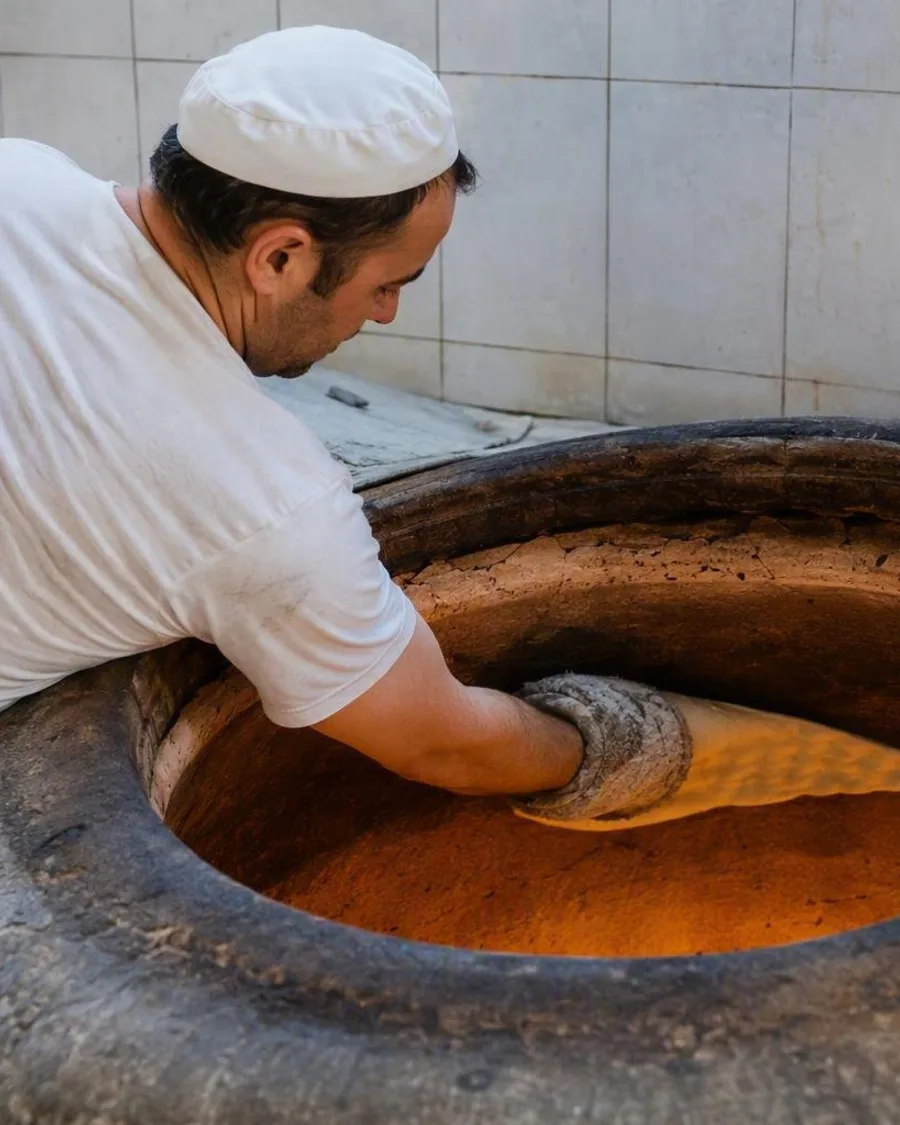
Food brings regional habits to the table. Cooks shape khinkali around meat, mushrooms or cheese, bake khachapuri with melted cheese, and dress vegetables with walnuts, garlic and herbs. In Kakheti, winemakers ferment grapes in qvevri, large clay vessels buried in the ground. On the Black Sea coast, Adjara adds subtropical produce and Ottoman-era flavours to the mix.
Tbilisi offers an easy first taste of these dishes, wines and conversations, but the smaller towns give them more room. Stay for a long meal, raise a glass when the tamada calls for a toast, and leave time for the roads into the valleys and mountains.