City · Georgia
Tbilisi
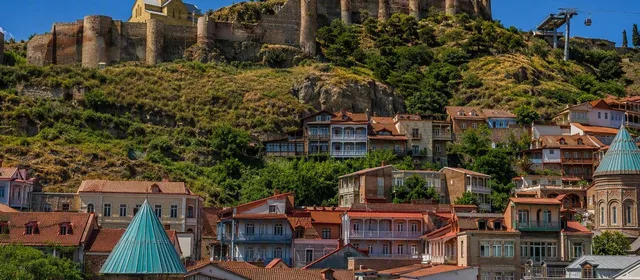
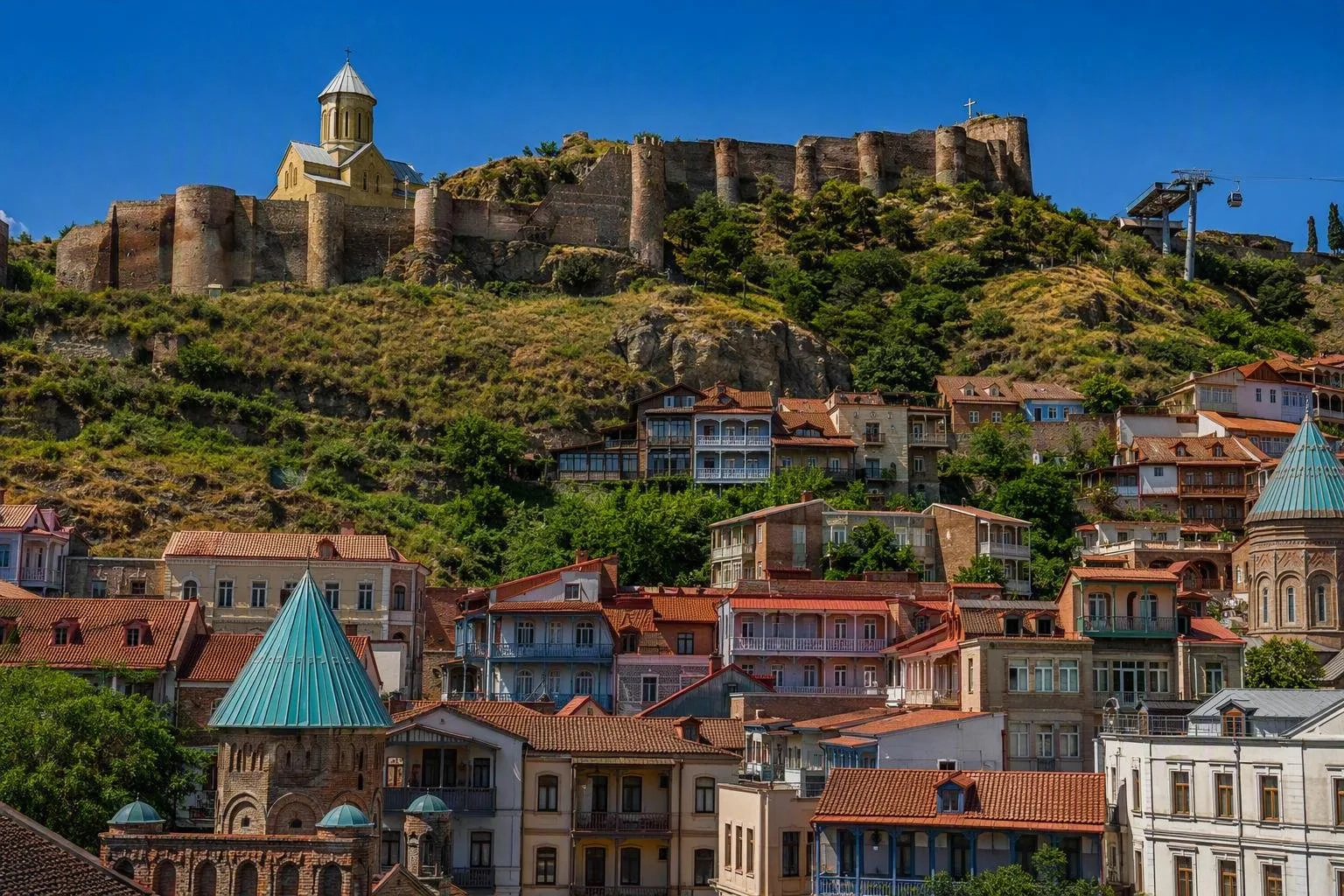
Georgia’s capital occupies a tight valley on the Mtkvari River, where Old Town lanes, sulfur baths and Narikala Fortress meet beneath the hills. Its streets show the accumulated imprint of trade, conquest and 19th-century expansion.
Orientation
Tbilisi is Georgia’s capital, set on the Mtkvari River between ridges and slopes. Its early position on routes across the Caucasus made it a strategic trading city; successive Georgian, Persian, Arab, Russian and Soviet periods remain legible in the street plan and architecture.
Use Old Tbilisi as the starting point. The historic core is compact but steep: it runs from Freedom Square towards Meidan, Abanotubani and the foot of Narikala. Across the river, Rike Park and the Metekhi cliff give the clearest view back towards the old quarter.
Old Tbilisi: read the layers
Walk the lanes rather than treating the area as a checklist. Courtyard houses and carved wooden balconies sit beside churches, a mosque, synagogues and 19th-century brick buildings. The city’s distinctive domestic architecture uses balconies and courtyards as extensions of the street.
Make time for:
- Sioni Cathedral and Anchiskhati Basilica, two anchors of the historic religious landscape.
- Meidan and Shardeni, for the dense old-town street pattern and restored façades.
- Metekhi Church, on the rocky bluff above the Mtkvari.
- The Bridge of Peace, a contemporary pedestrian crossing linking the old core with Rike Park.
Churches are active places of worship: cover shoulders and knees, and keep visits quiet during services.
Baths and fortress
Abanotubani is the reason for Tbilisi’s name, derived from the Georgian word for “warm.” Its low brick domes mark bathhouses supplied by sulfur springs. Choose either a gender-separated communal bath or a private room; private rooms suit mixed groups. The traditional kisa scrub is vigorous, not a gentle spa treatment. Bring water and take breaks from the heat.
Above the district, Narikala Fortress follows the ridge. Its defensive role and repeated rebuilding explain why it is more powerful as a city overlook than as a complete castle interior. Take the cable car from Rike Park for a short ascent and views over the river, rooftops and bath domes; descend on foot only if you are comfortable with uneven, sloping ground.
Beyond the old core
Follow Rustaveli Avenue from Freedom Square for Tbilisi’s civic and cultural axis. It concentrates major museums, theatres and late-imperial or early-20th-century façades. The Georgian National Museum is the practical choice for archaeology and national history.
For a broader view, take the funicular to Mtatsminda. The hill looks directly across the river valley and makes the city’s terrain intelligible: Old Tbilisi sits low by the water, while later districts spread along both banks and up the slopes.
Getting around
The Old Town is best on foot, but cobbles, stairs and sharp gradients limit wheelchair and stroller access. The metro has two lines; Freedom Square, Rustaveli and Avlabari are the most useful central stops. Municipal buses and metro accept contactless bank cards or a rechargeable Metromoney card, with a standard fare and transfer window.
From Tbilisi International Airport, bus 337 serves the city; its exact route can change with roadworks. For a direct trip, use a ride-hailing app rather than negotiating with a street taxi. In summer, walk hills and Old Town lanes early or late in the day; rain makes the stone paving slippery.
From the magazine
Stories about Tbilisi
Editorial stories linked directly to Tbilisi.
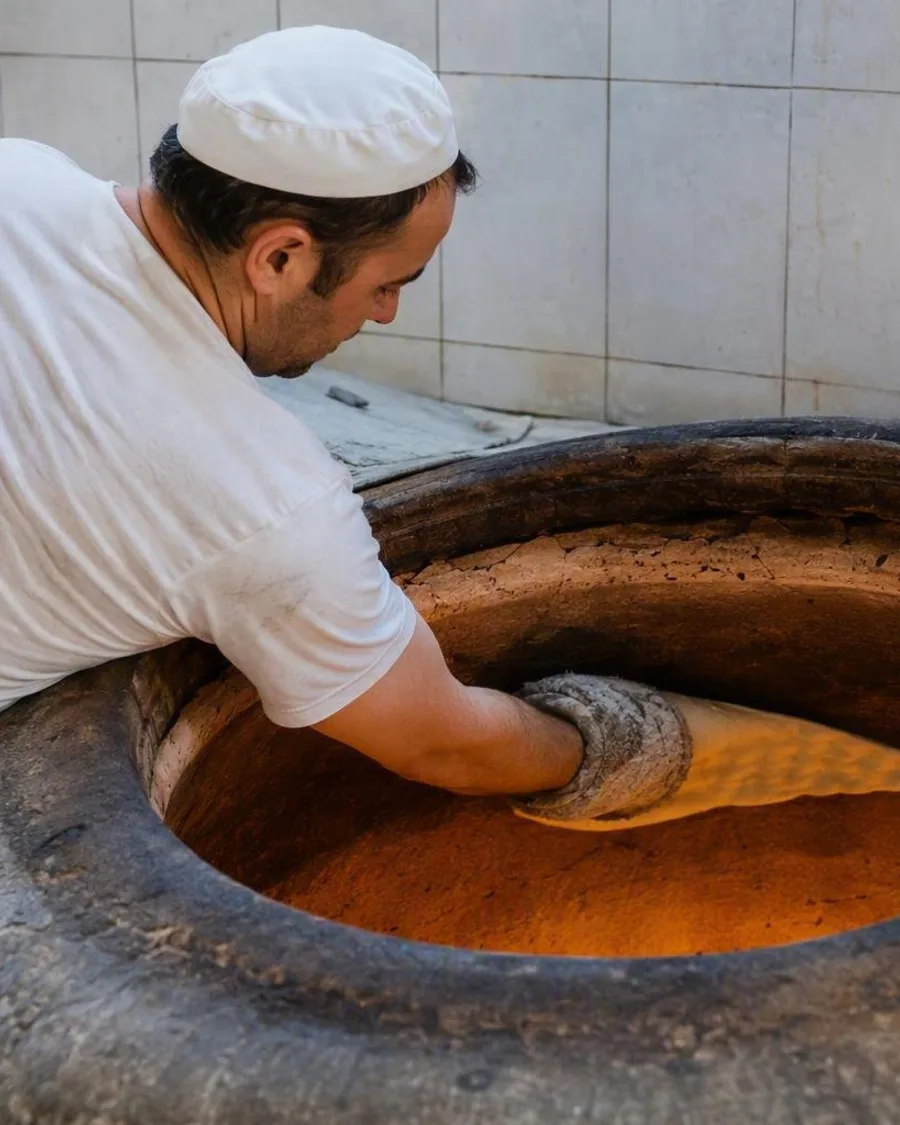
Ten places where local bread is still made by hand
Bread shows the daily work behind a neighbourhood meal: a household’s marked dough at a Marrakesh communal oven, dark rye beside sourdough in Copenhagen, and bolillos from brick ovens in Mexico City. These ten working addresses and market settings sell local bread made through distinct local practices.
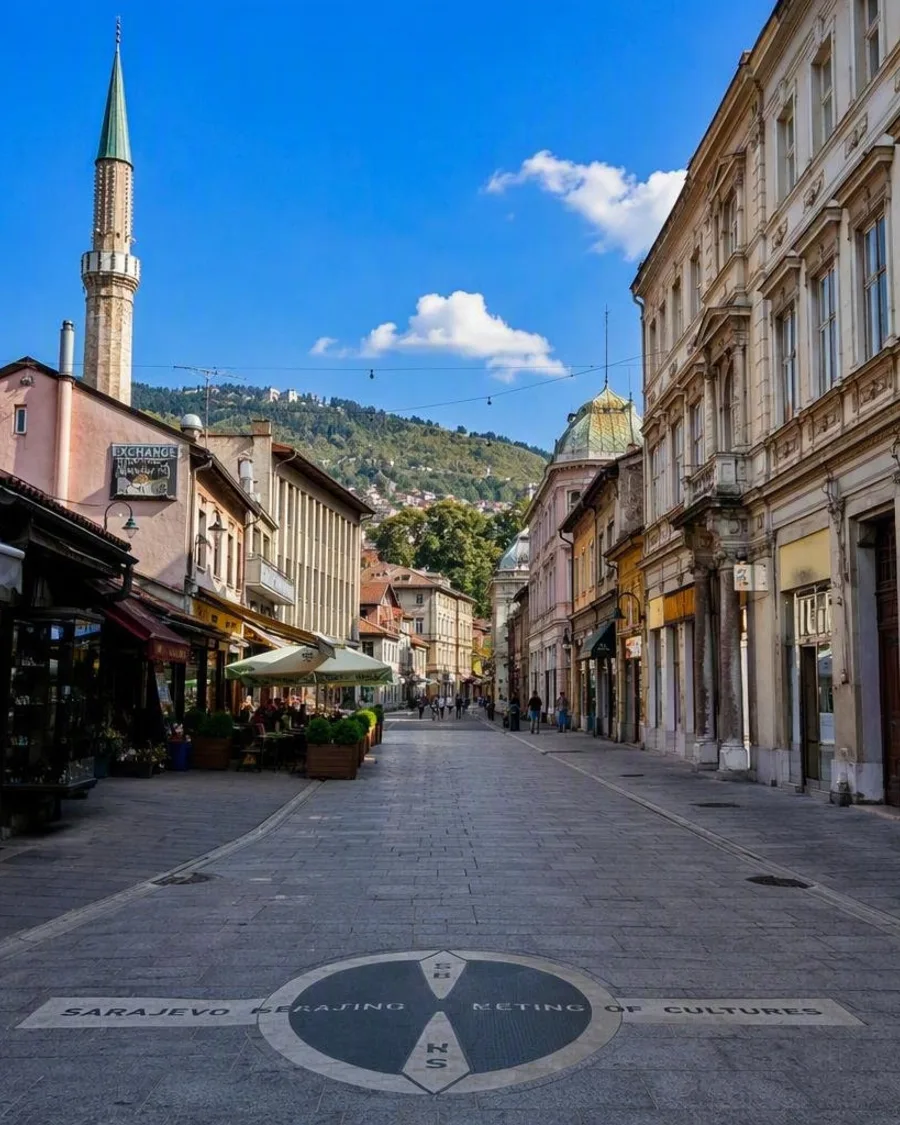
Eight cities where cultures still share the street
A Hindu temple and a mosque stand among the shophouses of Singapore’s Chinatown. In Sarajevo, a short walk runs from an Ottoman bazaar to Habsburg-era façades. In these eight cities, history still shapes worship, trade, food and ordinary street life.
Routes from our editors
Travel through Tbilisi
Editorial routes connecting Tbilisi with other countries, cities and hotspots.
No routes through Tbilisi have been published yet.
More in Georgia
Related hotspots
Other cities, nature areas and places within Georgia.