Eight cities where cultures still share the street
A Hindu temple and a mosque stand among the shophouses of Singapore’s Chinatown. In Sarajevo, a short walk runs from an Ottoman bazaar to Habsburg-era façades. In these eight cities, history still shapes worship, trade, food and ordinary street life.
This is not a ranking of the world’s “most diverse” cities. Each entry meets the same test: at least three traditions remain visible in public space; they have historical depth; they continue in language, worship, food, trade or neighbourhood life; and their traces lie close enough together to read from the street. Historical continuity carries the most weight, with physical proximity deciding close calls. A list centred on migration numbers, contemporary art or food alone would look different.
8. Tbilisi: faiths and bathhouses beside the Mtkvari
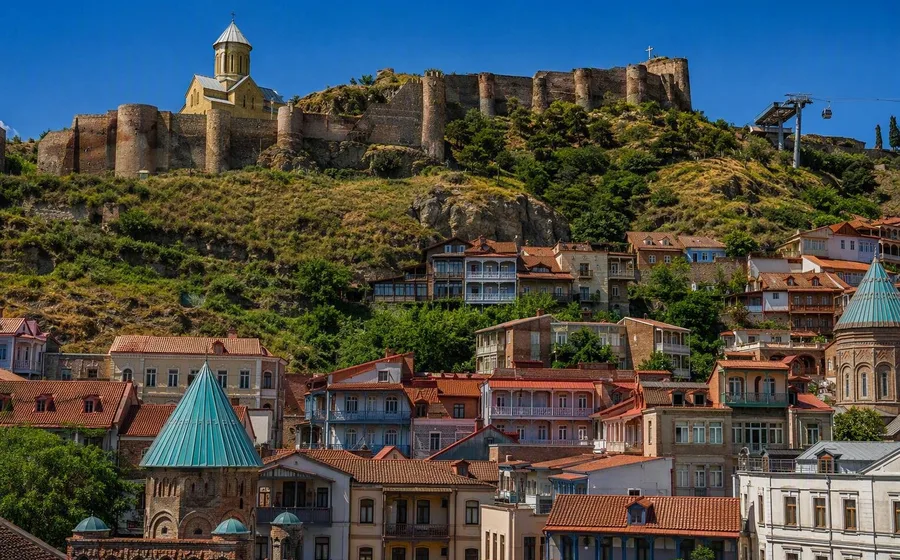
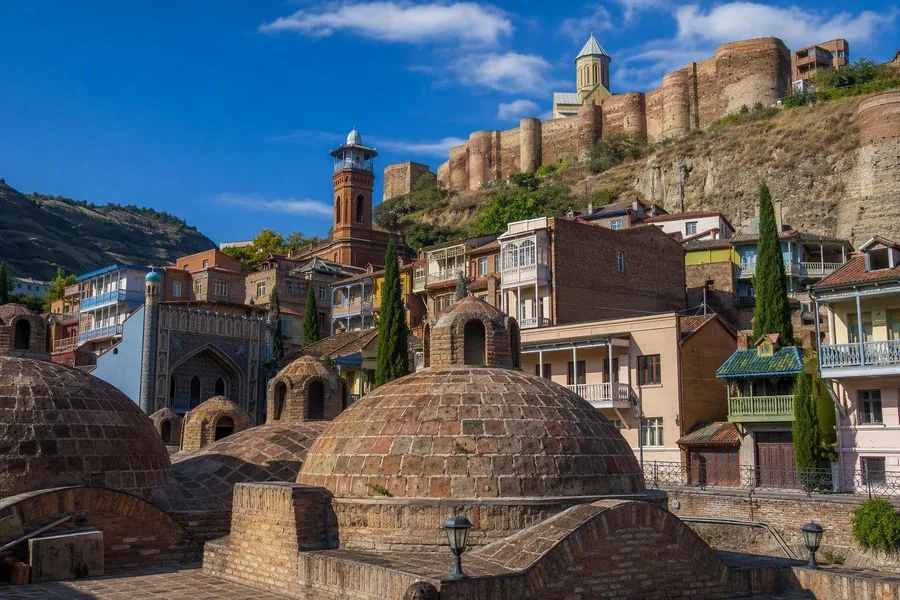 Brick-domed sulphur baths rise among old houses in Tbilisi’s Abanotubani district.
Tbilisi grew at a narrow point on the Mtkvari where travellers could cross the river and rulers could control routes between Europe and Asia. Silk Road trade brought merchants, caravanserais, bazaars and religious communities; repeated conquests brought rebuilding under different powers.
The river still provides the clearest route through those layers. Brick domes cover the sulphur baths of Abanotubani, while timber balconies and open galleries link houses, courtyards and steep streets. Near Meidan, the Moorish-influenced Great Synagogue stands near the former Armenian bazaar and Persian bath district. The red Juma Mosque, where Sunni and Shia Muslims worship together, sits below Narikala. Georgian Orthodox, Armenian and Catholic churches also stand in the old centre.
Tbilisi takes eighth place because its building fabric holds exceptional depth, though its traditions are less concentrated than those higher on this list.
7. Melaka: a port built in successive layers
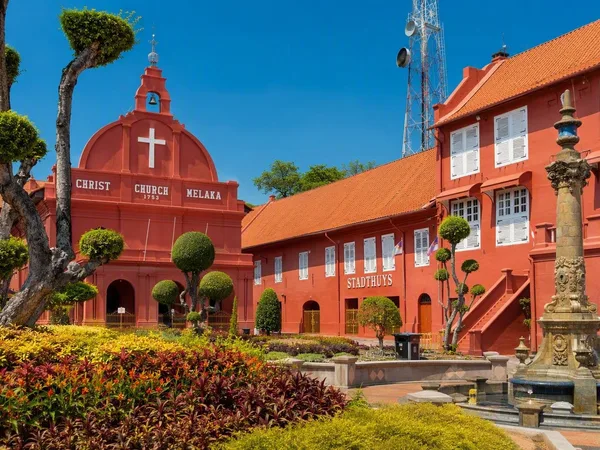
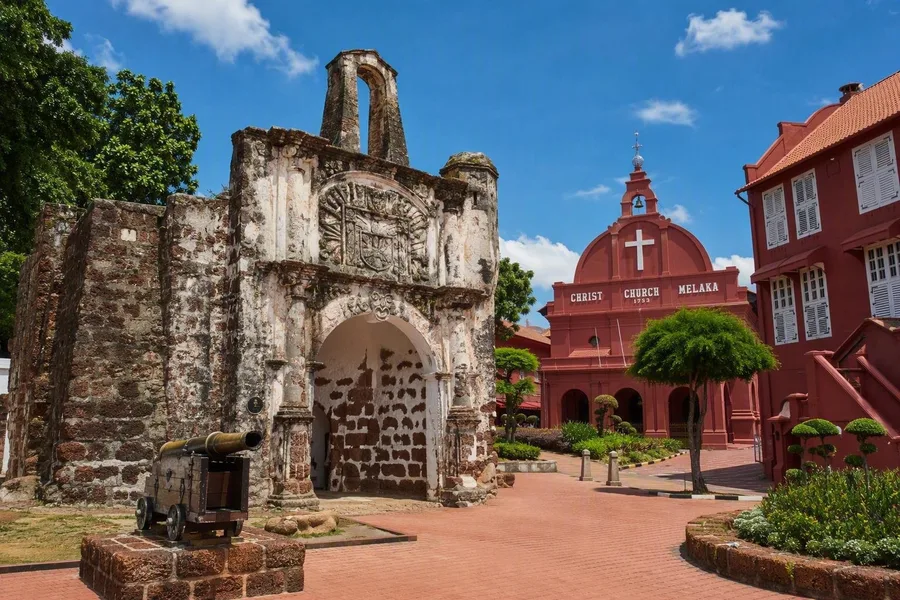 Porta de Santiago stands near Melaka’s salmon-red Stadthuys and Christ Church.
Trade through the Strait of Malacca connected Melaka to Asian and European ports for centuries. A Malay sultanate preceded Portuguese and Dutch rule, leaving fortifications, churches, government buildings, shophouses and homes in a compact historic centre.
The surviving Porta de Santiago belonged to the Portuguese A’Famosa fortress. Nearby, the salmon-red Stadthuys and Christ Church mark the Dutch period, while Jonker Street’s deep shophouses join commerce and domestic life under one roof. Baba-Nyonya culture grew from Chinese and Malay family histories and appears in furniture, porcelain, the sarong kebaya and Nyonya cooking. Melaka also has a Chitty community with Indian and Malay roots, and a Catholic, Cristang-speaking Eurasian community descended from the Portuguese period.
Those legible links between trade, households and colonial power place Melaka just above Tbilisi.
6. Kuala Lumpur: three faiths near the old trading streets
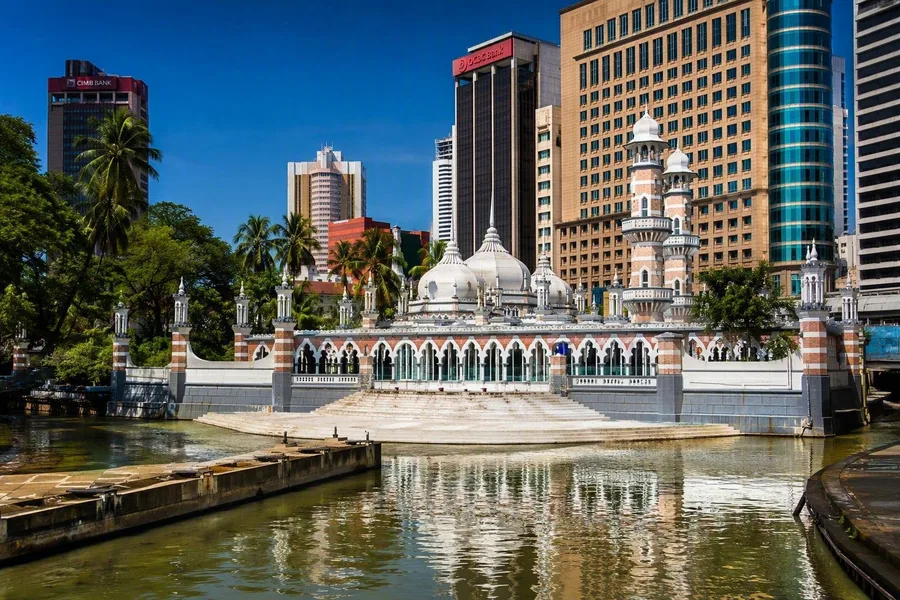 Masjid Jamek stands at the meeting of the Klang and Gombak rivers in Kuala Lumpur.
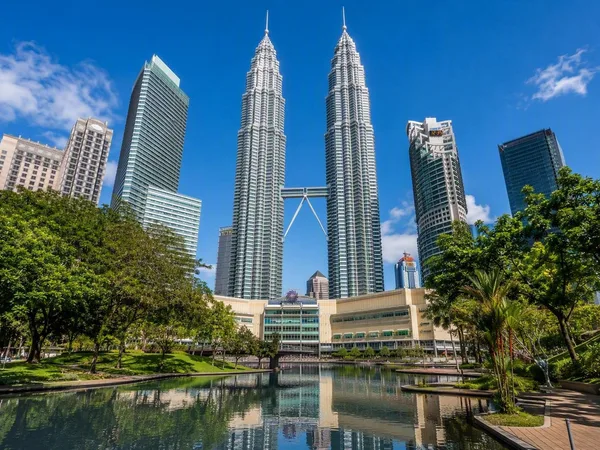
Kuala Lumpur has less historical depth than Melaka, but several religious traditions remain close together near Chinatown and the rivers at the old core. Masjid Jamek stands at the meeting of the Klang and Gombak, the site associated with the city’s origins. Its design draws on Mughal architecture.
Sri Mahamariamman Temple represents a South Indian Hindu tradition, while Sze Ya Temple belongs to the older Chinese temple culture. Worship, shopping and traffic continue around them rather than behind the boundary of a heritage precinct. That daily proximity earns Kuala Lumpur sixth place, although its visible layers cover a shorter span than those of the next five cities.
5. Singapore: old migration patterns in daily use
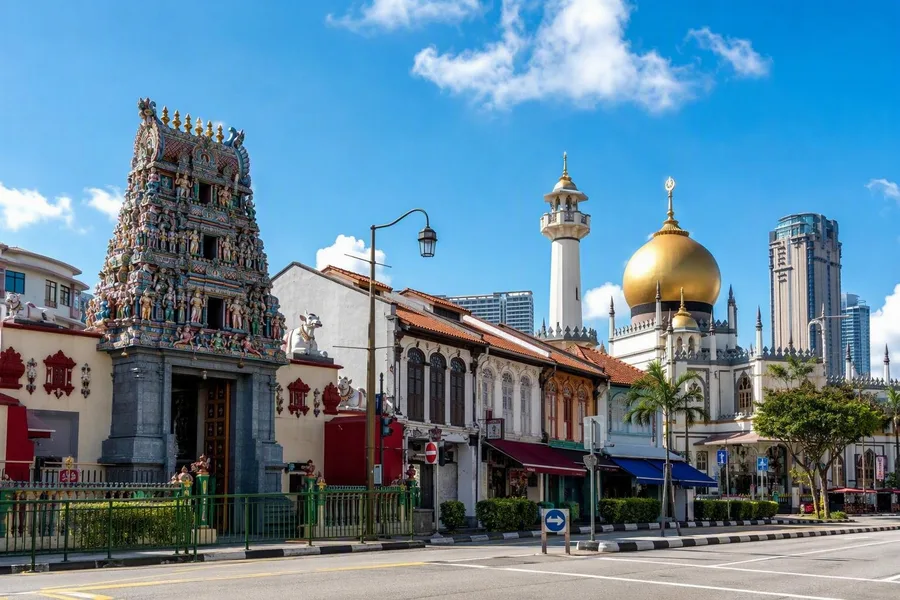 Sri Mariamman Hindu Temple and Jamae Mosque stand among shophouses in Singapore’s Chinatown.
Singapore’s cultural layers do not depend on ancient masonry. Chinese, Malay, Indian, Indonesian and other communities adapted languages, celebrations, food and performance traditions over generations. English, Malay, Mandarin and Tamil coexist with Hokkien, Cantonese, Javanese and Kristang in the wider cultural repertoire.
The historic districts make that inheritance concrete. Chinatown contains Chinese temples as well as Sri Mariamman Hindu Temple and Jamae Mosque. Kampong Gelam combines low shophouses with Sultan Mosque, former palace grounds and businesses rooted in Arab, Persian, Indian and Indonesian trade. Little India still supports prayer, grocery shopping, goldsmiths, flower sellers, sari shops and restaurants.
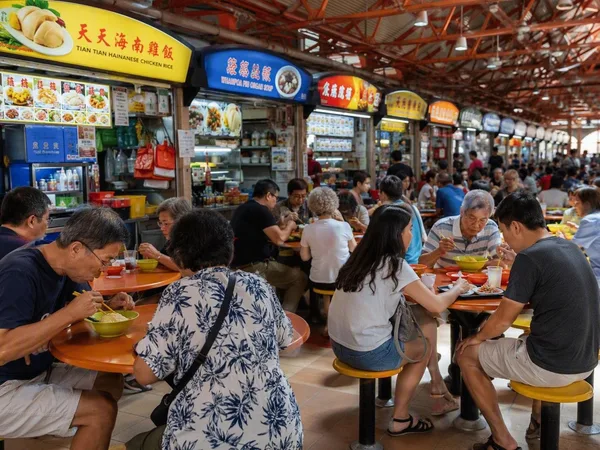
Hawker centres bring several migrant food traditions into shared daily dining spaces. Singapore ranks fifth because that exchange remains strong, but planned districts make its historical layers less compact than those in George Town.
4. George Town: a free port that became a neighbourhood
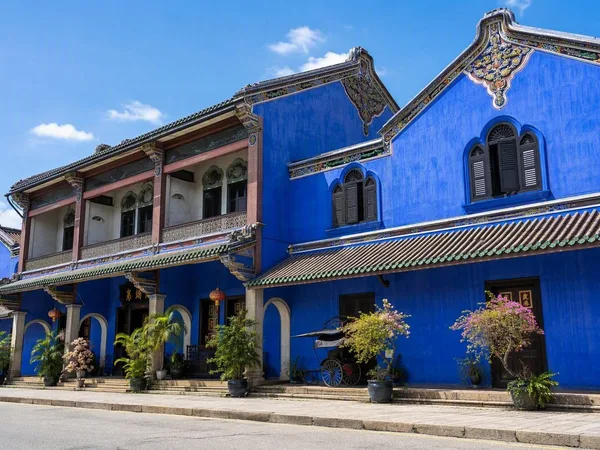
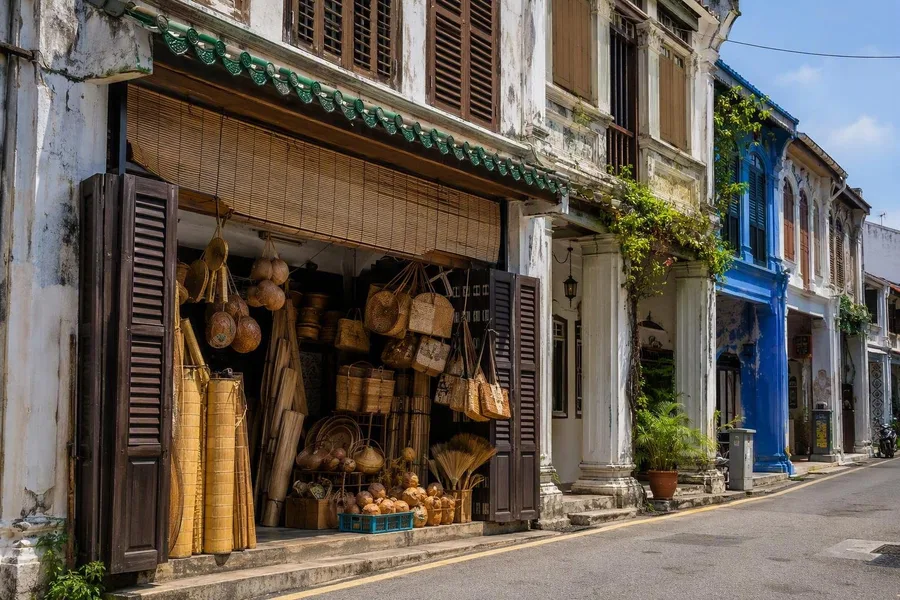 A traditional business operates from an old shophouse in George Town’s historic trading district.
George Town began as a free port in 1786 and drew merchants from China, India and Arab regions. Their businesses, associations, religious practices and homes formed a multi-ethnic port society.
Traditional shops and community organisations still use old shophouses and trading streets, so the architecture has not become an empty shell. Commerce occupies the same narrow fabric as worship and domestic life. George Town stands above Singapore because its traditions remain embedded in a particularly compact historic port district rather than being spread mainly across planned precincts.
3. Jerusalem: sacred places at their closest
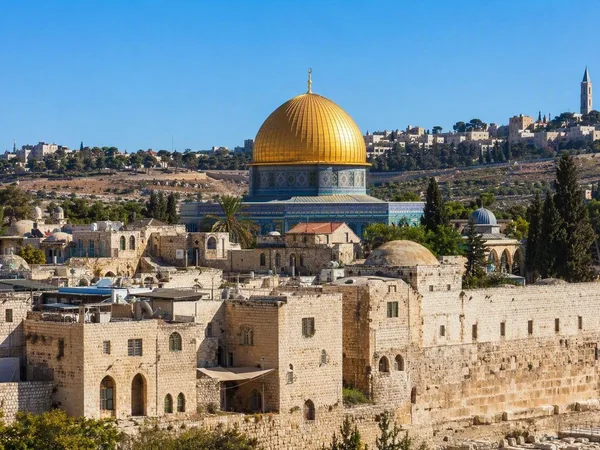
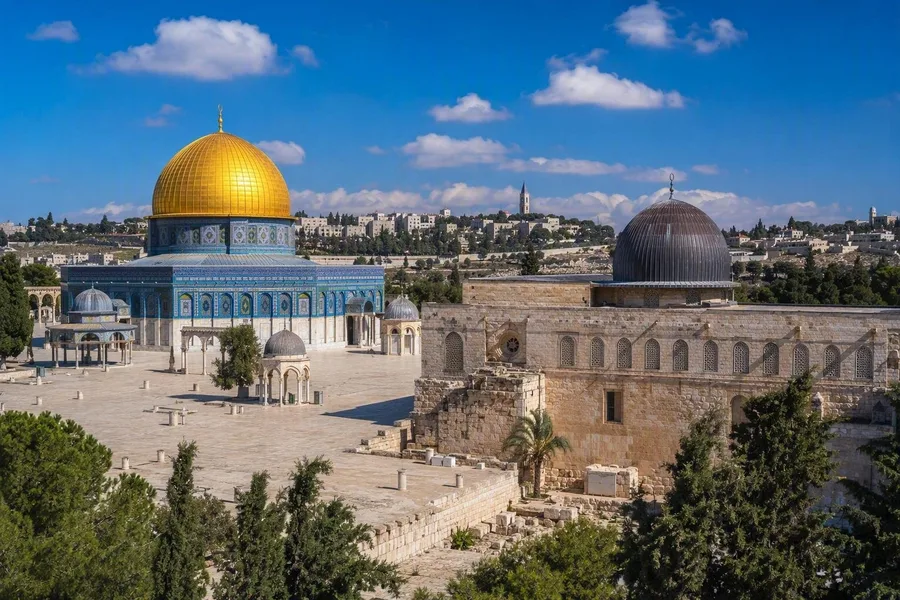 The Dome of the Rock and Al-Aqsa Mosque stand on Jerusalem’s elevated Haram al-Sharif.
Inside Jerusalem’s walls, Judaism, Christianity and Islam occupy an extraordinary concentration of sacred architecture. The Western Wall, Church of the Holy Sepulchre and Dome of the Rock lie within the Old City, while Al-Aqsa Mosque stands on the elevated Haram al-Sharif, or Temple Mount.
The traditional Muslim, Christian, Armenian and Jewish quarters are recognisable but not sealed units. Arabic, Hebrew, Armenian and other languages cross their streets. The souk and Via Dolorosa overlap in the Muslim Quarter; the Church of the Holy Sepulchre carries Byzantine and Crusader fabric; and St James Cathedral anchors the Armenian Quarter.
Jerusalem ranks third because no other entry matches this sacred density. It does not rank higher because physical closeness also comes with firm boundaries, contested access and separate religious authority.
2. Istanbul: empires reused in a living metropolis
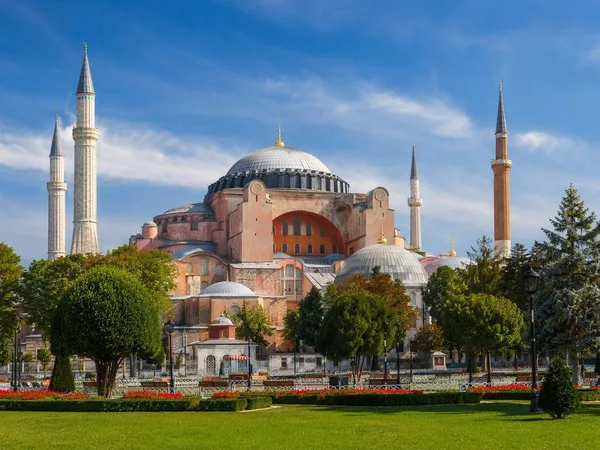
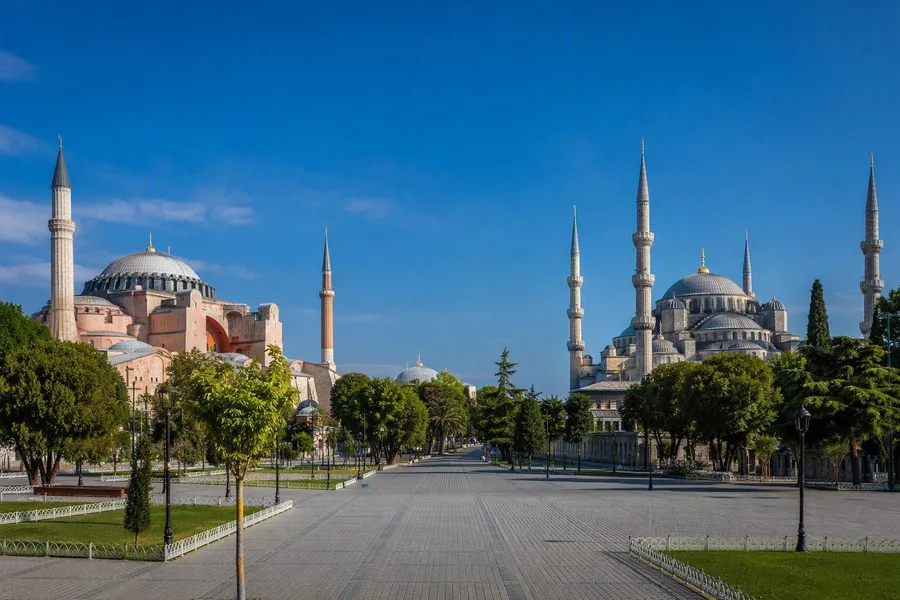 Hagia Sophia and the Blue Mosque stand beside the former Hippodrome in Sultanahmet, Istanbul.
Water explains much of Istanbul’s historical importance. The Bosphorus separates Europe and Asia, while the Golden Horn and Sea of Marmara helped successive rulers make the city the capital of the Eastern Roman and Ottoman empires.
In Sultanahmet, the former Hippodrome lies beside Hagia Sophia and the Blue Mosque. Hagia Sophia began as a sixth-century church and later served as a mosque and museum before returning to mosque use. Around Süleymaniye Mosque, bazaars and homes stand beside buildings once used as a school, bathhouse, caravanserai, library and public kitchen. Zeyrek Mosque began as the church of the Pantokrator monastery.
Istanbul takes second place because reuse, worship and trade keep Byzantine and Ottoman structures in daily circulation. Its vast scale spreads those layers more widely than in Sarajevo.
1. Sarajevo: four eras along one central line
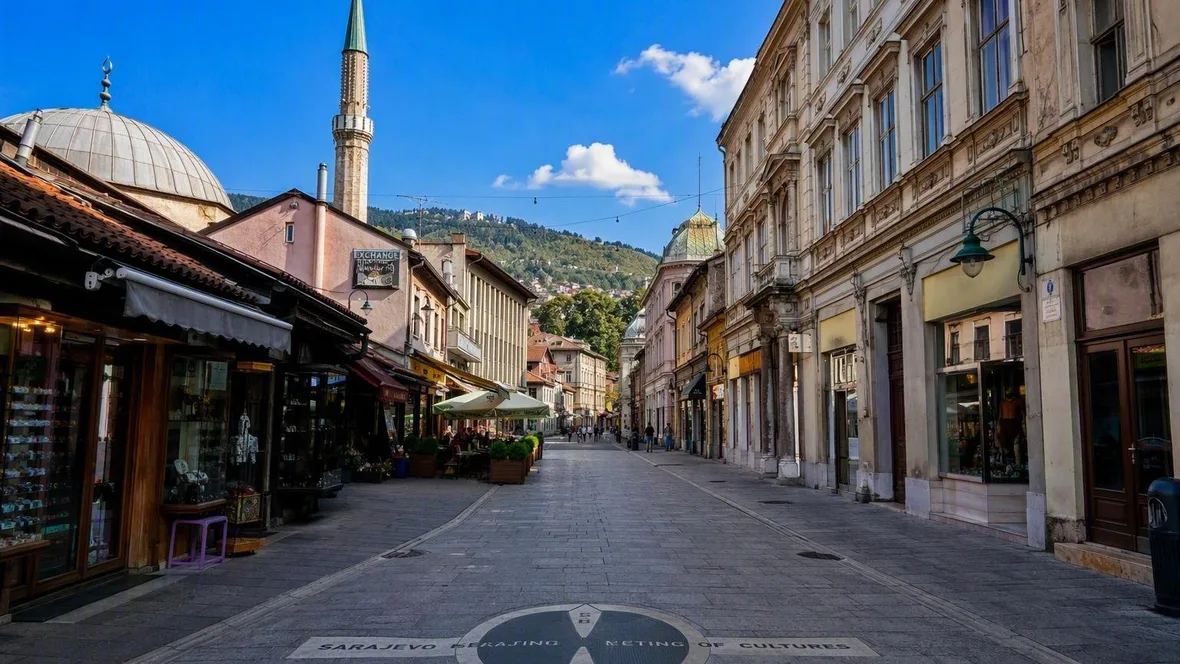
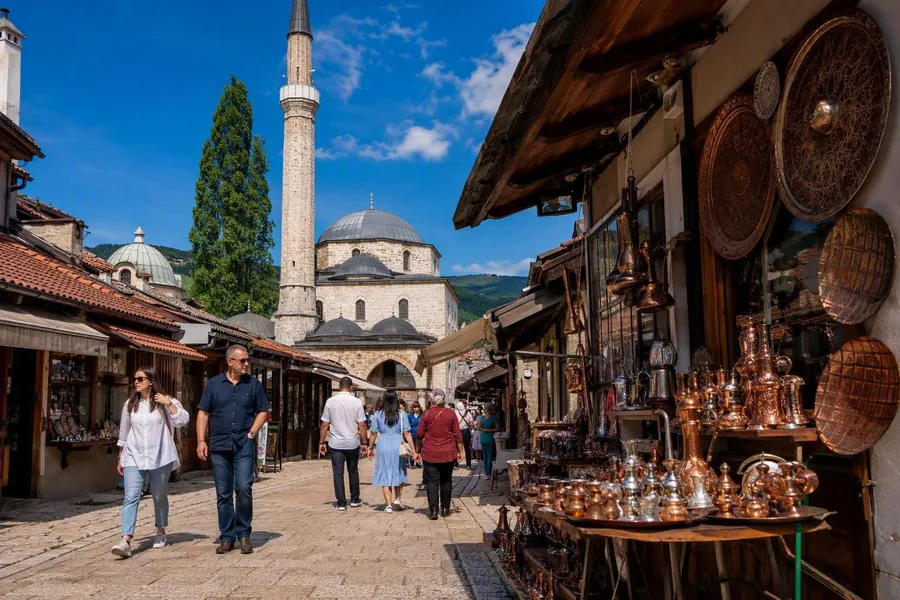 Pedestrians pass coppersmith shops in Sarajevo’s working Baščaršija bazaar near Gazi Husrev-beg Mosque.
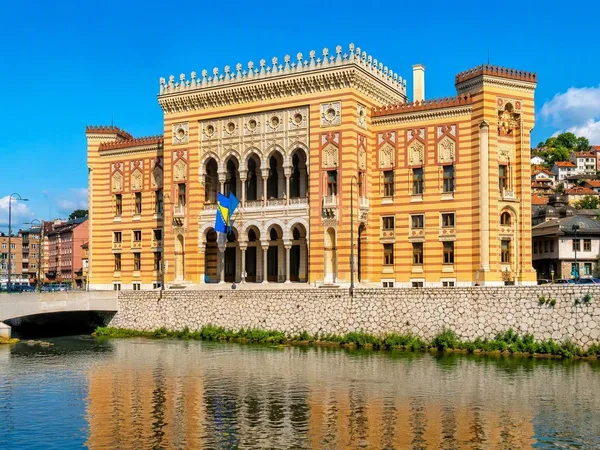
Sarajevo compresses successive periods into a narrow valley. Along the central east–west axis, Ottoman streets give way to Habsburg façades, followed by Yugoslav modernism and post-siege rebuilding.
Baščaršija remains a working Ottoman bazaar. Kazandžiluk retains its association with coppersmiths, while Sarači recalls the saddle trade. The Gazi Husrev-beg complex groups a mosque, madrasa, library, mausoleum and clock tower around commercial streets. Farther west, the Catholic Sacred Heart Cathedral, Serbian Orthodox Cathedral and Ashkenazi Synagogue mark different communities within the centre. At the Meeting of Cultures marker on Ferhadija, the street wall changes from bazaar-scale shops to Habsburg-era buildings.
Sarajevo takes first place without suggesting a history of effortless harmony. At the valley floor, green slopes rise sharply on both sides. Houses climb the hills above streets where several centuries of worship, trade and building remain gathered below.
Keep exploring
Places in this story
Asia
4 landen en gebieden
Europe
Middle East
Bosnia and Herzegovina
Singapore
Sarajevo
Tbilisi
Georgia’s capital occupies a tight valley on the Mtkvari River, where Old Town lanes, sulfur baths and Narikala Fortress meet beneath the hills. Its streets show the accumulated imprint of trade, conquest and 19th-century expansion.
Melaka
Kuala Lumpur
George Town
Jerusalem