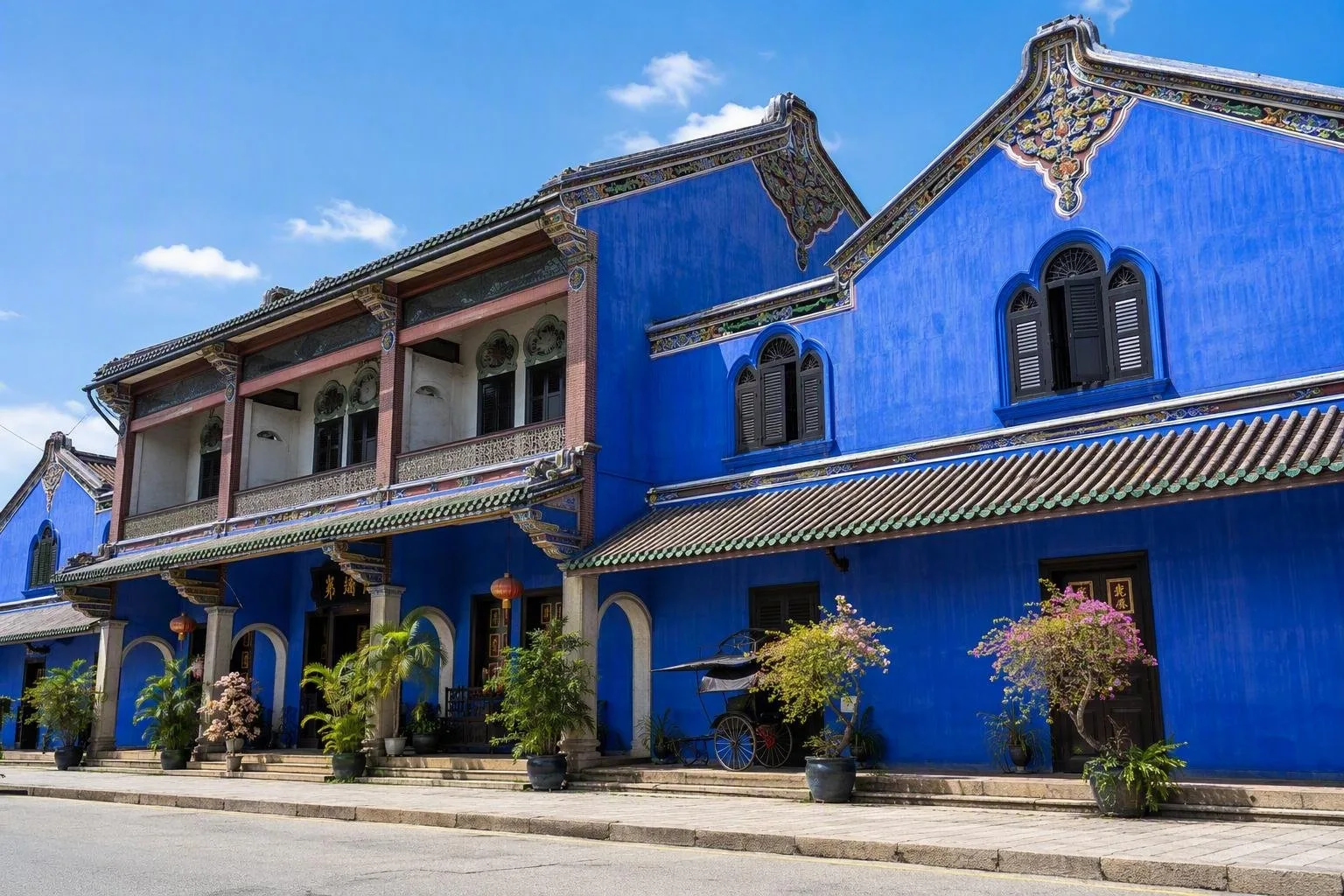
City · Malaysia
George Town
George Town is Penang’s historic port city on Malaysia’s northwest coast. Its compact World Heritage core combines shophouses, clan houses, religious buildings, waterfront settlements and a formidable everyday food culture.
Why George Town matters
Founded as a British free port in 1786, George Town drew traders and migrants from China, India, the Malay Archipelago and the Middle East. Their commercial and residential districts still shape the city. The historic core became part of the UNESCO-listed Historic Cities of the Straits of Malacca in 2008.
This is not a museum quarter. Clan associations, places of worship, market streets and coffee shops remain active alongside restored shophouses, small hotels and galleries. The point is the urban mix: British-era civic buildings, Chinese courtyard houses, Peranakan interiors, mosques, Hindu temples and Chinese temples sit within a short walk.
Start with the heritage grid
The core is best handled on foot. Begin at Fort Cornwallis and the Esplanade, then follow the streets south and west through Lebuh Light, Church Street, Armenian Street and the lanes around Cannon Square.
Key stops:
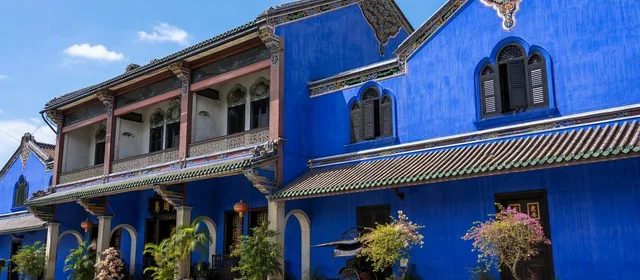
- Cheong Fatt Tze Blue Mansion: an indigo Straits Chinese mansion from the 1880s; join a guided visit for the interior.
- Khoo Kongsi: a richly carved Chinese clan house and temple at Cannon Square.
- Pinang Peranakan Mansion: a restored merchant house with Peranakan furnishings and decorative arts.
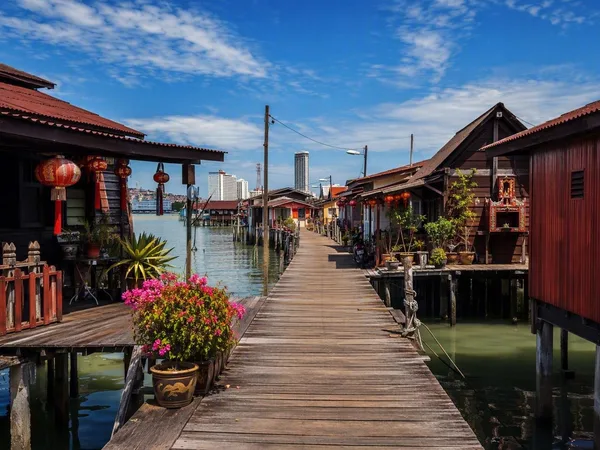
- Clan Jetties: waterfront Chinese settlements on timber piers; Chew Jetty is the largest and most visited.
The historic streets are narrow and traffic is often one-way. Walking is faster than taking short vehicle trips, but expect heat, uneven paving and sudden rain.
Temples, mosques and street life
Jalan Masjid Kapitan Keling is the clearest introduction to George Town’s religious architecture. Kapitan Keling Mosque, Sri Mahamariamman Temple and Kuan Yin Teng are all close by, while St. George’s Church is a short walk north. These are working religious sites, not sets: remove shoes where required, cover shoulders and knees, and do not photograph worshippers without permission.
For a different layer of the city, follow Lebuh Armenian and nearby lanes for Ernest Zacharevic’s painted murals and iron-rod caricatures. Go early if photography matters; the best-known walls draw crowds later in the morning.
Eat by district, not by checklist
George Town’s food reflects Chinese, Malay, Indian Muslim and Peranakan traditions. Use the streets as a guide rather than pursuing one “best” stall.
- Kopitiams: order coffee and breakfast or noodles; many traditional Chinese-run shops serve pork or lard and are not halal.
- Little India: look for dosa, banana-leaf meals and sweets around Lebuh Pasar.
- Jalan Penang and Lebuh Chulia: useful for coffee shops, cendol, noodles and evening hawker food.
- Kimberley Street: a practical lunch stop for hawker dishes.
Timing and local rhythm
Walk the heritage zone before 10am or after 4pm. Midday is humid, and afternoon showers can arrive hard and quickly. Allow a half-day for the core if entering only one or two buildings; give it a full day if you want museums, a slow food stop and the waterfront.
Use ride-hailing or buses for longer trips beyond the centre. Within the core, carry water, wear secure shoes and keep a light cover-up for religious buildings.
From the magazine
Stories about George Town
Editorial stories linked directly to George Town.
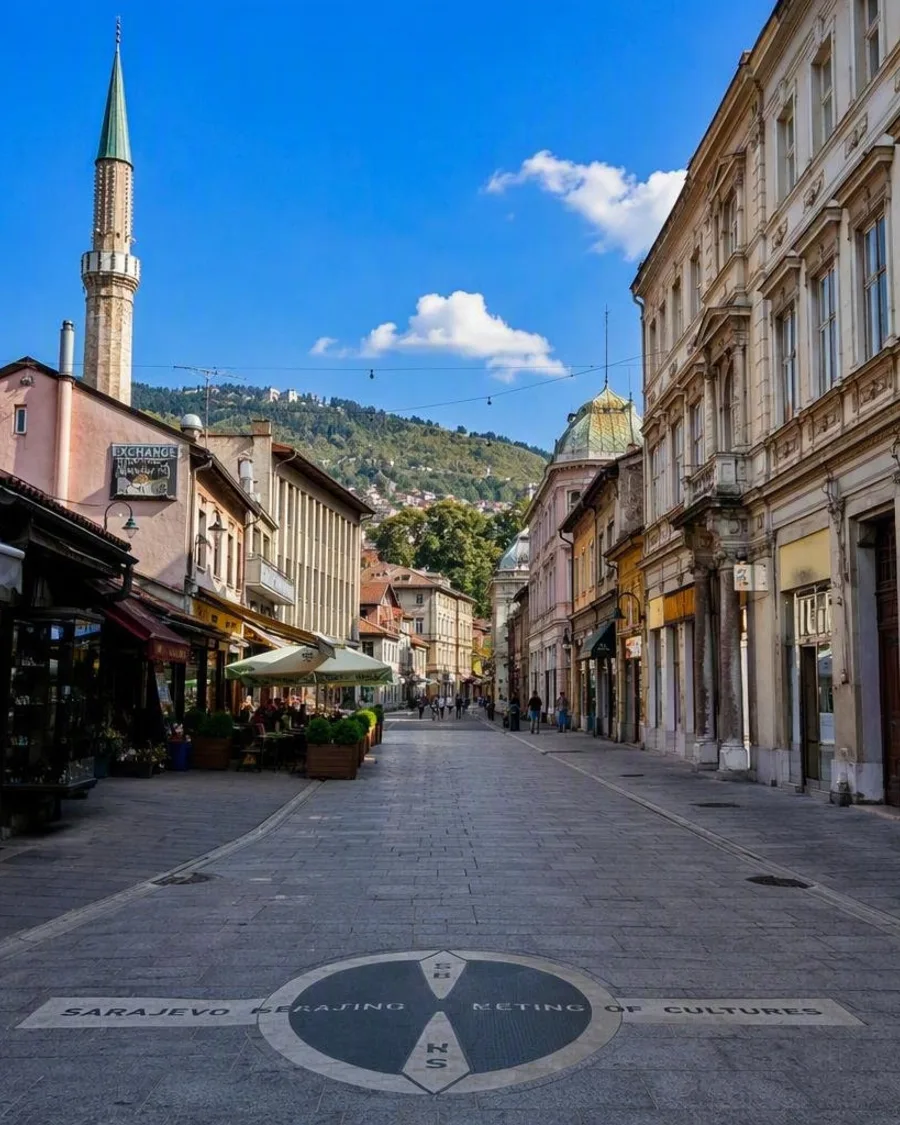
Eight cities where cultures still share the street
A Hindu temple and a mosque stand among the shophouses of Singapore’s Chinatown. In Sarajevo, a short walk runs from an Ottoman bazaar to Habsburg-era façades. In these eight cities, history still shapes worship, trade, food and ordinary street life.
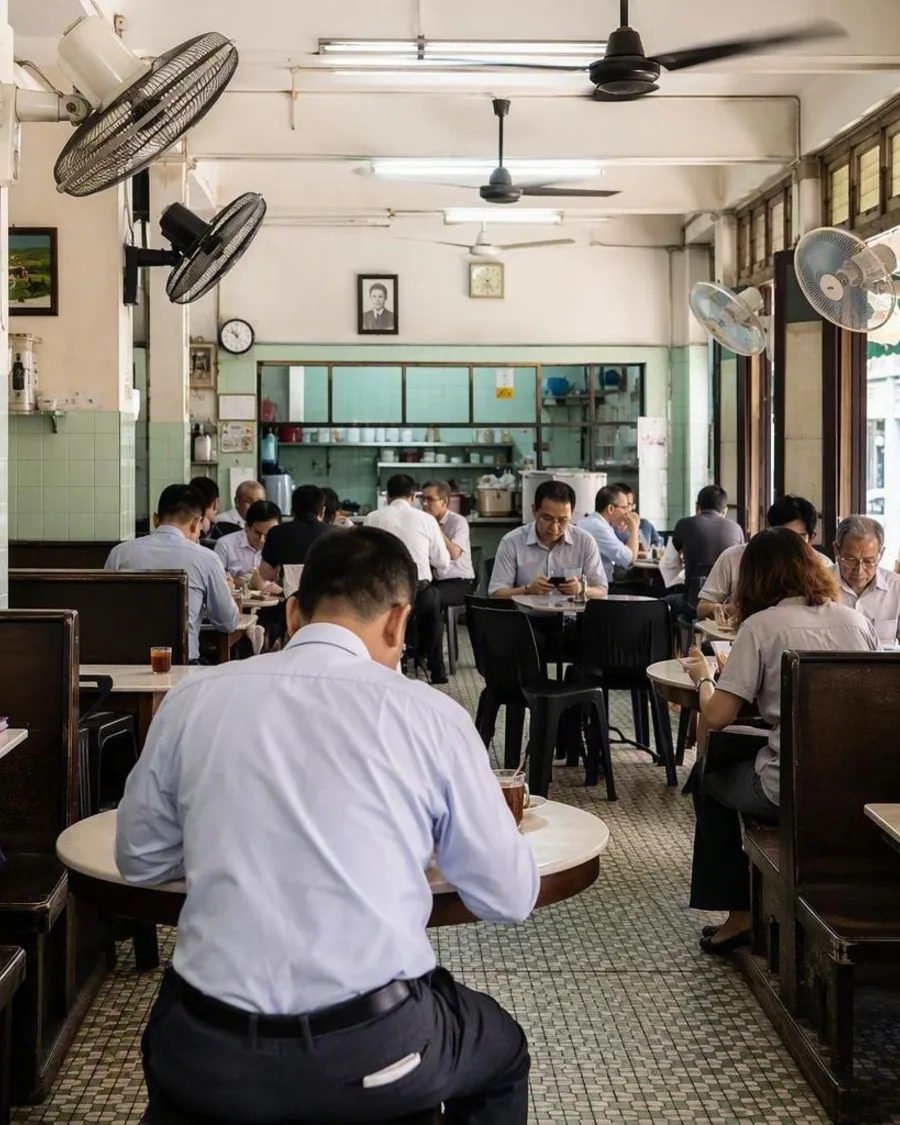
Inside George Town’s Working Kopitiams
At lunchtime, Kek Seng on Jalan Penang fills with office workers, returning regulars and visitors under ceiling fans, among old tiles and booth seats. The room shows why George Town’s kopitiams still matter: they give small food traders, workers and longtime customers the same practical place to eat.
Routes from our editors
Travel through George Town
Editorial routes connecting George Town with other countries, cities and hotspots.
No routes through George Town have been published yet.
More in Malaysia
Related hotspots
Other cities, nature areas and places within Malaysia.