City · Malaysia
Kuala Lumpur
Kuala Lumpur is Malaysia’s capital, where the riverside historic core, Chinese and Indian trading districts, and high-rise KLCC meet. Use it for major museums, food streets, religious architecture and a remarkably capable urban rail network.
Get oriented
Kuala Lumpur is best understood as several working districts rather than one continuous centre. KLCC is the tower-and-park district; Bukit Bintang is the retail and dining corridor; Chinatown and Pasar Seni hold the old commercial core; and Merdeka Square contains the civic landmarks.
For a first stay, base yourself near an LRT, MRT or monorail station. KL Sentral is the transport hub; KLCC, Bukit Bintang and Pasar Seni are stronger choices if you want sights outside the door.
Start in the historic core
Begin at Merdeka Square, where the Malayan flag was raised in 1957. Across Jalan Raja, the 1897 Sultan Abdul Samad Building combines brick arches, copper domes and its clock tower. From here, walk to Masjid Jamek at the confluence of the Klang and Gombak rivers.
The mosque, built in 1909, is one of the city’s oldest surviving mosques. Its domes, minarets and arched colonnades draw on Mughal and Indo-Saracenic forms. The River of Life promenade follows the nearby waterfront.
Continue south to Pasar Seni and Petaling Street. Central Market occupies a former market building with an Art Deco façade, while Chinatown’s lanes retain shophouses, clan buildings and temples. On Jalan Tun H.S. Lee, Sri Mahamariamman Temple’s South Indian gateway tower and the Sin Sze Si Ya Temple give the area its religious depth.
The modern skyline
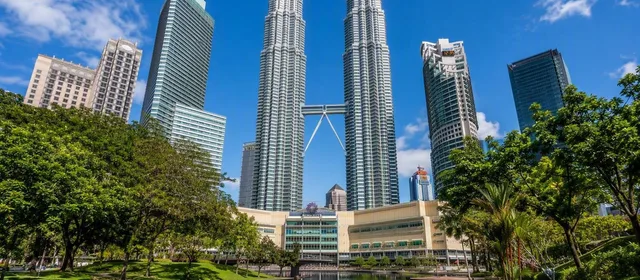
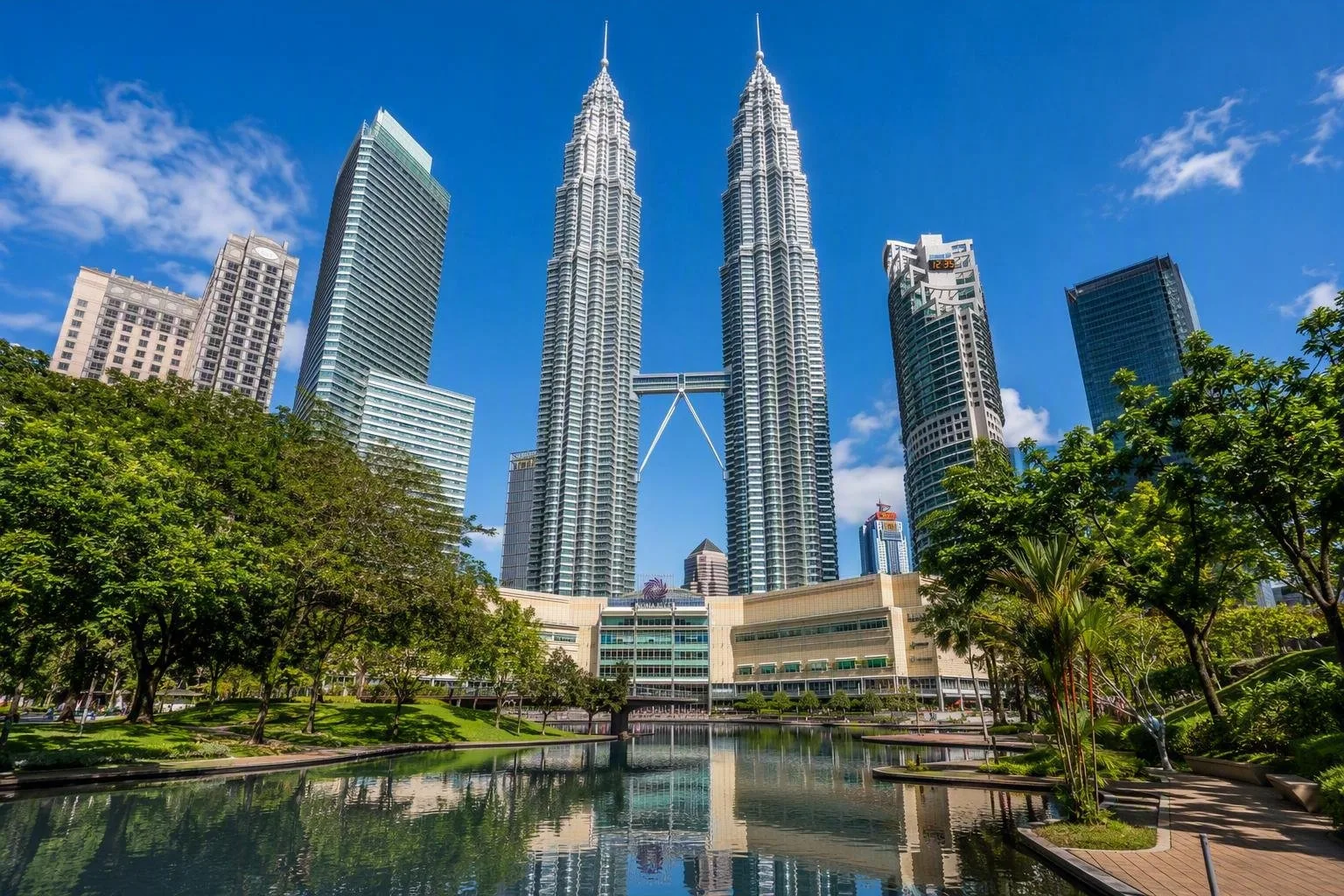
The Petronas Twin Towers are the city’s clearest landmark. At 451.9 metres, they anchor KLCC, with the Skybridge on floors 41 and 42 and an observation deck on floor 86. KLCC Park provides the best ground-level setting and a useful break from the surrounding towers and mall.
For a second skyline angle, use KL Tower’s observation deck or Sky Deck. It stands on Bukit Nanas beside the KL Forest Eco Park, a small permanent forest reserve in the centre.
Green space and museums
The Perdana Botanical Gardens, established in 1888, offer lakes, walking paths and shade near the National Museum, Islamic Arts Museum and National Mosque. Masjid Negara is distinctly modern: look for its star-shaped roof and 73-metre minaret.
This cluster works well in the morning, before moving back into the central districts for lunch or an evening meal.
Getting around and local rules
Use the LRT for KLCC, Masjid Jamek and Pasar Seni; the MRT for Bukit Bintang and Pasar Seni; and the monorail for the KL Sentral–Bukit Bintang corridor. A reloadable Touch ’n Go card avoids repeated ticket-machine queues. The KLIA Ekspres links Kuala Lumpur International Airport with KL Sentral in 28 minutes.
At mosques and temples, cover shoulders and knees, remove shoes where required, and keep clear of worshippers. Non-Muslim access to mosques is outside prayer periods; Masjid Jamek lists visitor sessions from 10:00–12:30 and 14:30–16:30.
From the magazine
Stories about Kuala Lumpur
Editorial stories linked directly to Kuala Lumpur.
Routes from our editors
Travel through Kuala Lumpur
Editorial routes connecting Kuala Lumpur with other countries, cities and hotspots.
No routes through Kuala Lumpur have been published yet.
More in Malaysia
Related hotspots
Other cities, nature areas and places within Malaysia.