City · Malaysia
Melaka
Melaka is Malaysia’s historic port city on the Strait of Malacca, where a compact World Heritage core preserves Malay, Portuguese, Dutch and Peranakan layers. Dutch Square, St Paul’s Hill and Chinatown are all within an easy walk.
Why Melaka matters
Melaka grew from a Malay trading settlement into a major port linking the Malay Archipelago, India, China and Europe. The city’s historic core is part of the UNESCO-listed Historic Cities of the Straits of Malacca, recognised for almost 500 years of commercial exchange and overlapping cultural traditions.
The useful way to read the city is chronologically: the Melaka Sultanate came first; the Portuguese took the port in 1511; the Dutch left the most conspicuous civic architecture. Chinese, Malay, Indian, Peranakan, Chitty and Portuguese-Eurasian communities give those layers a living social context.
Start at Dutch Square
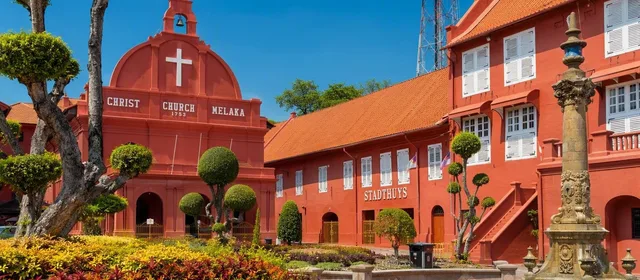
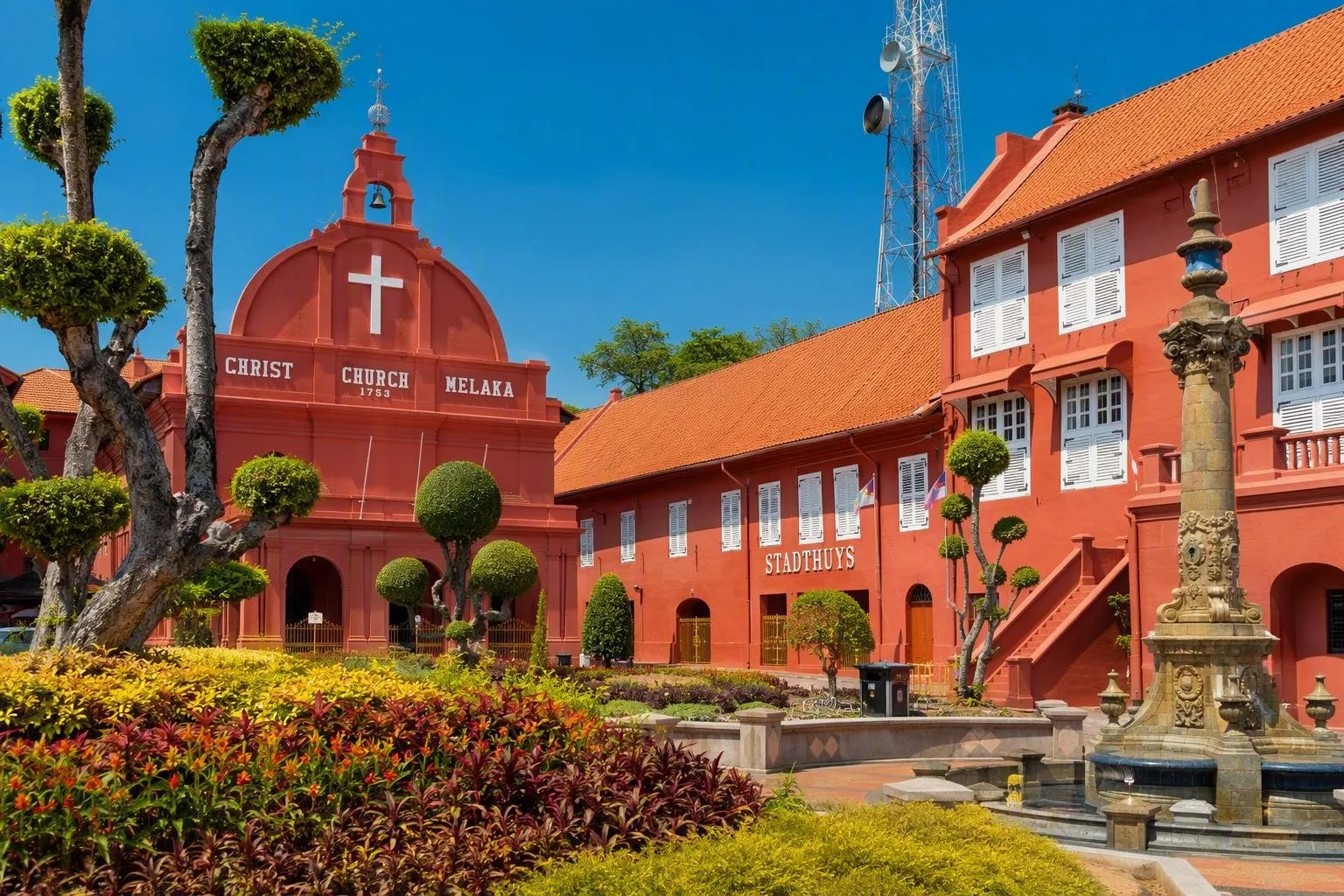
Begin at the red-painted Stadthuys and Christ Church. The Stadthuys was the Dutch administrative centre and now contains historical displays; Christ Church remains an active church. This is the clearest visual marker of Dutch Melaka and a practical orientation point for the old town.
From the square, take the steps up St Paul’s Hill. The roofless church ruins contain Portuguese and Dutch-period memorials, while the hill provides a quick view across the historic centre. Descend towards Porta de Santiago, the surviving gate of the Portuguese A Famosa fortress. It is a fragment rather than a complete fort; that is precisely its significance.
Chinatown and living heritage
Cross the Melaka River to Jalan Hang Jebat, widely known as Jonker Street. Its long, narrow shophouses were built for both trade and family life. Walk the side lanes as well as the main street: religious buildings and older shopfronts reveal more of the neighbourhood than the retail frontage alone.
For Peranakan domestic culture, the Baba & Nyonya Heritage Museum presents a preserved townhouse with furniture, porcelain and household spaces. Peranakan culture developed from Chinese-Malay family histories and remains central to Melaka’s food, dress and material culture.
Look also for the religious mix around Jalan Tukang Emas: Cheng Hoon Teng Temple, Kampung Kling Mosque and Sri Poyyatha Vinayagar Moorthi Temple sit in the old-town street network.
Plan the walk
The heritage core is best covered on foot. Start early for the hill, square and museums, then use the river and Chinatown lanes as the connecting route. The midday heat is real; schedule indoor stops or a meal during the hottest hours.
Weekend note: Jonker Street’s evening market changes the character of the street and brings heavier foot traffic. Visit in daytime for architecture and museums; go in the evening if the market is the priority.
At worship sites: dress modestly, keep voices low and avoid entering restricted prayer areas.
From the magazine
Stories about Melaka
Editorial stories linked directly to Melaka.
Routes from our editors
Travel through Melaka
Editorial routes connecting Melaka with other countries, cities and hotspots.
No routes through Melaka have been published yet.
More in Malaysia
Related hotspots
Other cities, nature areas and places within Malaysia.