
City · Israel
Jerusalem
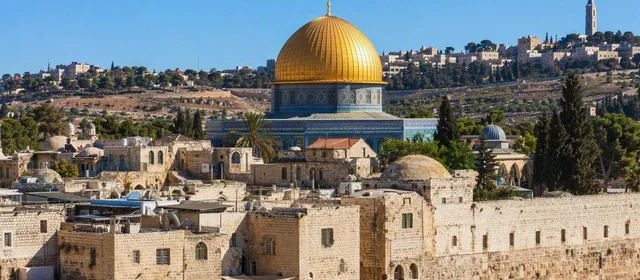
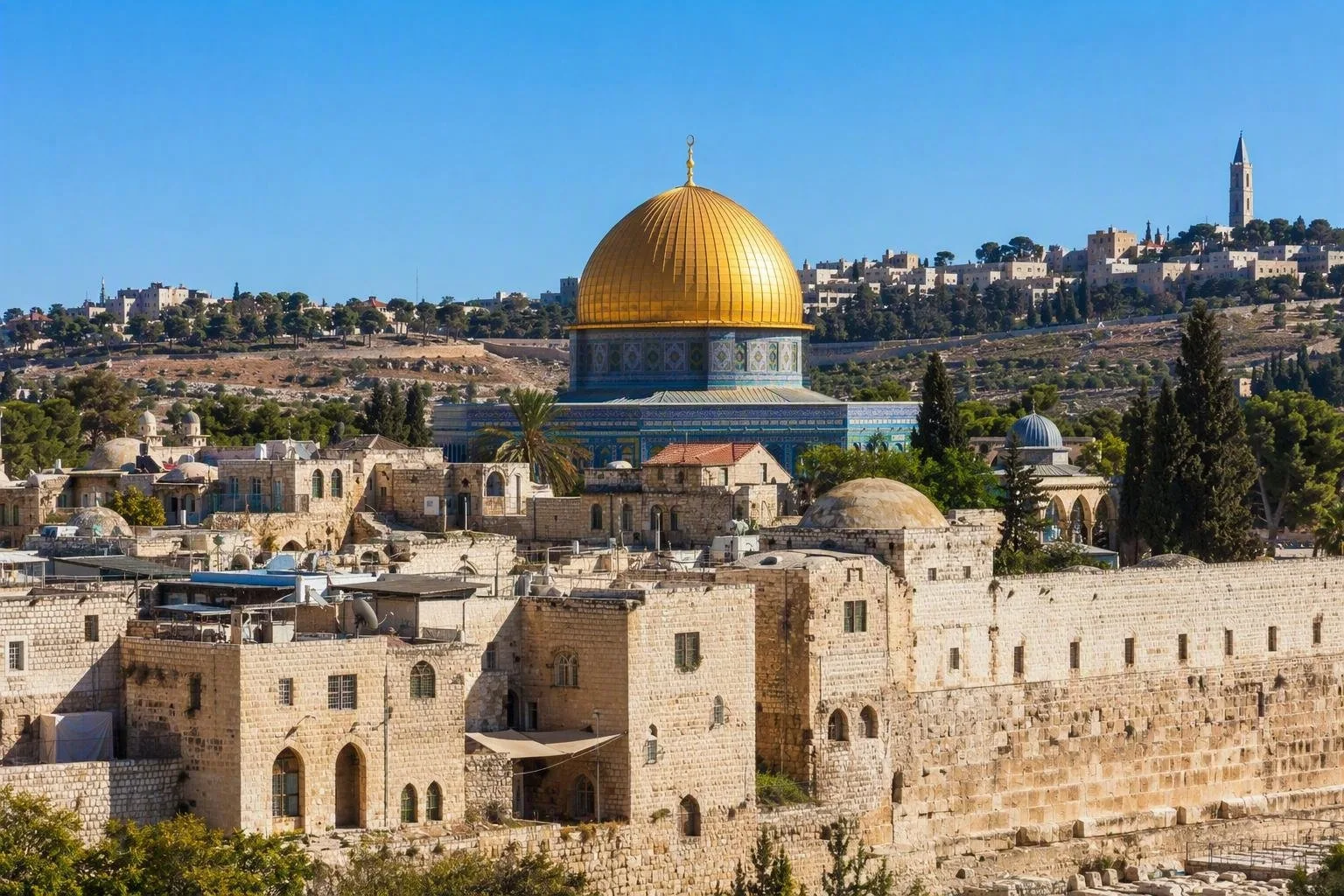
Jerusalem is a hill city whose walled Old City concentrates Judaism’s Western Wall, Christianity’s Church of the Holy Sepulchre and Islam’s Haram al-Sharif. The principal sites sit within a compact, steep and intensely used historic core.
Start with the Old City
Jerusalem is best approached as a living city of neighbourhoods, markets and places of worship, not as a single monument. Its walled Old City is less than a square kilometre, yet contains more than 220 historic monuments. The four traditional quarters—Muslim, Christian, Jewish and Armenian—are useful bearings, but lanes, markets and sacred sites run across their edges.
Enter through Jaffa Gate for the clearest first orientation. Damascus Gate leads directly into the northern market streets; Dung Gate is the practical approach to the Western Wall plaza. Pavements are uneven, passages can be stepped, and the route between landmarks is rarely level. Wear shoes made for stone streets rather than sightseeing photos.
The sacred core
The major places are close together but demand different kinds of attention.
- Western Wall: The visible prayer area stands at the foot of the raised platform above it. It is Judaism’s holiest accessible place of prayer. The plaza is open-air; its prayer sections are separated for men and women.
- Haram al-Sharif / Temple Mount: The elevated compound contains the 7th-century Dome of the Rock and Al-Aqsa Mosque. It is sacred to Muslims and central to Jewish tradition. Entry arrangements, visitor access and security rules are sensitive and may change at short notice.
- Church of the Holy Sepulchre: In the Christian Quarter, this is the traditional site of the crucifixion and tomb of Jesus. Its chapels and rotunda are shared by several Christian communities.
Use the names employed at each site and treat worshippers as worshippers, not background for photographs.
Walk the layers
From Jaffa Gate, take David Street toward the market lanes, then turn into the Christian Quarter for the Church of the Holy Sepulchre. Continue through the Muslim Quarter to the Via Dolorosa, whose final stations are inside the church. The Cardo in the Jewish Quarter exposes part of a Roman-era street beneath later city fabric.
For the classic skyline, cross the Kidron Valley to the Mount of Olives. Its western slope looks back across the Old City to the gold dome, the platform and the wall circuit. The walk is steep; take transport uphill and descend on foot if you want to include the viewpoint with the Old City.
Visiting with respect
Dress conservatively for all holy places: covered shoulders and knees are the reliable baseline. At the Western Wall, do not eat, smoke or light candles; on Sabbath and Jewish holidays, do not photograph or use electronic devices in the plaza. Wheelchair access to the Wall plaza is via Dung Gate.
Security checks are normal at major entrances. Build time into a day around religious holidays, Friday prayers and Sabbath, when access, services and crowd levels can alter the rhythm of the Old City.
From the magazine
Stories about Jerusalem
Editorial stories linked directly to Jerusalem.
Routes from our editors
Travel through Jerusalem
Editorial routes connecting Jerusalem with other countries, cities and hotspots.
No routes through Jerusalem have been published yet.
More in Israel
Related hotspots
Other cities, nature areas and places within Israel.
There are no other hotspots in Israel yet.