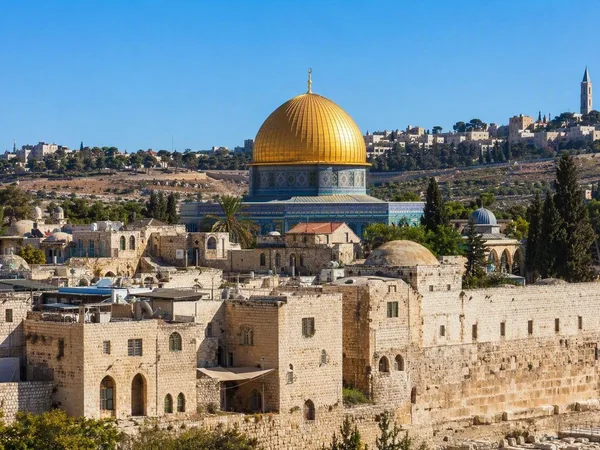
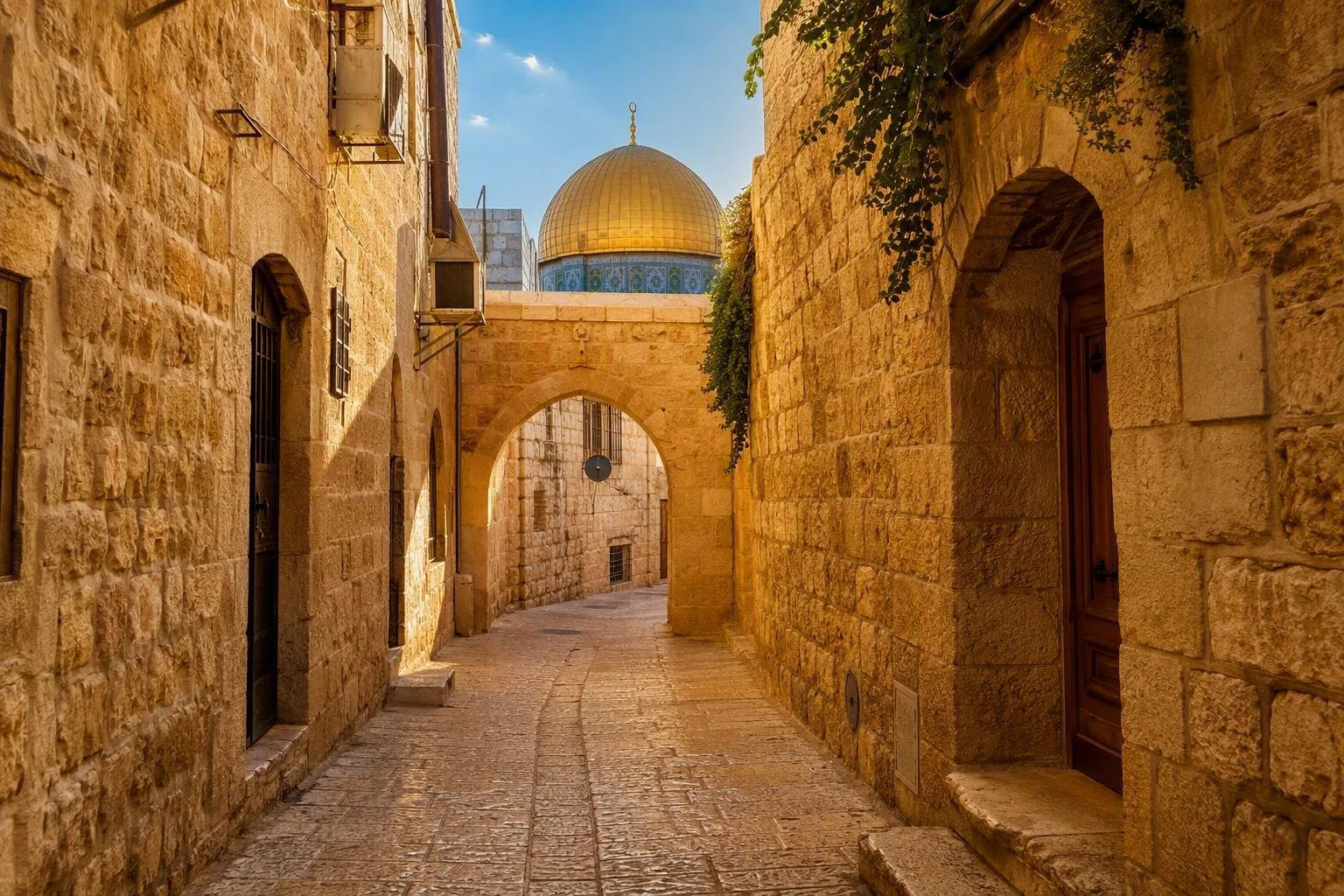
Israel packs striking contrasts into short distances. Jerusalem and Tel Aviv stand about an hour apart, but their streets move to different tempos. In Jerusalem’s Old City, people pass the Western Wall, the Church of the Holy Sepulchre and views of the Dome of the Rock through limestone lanes. Tel Aviv opens onto the Mediterranean, with beaches, Bauhaus apartment blocks and restaurants that stay busy late into the evening. The two cities show different periods of the country’s history in their buildings, food and daily life.
Food brings those histories to the table. Palestinian kitchens in East Jerusalem serve maqluba, hummus and knafeh. At Mahane Yehuda Market, vendors sell bread, spices, fruit and cooked dishes. Tel Aviv’s Carmel Market combines produce stalls with counters serving food shaped by Jewish communities from North Africa, the Middle East and Europe.
The landscape changes quickly beyond the cities. Akko has Crusader halls beneath an Ottoman-era port town. Olive groves and villages cover hills above the Sea of Galilee in the Galilee. Farther south, the Negev surrounds Makhtesh Ramon with cliffs, dry riverbeds and wide desert plateaus. Archaeological sites, Hebrew and Arabic place names, religious traditions and modern neighbourhoods often sit close together. Take time for more than the best-known landmarks, and Israel offers plenty of places to linger over.