City · Bosnia and Herzegovina
Sarajevo
Sarajevo is the capital of Bosnia and Herzegovina, set in a narrow valley around the Miljacka River. Its compact centre connects the Ottoman bazaar of Baščaršija with Austro-Hungarian boulevards, religious landmarks and the physical record of the 1992–96 siege.
Read the city east to west
Sarajevo’s centre is best understood as a short urban sequence rather than a list of isolated sights. Start east at Baščaršija, the Ottoman market quarter founded in the 15th century. Its lanes retain trade names, and Kazandžiluk is still the coppersmiths’ street. The wooden Sebilj fountain marks the square at its heart.
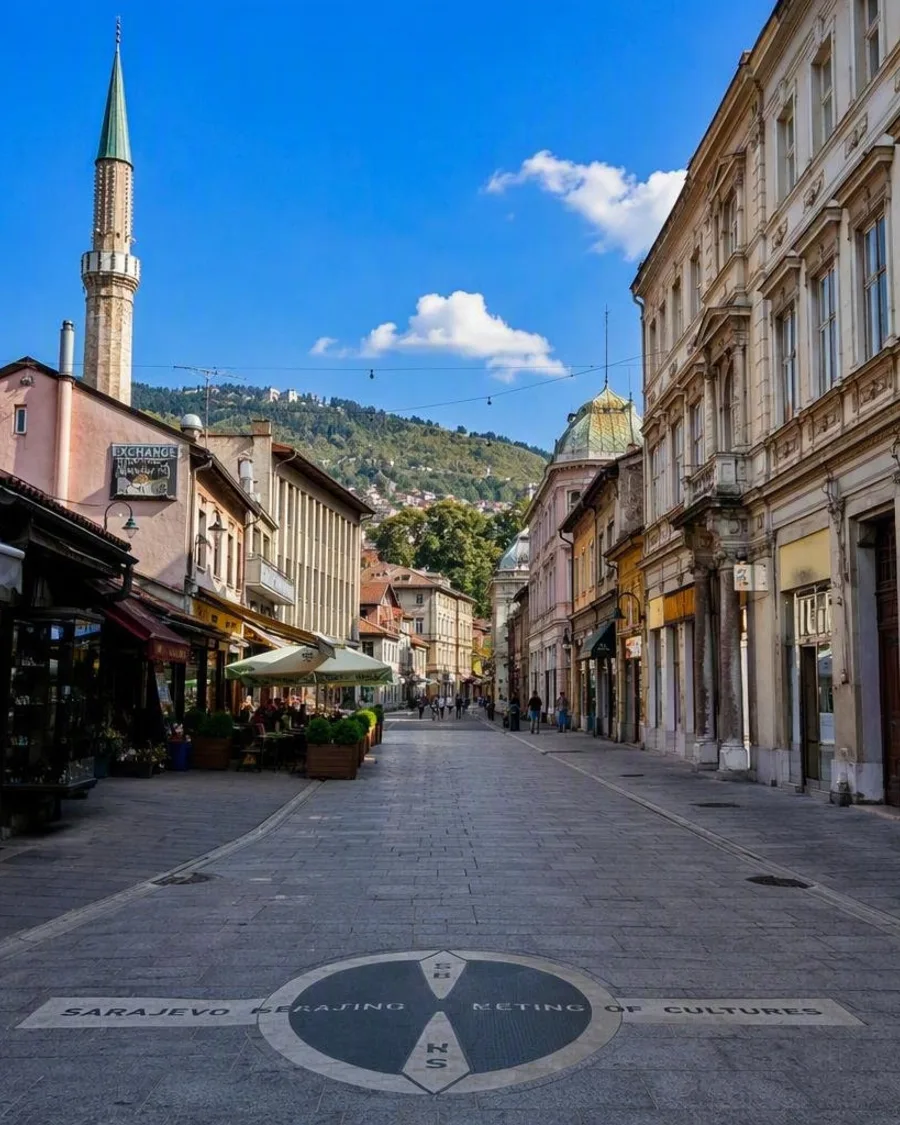
Walk west through the bazaar to the pavement marker known as the Meeting of Cultures. East of it, narrow cobbled market lanes; west of it, Ferhadija’s straighter Austro-Hungarian streets and façades. The transition is immediate and is Sarajevo’s clearest architectural lesson.
Core stops
- Gazi Husrev-beg Mosque: Completed in 1531, this is the centre of a larger Ottoman endowment including a covered market, madrasa, library and clock tower. It is an active place of worship.
- Latin Bridge: The four-arch Ottoman bridge crosses the Miljacka near the corner where Gavrilo Princip killed Archduke Franz Ferdinand and Sophie on 28 June 1914. The Museum of Sarajevo 1878–1918 stands opposite.
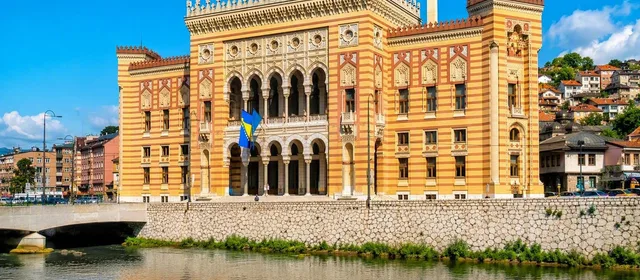
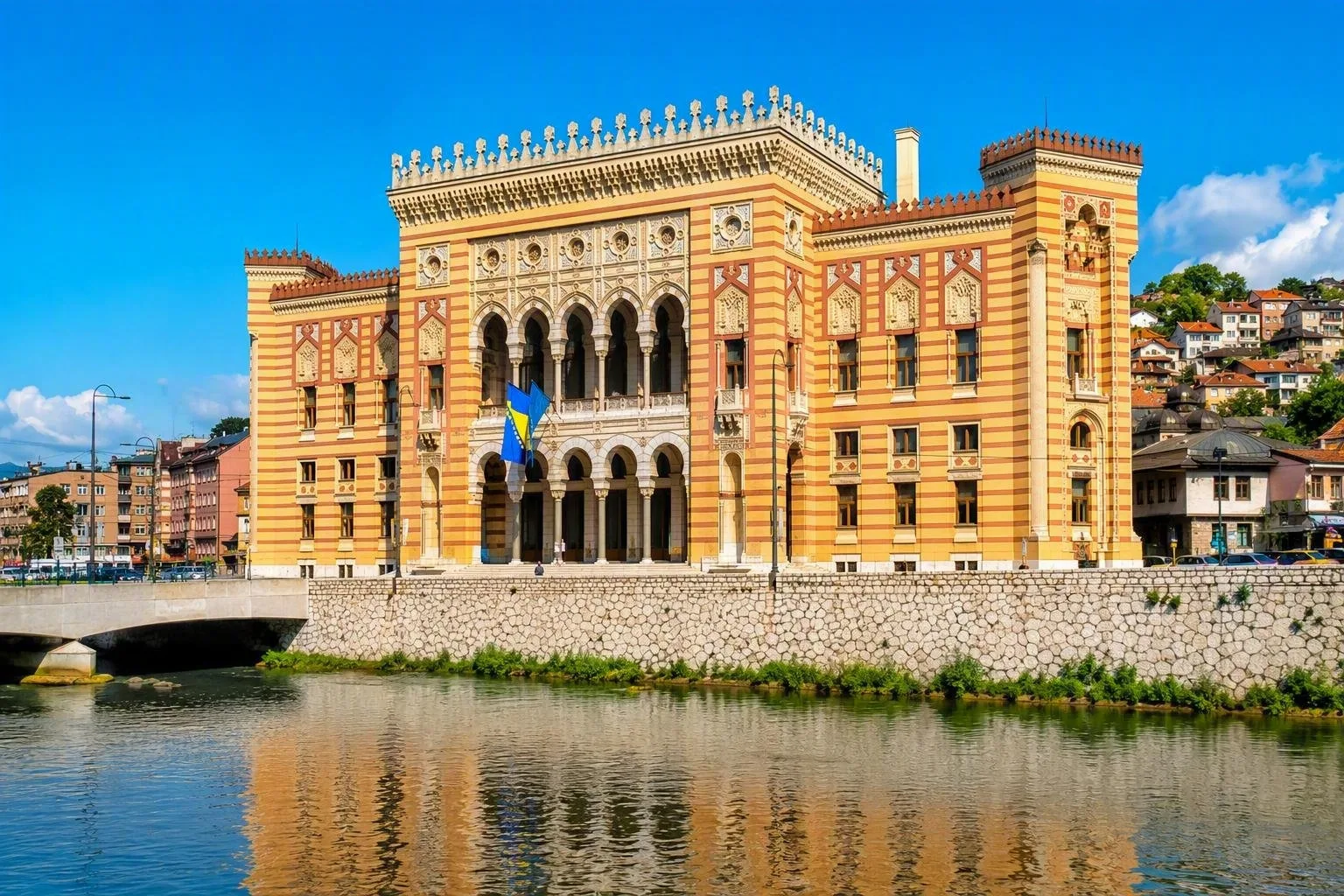
- Vijećnica (City Hall): This richly patterned pseudo-Moorish building on the riverbank opened in 1896. It later housed the National and University Library, was badly damaged by fire during the siege, and reopened after restoration in 2014.
- Faiths in close range: The Gazi Husrev-beg Mosque, Old Orthodox Church, Sacred Heart Cathedral and Ashkenazi Synagogue sit within the old-centre walking area. Treat each as a working religious site, not a backdrop.
Siege and recovery
The siege of Sarajevo lasted from 1992 to 1996. Do not reduce the city to that period, but do not skip it either: it explains rebuilt façades, memorials and the significance of places such as Vijećnica. The Tunnel of Hope museum, outside the historic core near the airport, preserves part of the underground route that linked the besieged city to territory beyond the blockade.
Practical rhythm
The historic centre is compact and best covered on foot; use the Baščaršija tram stop as an easy eastern starting point. Allow a half-day for the bazaar, mosque complex, bridge and City Hall, longer if you enter museums.
For mosque interiors, visit outside prayer times, wear clothing that covers shoulders and knees, remove shoes where required, and keep voices low. Take a Bosnian coffee in Baščaršija and order ćevapi with somun bread for a direct introduction to the city’s everyday food culture.
Get above the valley
For the city’s geography, take the cable car towards Trebević or walk up to the Yellow Fortress. From the slopes, the logic of Sarajevo becomes clear: the Miljacka traces the valley floor, dense neighbourhoods climb both sides, and minarets, church towers and later apartment blocks share the same narrow basin.
From the magazine
Stories about Sarajevo
Editorial stories linked directly to Sarajevo.
Routes from our editors
Travel through Sarajevo
Editorial routes connecting Sarajevo with other countries, cities and hotspots.
No routes through Sarajevo have been published yet.
More in Bosnia and Herzegovina
Related hotspots
Other cities, nature areas and places within Bosnia and Herzegovina.