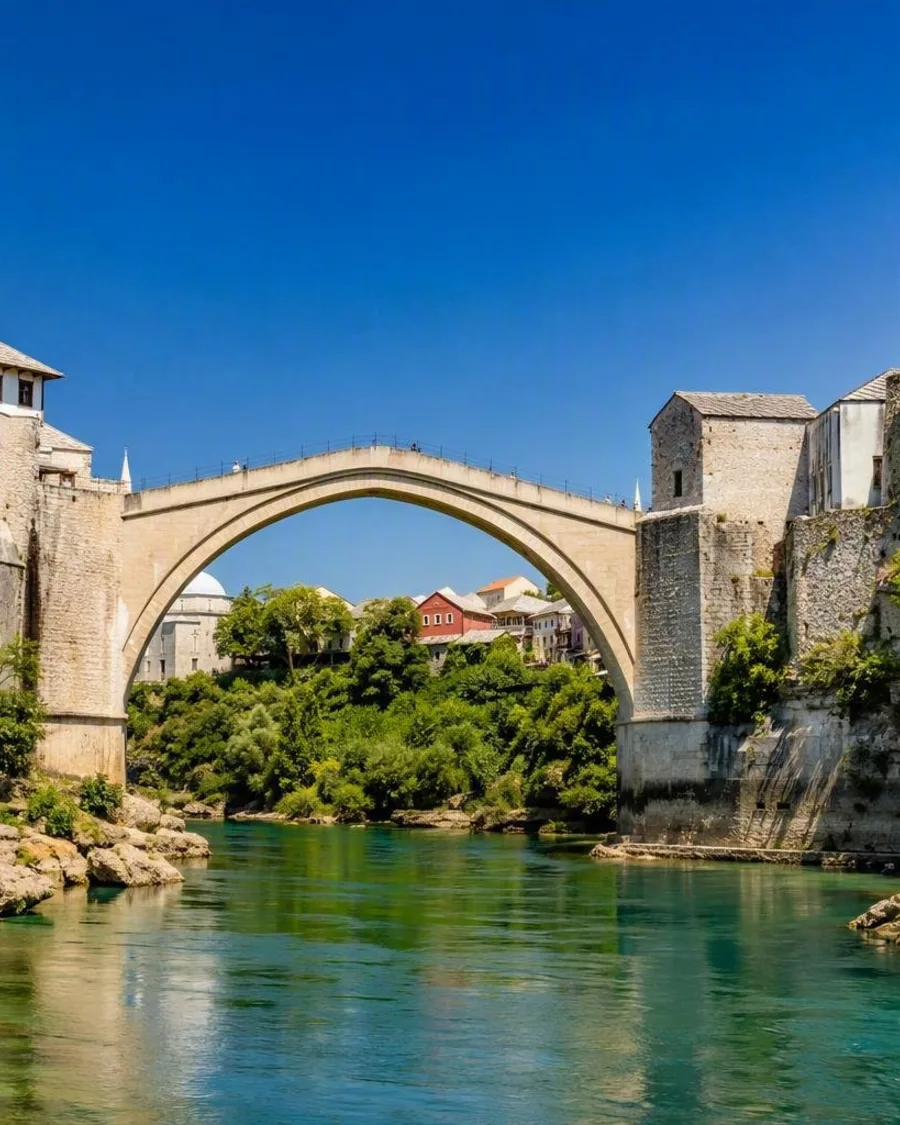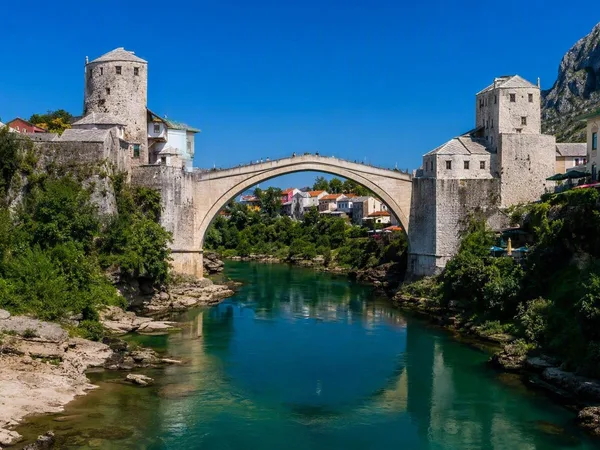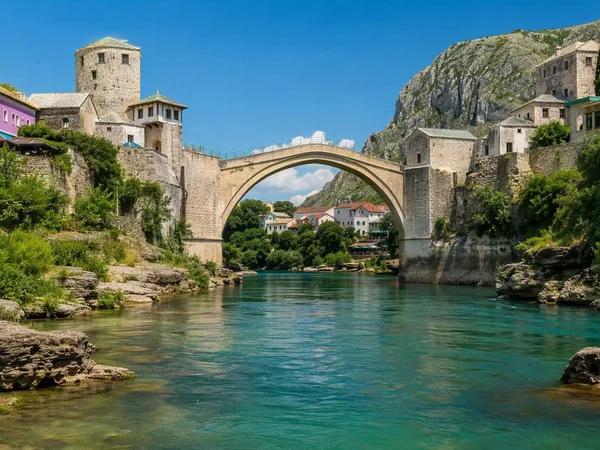
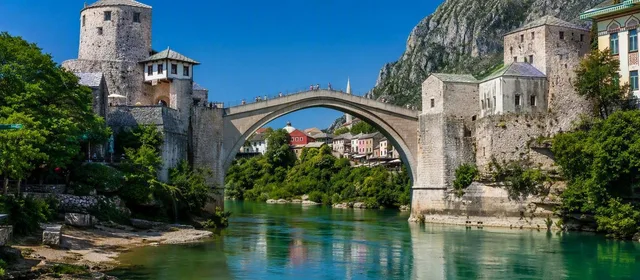
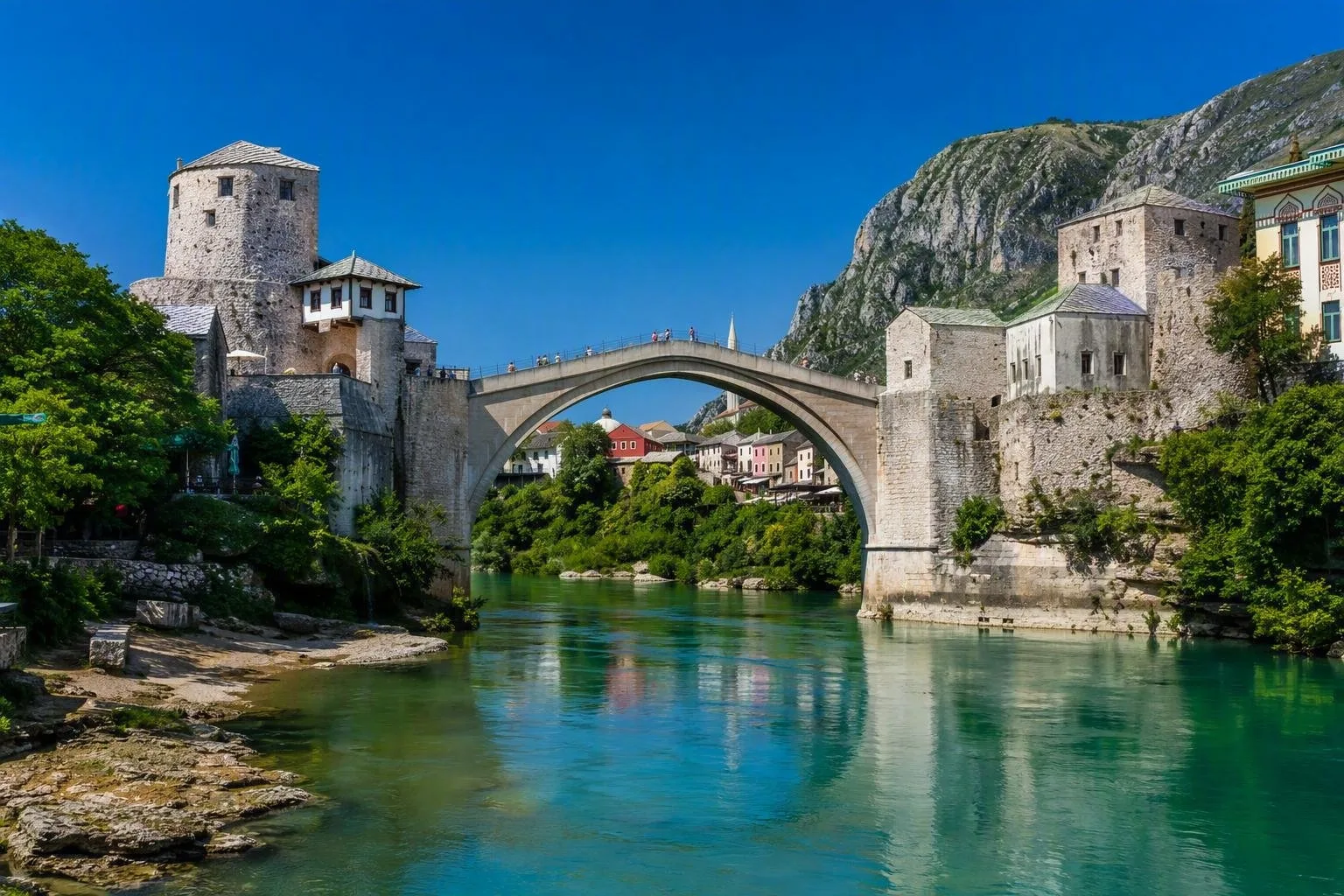
Mostar’s Stari Most is more than a postcard view: its pale stone arch crosses the turquoise Neretva between old Ottoman lanes, steep hills and buildings that still bear marks from the 1990s war. The bridge was destroyed in 1993 and rebuilt in 2004. That history matters, but so does the ordinary life around it: coffee poured slowly, market stalls opening in the morning and swimmers gathering by the river in summer. Bosnia and Herzegovina holds its past in plain sight without stopping there.
South of Mostar, the Buna River pours from a cave beneath the cliffside Blagaj tekke, a 16th-century dervish house. At Počitelj, stone houses, a mosque and a fort climb above the Neretva. These places share Ottoman roots and karst scenery, yet each feels distinct: Blagaj stays close to the water, while Počitelj looks over the valley from its hillside.
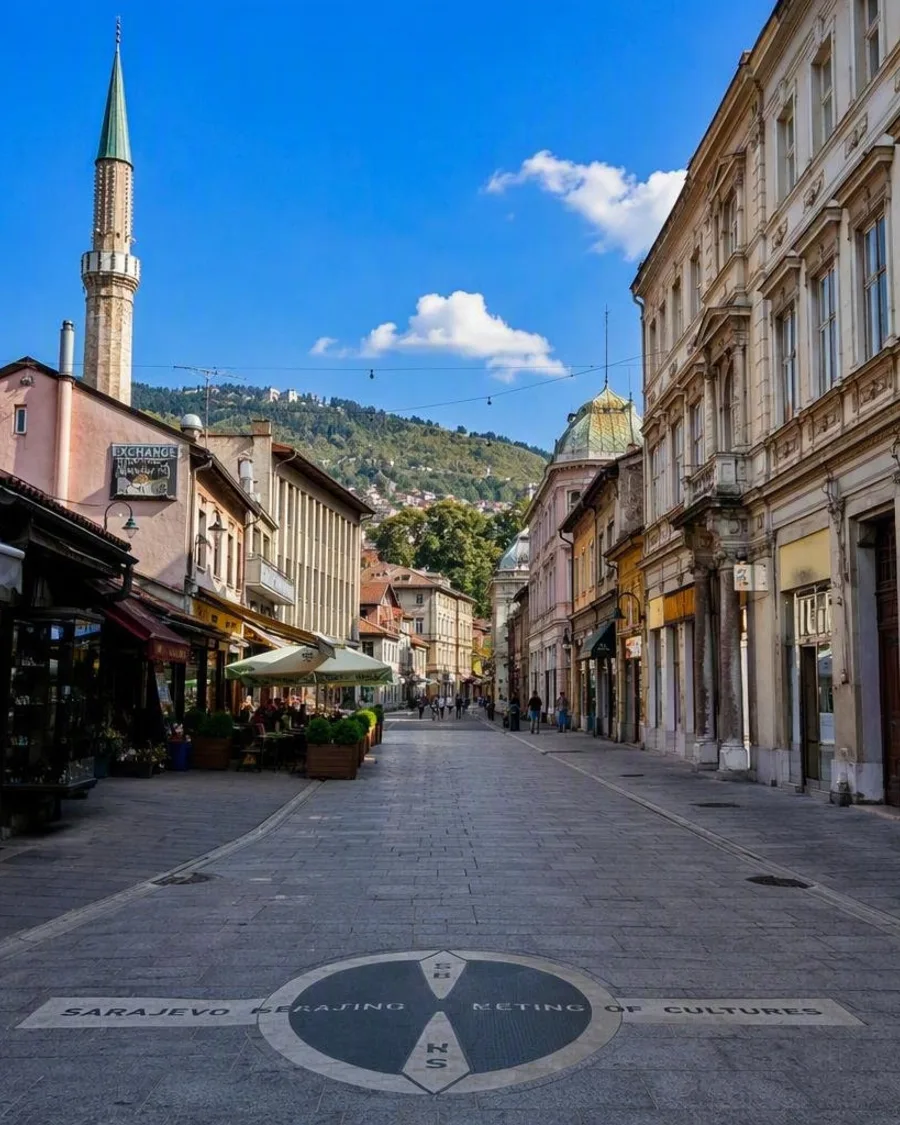
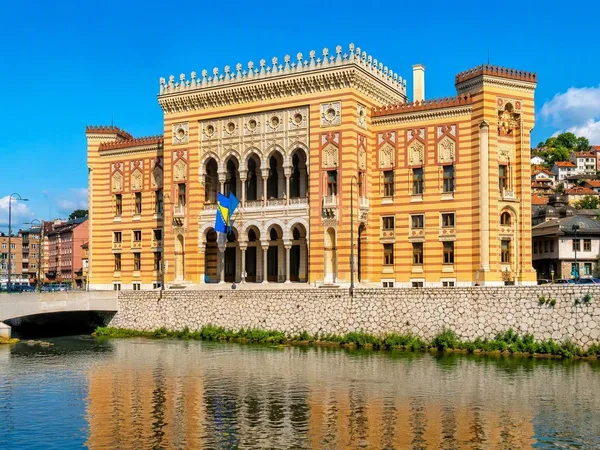
Sarajevo offers another change of pace. Coppersmiths tap metal in Baščaršija beside burek shops and coffeehouses. Walk west for a few minutes and Austro-Hungarian façades replace the bazaar’s low roofs. Museums trace the 1914 assassination, the 1984 Winter Olympics and the siege of the 1990s. Beyond the cities, trails cross Sutjeska National Park, where Perućica forest stands below the peaks around Maglić. Stay for Bosnian coffee, grilled ćevapi and the small towns between the better-known stops; they make room for a slower, warmer visit.