Singapore

Hawker stalls, shophouses and mangroves

Singapore

Singapore packs hawker stalls, tropical wetlands and four official languages into a compact island city-state.

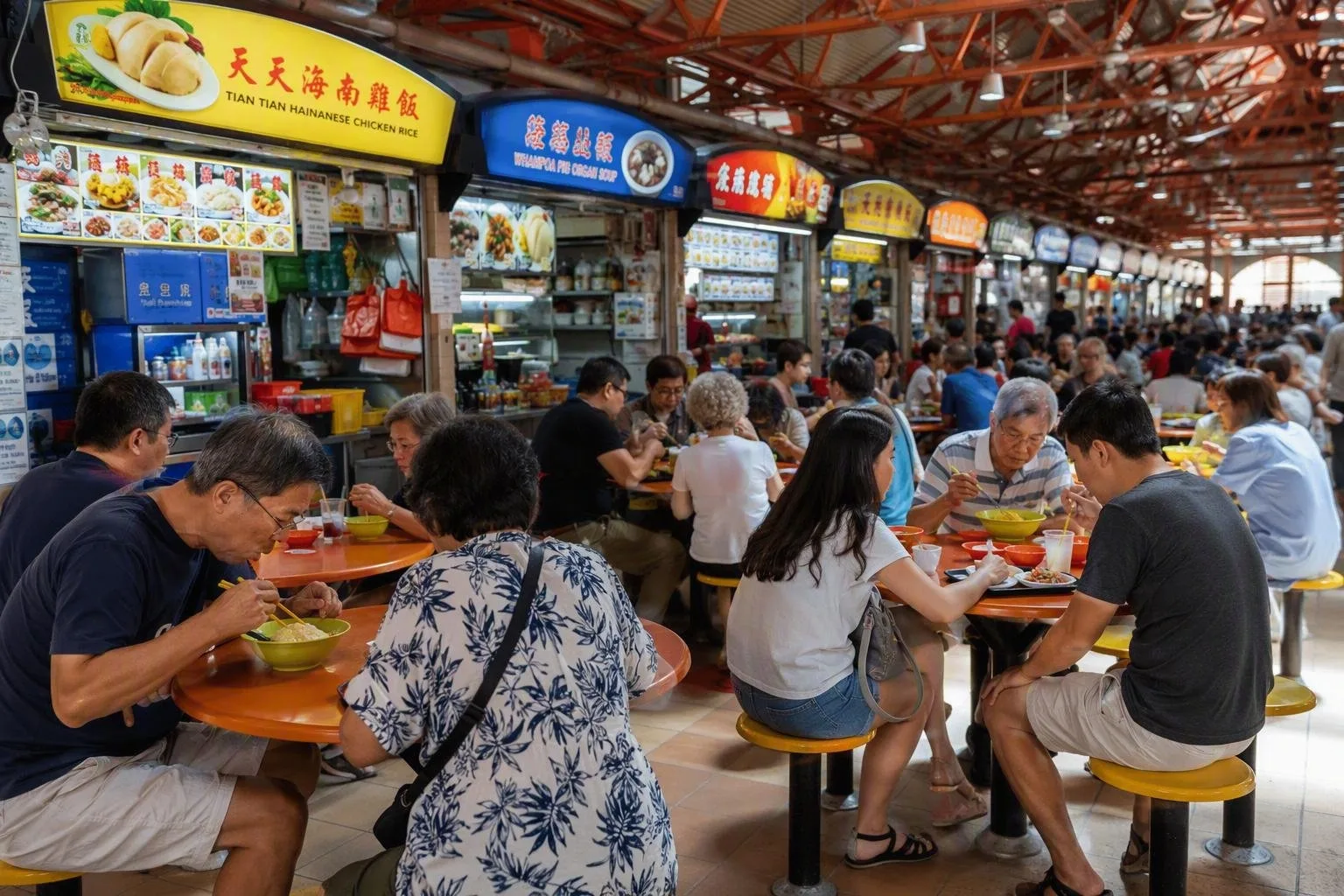
Singapore is worth a closer look because its polished skyline sits beside places with much older roots. A few MRT stops separate Marina Bay’s office towers from mangroves, old shophouses and patches of forest where long-tailed macaques live. The island measures about 50 kilometres from east to west, but Malay, Chinese, Indian, Peranakan and colonial histories fill its temples, family businesses and kitchens. Since independence, public housing towns, reservoirs and commercial districts have spread across the island without erasing every older landmark. The Supertrees at Gardens by the Bay draw the cameras, but hawker centres give a clearer view of daily life. Stallholders focus on single dishes such as chicken rice, laksa, roti prata or satay, while diners share tables beneath spinning fans.

In Kampong Gelam, the gold dome of Sultan Mosque rises above textile shops and restaurants. In Little India, flower garlands and spices line the streets near Sri Veeramakaliamman Temple. Boat Quay’s restored warehouses now house restaurants, while the Asian Civilisations Museum traces the port’s connections across Asia.

Away from the centre, boardwalks cross Sungei Buloh Wetland Reserve, where migratory birds feed on mudflats. On Pulau Ubin, paths pass flooded granite quarries, wooden kampong houses and coastal forest. Spend time over breakfast at a kopitiam, walk part of a park connector, then sit by the Singapore River after the office lights come on. Singapore has plenty to see at speed, but it also suits a slower day between neighbourhoods.

When to go

Best time to travel

The monthly values are indicative average maximum temperatures for Singapore city. Temperatures vary slightly between coastal, central and densely built areas, while rainfall and humidity can differ more across the island. The monthly values are indicative average maximum temperatures for Singapore city. Temperatures vary slightly between coastal, central and densely built areas, while rainfall and humidity can differ more across the island.

jan30.5°C feb31.2°C mar31.6°C apr31.7°C may31.6°C jun31.3°C jul31°C aug31°C sep31.1°C oct31.1°C nov30.9°C dec30.5°C

Weather in the capital

Practical Singapore

On every country page we show the current weather for the capital.

Singapore
Morning28°Cclear
Afternoon32°Cdrizzle
Evening29°Cclear
today32°C / 27°Chigh and low

Current forecast by Open-Meteo

Getting around

The MRT and public buses serve most districts and major sights. Taxis and ride-hailing services work well for late trips or places farther from a station.

Paying in Singapore

Cards and mobile payments are widely accepted, though some hawker stalls and small businesses prefer cash. ATMs are common in malls and MRT stations.

Where to stay

Marina Bay and Orchard Road have large hotels. Heritage districts have smaller properties, while hostels cluster near the city centre.

Before you leave

Worth knowing

A practical starting point for your trip. Check current conditions and local information before you leave.

01

Official languages

English, Malay, Mandarin and Tamil are official languages. English is widely used in transport, business and public information.

02

International calling code

Singapore’s international calling code is +65.

03

Driving side

Traffic drives on the left, and most vehicles have the steering wheel on the right.

04

Contactless transport payment

Contactless bank cards and mobile wallets work on MRT trains and public buses. Tap the same card or device when entering and leaving.

05

Using public buses

Signal clearly at the stop when your bus approaches. On board, press the stop button before your destination and usually leave through the rear door.

06

Tipping customs

Tipping is not customary. Many restaurants add a service charge to the bill.

07

Returning trays

Return used trays and crockery at hawker centres, coffee shops and food courts. Use the marked return station.

08

Meal times

Breakfast often runs from 7 to 10am, lunch from noon to 2pm, and dinner from 6 to 9pm. Individual hawker stalls set their own hours.

09

Business hours

Most malls and shops open around 10 or 11am and close around 9 or 10pm. Offices generally operate from Monday to Friday.

10

Metric measurements

Singapore uses kilometres, metres, litres, kilograms and degrees Celsius.

11

Mobile connectivity

Prepaid SIM cards and eSIMs are widely available. Wireless@SG provides public Wi-Fi at many stations, libraries, malls and community spaces.

12

Escalator etiquette

Stand on the left and leave the right side clear for people walking, especially in MRT stations.