From a Hauled Boat to Batumi’s Fish Counter
In Batumi, a documented small catch begins with a boat pulled from the Black Sea on wooden runners, not tied to a market quay. Nets and sacks carry the work forward, then scales and scissors finish it in the compact fish market near the port.
A boat comes out of the Black Sea
Batumi stands on a gulf of the Black Sea in southwestern Georgia, near the Turkish border. The sea has shaped the city since its early life as a port, and fishing remains a local practice alongside the larger commercial harbour.
The documented small boats work on a modest scale. Each carries up to three or four people, and workers bring the boats ashore on wooden sliding structures rather than mooring them at a quay.
That is where this short chain starts. A boat reaches land. The catch comes out. Then the work separates what can go on to sale from what still needs cleaning.
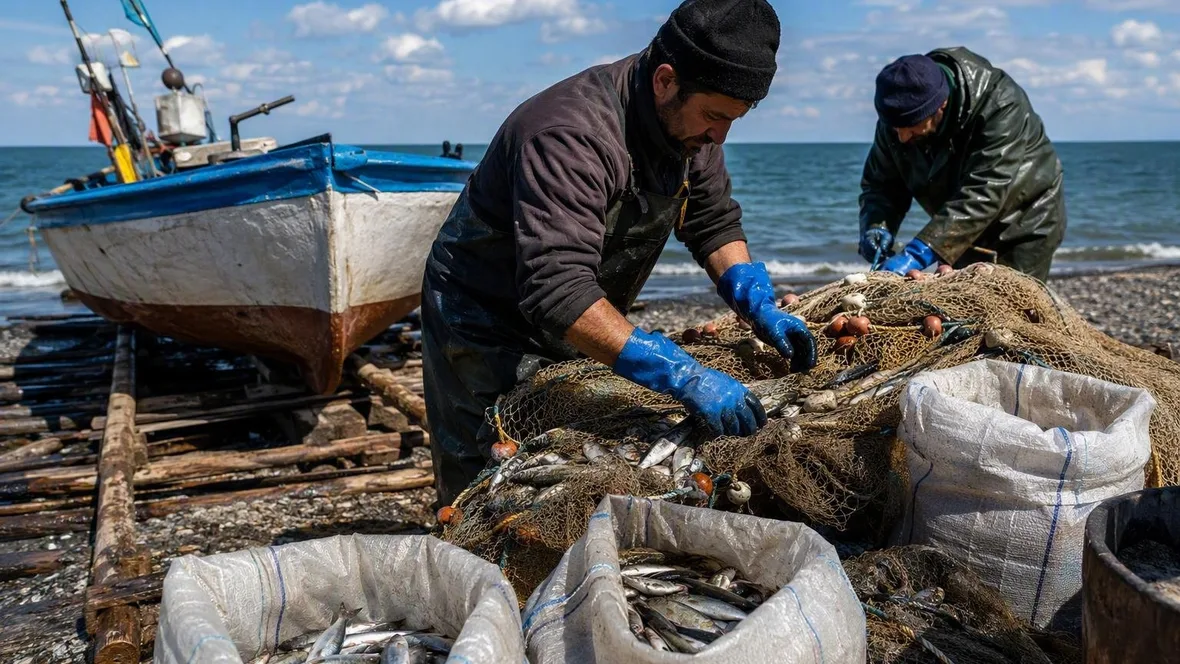
Sacks of mussels sit in the boat. Other catch collects in a landing net. Workers remove dirt from the mussels, while the landing net holds a mixed catch for sorting.
The materials stay close to the task. Wood carries the boat clear of the water. The net gathers the catch, and sacks keep the shellfish together while workers clean them. The sources do not support the familiar picture of fish boxes stacked on a rain-soaked metal dock, or knives flashing beside a boat. Here, the evidence is plainer: timber, netting, sacks and hands at work.
Nets, sacks and sorting hands
The catch does not move straight from sea to counter. Workers first clean the shellfish and sort what has gathered in the landing net. Those actions take place beside the small boat after it has been pulled from the water.
The sequence is physical and brief. The boat rests on its wooden runners. A net concentrates the catch in one place. Sacks hold mussels while dirt is removed. The cleaned and sorted catch then goes to the nearby fish market for weighing and sale.
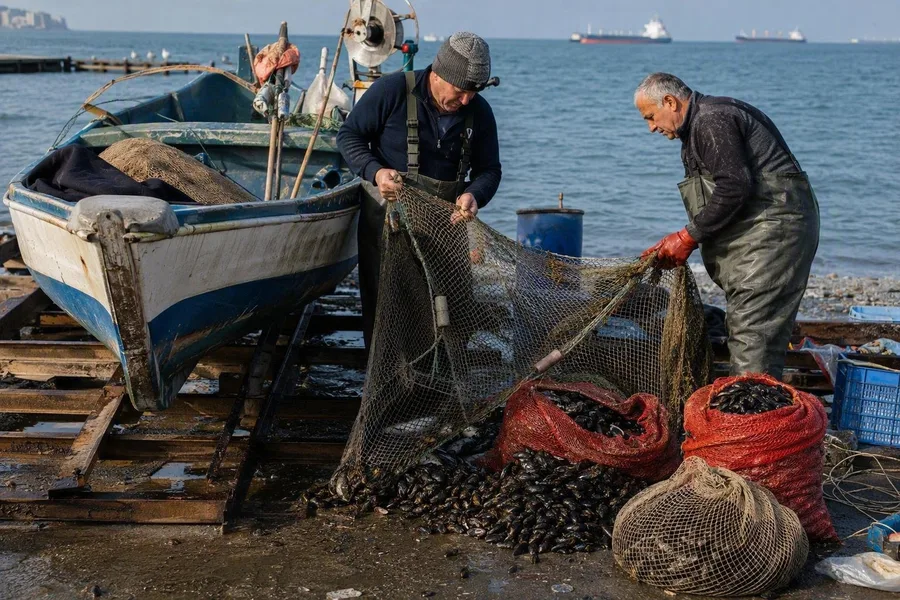 Workers sort a landing net beside a boat on wooden runners at Batumi’s shore.
This is not a claim that every fish at the market came from that boat. Batumi Fish Market also sells imported and frozen goods alongside fresh Black Sea fish. A tray on ice can therefore hold fish from more than one supply route.
The small catch still has a clear, documented path. It leaves the water in a net or sack, receives its first cleaning beside the hauled boat, and then enters a retail space where sellers weigh it for buyers.
Batumi’s shoreline explains the closeness of those actions without turning them into a single quay scene. The city sits directly on the Black Sea, and the market serves as a local point of sale for fish in a port-side district.
The counter at Baku Street 27
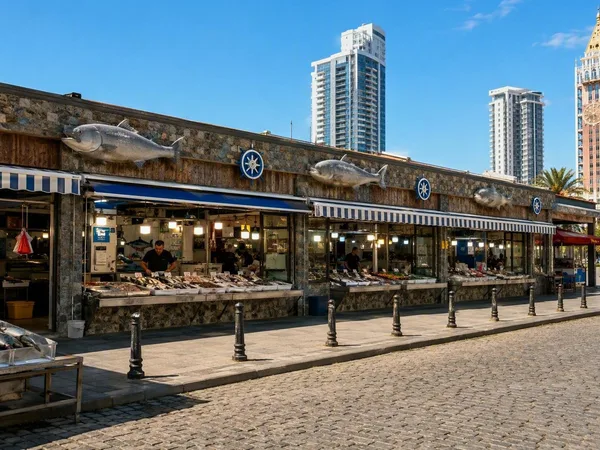
Batumi Fish Market stands at Baku Street 27, near the port and its fenced freight area. The building is low and single-storey, with only a few stalls visible from the entrance.
The market is a selling point, not the documented landing place for a particular boat. That distinction matters. The boat work happens at the shore; the market handles weighing, purchase and cleaning a short distance away.
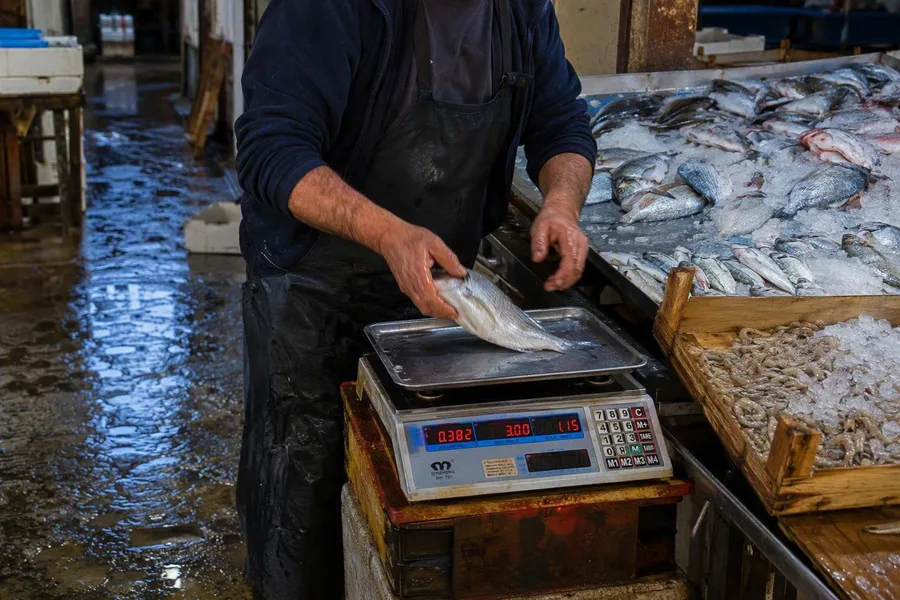 A seller weighs fish from ice at Batumi Fish Market on Baku Street 27.
Inside, fish lies on ice. Meltwater makes the floor wet. This is the supported wet surface in Batumi’s fish trade, rather than rain on an unverified metal quay.
The room keeps the work in view. Fish moves from ice to a scale, then to a cleaning surface. The modest number of stalls leaves little distance between display and handling.
The scale changes the catch into a purchase. Sellers select fish and weigh it for customers, who buy by weight. The weighing does not end the work. Buyers can have fish cleaned on the spot.
Scissors after the scale
A pair of scissors is documented in the cleaning process. Workers open fish with the scissors and remove the innards. That small detail gives the market counter a practical role beyond display: it handles fish after the sale as well as before it.
Some cleaned fish can go onto metal skewers for smoking. The metal belongs to that later preparation, not to a claimed dockside surface. The distinction keeps the work legible: wood for hauling the boat, netting and sacks for the catch, ice for the counter, a scale for sale and scissors for cleaning.
The market’s few stalls suit this compressed run of tasks. A fresh catch does not need to pass through a large auction hall before retail sale in the documented account. It is cleaned and sorted near the boat, carried on to the market, weighed at the stall and cut open after purchase.
Fresh Black Sea fish appears there daily, although imported frozen stock shares the market space. The market therefore gives Batumi’s small-scale fishing work a visible endpoint without pretending that every counter display comes from the same shore landing.
Practical: Batumi Fish Market is in the Boni-Gorodoki area at Baku Street 27. Fish is sold by weight and can be cleaned at the market.
After the catch has moved on, the small boat remains on its wooden supports. The landing net lies empty beside it on the shore.
Keep exploring