Eight European cities best read from a tram window
A good tram route does more than join landmarks. It follows the grades, quays and street plans that shaped a city, then leaves enough time to see them from a seat by the window. These eight rides turn everyday public transport into a clear route through the urban grain.
Lisbon: down from Graça on the 28E
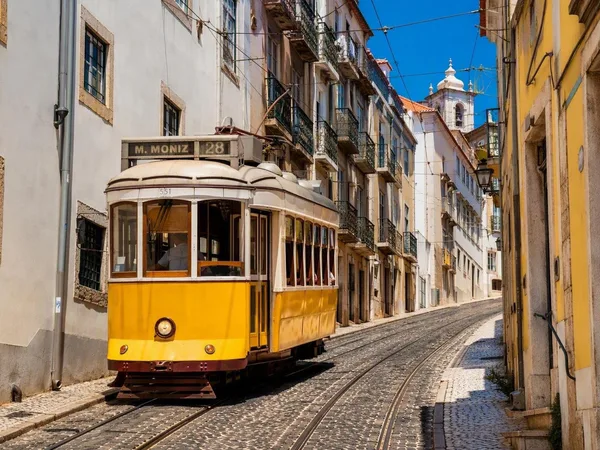
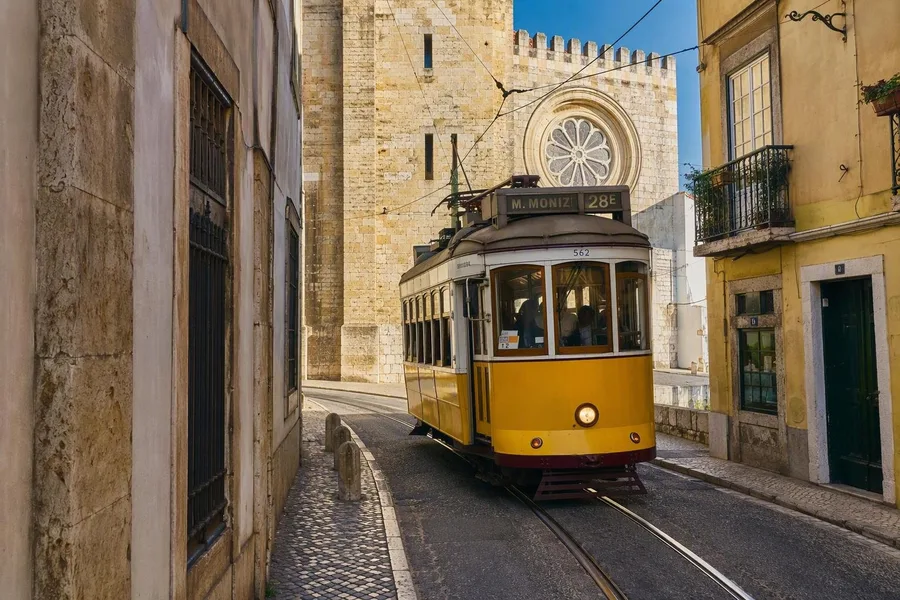 Lisbon’s compact 28E tram passes the Sé through Alfama’s tight streets.
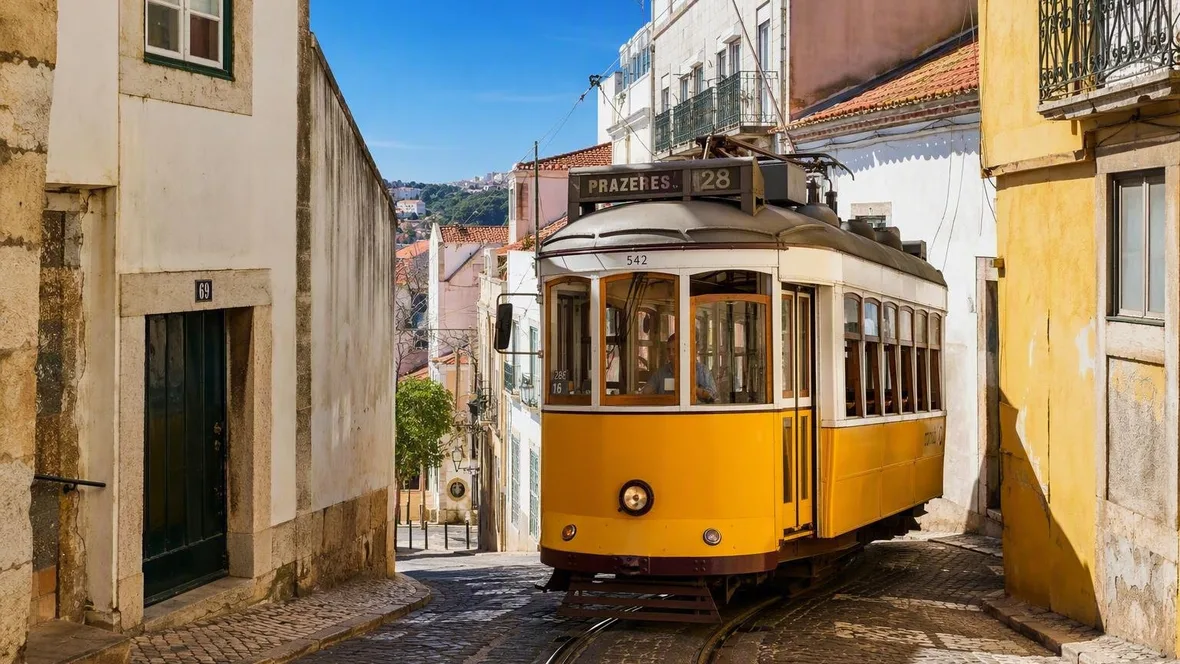
Lisbon’s 28E leaves Martim Moniz and climbs towards Graça in a compact Remodelado tram, built to handle steep streets, sharp bends and façades pressed close to the rails. The wooden interior creaks, and the bell warns people at the tightest passages.
From Graça, the tram drops past São Vicente de Fora into Alfama. Medieval lanes fold down the slope around Portas do Sol; at the Sé, the route reaches the cathedral before entering the flatter, planned streets of Baixa. It then rises again through Chiado to Estrela, Campo de Ourique and the terminus beside Prazeres cemetery. The route explains why Lisbon kept these small cars: larger trams would not fit this old street pattern.
Porto: tram 1 beside the Douro
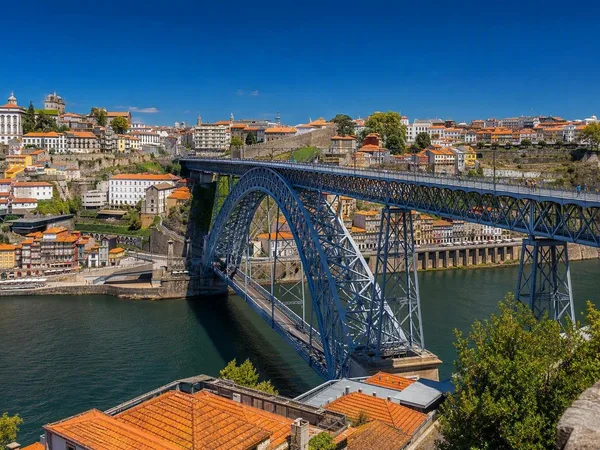
Porto’s tram 1 takes the north bank of the Douro from Infante, beside Ribeira, to Passeio Alegre at Foz. It passes Alfândega, Monchique, Cais das Pedras, the Museu do Carro Eléctrico and Massarelos, then runs beneath Ponte da Arrábida.
The yellow historic cars carry polished wood, wooden benches, narrow doors and hand-operated bells. More importantly, their slow pace keeps the river in view. Dense quays and old trading buildings near Ribeira give way to less crowded banks, then to the gardens at Passeio Alegre, where the Douro reaches the Atlantic. The line avoids Porto’s steep upper streets and stays with the water all the way west. A sensible refusal to hurry.
Prague: tram 22 from the castle hill
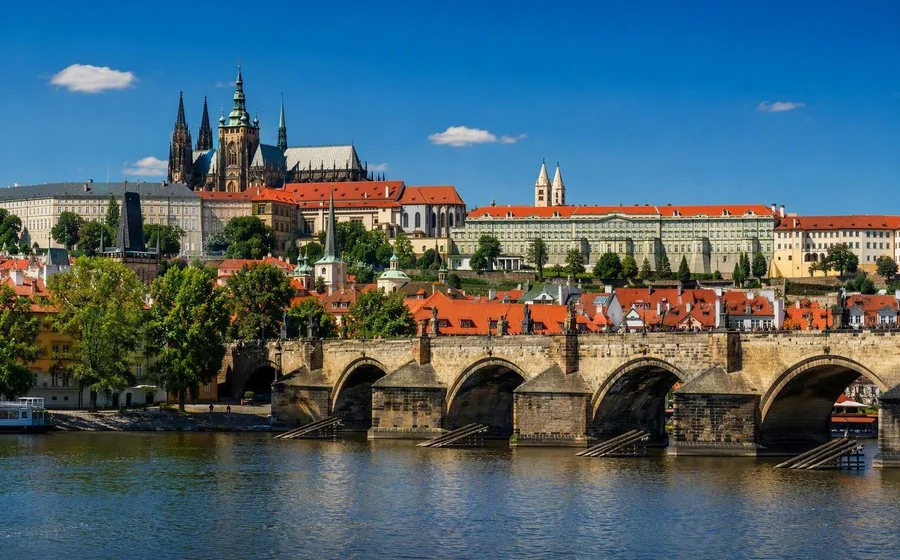
Take tram 22 at Pohořelec and let it descend towards Malá Strana. The tracks run down from the castle district through narrow curves, past the Praagse Burcht, into the baroque quarter where St Nicholas Church dominates Malostranské náměstí.
The tram crosses the Vltava on Most Legií beside the gilded roof of the National Theatre. On the far bank, the streets widen. Late nineteenth-century apartment blocks in Vinohrady replace the steep lanes below the castle, and the line continues into the residential city beyond the historic core. Tram 22 does the uphill work as well, which remains one of civilisation’s better arrangements.
Vienna: line D along the Ringstraße
Line D comes down from Nußdorf through Spittelau and past Franz-Josefs-Bahnhof before reaching the Ring near the Votivkirche. The boulevard has its unusual width because Vienna laid it out after the demolition of the city walls in 1857.
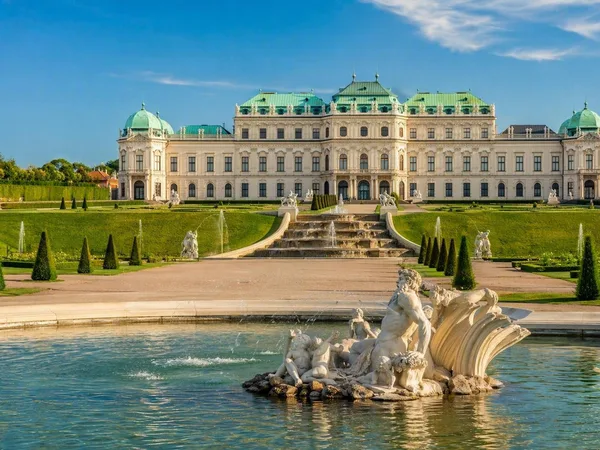
Rathaus, Burgtheater, parliament, Hofburg, Burggarten and the Staatsoper pass in sequence along the former edge of the walled city. Neo-Gothic, classical and Renaissance-inspired façades stand shoulder to shoulder, a public display of nineteenth-century imperial Vienna. Line D turns at Schwarzenbergplatz and reaches the Belvedere, where a palace replaces the usual anonymous terminus.
Budapest: tram 2 on the Pest embankment
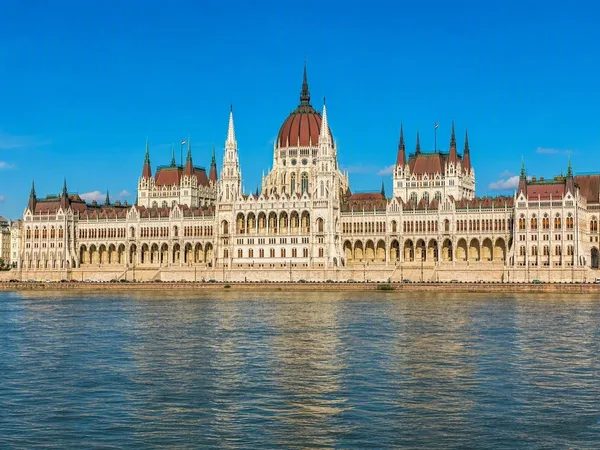
Tram 2 runs from Jászai Mari tér towards Közvágóhíd with the Danube close beside the tracks. This alignment has a practical history. The embankment was built as part of nineteenth-century flood protection, and the tramway opened here between 1896 and 1900; near the promenade, riveted iron columns raised the line above the walking space.
At Kossuth Lajos tér, the tram passes Parliament. Near Széchenyi István tér, the Chain Bridge and Buda Castle fill the far bank; farther south, Vigadó, the riverside promenade and Gellért Hill take their turn. Water stays on one side, while Pest’s squares and monumental buildings hold the other.
Amsterdam: tram 2 from Centraal to Museumplein
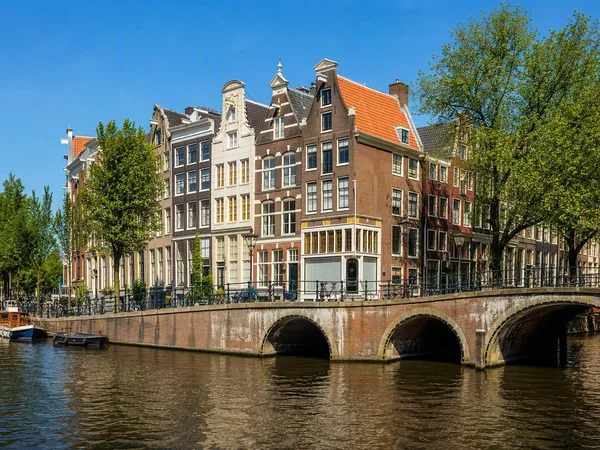
Amsterdam’s tram 2 leaves Centraal Station via Nieuwezijds Kolk, Dam Square and Koningsplein. It crosses Keizersgracht and Prinsengracht, works along the narrow Leidsestraat and reaches Leidseplein.
Canals appear in short flashes rather than as one grand panorama. The tram then reaches the more open ground around Museumplein, with the Rijksmuseum, Van Gogh Museum and Stedelijk Museum nearby; Vondelpark sits on the same corridor. Continue beyond the museums and the route moves into Oud-Zuid and residential districts towards Nieuw Sloten. Amsterdam has no hills to conquer. It spreads sideways, across bridges and through changing street widths.
Zürich: line 4 from hillside to Zürich-West
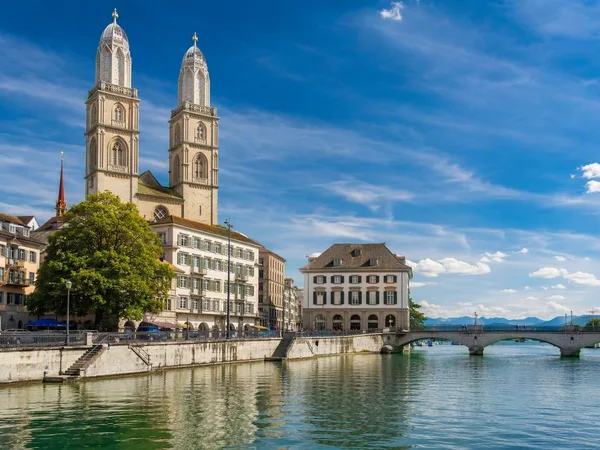
Line 4 starts at Rehalp on Zürich’s southeastern side and comes down through Hegibachplatz and Kreuzplatz to Stadelhofen and Bellevue. It follows Limmatquai through the old town past Helmhaus and Rathaus, crosses by Rudolf-Brun-Brücke, then reaches Central and the Hauptbahnhof.
West of the centre, the same line shows a different Zürich. Between Escher-Wyss-Platz and Altstetten Nord, tracks opened in 2011 through Zürich-West, a former industrial area now used for homes, offices and cultural spaces. The tram runs largely on its own reservation beside trees, planted central strips and broad walking and cycling paths along Pfingstweidstrasse. Old-town quays and former factory land sit on one continuous ride.
Milan: tram 1 to Arco della Pace
Milan’s tram 1 runs through the central city from the broad avenues around Repubblica and Piazza Cavour towards Montenapoleone, Teatro alla Scala and Cordusio. It continues past Cairoli and Castello Sforzesco, beside Parco Sempione, to the neoclassical Arco della Pace.
A Carrelli may appear on the service, although the historic vehicle is not guaranteed. These early twentieth-century trams retain polished wooden interiors, large windows and inverted glass lamps, but they still run in everyday service.
Tickets in brief
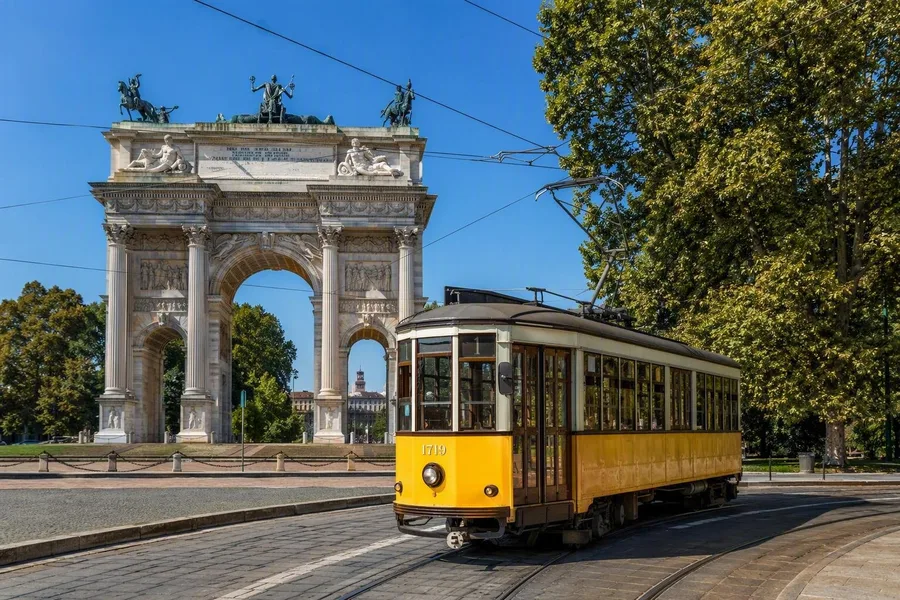 Tram 1 stops beside Parco Sempione beneath Milan’s Arco della Pace.
Reservations are not needed for these tram rides. Lisbon’s 24-hour Carris and Metro ticket costs €7.25; Prague’s costs 140 Kč in the app or 150 Kč on paper; Vienna’s digital 24-hour ticket costs €9.70; and Budapest’s 24-hour travelcard costs 2,750 Ft. Amsterdam’s GVB day ticket is €10, Zürich’s 24-hour ticket for the relevant one-to-two-zone trip is CHF9.40, and Milan’s day ticket is €7.60.
At Arco della Pace, tram 1 stops beside Parco Sempione. The doors fold open, the wooden car rattles away, and the pale arch remains above the rails.
Keep exploring
Places in this story
Europe
10 landen en gebieden
Portugal
Czechia
Austria
Lisbon
Porto
Prague
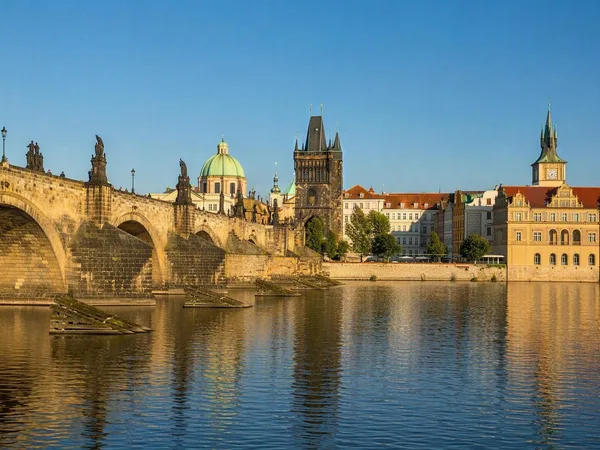
Prague is the Czech capital on the Vltava River, where the castle hill, Lesser Town, Old Town and New Town form a dense historic core. Tram 22 is a useful spine between the castle district and the city beyond.
Vienna
Budapest
Amsterdam
Zürich