Czechia

Stone bridges, forest trails and Moravian wine

Czechia

Czechia pairs Prague’s architectural grandeur with spa towns, wooded highlands and a strong culture of beer and wine.

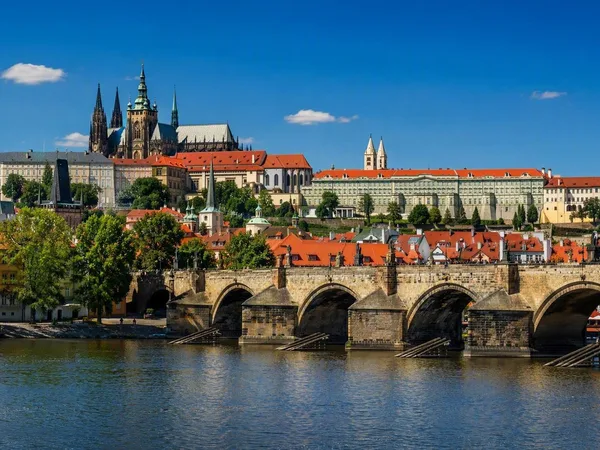
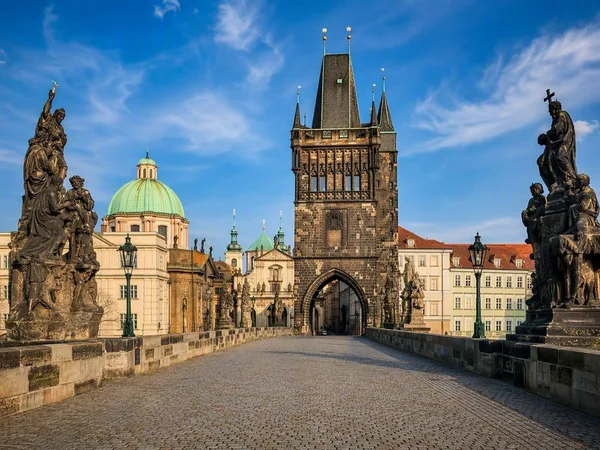
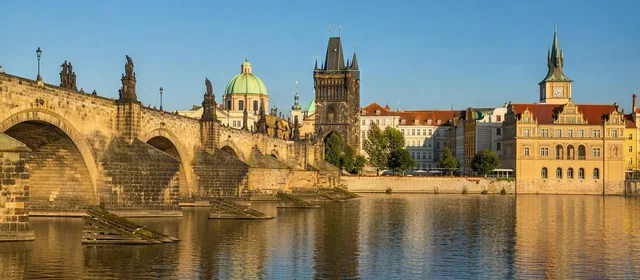
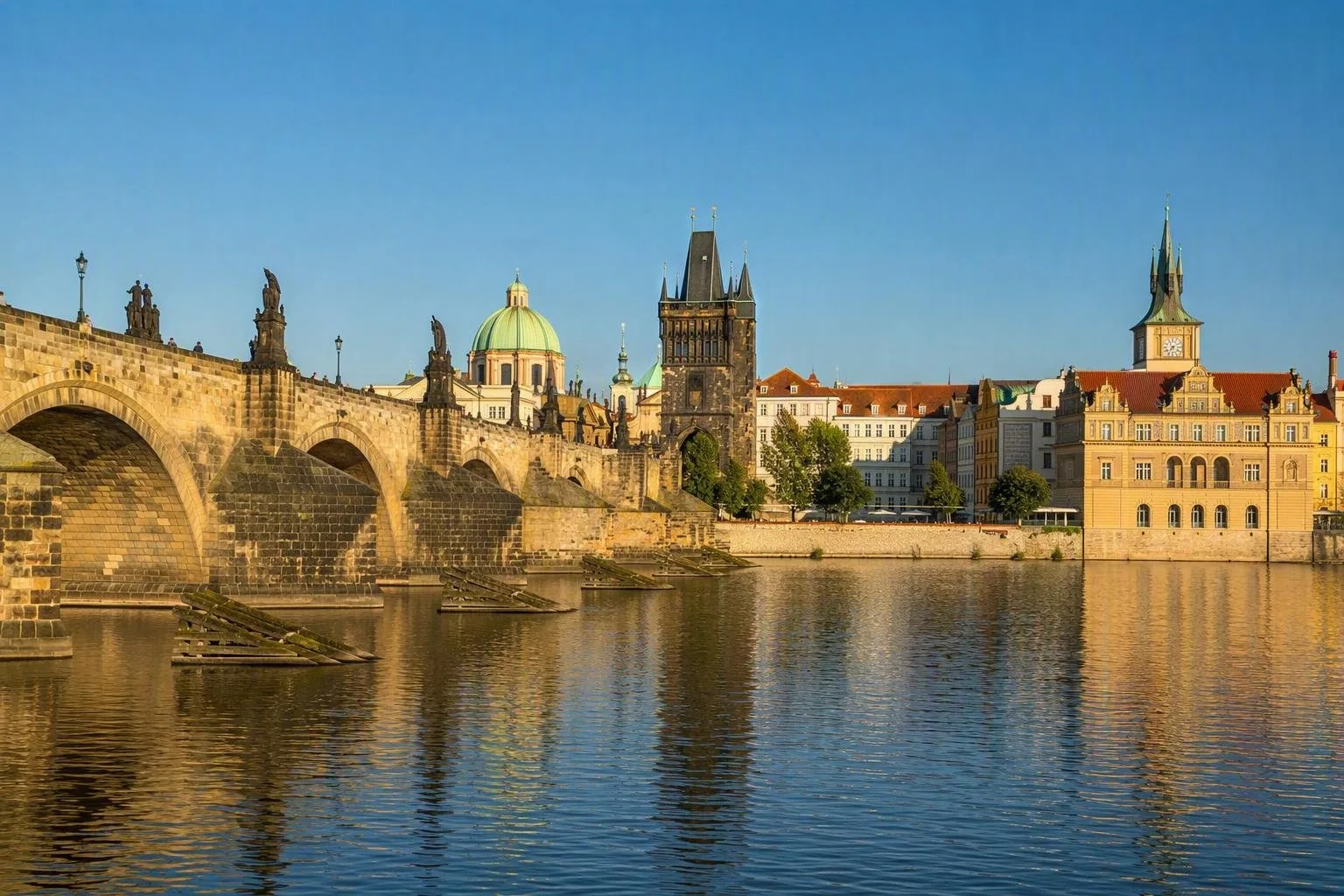
Prague makes a strong first impression, but Czechia opens out quickly beyond the capital. Charles Bridge spans the Vltava below Prague Castle, with Gothic lanes on one bank and Baroque façades on the other. The city also holds functionalist villas, former industrial sites and neighbourhood pubs where a beer arrives with little ceremony. Beyond Prague, Renaissance squares sit at the centre of small towns, marked paths run through sandstone cliffs and wooded hills, and mineral springs fill the colonnades of Karlovy Vary and Mariánské Lázně. Bohemian kings, the Habsburg monarchy, industrialisation, Jewish and German communities, communist rule and the 1989 revolution all left traces in streets, buildings and family histories.

In South Bohemia, Český Krumlov follows a bend in the Vltava beneath its castle. Fishponds near Třeboň recall a landscape shaped for centuries by carp farming. In the east, Brno has modernist landmarks, busy cafés and old beer halls. South Moravia shifts the table from beer to wine: vineyards surround Mikulov and Znojmo, and cellar villages pour local whites such as Grüner Veltliner and Riesling.

Czech cooking still leans on roast meat, dumplings and rich sauces, while bakeries sell rolls and cakes for the everyday routine. Plzeň and České Budějovice remain important brewing towns, and small breweries operate in villages and city districts across the country. Take a few days beyond Prague, whether for a spa colonnade, a castle town or a glass of Moravian wine. Czechia is easy to explore at a slower pace.

When to go

Best time to travel

The monthly values are indicative average maximum temperatures for Prague. Conditions vary meaningfully between lowland cities, upland areas and the mountain regions. The monthly values are indicative average maximum temperatures for Prague. Conditions vary meaningfully between lowland cities, upland areas and the mountain regions.

jan3°C feb5°C mar10°C apr16°C may20°C jun24°C jul26°C aug26°C sep20°C oct14°C nov8°C dec4°C

Weather in the capital

Practical Czechia

On every country page we show the current weather for the capital.

Prague
Morning14°Cclear
Afternoon11°Covercast
Evening19°Cclear
today24°C / 11°Chigh and low

Current forecast by Open-Meteo

Getting around

Trains link the main cities, while regional buses reach smaller towns and villages. Prague has a metro, tram and bus network; Brno, Ostrava and several other cities also run extensive tram services.

Paying in Czechia

Cards are widely accepted in cities and tourist areas, but some small businesses and rural venues prefer cash. Prices are shown in Czech koruna; check the exchange rate before accepting a conversion at a card terminal or cash machine.

Where to stay

Choices range from city hotels and historic pensions to rural guesthouses, campsites and mountain lodges. Prague and Český Krumlov often fill up for busy weekends and major events, so book early for a wider choice.

Before you leave

Worth knowing

A practical starting point for your trip. Check current conditions and local information before you leave.

01

Calling code

Czechia’s international calling code is +420. Czech telephone numbers normally have nine digits after the country code.

02

Language

Czech is the official language. English is common in tourist areas and among many younger people. “Dobrý den” is a polite formal greeting during the day.

03

Driving conventions

Traffic drives on the right, and drivers overtake on the left. Road signs use standard European symbols, and distances appear in kilometres.

04

Ticket validation

Paper tickets often need validation at the start of a journey. App tickets may need activation before boarding, and the system varies by city.

05

Rail travel

Several operators run domestic trains, and some tickets are valid only with the named company. Seat reservations may be optional or sold separately, depending on the service.

06

Tipping

In restaurants, people commonly round up or leave about 5–10% for good service. Tell the server the total amount you want to pay rather than leaving change on the table.

07

Meal times

Lunch commonly falls between 11:30 and 14:00, and many restaurants serve weekday lunch menus. Dinner usually starts from about 18:00.

08

Business hours

Many shops open from morning until early evening, while supermarkets often stay open later. Smaller businesses may close earlier on Saturdays and stay closed on Sundays.

09

Mobile connectivity

Mobile coverage is generally strong in towns and along main routes. Free Wi-Fi is common in cafés, restaurants, stations and public buildings.

10

Measurements

Czechia uses the metric system. Distances are measured in kilometres, fuel in litres and food in grams or kilograms.

11

Cycling

Marked cycle routes run through cities and rural areas, but protected lanes are not continuous. Cyclists keep to the right and follow normal traffic rules.

12

Everyday etiquette

Use a formal greeting when entering a small shop or meeting someone for the first time. People commonly remove their shoes when entering a private home.

Cities and hotspots

Places worth saving

From city to nature reserve: places with stories, facts and tips.