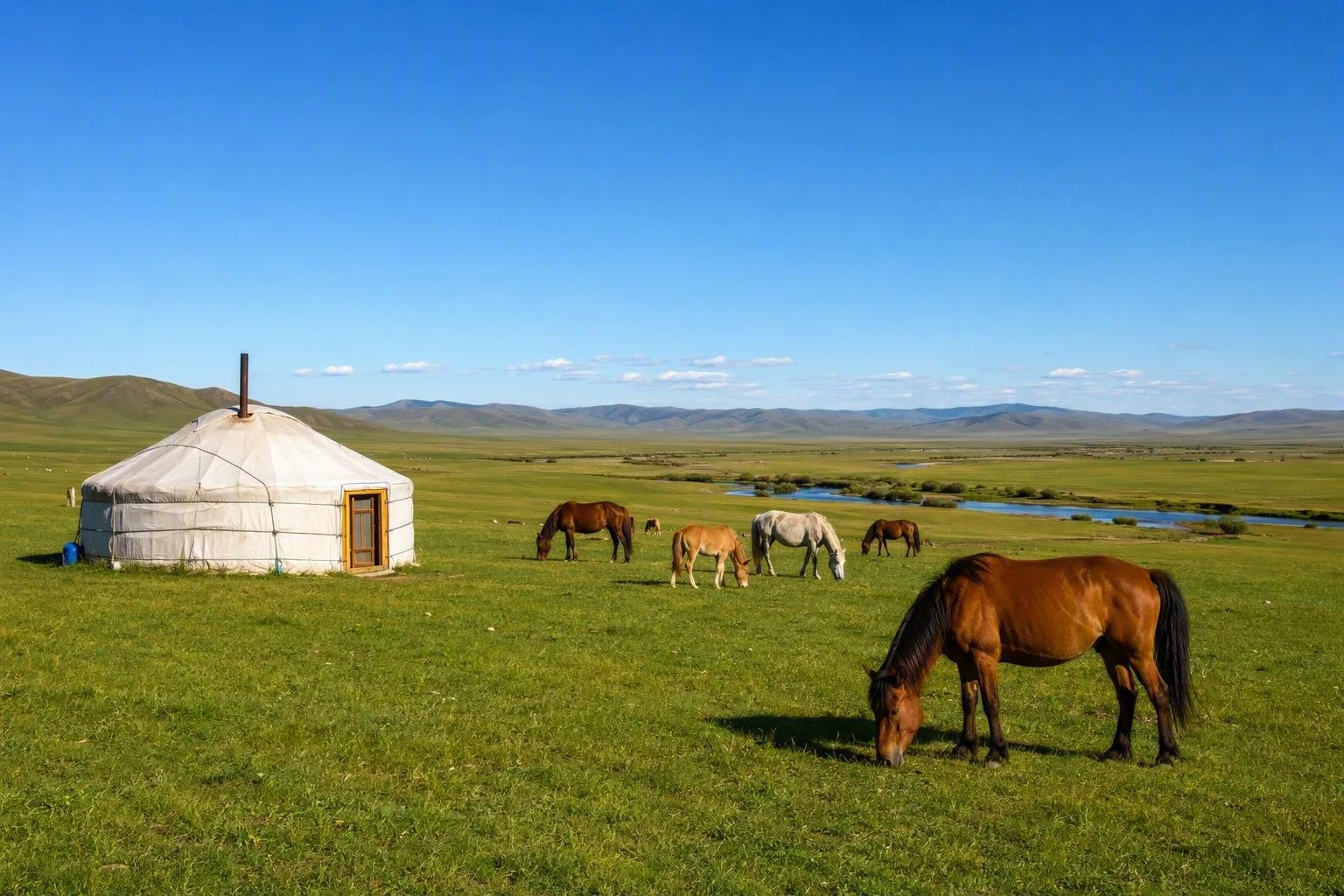
Nearly half of Mongolia’s population lives in Ulaanbaatar, a crowded valley of apartment blocks, traffic, Buddhist temples and new glass towers beneath bare hills. Leave the city and the settlements soon thin out. Herders take sheep, goats, cattle, yaks and horses between seasonal pasture, and white gers stand beside wells, rough tracks and family camps. The country’s scale becomes clear quickly: a long drive can pass little more than grazing animals, distant hills and a motorbike rider carrying supplies home.
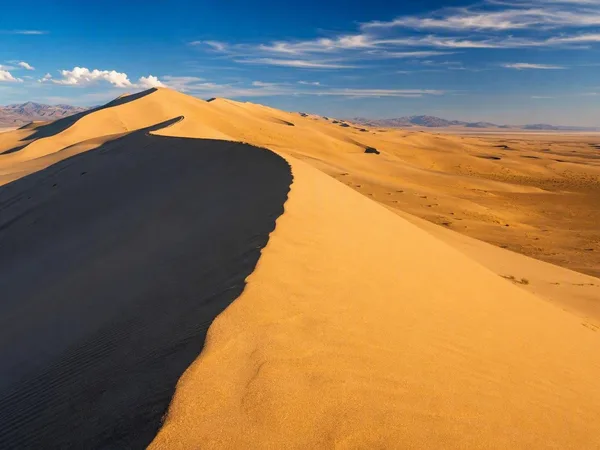
The landscapes change sharply from one region to the next. In the Orkhon Valley, green pasture surrounds the ruins of Karakorum, once the Mongol Empire’s capital, and Erdene Zuu Monastery. In the Gobi, Bactrian camels cross gravel plains near the dunes of Khongoryn Els, while the red cliffs of Bayanzag hold dinosaur fossils. Around Lake Khövsgöl in the north, larch forest, clear water and mountains replace the dry southern plains.
Ulaanbaatar gives these places historical and cultural context. The National Museum covers steppe empires and twentieth-century statehood, and Gandantegchinlen Monastery shows Buddhism’s return to public life after the socialist period. In July, Naadam fills stadiums and local fields with wrestling, horse racing and archery. On family tables, mutton dumplings, salted milk tea and dried curds reflect the food stores of herding households and long winters. Give Mongolia time in the capital and beyond it, and its people and places stay with you long after the open road ends.