The world’s 10 most remarkable deserts, ranked
In Egypt’s White Desert, wind-blown sand has carved snow-white chalk into mushrooms, cones and solitary towers. This deliberately subjective ranking weighs access alongside landscape and distinctive character, so a spectacular place can fall when reaching it requires a serious expedition.
Getting to the ten deserts
The last stretch often decides the trip. The White Desert needs a local 4x4 crew from Bahariya; the Thar is reached from Jaisalmer, then by camel or jeep beyond the dune edge. The Simpson requires a high-clearance 4WD, a vehicle pass and specialist preparation, while the Gobi usually calls for a driver-guide from Dalanzadgad. Camps can arrange 4x4 transfers into Wahiba Sands and Erg Chebbi. A normal car reaches Death Valley’s main sights, and Calama provides flight connections and transfers to San Pedro de Atacama. Wadi Rum camps collect guests by 4x4 from the village; at Sossusvlei, a shuttle crosses the final soft sand. Budget for Death Valley’s US$30 private-vehicle entry and Wadi Rum’s 7 JOD international entry before jeep trips or camping. Valle de la Luna requires an advance reservation, while remote desert camps are best booked with their transfers.
10. White Desert, Egypt
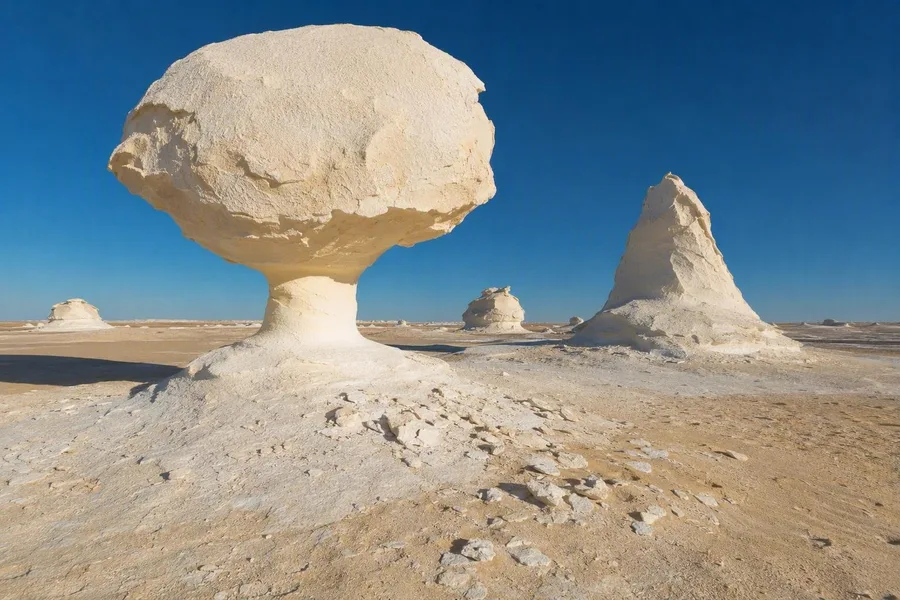 Wind-sculpted chalk mushrooms and cones rise from Egypt’s White Desert.
The White Desert replaces the expected gold of the Sahara with chalk. Wind-blown sand, temperature shifts and uneven weathering have cut pale limestone into narrow-necked mushrooms, leaning cones and detached figures. Few deserts offer such an abrupt change of material and colour.
That geology earns its place, but access holds it at number ten. Travellers reach Bahariya Oasis first, then continue with a local desert crew, usually on an overnight 4x4 trip. The formations are exceptional; the route is not especially direct.
9. Thar Desert near Jaisalmer, India
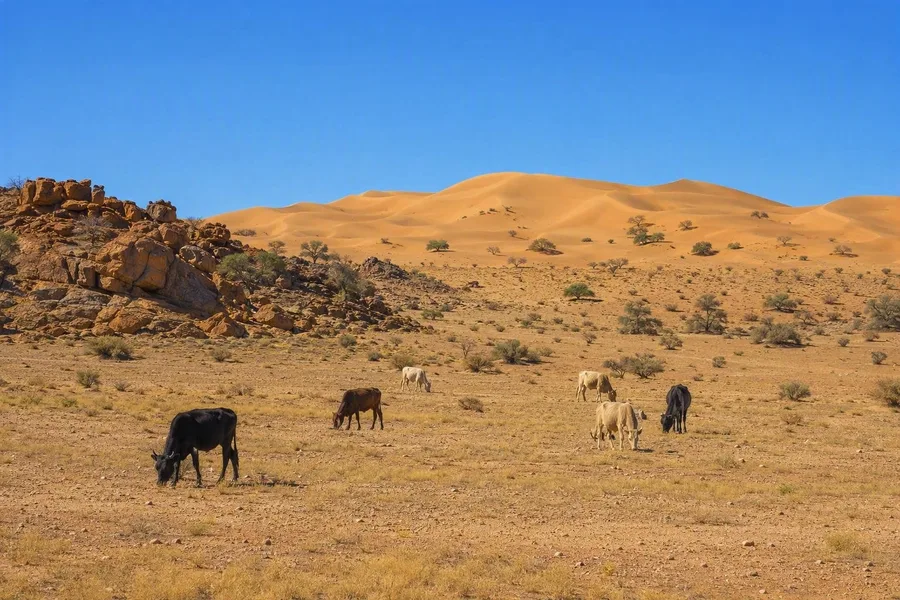 Grazing livestock move between dunes and jagged rocks in the Thar near Jaisalmer.
Near Jaisalmer, dunes share the ground with jagged rock, salt lakes, villages and grazing livestock. Desert National Park also shelters the seriously threatened great Indian bustard. This is a desert where daily work remains visible beyond the sand.
Jaisalmer gives that setting depth. The former caravan centre contains a still-inhabited Rajput hill fort, Jain temples and water-harvesting structures inside its walls. Trains and flights make the city relatively easy to reach, but the Thar’s varied terrain lacks the single defining landform of the deserts above it.
8. Simpson Desert, Australia
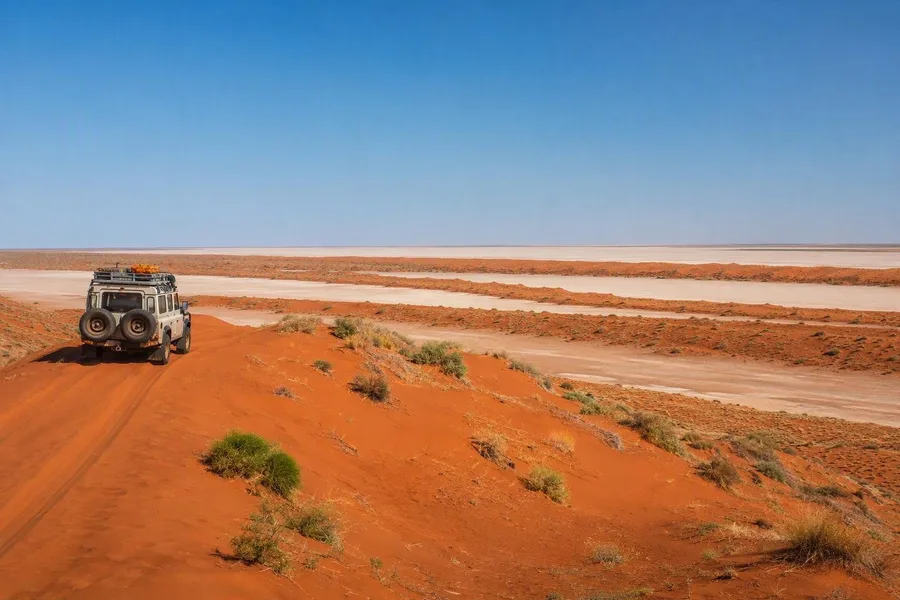 A high-clearance 4WD crosses a red sand ridge in Australia’s Simpson Desert.
Wind has arranged the Simpson’s red sand into almost parallel ridges, some running for up to 200 kilometres. Between them lie flat white playas, where floodwater can briefly gather before evaporation leaves bright salt.
The repeated dune lines give the Simpson a strong visual identity. Yet high-clearance 4WDs, permits and self-sufficient travel are required, and the park closes during the hottest period. That physical barrier keeps this formidable wilderness at eighth.
7. Gobi, Mongolia
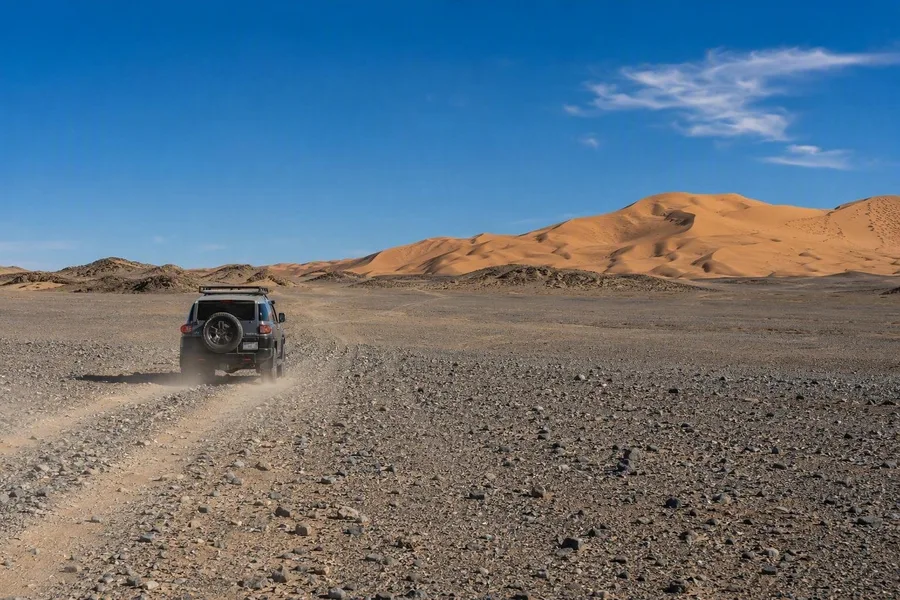 A local driver crosses the Gobi’s gravel plain by 4x4 toward Khongoryn Els.
The Gobi is mostly stone. Gravel plains, dry gullies, low hills and rocky mountains cover more ground than sand, with the Khongoryn Els dunes rising as a dramatic exception. At Bayanzag, the Flaming Cliffs entered palaeontological history when researchers found the first documented dinosaur eggs there.
This range gives the Gobi unusual depth, from fossil beds to singing dunes. Large distances, rough ground and limited wayfinding usually require a local driver and 4x4, so its best-known sites take more planning than the deserts below it.
6. Wahiba Sands, Oman
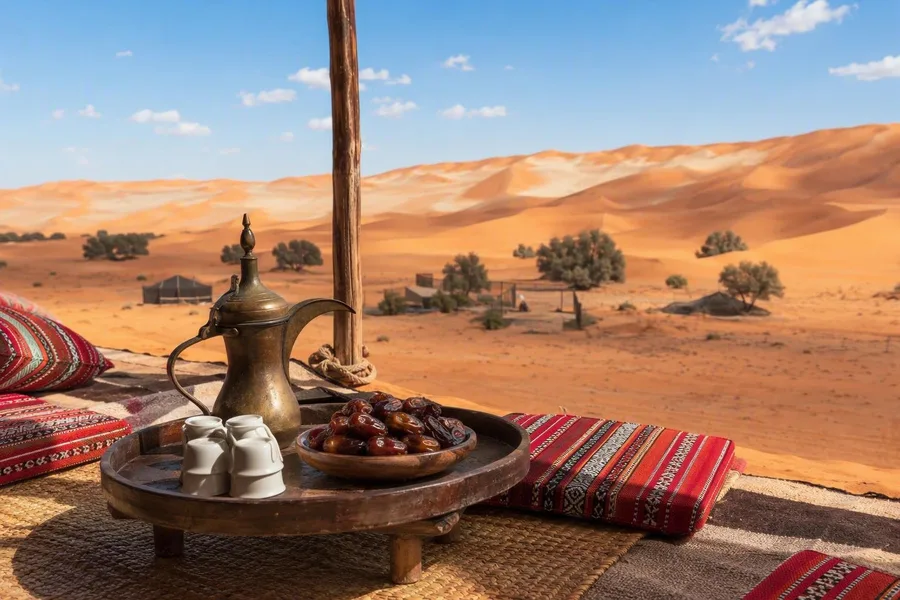 Coffee and dates are served at a locally run camp in Wahiba Sands, Oman.
Wahiba Sands offers a classic sand-sea landscape: golden, shifting dunes and reddish-white slopes beyond the paved road. The Al Wahiba and other Bedouin communities live in different parts of the sands.
At some locally run camps, coffee and dates form part of a living practice of hospitality rather than a historical display. A drive of roughly 2.5 to three hours from Muscat reaches the desert’s edge, though the dunes themselves still require a 4x4 or transfer. Wahiba’s cultural continuity lifts it to sixth, even if its dunes are more familiar than the rock, salt and clay landscapes ahead.
5. Erg Chebbi, Morocco
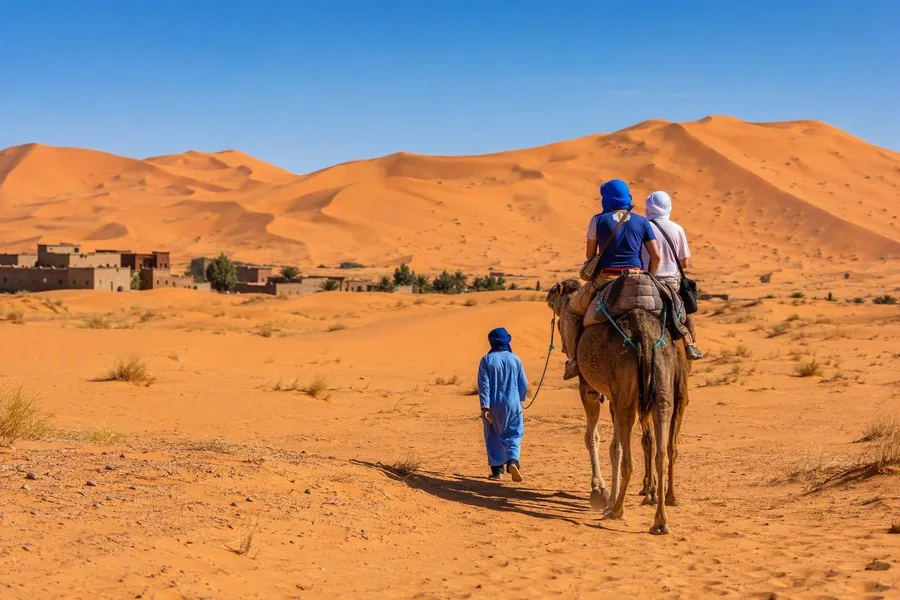 A camel carries visitors from Merzouga into Erg Chebbi’s Saharan dunes.
Erg Chebbi rises beside Merzouga, where roads give way to Saharan dunes that reach up to 150 metres. Camel and 4x4 transfers carry visitors from the village into desert camps. That direct handover makes this one of the ranking’s more approachable dune fields.
Nearby Rissani adds historical weight. The remains of Sijilmassa recall a trading city, while earthen ksours, or fortified villages, show how communities organised life in the dry Tafilalet oasis region. Erg Chebbi takes fifth for its large-scale sand, simple access from Merzouga and visible caravan-era context.
4. Death Valley, United States
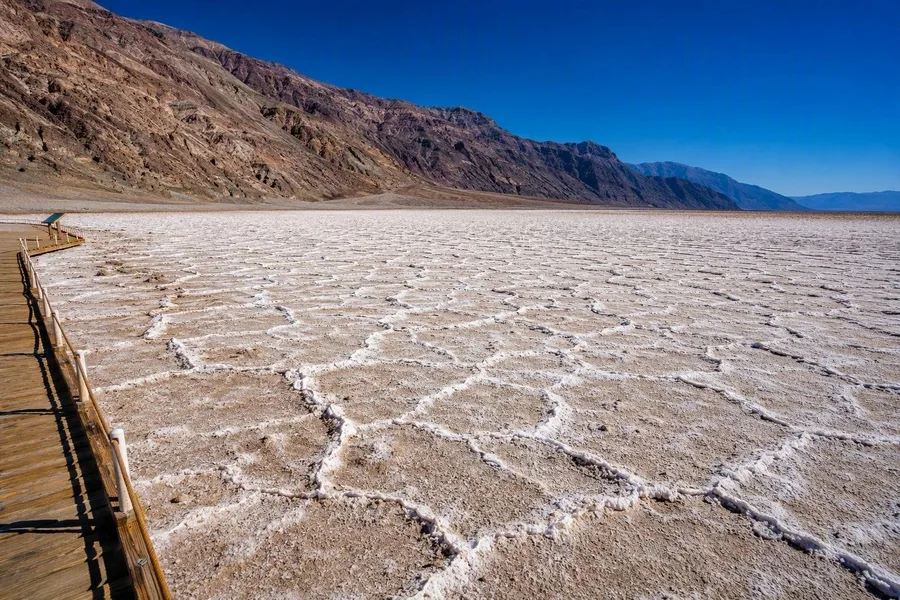 White salt polygons cover Badwater Basin beneath Death Valley’s steep mountains.
At Badwater Basin, groundwater evaporates and leaves white salt polygons across the lowest point in North America. Faults continue to lower the valley floor beside steep mountains, while volcanic ash and cinders colour the slopes at Artist’s Palette.
Few deserts pair such extreme geology with such straightforward access. Paved roads, parking and a boardwalk bring visitors to Badwater Basin without a desert expedition. That ease gives Death Valley a clear advantage over the lower-ranked choices.
3. Atacama, Chile
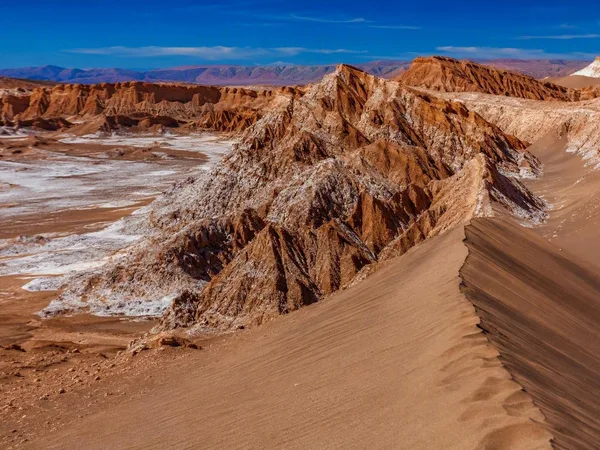
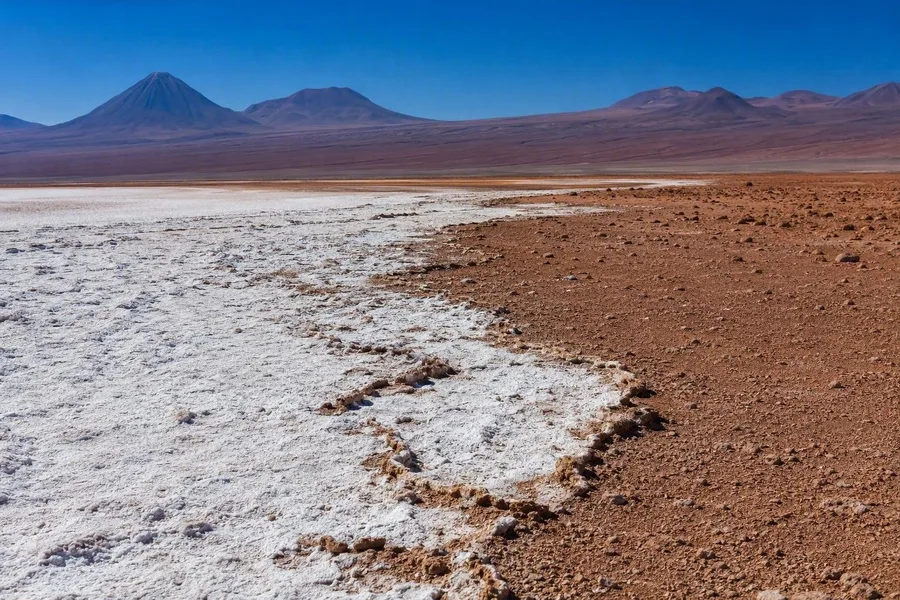 White salt crusts meet brown-orange volcanic ground in Chile’s Salar de Atacama.
The Atacama gathers salt flats, flamingo lagoons, wind-cut rock, highland geysers and exceptionally clear night skies around San Pedro de Atacama. In the Salar de Atacama, rare floods wash clay and salt down from the mountains; trapped water evaporates into crusts beside brown-orange volcanic ground.
Flights to Calama and transfers to the adobe-built town of San Pedro make a broad sweep of landscapes feasible. High altitude limits some excursions, but no lower-ranked desert places salt, volcanoes, lagoons and geysers within such a practical base.
2. Wadi Rum, Jordan
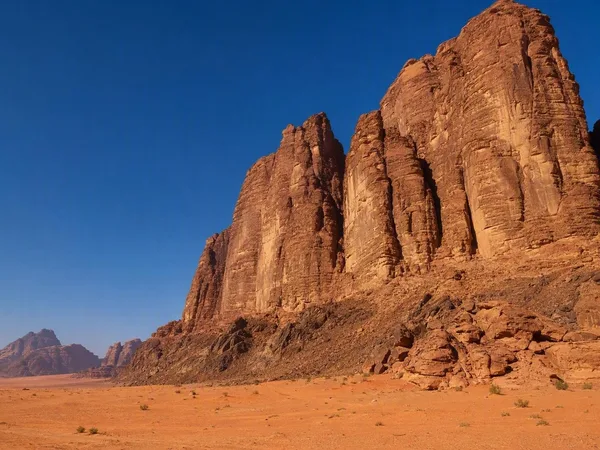
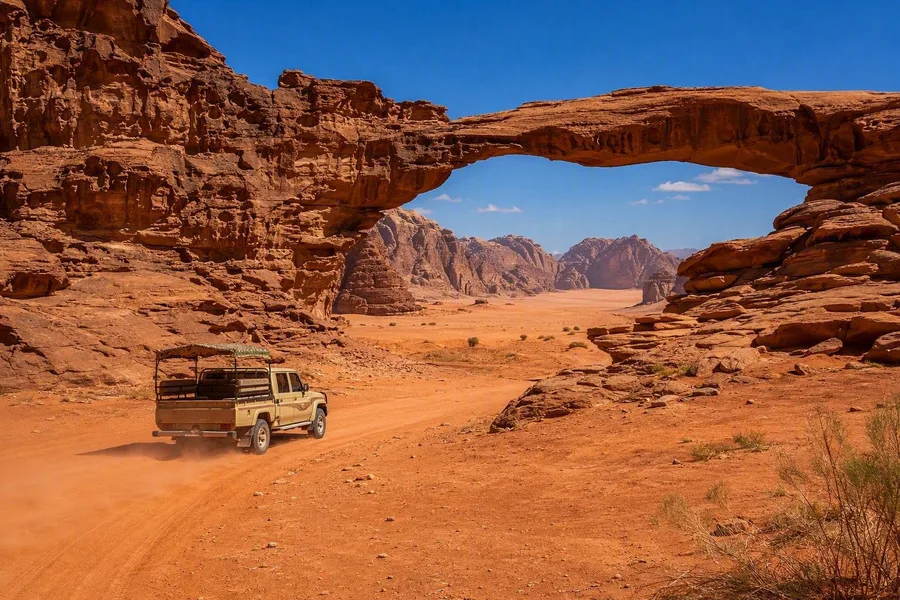 A local 4x4 crosses Wadi Rum’s sandy valley beneath sandstone cliffs in Jordan.
Sandstone cliffs, arches and narrow gorges rise above Wadi Rum’s sandy valleys. On rock faces, loose boulders and cliff walls, petroglyphs and inscriptions record human figures, animals and several writing systems from at least 12,000 years of occupation.
Bedu knowledge of camels, tent-making, tracking and climbing remains closely tied to this terrain. The road approach from Aqaba or Petra, followed by a local 4x4 transfer, keeps the protected area comparatively accessible. Wadi Rum reaches second because monumental geology and a deeply readable human record stand on the same ground.
1. Namib Desert around Sossusvlei, Namibia
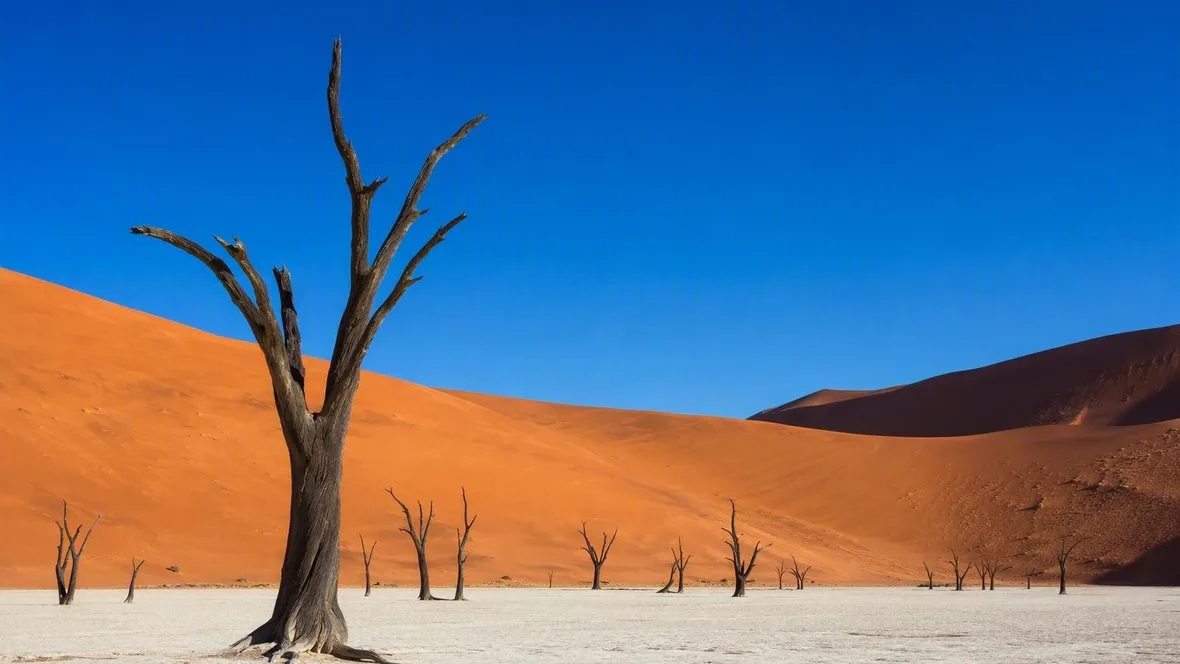
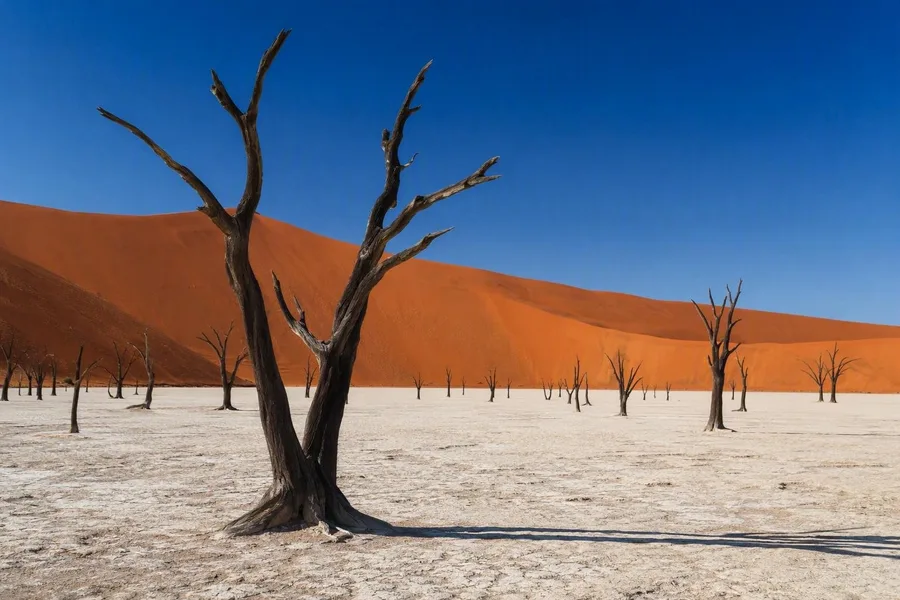 Dead camel-thorn trees stand on Deadvlei’s white pan beneath red Namib dunes.
The Namib takes first place at Deadvlei. Wind has gathered iron-coated sand into orange-red dunes around a white salt-and-clay pan, where the Tsauchab River ends against the sand. Dead camel-thorn trees remain standing because the climate is too dry for normal decomposition.
Sesriem provides the gateway, and the main road reaches a parking area before a shuttle crosses the final stretch of deep sand. From there, a walk over a dune brings the white pan into view, its dark trees fixed beneath rust-red ridges.
Keep exploring