
Region · Mongolia
Gobi, Mongolia
The Gobi is Mongolia’s vast southern desert region, extending into northern China. Its Mongolian routes link gravel plains and rocky valleys with Khongoryn Els dunes, Bayanzag’s fossil beds and the narrow gorge of Yolyn Am.
What the Gobi is
Forget the image of an unbroken sand sea. Much of the Mongolian Gobi is cold, dry country of gravel plains, rocky outcrops, low mountains and steppe; dunes are only one part of the landscape. The scale is the point: major sights are far apart, and a Gobi trip is an overland journey rather than a series of short stops.
For a practical first route, focus on southern Mongolia around Dalanzadgad and Gobi Gurvansaikhan National Park. This is a gateway area, not the whole desert: the Gobi stretches across a vast swathe of southern Mongolia and into China.
The essential landscapes
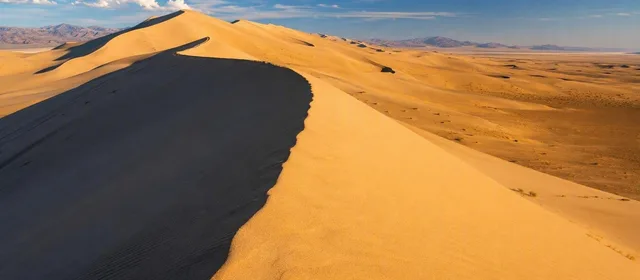
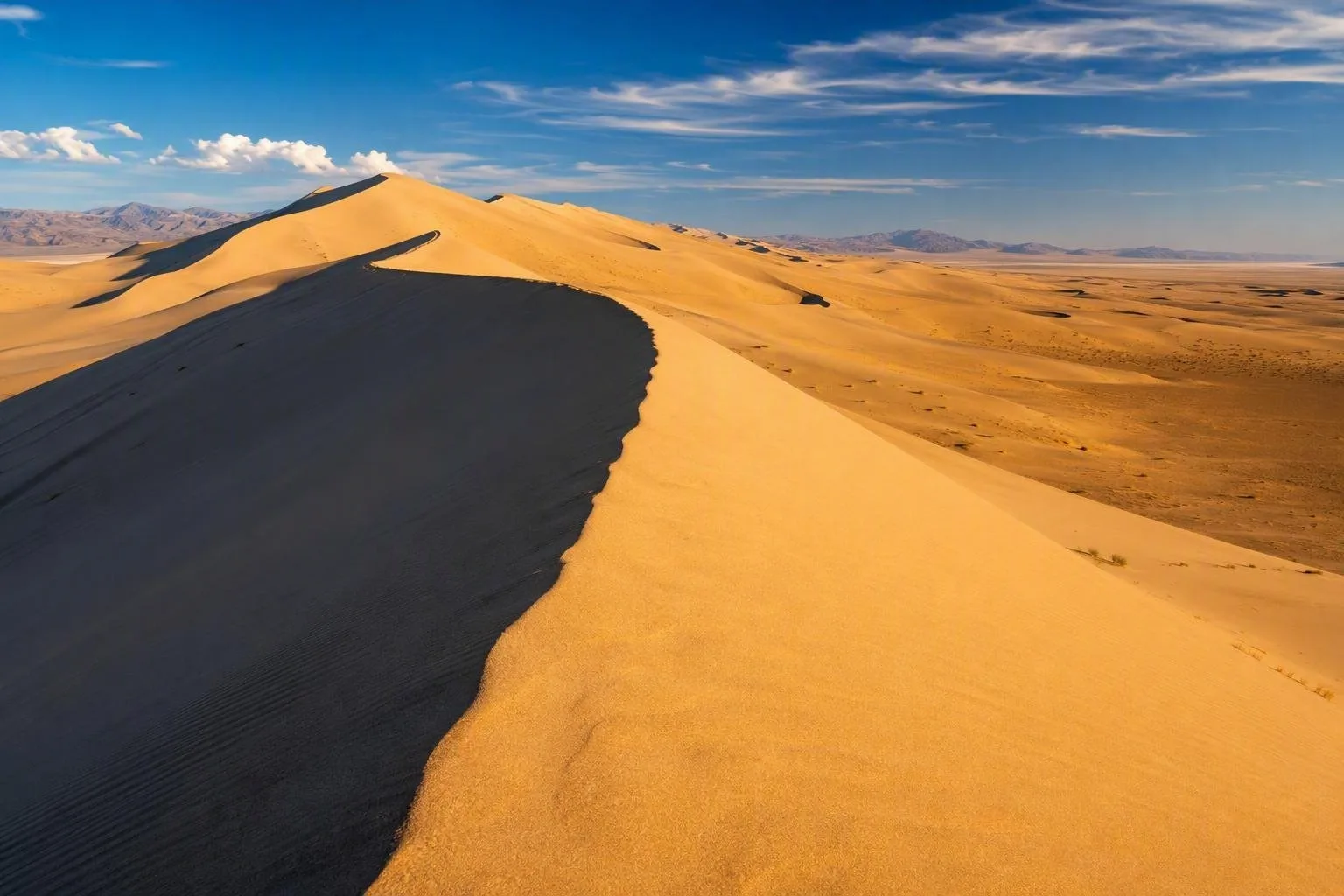
- Khongoryn Els: Long pale dune ridges known as the Singing Sands. Dry, moving sand can produce a low hum. Climbing loose slopes is strenuous; go early or late, carry water and allow time for the descent.
- Bayanzag (Flaming Cliffs): Red sandstone exposures in the Gobi’s fossil country. The first scientifically recognised dinosaur-egg nest was found here in the 1920s. Stay on established routes and leave every fossil fragment where it lies.
- Yolyn Am: A narrow mountain gorge in Gobi Gurvansaikhan National Park. Its shaded floor can retain ice into the warmer season, but the amount and duration vary by year. It is the best walking stop on the classic circuit; bring a warm layer even on a hot day.
These places work as one itinerary because they show the Gobi’s range: sand, fossil-bearing rock and a cool mountain valley.
Reaching and crossing it
Dalanzadgad is the usual operational base, with domestic air links from Ulaanbaatar. From there, hire a vehicle with an experienced local driver or join a multi-day trip. Tracks outside settlements can be rough, unmarked and affected by weather; ordinary point-to-point public transport does not connect the headline sites.
Build in driving time. A compact highlights circuit needs several days, while a slower route gives room for long transfers, walks and weather delays. Do not plan the Gobi as a day trip from Ulaanbaatar.
When to go and what to expect
The main travel season runs roughly from May to September. June and September generally offer more manageable conditions than peak summer; July and August bring the hottest days. Temperatures can still drop sharply after sunset.
Pack for exposure rather than style: sun protection, a refillable water bottle, secure walking shoes, a windproof outer layer and warm evening clothing. Remote ger camps vary widely. Beds, meals, electricity, showers and toilets may be shared or limited, so treat facilities as part of the itinerary rather than an afterthought.
Remote-country rules
Carry enough water and cash before leaving Dalanzadgad; card payments, ATMs, mobile signal and reliable internet are limited away from towns. Follow your driver’s route in wind or poor visibility, and do not drive off alone across open desert.
The Gobi is working pasture and protected landscape, not vacant land. Ask before photographing people or entering a family ger, keep distance from livestock and wildlife, and take all rubbish out with you.
From the magazine
Stories about Gobi, Mongolia
Editorial stories linked directly to Gobi, Mongolia.
Routes from our editors
Travel through Gobi, Mongolia
Editorial routes connecting Gobi, Mongolia with other countries, cities and hotspots.
No routes through Gobi, Mongolia have been published yet.
More in Mongolia
Related hotspots
Other cities, nature areas and places within Mongolia.
There are no other hotspots in Mongolia yet.