Sesame Bread and Knafeh in Downtown Amman
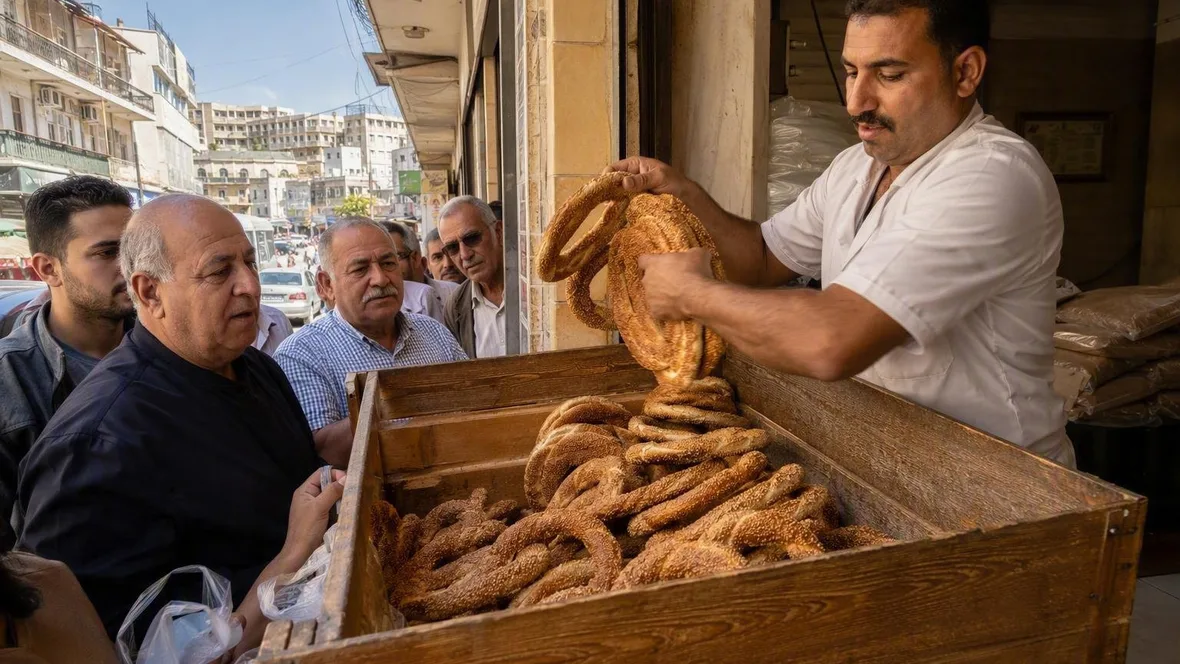
At the northern edge of downtown Amman, customers at Salaheddine Bakery take sesame-coated ka’ak from a wooden bin, cut it open and fill it at the counter. That brief stop puts bread between work, shopping, traffic and the steep routes home from the hills.
A sesame bakery on King Hussein Street
Salaheddine Bakery stands on King Hussein Street, between Jabal al-Hussein and downtown Amman. Its staple is Jerusalem-style ka’ak: an elongated savoury bread with a sesame coating, a firm crust and a lighter centre.
The bakery’s work is plain to see in the documented routine. Bakers prepare the dough, roll each piece through sesame and bake it in a brick-and-clay oven; they cook eggs in the same oven. A baker moves a fresh batch with a peel into a wooden bin, where customers gather around the bread.
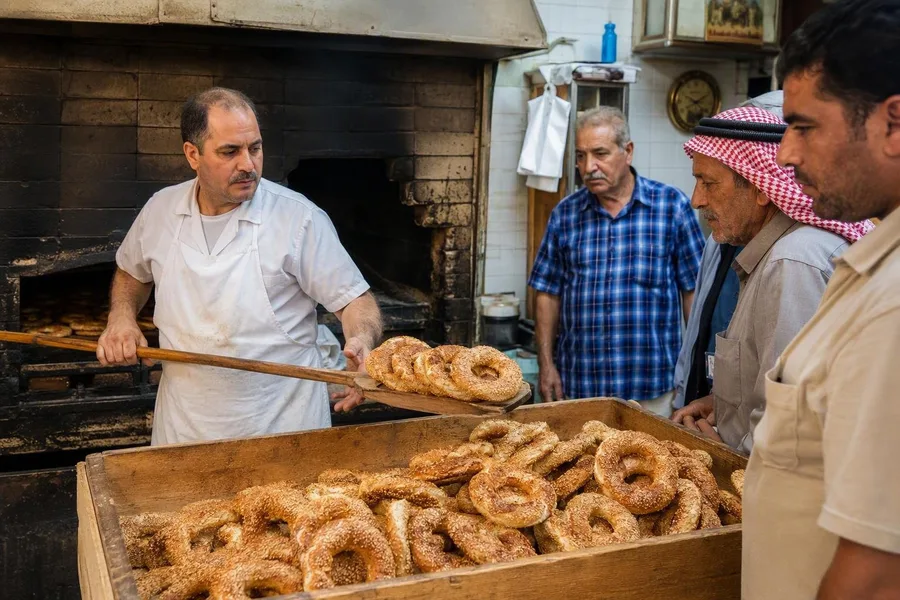 A baker transfers fresh sesame-coated ka’ak into a wooden bin at Salaheddine Bakery on King Hussein Street.
Customers do not wait for table service. They take a ka’ak, split it at the counter and add fried egg, cheese, za’atar, salt or red chilli sauce from bowls and trays. They put the filled bread in a paper bag and pay near the door.
The Jerusalem name places ka’ak in a wider Levantine bread tradition. At Salaheddine, the bread also works as a portable sandwich, assembled without a dining room on a road that links a hillside neighbourhood with the old centre.
The valley below the hills
Al-Balad occupies the floor of a narrow valley enclosed by hills. Circassian newcomers settled here from 1878, using local stone for modest houses along tight streets near the Seil Amman watercourse. Homes, footpaths, supplies and small shops shared a limited strip of level ground.
Trade grew with migration and rail links. Merchants arrived from Syria, Lebanon and Palestine around 1900, and the Hejaz Railway connected Amman with Damascus and Haifa from 1903, opening access to larger markets. When Amman became the capital in 1921, government offices, services and trade concentrated in the valley.
The hills still shape the routes through the centre. Long, narrow stairways run at right angles from the valley floor to neighbourhoods on the jabals, while later roads curve along the slopes. Pedestrians descending from those neighbourhoods meet market shoppers and road traffic below.
King Faisal Street forms the commercial spine of Al-Balad. It runs from the area near the Roman Theatre past the gold souq to the Grand Husseini Mosque. Shops group by trade among narrow streets and Ottoman-era buildings, placing bread, groceries and sweets in the middle of a working market.
Bread opposite the Roman Nymphaeum
Waleed Abu Hajar Bread Shop stands opposite the Roman Nymphaeum in Al-Balad. Founded in 1994, the business is registered to sell bread, ka’ak of several kinds and pastries. That range puts household bread, a sesame snack and sweet baked goods in one stop.
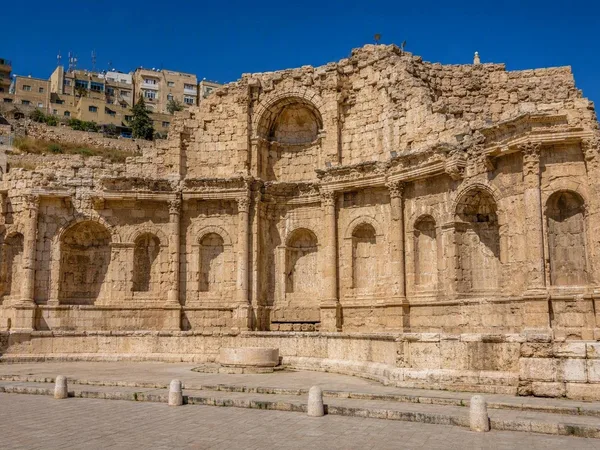
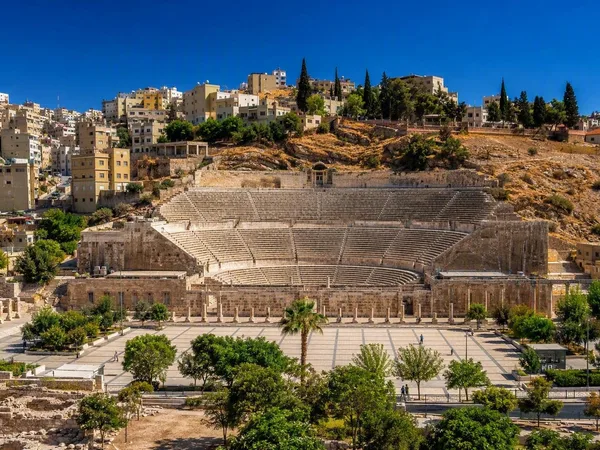
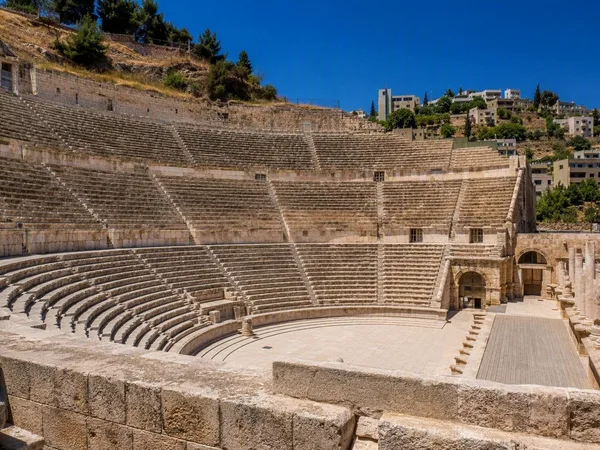
The pavement outside carries several periods of the city at once. The Nymphaeum stood beside the stream and the Roman east–west axis, and city residents once collected water there. The Roman Theatre and Odeon belonged to the same civic district; the restored theatre now hosts performances and events.
Bread shops sit beside these monuments in a district still used for market errands, worship, transport and shopping. The stone remains do not stand apart from the daily trade around them.
The everyday reference point is khubz ‘arabi, a lightly risen flatbread eaten across Jordan on a very large daily scale. Its place in the city rests on repetition: bread bought with groceries, carried home, and set out with meals.
Jordanian bread includes shrak, though the selected downtown shops do not document it as part of their own stock. Bakers make this large, very thin round from flour, water and salt, then bake it on a hot convex metal saj. People also use shrak beneath rice and meat in mansaf. The contrast matters on the market streets: khubz is a daily flatbread, while shrak preserves a distinct, thin saj-baked form.
Knafeh on Al-Azhar Street
Bread turns sweet on Al-Azhar Street. Habibah Sweets has traded from its original downtown branch since 1951, selling knafeh made with stretchy akawi cheese, syrup and either a soft semolina crust or crisp kataifi strands. It is pastry rather than daily flatbread, yet it relies on the same familiar materials of flour, cheese and heat.
Habibah’s Nabulsi-style knafeh belongs to a Palestinian-Levantine sweet-making tradition. The business sits in Al-Balad rather than apart from it: its address is at Marwan Madi Complex, 2 Al-Azhar Street, beside the entrance next to Arab Bank.
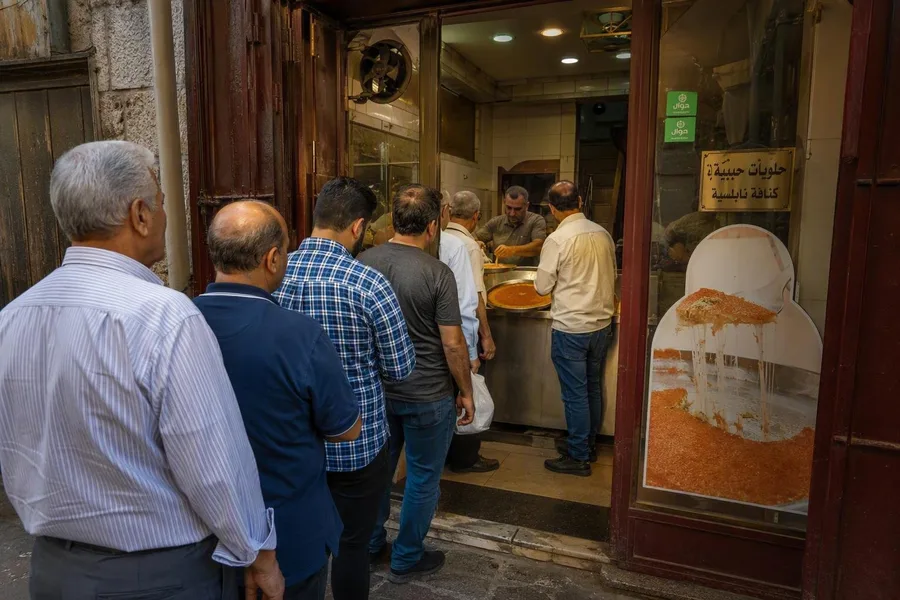 Customers queue at Habibah Sweets on Al-Azhar Street to collect knafeh.
Customers queue in the narrow entrance, collect portions and eat them in a nearby courtyard; groups can order larger quantities for gatherings. Hummus and falafel shops stand nearby, and the route from a savoury meal to a portion of cheese pastry takes only a few steps.
The contrast with Salaheddine is direct. At King Hussein Street, customers open a sesame bread and fill it themselves before they leave. At Habibah, customers collect a finished portion of knafeh and carry it into the courtyard. Both sales depend on the constant short journeys that bring people through Al-Balad’s market streets.
Practical details
Habibah’s original branch is at Marwan Madi Complex, 2 Al-Azhar Street, through the entrance beside Arab Bank. Waleed Abu Hajar Bread Shop stands opposite the Roman Nymphaeum in Al-Balad. Salaheddine Bakery is on King Hussein Street and is listed as open around the clock.
Down to the market floor
The Grand Husseini Mosque, built in 1924, stands among traditional souqs, street sellers and a fruit-and-vegetable market that local residents still use. Stone houses with inner courtyards and central halls line the slopes behind high walls, and narrow stairways connect those neighbourhoods with the shops below.
At the bottom of the stairs, shoppers enter the valley market as traffic moves past the old storefronts. At Habibah’s narrow entrance, the queue reaches the counter one person at a time, and each portion of knafeh passes out towards the courtyard.
Keep exploring
Places in this story
Middle East
Nog geen landen
Syria
Lebanon
Palestine
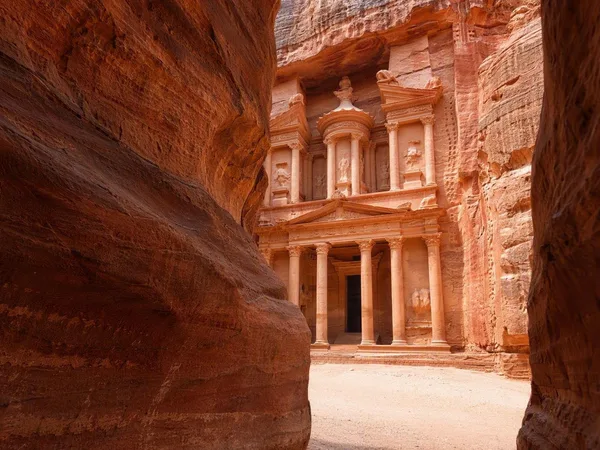
Jordan
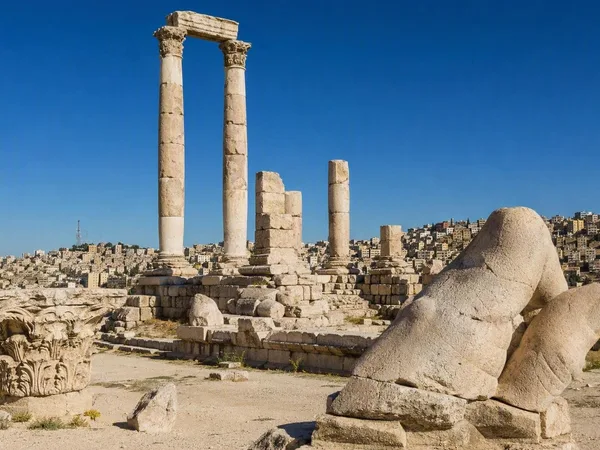
Amman
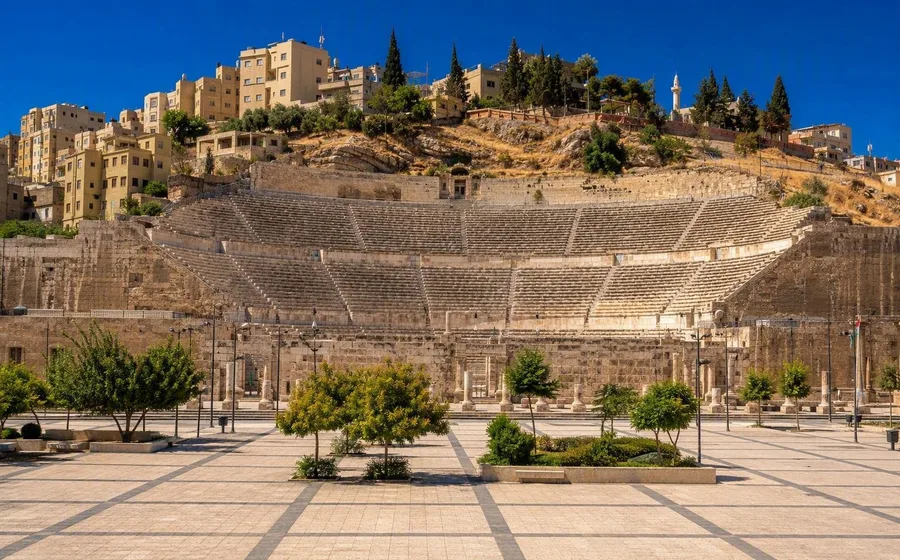
Al-Balad
Al-Balad is Amman’s historic downtown, set in the valley below the Citadel in central Jordan. Its compact streets connect Roman monuments, the Grand Husseini Mosque, and working souqs.
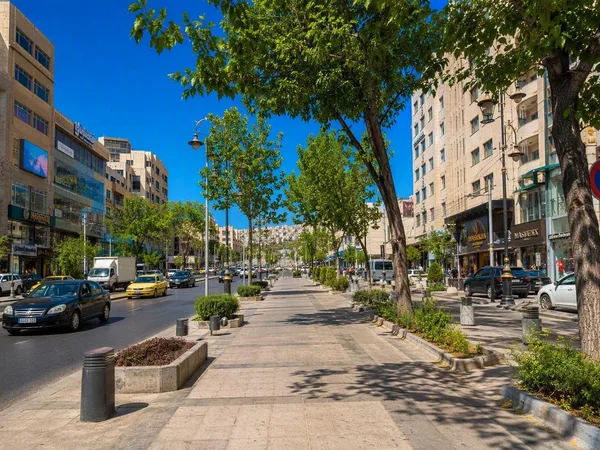
Jabal Hussein, Amman
Wadi Amman
Roman Theatre, Amman