A Bowl of Luang Namtha: Rice Noodles at the Night Market
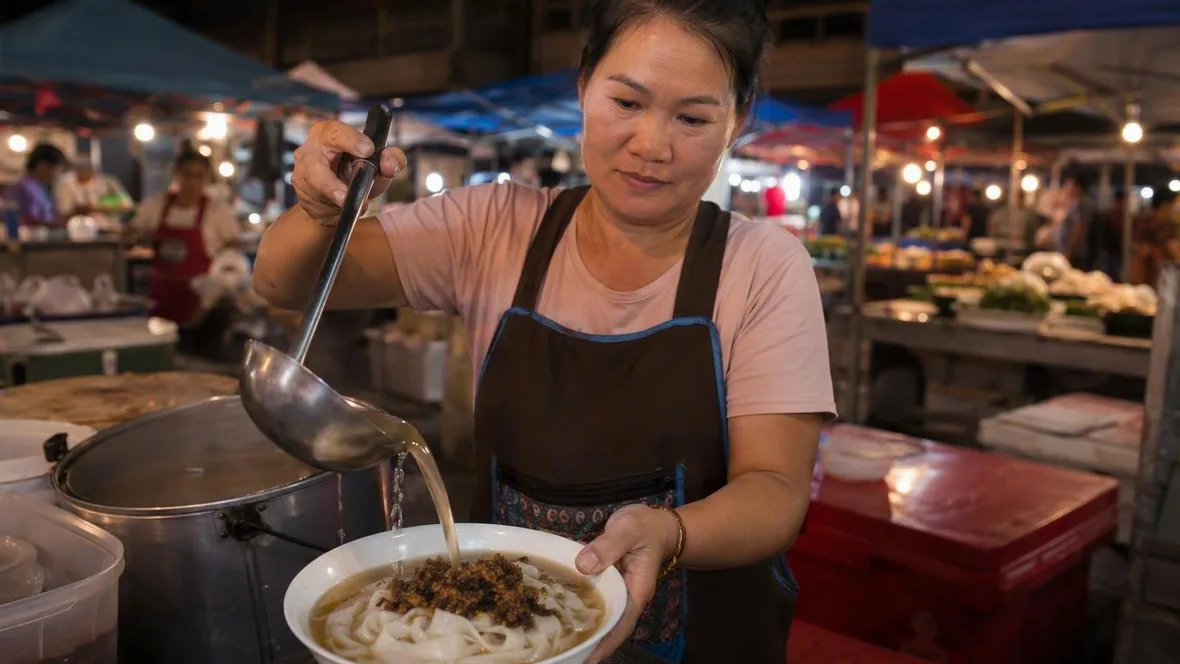
Broad rice noodles fill a bowl, followed by minced-meat sauce and clear chicken broth. In Luang Namtha, khao soi turns rice into supper, and the night market makes that link visible.
When Road No. 3 turns to supper
Luang Namtha Night Market stands on Road No. 3 in the centre of the provincial capital in northern Laos. Vendors begin setting up during the afternoon. By opening time, the emphasis has shifted to evening food: noodles, grilled meat, sticky rice and other prepared dishes.
The market has a plain daily function. People eat at shared tables or buy cooked food to take away, while stalls farther inside sell vegetables, fruit and meat. Freshly prepared broths and noodles stand beside chicken on spits.
That food trade takes place in a city with a long role in regional exchange. Luang Namtha lies in the Nam Tha valley, where older routes connected southern China, the Mekong and what is now northern Thailand. The river led towards the Mekong, while a caravan route ran through Muang Luang Phukha and Vieng Phukha. Salt from fields northeast of town also circulated as a regional commodity.
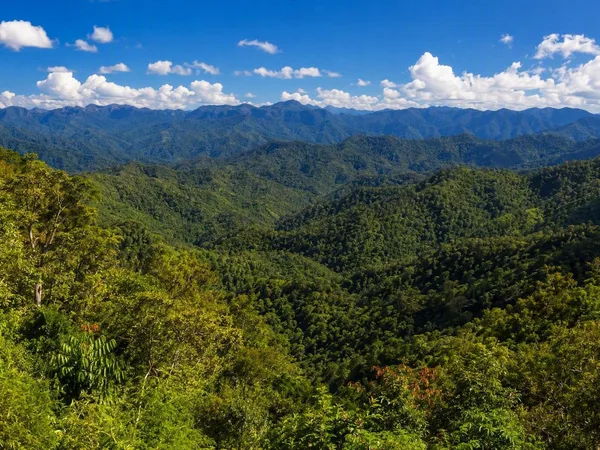
Luang Namtha remains the provincial capital and a trading centre between China and Thailand. Most of the province is mountainous, but the plains around Namtha and Sing contain important farming land. At the night market, rice, vegetables and cooked dishes bring produce from those landscapes into town.
The Lao khao soi
The name can confuse anyone who knows northern Thailand. Luang Namtha’s khao soi, also written khao soy, is not the coconut curry with egg noodles associated with Chiang Mai. It is a Lao rice-noodle dish linked to the north of the country.
The noodles are fresh, broad and often cut by hand. A thick sauce combines minced pork with fermented soybean paste and chilli, along with tomato, garlic, shallot and spices. In the documented soup version, the cook puts noodles in a bowl, spoons over the reduced meat sauce and adds clear chicken broth. Spring onion, coriander and crisp pork skin finish the bowl. Fresh herbs and leafy vegetables come alongside.
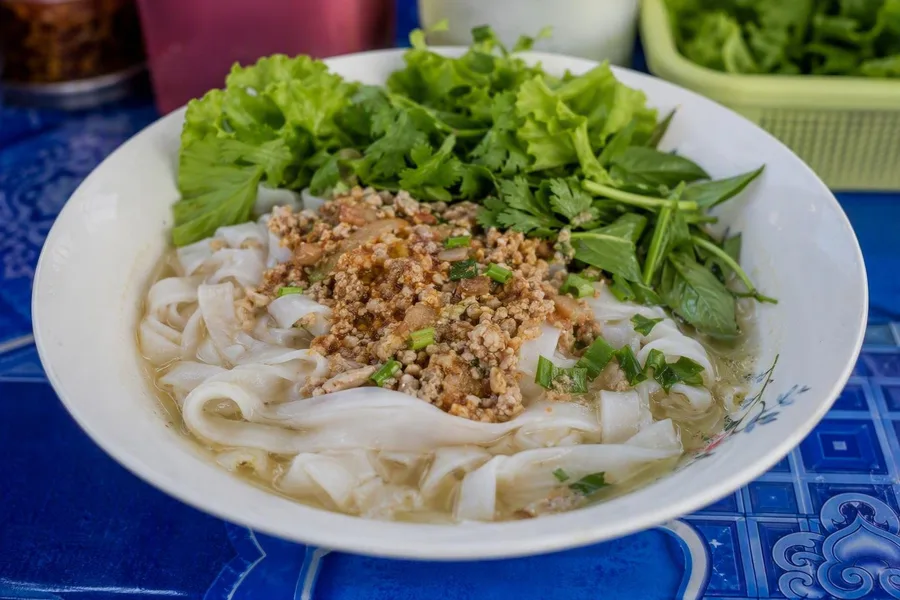 Khao soi at Luang Namtha Night Market combines broad rice noodles, meat sauce and clear broth.
The serving does not end there. Diners can add sugar, fish sauce, chilli, vinegar, lime juice or pepper at the table. Those seasonings change the balance of salt, sourness, sweetness and heat without changing the bowl’s central structure.
Luang Namtha also has a dry form, khao soy heang. A documented serving at the night market paired rice noodles with a drier sauce rather than broth. Local documentation states that cooks make both the noodles and sauce fresh each day.
The spelling varies, but the food has a clear identity: rice noodles with a strongly seasoned sauce built around fermented soybeans and chilli. That paste distinguishes the Lao dish from its Thai namesake more usefully than a broad label such as “northern noodle soup.”
Rice before noodles
Khao soi begins with the crop that fills fields and daily meals across Luang Namtha Province. In 2020, the province produced 58,123 tonnes of rice, mainly from rain-fed lowland fields, with a significant upland crop as well. Rice is food, farm output and the raw material behind prepared market dishes.
Terrain shapes what farmers grow. Khao Ta Khied was the province’s most widely cultivated variety in one study of the local rice chain. Trials have also identified a non-sticky upland line suited to Luang Namtha’s conditions, while testing has included HTDK17, a fragrant variety selected for yield and tolerance of both flooding and drought.
None of this proves that a particular bowl at the night market contains rice grown in the nearest field, or even within the province. The available evidence does not trace individual portions that closely. The connection is regional: farmers grow rice, rice becomes noodles, and market cooks sell those noodles as an everyday meal.
Sticky rice appears separately among the night market’s prepared foods. Vegetables also reach town from fields, gardens and surrounding landscapes. Research in the province has recorded cultivated and gathered produce in local markets, including bamboo shoots, banana flowers, mushrooms and wild greens. Not all of these ingredients belong in khao soi. Together, they show why a market can sell fresh produce and cooked bowls within the same evening trade.
A provincial market with many histories
Luang Namtha Province is home to about seventeen ethnic groups from Lao-Tai, Mon-Khmer, Hmong-Iumien and Tibeto-Chinese language families. That diversity reflects settlement, migration, farming and trade across valleys, mountains and borders.
The province’s history also sits in the town’s commercial role. In earlier local government, Lanten speakers served as scribes, translators and intermediaries between administrators and villages. Wars, displacement and later resettlement changed who lived and farmed in valleys and along roads.
A food stall cannot represent all those histories, and a seller’s identity cannot be read from a dish or an item of clothing. Daily trade offers a clearer view. Households in lowland areas cultivate wet rice and vegetables. In other landscapes, households may combine upland rice, gardens, livestock and gathered forest foods. Some of those goods reach local markets directly; others pass through traders.
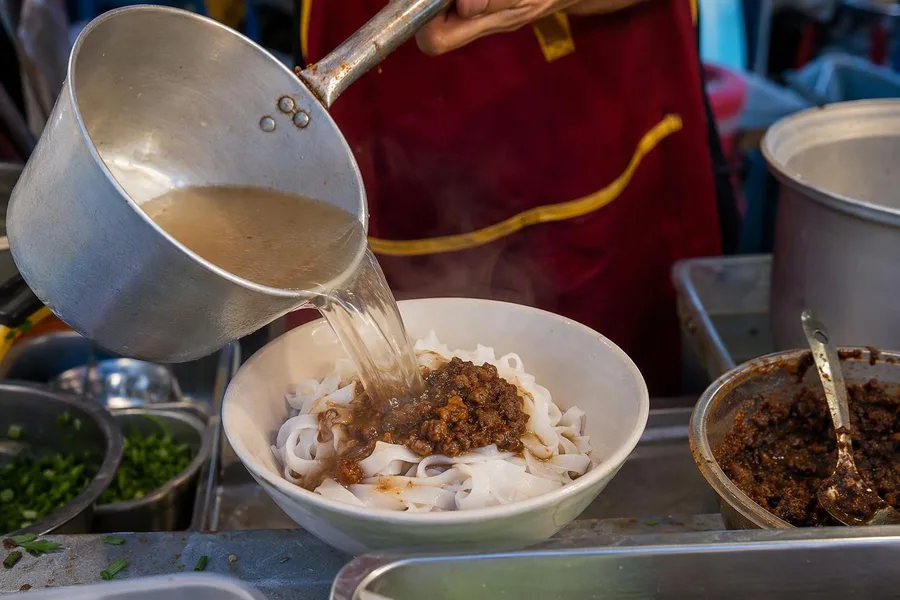 Clear broth is poured over khao soi noodles and meat sauce at Luang Namtha Night Market.
Khao soi moves through these ordinary food networks without flattening their differences. It is eaten at home and in restaurants in northern Luang Namtha, especially around Muang Sing, and it is sold in markets and food stalls. The dish matters because it remains regular food: a practical use for rice, local seasonings and a market meal.
Finding the night market
Practical details: Luang Namtha Night Market is on Road No. 3 in the town centre, at map reference 2C35+6VH. It operates daily from 4pm to 10pm. Vendors may start setting up around 3pm, and trade generally eases near closing time. The mix of stalls can change from one evening to the next.
At opening time, cooked-food tables take over the working space. Noodles and broth sit among sticky rice and grilled meat. On Road No. 3, broad rice noodles take a spoonful of khao soi sauce, then a pour of clear broth.
Keep exploring
Places in this story

Asia
4 landen en gebieden
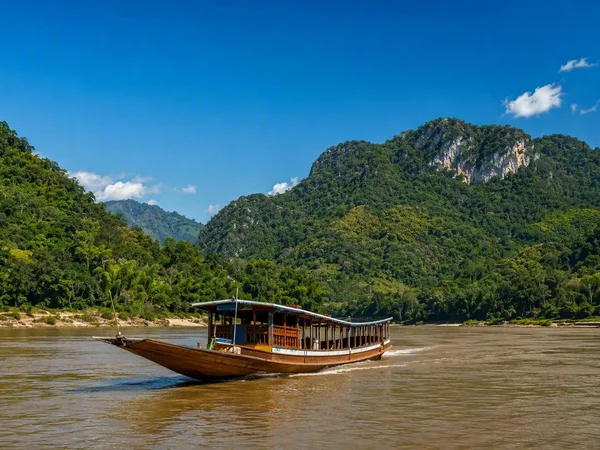
Laos

China

Thailand
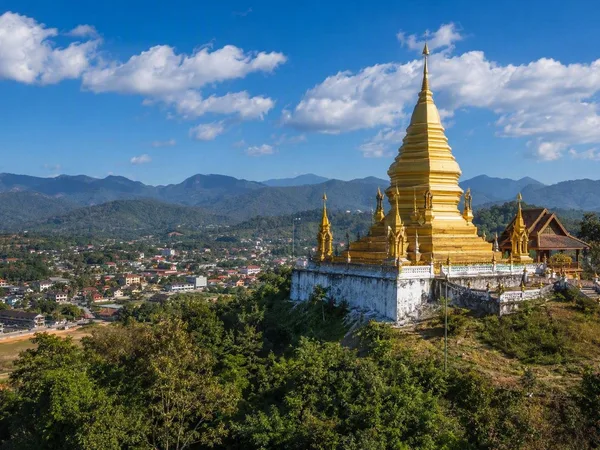
Luang Namtha
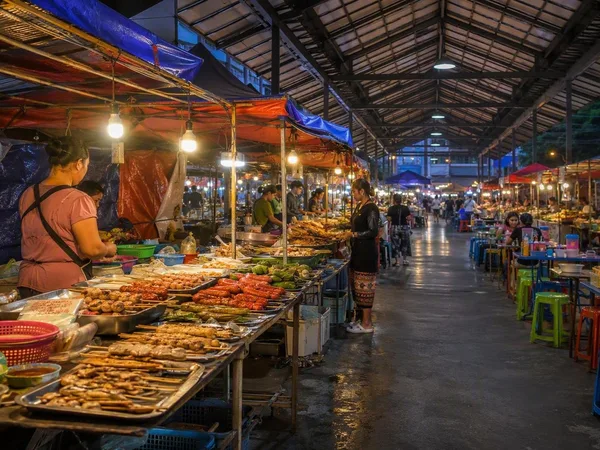
Luang Namtha Night Market
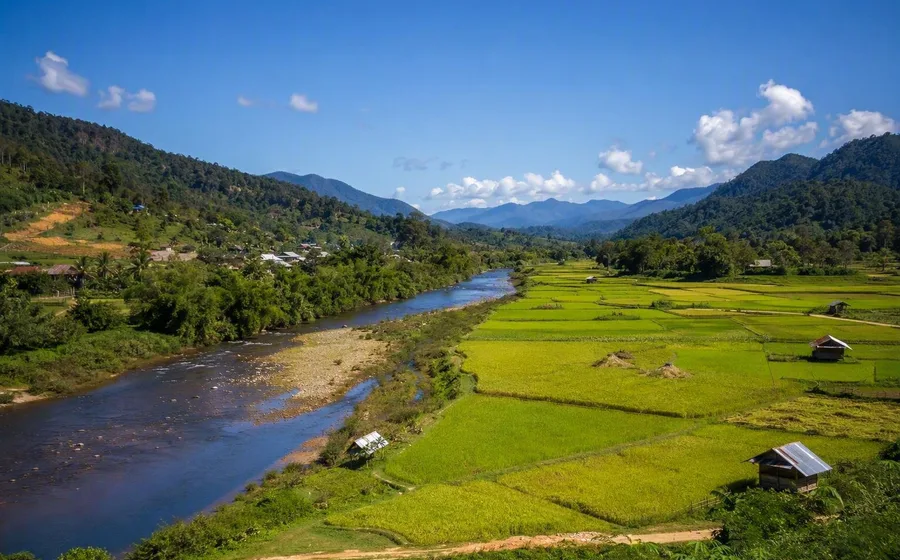
Nam Tha Valley
The Nam Tha Valley is the cultivated river plain around Luang Namtha in northwestern Laos. Rice fields, village roads and low mountains make it the practical rural counterpoint to the town and the nearby Nam Ha protected area.
Luang Namtha province