Nature area · Bolivia
Salar de Uyuni
Salar de Uyuni is the vast salt flat of Bolivia’s southwestern Altiplano, near the town of Uyuni in Potosí. At roughly 3,650 metres above sea level, its hard white crust shifts between dry-season polygons and a shallow rainy-season mirror.
The salt flat
Salar de Uyuni is the world’s largest salt flat, covering about 10,582 sq km on Bolivia’s high Altiplano. It formed as ancient lakes evaporated, leaving a broad halite crust above mineral-rich brines. The surface is exceptionally level: that uniformity is why it is also used as a satellite-calibration site.
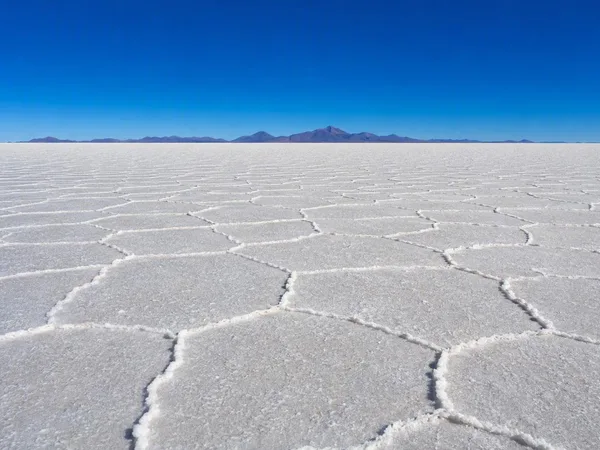
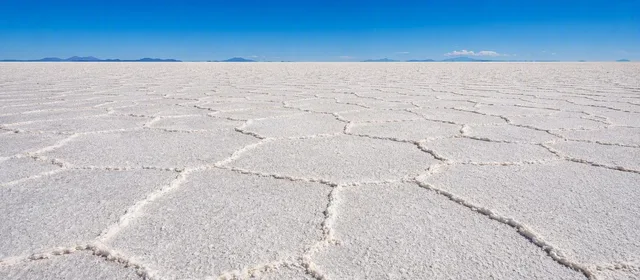
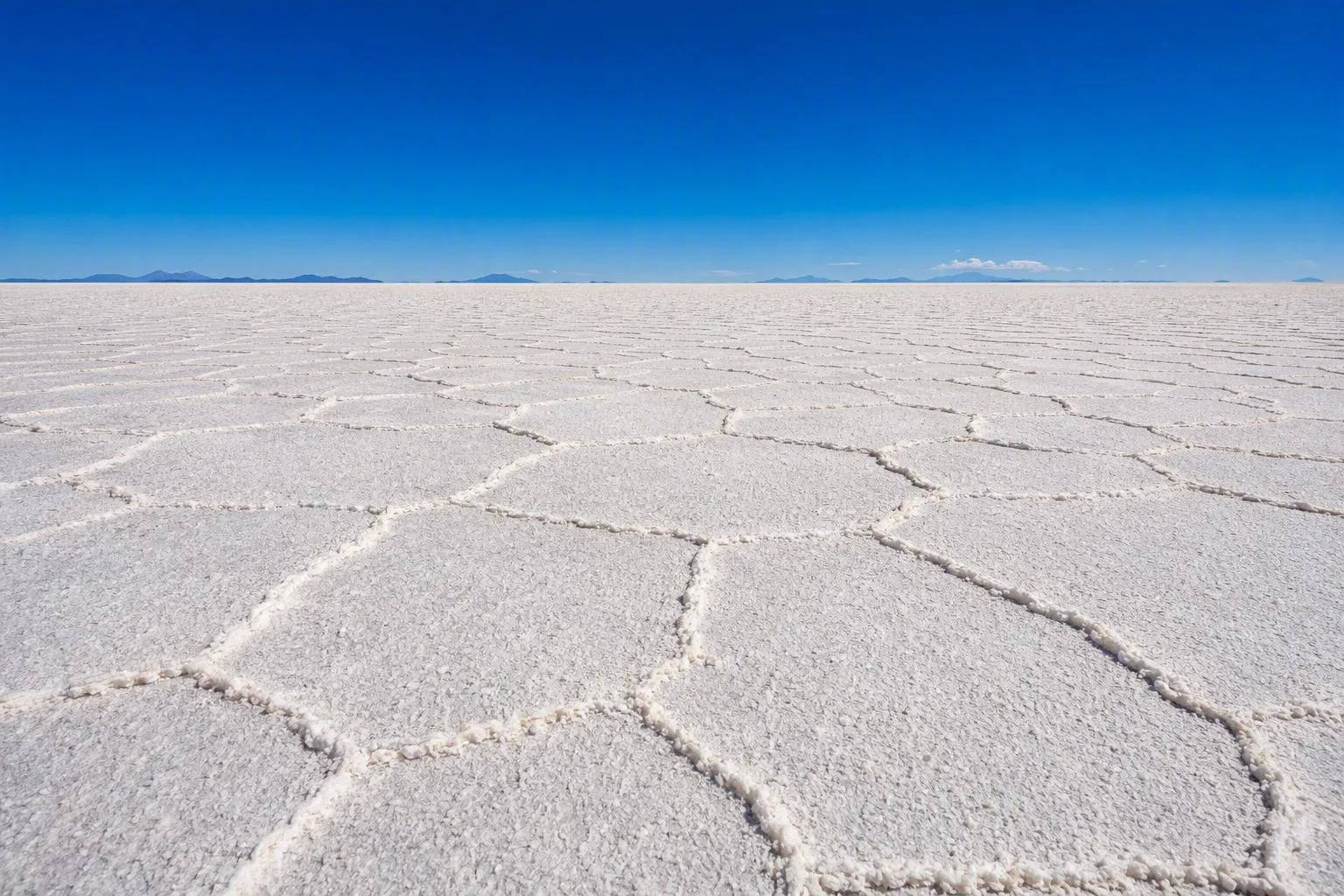
This is a landscape of scale rather than a sequence of monuments. In dry conditions, white salt tiles run to the horizon; during seasonal flooding, a thin sheet of water can erase the visual boundary between ground and sky.
What to see on the salar
Dry salt polygons are the essential sight from roughly April to November. Walk out from the vehicle for close views of the raised geometric ridges; the hard, bright crust makes distance difficult to judge.
The mirror season generally falls between December and March, when rain covers parts of the salar with only a few centimetres of water. Reflection depends on water depth, wind and the day’s weather, so it is never guaranteed.
Isla Incahuasi is a rocky island rising from the salt plain, with giant cacti and views across the salar. It is a useful contrast to the otherwise almost featureless surface, though wet-season conditions can affect access.
Getting there and moving around
Uyuni is the main base, with road and air connections from elsewhere in Bolivia. Most visits use a local 4x4 tour, either as a day trip focused on the salar or as part of a longer Altiplano route.
A vehicle is not merely a convenience here. The salar is immense, routes can be indistinct, and seasonal water changes where it is sensible to drive. Use an experienced local driver for crossings, particularly when the surface is flooded. Keep to established tracks and your driver’s route; do not drive over salt works, extraction areas or unmarked wet ground.
Altitude, sun and cold
At around 3,650 m, even a level walk can feel strenuous. Build in time to acclimatise in Uyuni or another high-altitude stop before a long excursion. Drink water regularly and take symptoms of altitude illness seriously.
The white ground intensifies sunlight. Pack sunglasses, high-factor sunscreen and a brimmed hat. Bring layers as well: temperatures can drop sharply after sunset and on early departures. Carry water and protect cameras and phones from salt spray during the wet season.
From the magazine
Stories about Salar de Uyuni
Editorial stories linked directly to Salar de Uyuni.
Routes from our editors
Travel through Salar de Uyuni
Editorial routes connecting Salar de Uyuni with other countries, cities and hotspots.
No routes through Salar de Uyuni have been published yet.
More in Bolivia
Related hotspots
Other cities, nature areas and places within Bolivia.