
Neighbourhood · Bolivia
Chualluma, La Paz
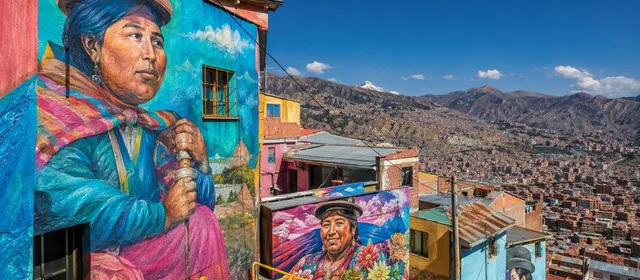
Chualluma is a steep residential neighbourhood on La Paz’s western slope, between the city and El Alto. Its painted façades and murals turn local Aymara life, especially the work and dress of chola women, into a walkable public artwork.
Orientation
Chualluma—also known from the Aymara Ch’uwa Uma, “crystal spring”—stands on La Paz’s western hillside at roughly 3,800 metres. It is a lived-in neighbourhood of about 400 families, not a purpose-built attraction. Its narrow lanes, stairways and views make it a worthwhile short detour between central La Paz and El Alto.
The neighbourhood is compact but steep. Allow time to move slowly at this altitude, especially if you have just arrived in La Paz.
What the colour scheme means
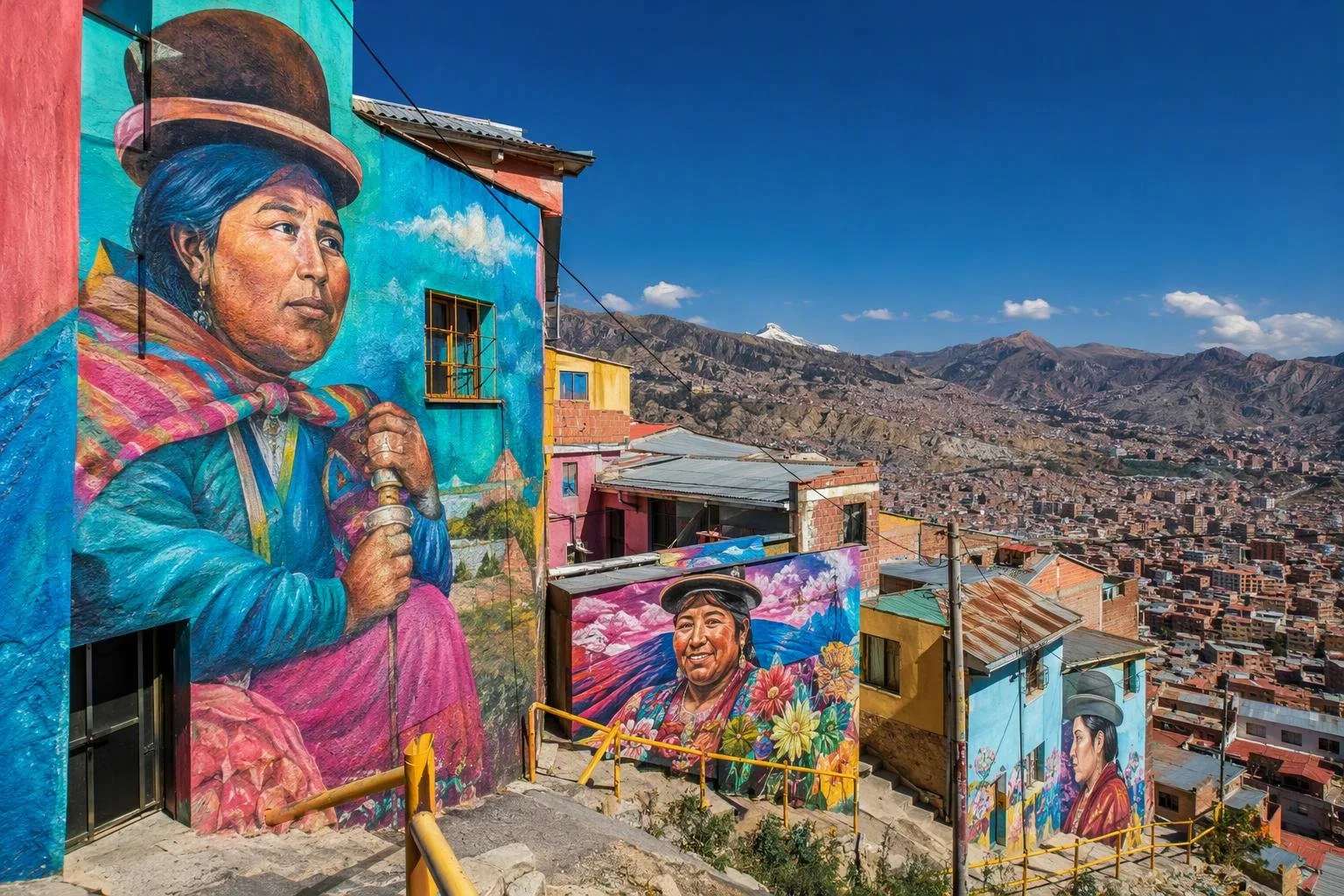
A community-led urban improvement project transformed the area in 2019. Houses, doors, stairways and public surfaces were painted in blocks of yellow, pink, green and blue, while murals were developed with residents and urban artists.
The artwork is rooted in neighbourhood life rather than generic street art. Look for images of women selling fruit and vegetables, weaving, and wearing the pollera skirt and bowler hat associated with the chola paceña. Aymara words and phrases also appear on walls. Treat the murals as part of people’s homes: photograph façades discreetly and do not block doorways.
Walk the stairs and murals
The best approach is on foot. Follow the stairways through both the lower and upper sections instead of trying to tick off a single landmark. Yellow-painted railings help trace several of the steep routes.
Look for:
- Large portrait murals of chola women.
- Painted façades spread across the slope, best appreciated from higher streets.
- Short viewpoints over La Paz’s basin and the cable-car lines.
- Everyday details: small shops, front doors and working residential streets.
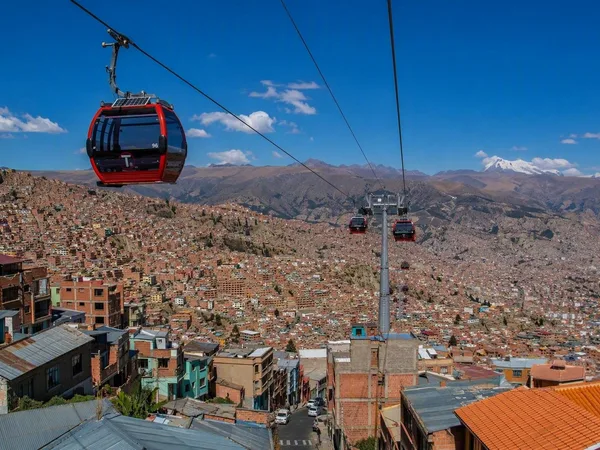
The Red Line of Mi Teleférico provides an elevated view of the neighbourhood’s coloured patchwork. From the Cementerio station area, Chualluma is reached by a downhill walk; a taxi can avoid the climb to the upper streets.
Timing and practical access
Visit in daylight. The light is useful for reading the mural detail and navigating the stairs, and the neighbourhood is quieter and easier to understand as a residential place in the morning or early afternoon. Avoid wandering the surrounding hillside after dark.
Wear shoes with grip: many routes are stairs, gradients are sustained, and surfaces can be uneven. Carry water and pace yourself at altitude. There is no formal museum entrance or circuit; use a map saved offline and keep the visit flexible.
Respecting the neighbourhood
Chualluma’s visual identity comes from its residents’ homes and from images of Aymara women’s work, dress and customs. Do not treat residents as props for photographs. Ask before making close portraits, keep noise down, and leave stairways clear for people carrying goods or heading home.
From the magazine
Stories about Chualluma, La Paz
Editorial stories linked directly to Chualluma, La Paz.
No stories about Chualluma, La Paz have been published yet.
Routes from our editors
Travel through Chualluma, La Paz
Editorial routes connecting Chualluma, La Paz with other countries, cities and hotspots.
No routes through Chualluma, La Paz have been published yet.
More in Bolivia
Related hotspots
Other cities, nature areas and places within Bolivia.
La Paz
6 linked stories and routes
El Alto
4 linked stories and routes
Bolivian Altiplano
3 linked stories and routes

Huayna Potosí
2 linked stories and routes
Mercado Rodríguez
2 linked stories and routes
La Ceja
1 linked stories and routes
Salar de Uyuni
1 linked stories and routes
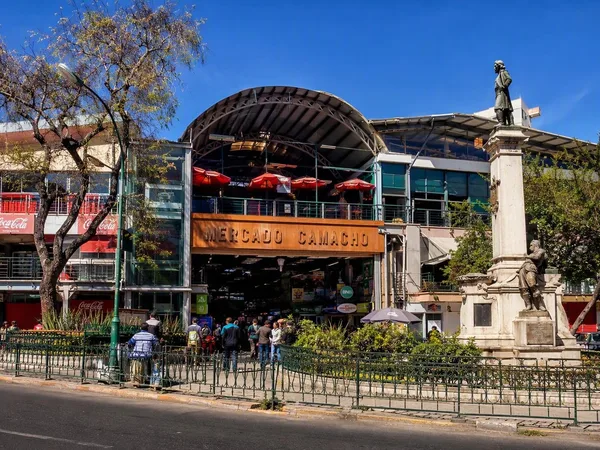
Mercado Camacho
1 linked stories and routes
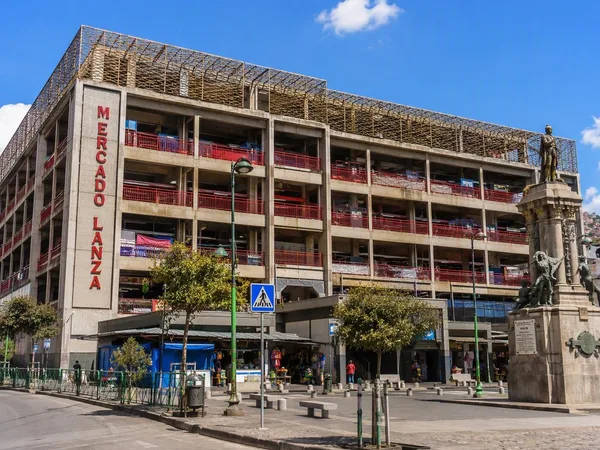
Mercado Lanza
1 linked stories and routes
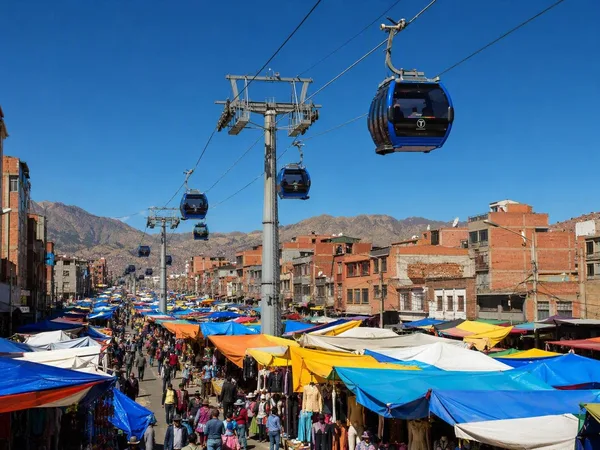
Feria 16 de Julio
1 linked stories and routes
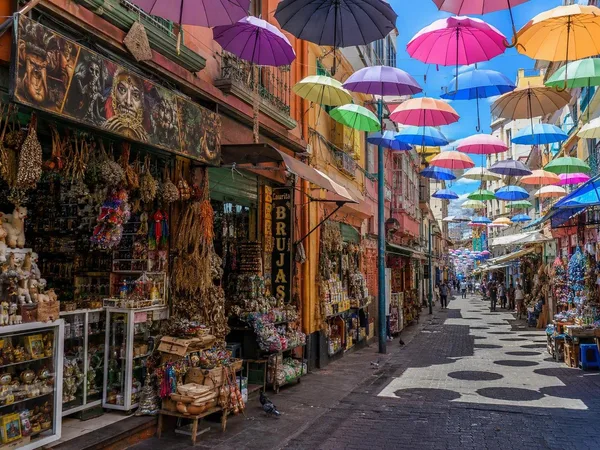
Mercado de las Brujas
1 linked stories and routes
San Pedro, La Paz
1 linked stories and routes
Potosí
1 linked stories and routes