
Sight · Saudi Arabia
Qasr Al-Hukm
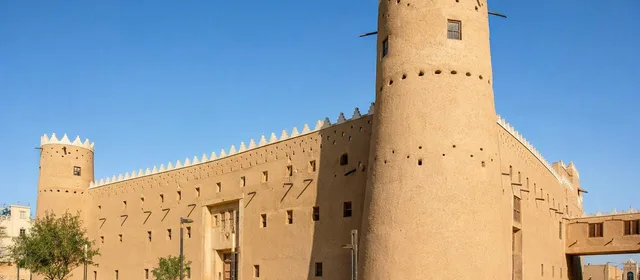
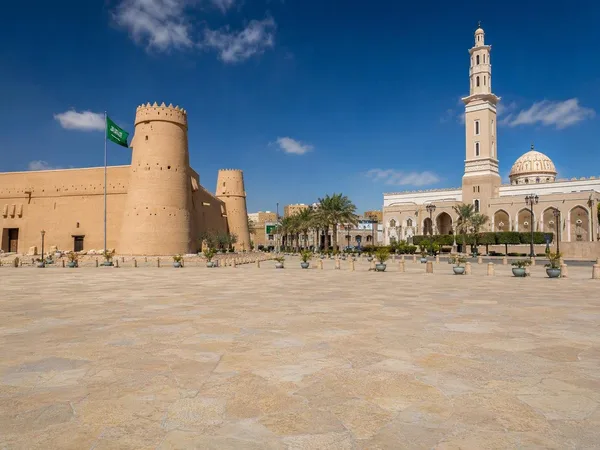
Qasr Al-Hukm is Riyadh’s historic seat of rule in the old city, facing Imam Turki bin Abdullah Mosque. The working palace anchors the civic quarter around Safat Square.
Why it matters
Qasr Al-Hukm is a historic political landmark, not a museum palace. Its earliest foundations date to 1747; after Riyadh became the capital of the Second Saudi State in 1824, Imam Turki bin Abdullah made the palace his seat of government. King Abdulaziz rebuilt it after retaking Riyadh, completed the work in 1911, and lived here until 1938.
The palace remains the headquarters of the Riyadh Principality. That continuing role explains both its importance and its limited everyday access.
Read the building
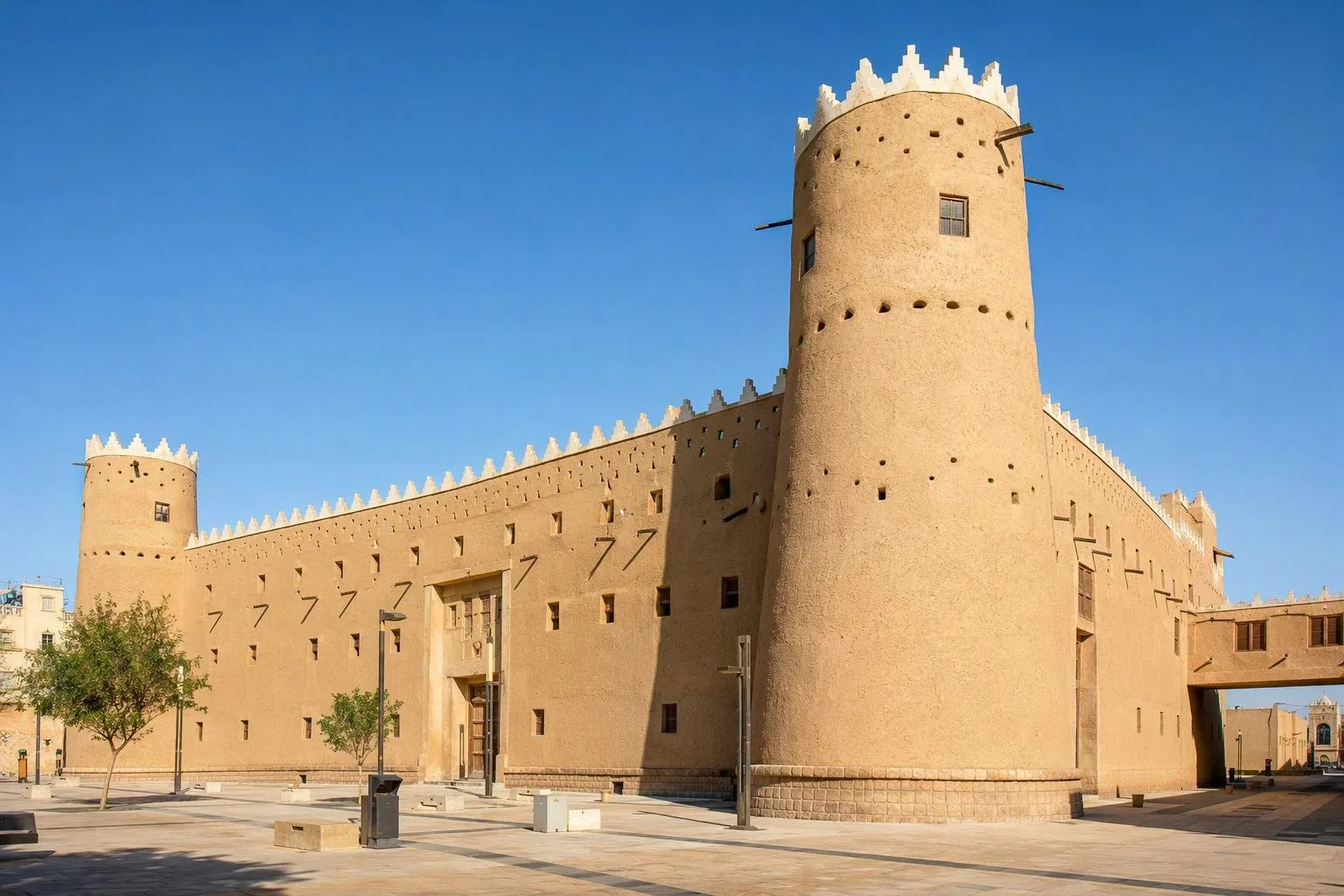
The present complex, reconstructed on its former site and completed in 1992, occupies 11,500 square metres. It reworks traditional Najdi architecture as a modern administrative building.
Look for the two-part massing:
- South side: a six-storey, fortress-like block with four corner towers and a fifth central tower for daylight and ventilation.
- North side: a five-storey section joined to the southern block.
- Inside: a sequence of courtyards and open spaces sits behind comparatively closed outer facades.
From the public realm, the towers and controlled, almost solid elevations are the clearest visual signature.
Orientation in old Riyadh
Qasr Al-Hukm stands in Al-Dirah, Riyadh’s historic administrative and market quarter. Safat Square lies between the palace and Imam Turki bin Abdullah Mosque; covered first-floor bridges link the two buildings. The palace is part of a compact heritage district rather than a standalone stop.
Use the surrounding squares to understand the layout. Justice Square, Imam Mohammed bin Saud Square and Masmak Square form a connected sequence of open spaces. Masmak Fort and Souq Al-Zal are nearby, but they are separate destinations; keep the palace itself as the focus here.
Visiting and access
Treat Qasr Al-Hukm primarily as an exterior landmark. Safat Square provides the most useful public view of the facade, bridges and neighbouring mosque. The palace houses active government functions, so do not expect walk-in access to its offices, majlis or interior courtyards.
Occasional official public tours have opened selected rooms, including reception halls and administrative spaces. These are event-specific rather than standard daily visiting hours. Stay within publicly accessible squares and respect security controls around government premises.
Best use of your time
Visit in daylight to read the towers, façades and urban plan; return after dark if you want the architecture against the square lighting. Allow time to walk the immediate civic precinct rather than trying to enter the building. The point is to see how a functioning seat of government was embedded in old Riyadh’s mosque, squares and market streets.
From the magazine
Stories about Qasr Al-Hukm
Editorial stories linked directly to Qasr Al-Hukm.
No stories about Qasr Al-Hukm have been published yet.
Routes from our editors
Travel through Qasr Al-Hukm
Editorial routes connecting Qasr Al-Hukm with other countries, cities and hotspots.
No routes through Qasr Al-Hukm have been published yet.
More in Saudi Arabia
Related hotspots
Other cities, nature areas and places within Saudi Arabia.
Riyadh
4 linked stories and routes
Najd plateau
2 linked stories and routes
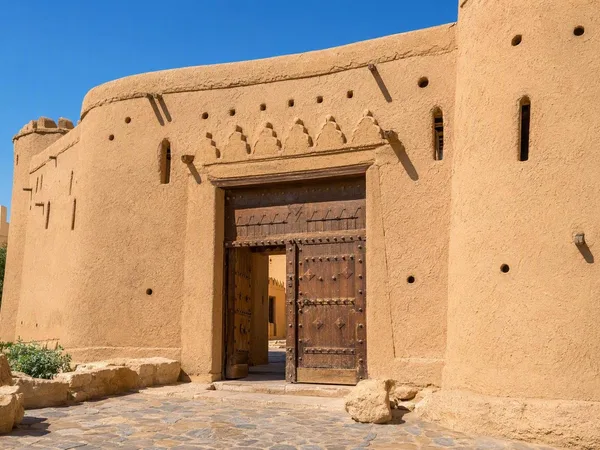
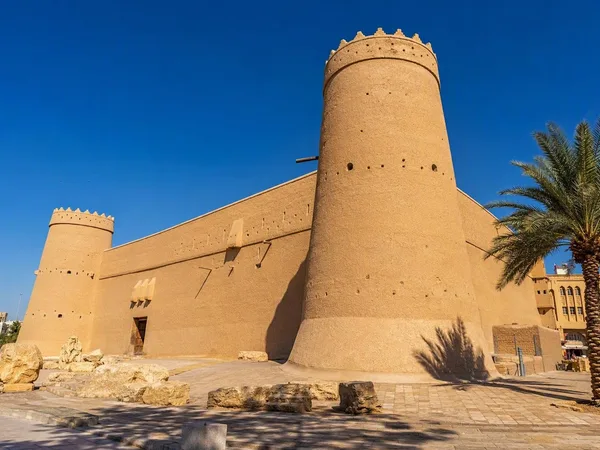
Masmak Fort
2 linked stories and routes
Al-Dirah
2 linked stories and routes
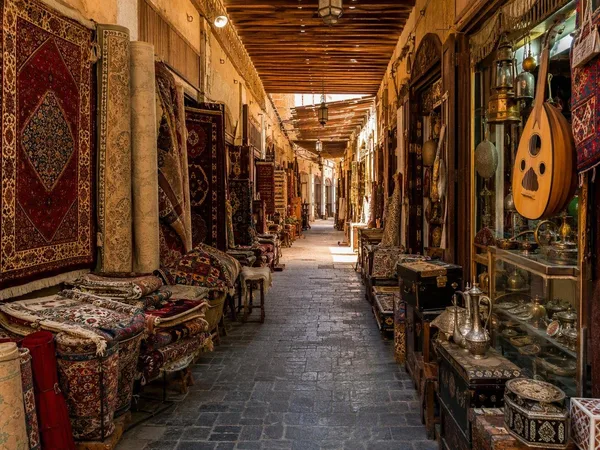
Souq Al-Zal
2 linked stories and routes
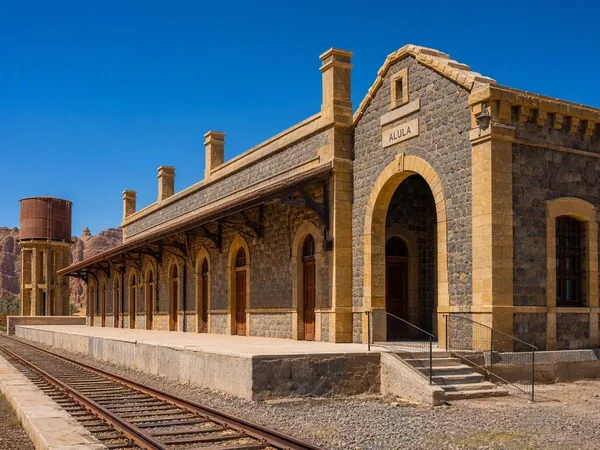
Hejaz
2 linked stories and routes
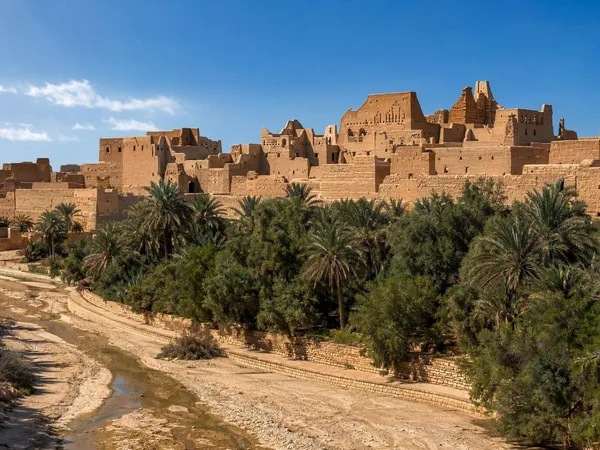
Diriyah
1 linked stories and routes
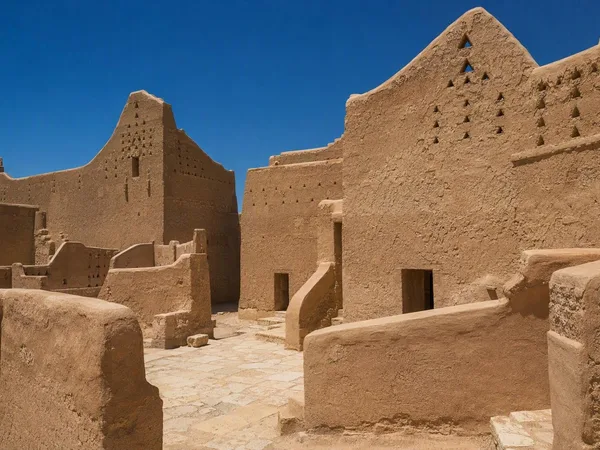
At-Turaif, Diriyah
1 linked stories and routes
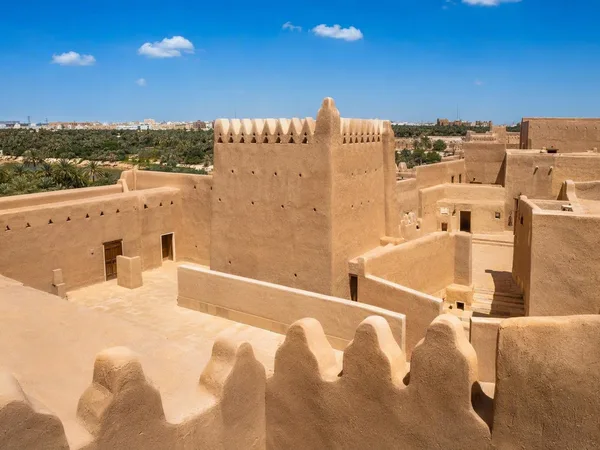
Salwa Palace
1 linked stories and routes
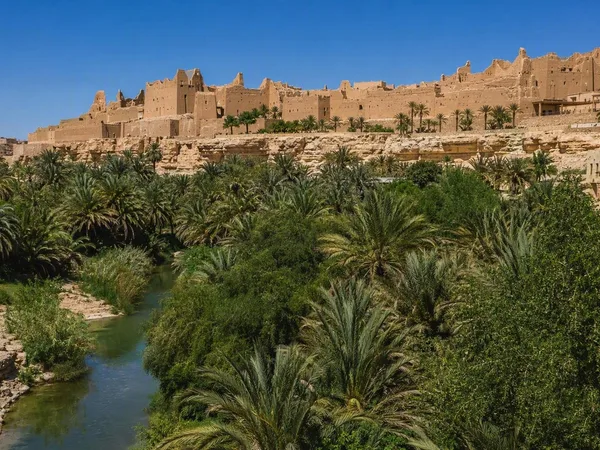
Wadi Hanifah
1 linked stories and routes
Bujairi Terrace, Diriyah
1 linked stories and routes
Deera Square
1 linked stories and routes