Sight · Saudi Arabia
At-Turaif, Diriyah
At-Turaif is the UNESCO-listed mud-brick citadel of Diriyah, on the western side of Wadi Hanifah northwest of Riyadh. It was the political centre of the First Saudi State and preserves the defining forms of Najdi architecture.
Why At-Turaif matters
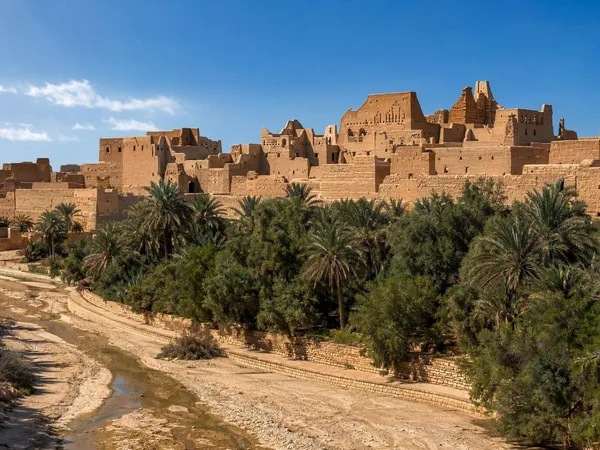
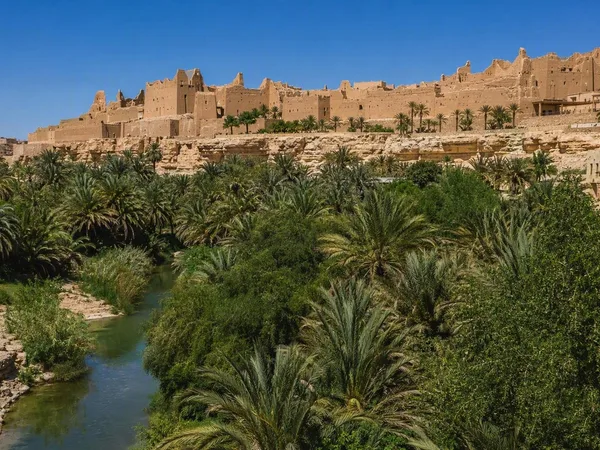
At-Turaif is the historic fortified district of Diriyah, set on a low limestone plateau above the oasis of Wadi Hanifah. It developed from the 15th century and became the seat of power of the First Saudi State in the 18th and early 19th centuries. UNESCO listed the district in 2010 for its political history, oasis setting and exceptional Najdi earthen architecture.
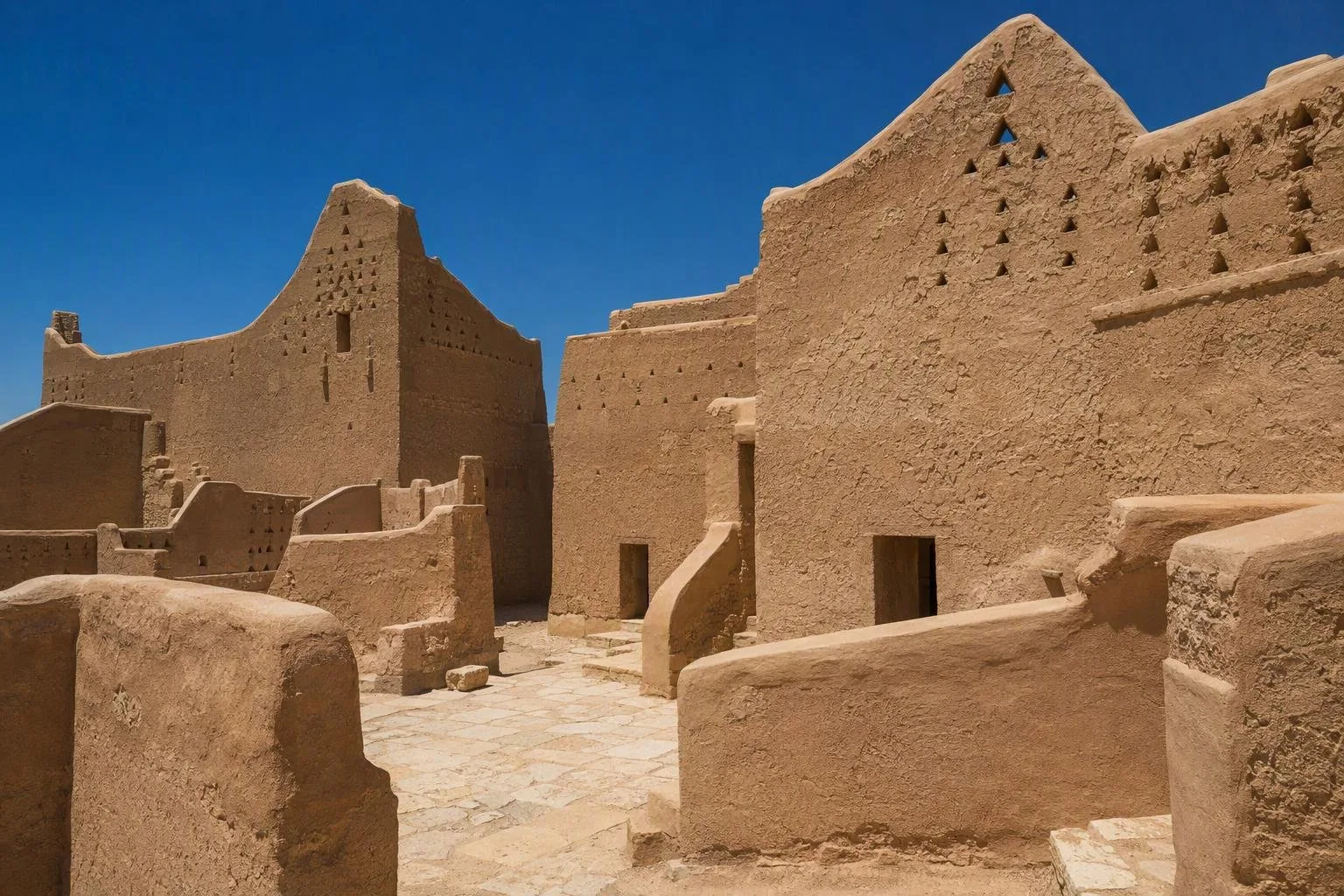
This is a site of palaces, mosques, lanes and courtyards—not a single monument. Much of it survives as conserved ruins, so read it as an urban capital whose original street network and massive clay-built volumes still define the place.
Read the landscape
The position explains the city. At-Turaif occupies the west bank of Wadi Hanifah, while the fertile valley below supported palm groves and agriculture. Its raised, naturally defensible site separated the ruling quarter from the productive oasis.
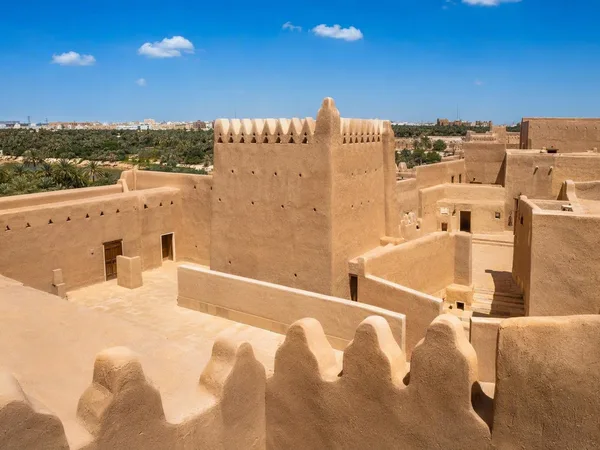
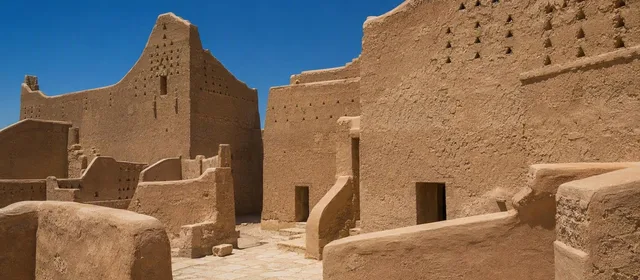
Builders took clay from the wadi bed and made unfired mud bricks, laid over limestone foundations and finished with earthen plaster. Look for thick walls, inward-facing courtyards, narrow passages and geometric detailing: practical responses to climate, privacy and defence rather than surface decoration alone.
Key structures to find
Salwa Palace is the district’s main landmark. This large palace complex served as the ruling family’s residence and administrative centre; its successive courtyards and tall mud-brick walls give the clearest sense of the former capital’s scale.
Also look for:
- At-Turaif Grand Mosque, part of the religious and political core.
- Saad bin Saud Palace, one of the major palace compounds.
- Hammam At-Turaif, a bathhouse that points to the district’s civic life.
- The defensive perimeter, lanes and smaller palace remains that make the citadel a complete settlement rather than a palace enclosure.
The district contains 13 palaces and five mosques. Exhibition spaces and route access can vary, so do not assume every surviving building is open inside.
Visiting the site
Allow two to three hours for the self-guided circuit, longer if you use the audio tour or join a guided visit. Accessible pathways are available, although the heritage setting includes open, exposed walking routes.
At-Turaif is generally open daily from 17:00 to midnight, with final entry at 23:00. Obtain a pass through the official Diriyah channels before arrival. Personal photography is permitted; commercial photography or filming requires prior approval.
Arrival and nearby context
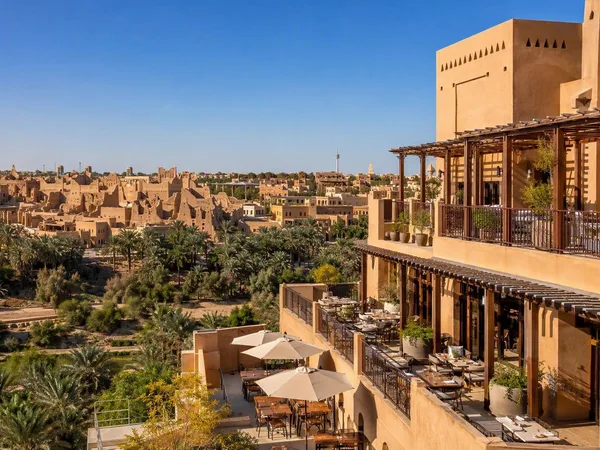
From Riyadh, arrive by taxi, ride-hailing service or car. Use the designated Bujairi or Samhan parking rather than attempting to approach the citadel directly. The modern Bujairi Terrace sits across the wadi and is useful for food and services, but it is a contemporary destination, not part of the historic district.
Construction and access diversions occur in the wider Diriyah development. Follow the current approach directions issued for the day of your visit.
From the magazine
Stories about At-Turaif, Diriyah
Editorial stories linked directly to At-Turaif, Diriyah.
No stories about At-Turaif, Diriyah have been published yet.
Routes from our editors
Travel through At-Turaif, Diriyah
Editorial routes connecting At-Turaif, Diriyah with other countries, cities and hotspots.
No routes through At-Turaif, Diriyah have been published yet.
More in Saudi Arabia
Related hotspots
Other cities, nature areas and places within Saudi Arabia.