
Saudi Arabia

Nabataean tombs, Red Sea ports and highland villages

Saudi Arabia

Saudi Arabia brings together ancient caravan towns, fast-changing cities and the green mountains of the southwest.

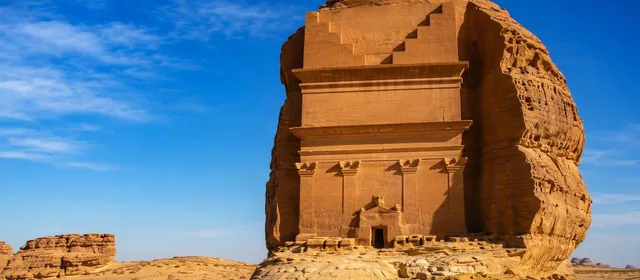
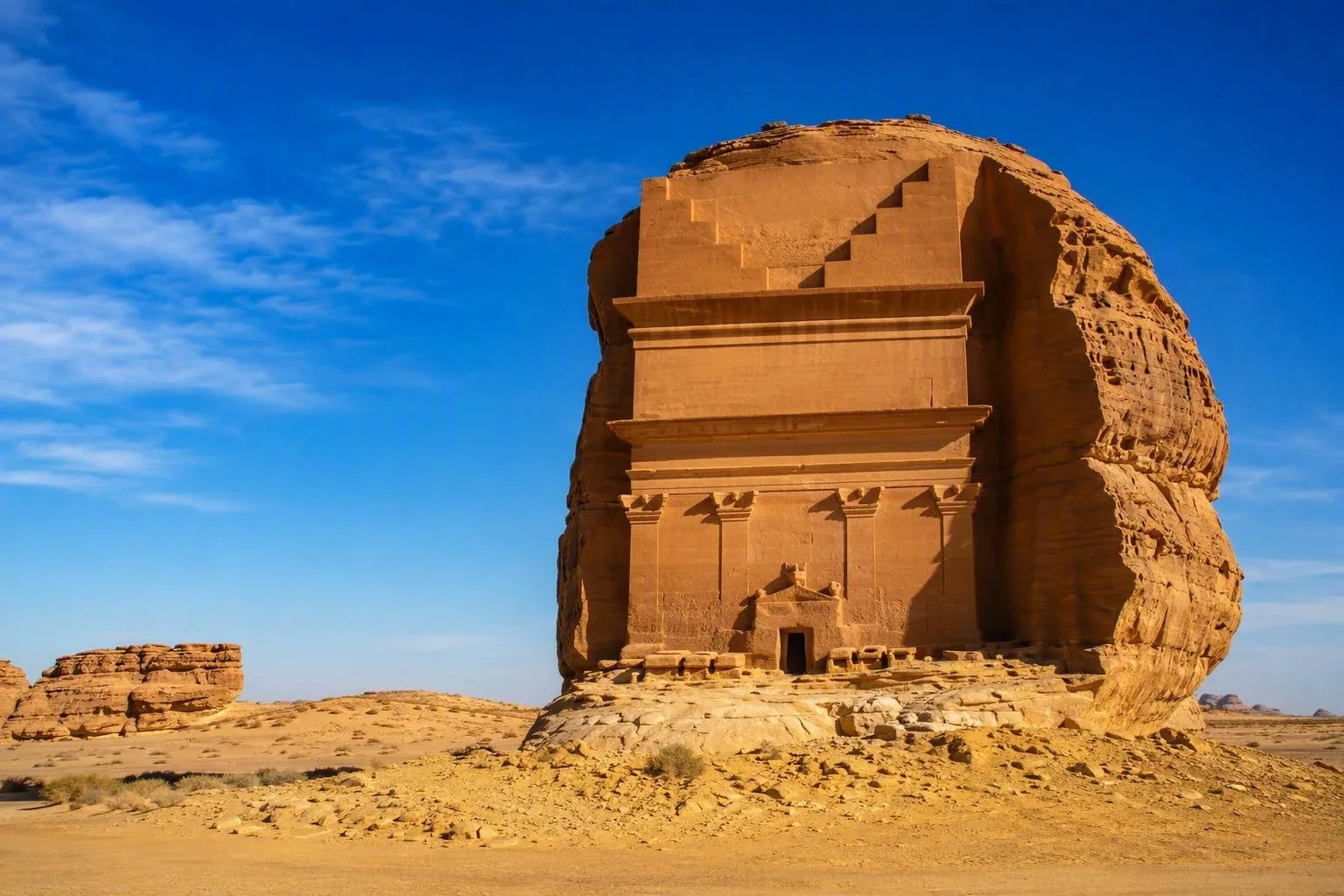
Saudi Arabia offers far more than open desert. In Riyadh, glass towers stand a short drive from Diriyah, where the mud-brick palaces of At-Turaif mark the seat of the first Saudi state. In the northwest, Nabataean masons carved monumental tombs into the sandstone at Hegra. Qasr al-Farid stands alone on the plain, with an unfinished façade that shows how the builders cut the rock from the top down.

Jeddah and the Asir highlands show two very different sides of the country. In Al-Balad, Jeddah’s old quarter, merchants built tall coral-stone houses with projecting wooden screens. Bakeries, small shops and cafés now fill the lanes below them. South of Abha, terraced fields run across mountain slopes beneath juniper trees. Villages such as Rijal Almaa preserve painted façades and local building traditions.

Food changes with the landscape. Restaurants serve kabsa, a rice dish cooked with meat or chicken, while homes and cafés pour Saudi coffee with cardamom alongside dates. Jareesh, made from crushed wheat, is a staple in several regions. Pilgrims, traders and herders once moved between the Red Sea coast, the central plateau and these southern mountains; their routes still show in old markets, forts and settlements. Take time beyond Riyadh and Jeddah, and Saudi Arabia becomes a generous place to explore at an unhurried pace.

When to go

Best time to travel

Monthly values are indicative average maximum temperatures for Riyadh. Temperatures and rainfall vary meaningfully between the Red Sea coast, the central plateau, the northern deserts and the Asir highlands. Monthly values are indicative average maximum temperatures for Riyadh. Temperatures and rainfall vary meaningfully between the Red Sea coast, the central plateau, the northern deserts and the Asir highlands.

jan20.2°C feb23.4°C mar27.7°C apr33.4°C may39.4°C jun42.5°C jul43.4°C aug43.6°C sep40.4°C oct35.3°C nov27.5°C dec22°C

Weather in the capital

Practical Saudi Arabia

On every country page we show the current weather for the capital.

Riyadh
Morning34°Cclear
Afternoon43°Cclear
Evening39°Cclear
today43°C / 31°Chigh and low

Current forecast by Open-Meteo

Getting around

Domestic flights cover the long distances between major regions. Haramain trains run between Mecca, Medina and Jeddah, while SAR trains serve routes from Riyadh. A rental car gives more flexibility around AlUla, Asir and rural areas.

Money

Cards and mobile payments work in most cities, hotels and larger shops. Keep some riyals for small purchases, markets and businesses outside major centres. ATMs are widely available.

Accommodation

Large cities have international hotels and serviced apartments. AlUla, Jeddah and the Red Sea coast also offer heritage stays and resorts. Prices can rise during major events and holiday periods.

Before you leave

Worth knowing

A practical starting point for your trip. Check current conditions and local information before you leave.

01

Calling code

Saudi Arabia’s international calling code is +966.

02

Driving side

Traffic drives on the right, and most cars have left-hand steering.

03

Language

Arabic is the official language. English is common in hotels, airports, larger restaurants and many urban businesses.

04

The working week

The official weekend falls on Friday and Saturday. Government offices and many businesses operate from Sunday to Thursday.

05

Prayer times

Prayer times can affect opening hours, although many businesses remain open. Friday midday prayers can delay shop and service hours.

06

Tipping

Tipping is appreciated but not compulsory. Check for a service charge before adding around 10% in restaurants.

07

Meal times

Lunch often comes after midday prayers, and dinner commonly starts after 8pm. During Ramadan, many dining hours move to after sunset.

08

Card payments

Credit cards, debit cards and contactless payments are widely accepted. Small market stalls and remote businesses may prefer cash.

09

Ride-hailing

Uber, Careem and local ride-hailing apps operate in major cities. Airports and shopping centres may use marked pickup zones.

10

Intercity trains

Reserve Haramain and SAR intercity trains in advance, especially around weekends, holidays and major events. Passenger details must match the booking.

11

Public dress

Wear loose, modest clothing in public. Women visitors do not have to wear an abaya, but both men and women should avoid revealing clothes.

12

Alcohol

Travellers cannot import or buy alcohol. Public sale and consumption are prohibited.