
City · Saudi Arabia
Riyadh
Riyadh is Saudi Arabia’s capital on the Najd plateau, where the old mud-brick core, major museums and a rapidly changing skyline sit within a vast inland metropolis.
Get oriented
Riyadh is a large, low-rise city built for distance rather than strolling. Its historic centre lies around Al Dirah and Qasr Al Hukm; the modern commercial spine runs north through Olaya and King Fahd Road. Diriyah, with the UNESCO-listed At-Turaif district, is north-west of the centre but is a separate historic destination—not a city-centre stop.
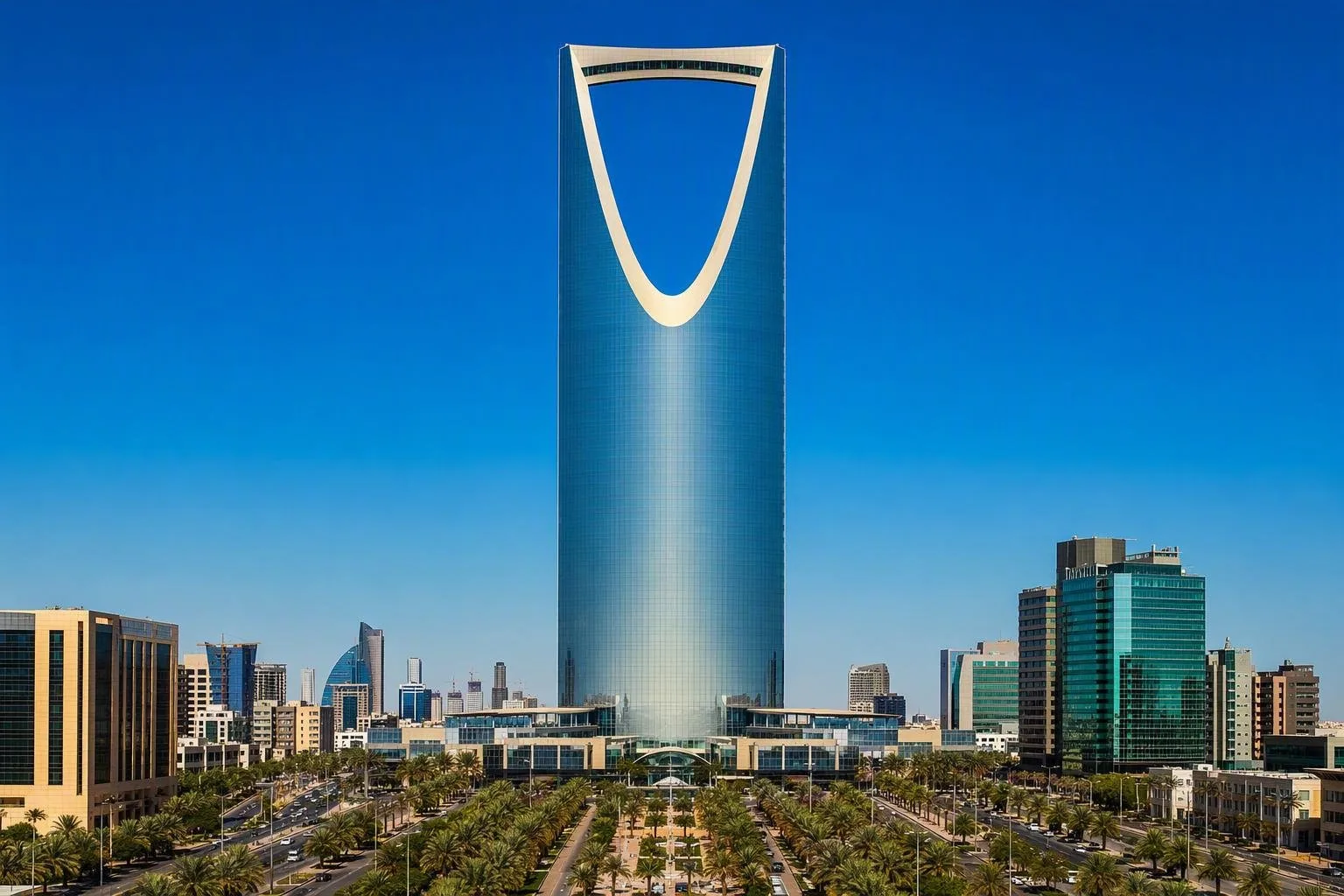
Choose an area based on your plan. Olaya is useful for hotels, restaurants and the Kingdom Centre; Al Dirah puts you near the fort and souq; KAFD is the contemporary business and architecture district.
Start with the old city
Masmak Fortress is the essential anchor in Al Dirah. This clay-and-mud-brick fort was captured by Abdulaziz Al Saud in 1902, a pivotal event in the creation of the modern Saudi state. Allow about an hour for the small museum, then walk to Souq Al Zal for incense, textiles, antiques and traditional goods.
For wider historical context, go to the National Museum of Saudi Arabia in the King Abdulaziz Historical Centre. Its galleries trace the Arabian Peninsula from prehistory through the formation of the kingdom. Pair it with Murabba Palace in the same wider complex rather than trying to rush both old-city sights and the museum into one short visit.
Read the skyline
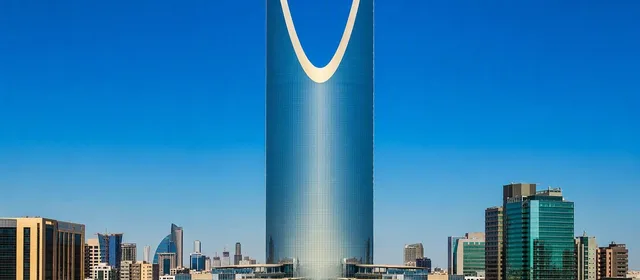
The 302-metre Kingdom Centre is Riyadh’s clearest visual landmark. Its Sky Bridge spans the tower’s inverted arch and gives a high, citywide view; book a late-afternoon slot if you want daylight and the illuminated city in one visit.
For a more recent urban counterpoint, explore King Abdullah Financial District (KAFD). Its towers, cafés and Zaha Hadid-designed metro station show the contemporary side of the capital. This is a better place to look at architecture than to search for heritage.
Diriyah and the wider landscape
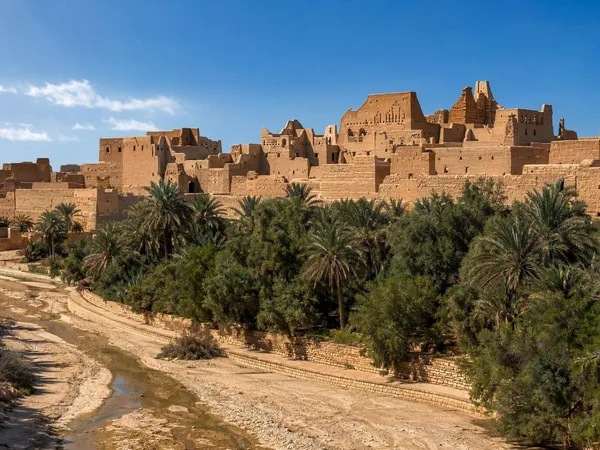
Set aside a separate half-day for At-Turaif in Diriyah. The mud-brick citadel was the first capital of the Saudi dynasty and retains palaces and an urban ensemble built above the Diriyah oasis. Its Najdi architecture—earth construction, thick walls and geometric decoration—provides the historical contrast to central Riyadh’s towers.
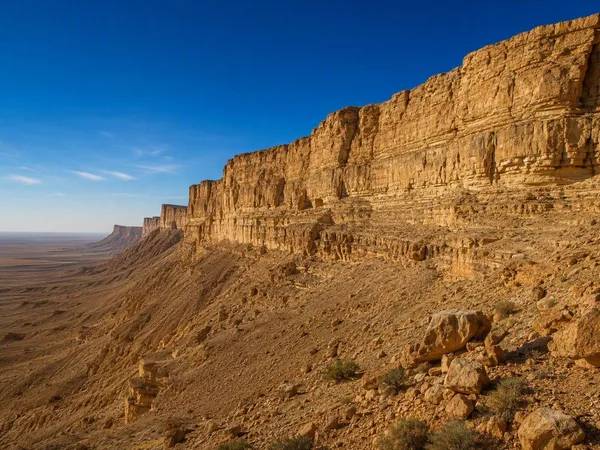
For open space within the metropolitan area, Wadi Hanifah follows a long valley through the city. The Edge of the World is farther out on the Tuwaiq escarpment; treat it as a dedicated desert excursion, not an urban attraction. The final approach requires suitable transport, commonly a guided 4WD trip.
Moving around and timing
King Khalid International Airport is Riyadh’s main air gateway. The metro connects key corridors, but ride-hailing services and taxis remain the most direct way to link sights spread across the city; allow generously for traffic.
Outdoor sightseeing is most comfortable from roughly November to March. Summer heat is severe, so schedule exposed sites early or after sunset. Dress modestly, particularly at heritage and religious places. Ask before photographing people, and do not photograph government, military or diplomatic buildings.
From the magazine
Stories about Riyadh
Editorial stories linked directly to Riyadh.
No stories about Riyadh have been published yet.
Routes from our editors
Travel through Riyadh
Editorial routes connecting Riyadh with other countries, cities and hotspots.
No routes through Riyadh have been published yet.
More in Saudi Arabia
Related hotspots
Other cities, nature areas and places within Saudi Arabia.
Najd plateau
1 linked stories and routes
Diriyah
1 linked stories and routes
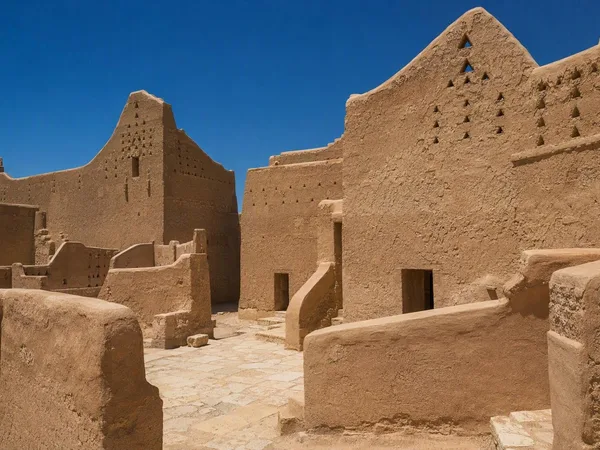
At-Turaif, Diriyah
1 linked stories and routes
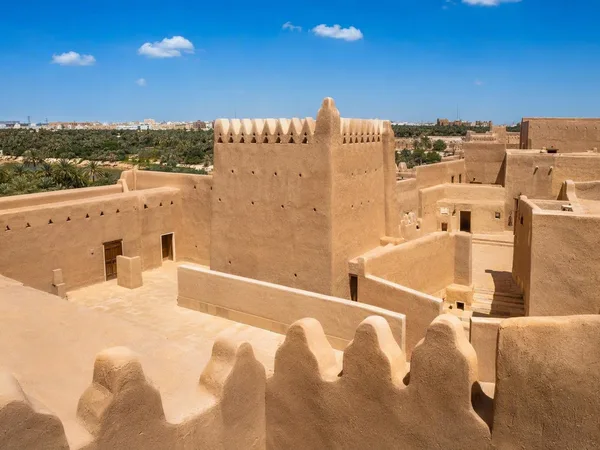
Salwa Palace
1 linked stories and routes
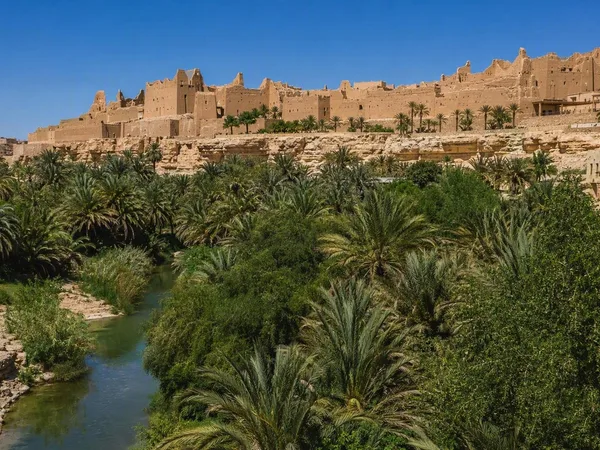
Wadi Hanifah
1 linked stories and routes
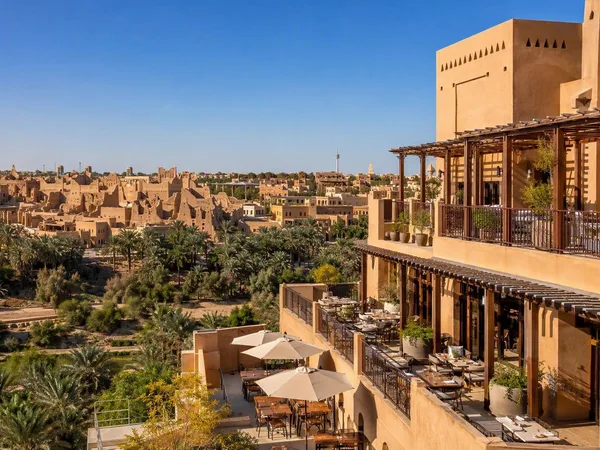
Bujairi Terrace, Diriyah
1 linked stories and routes