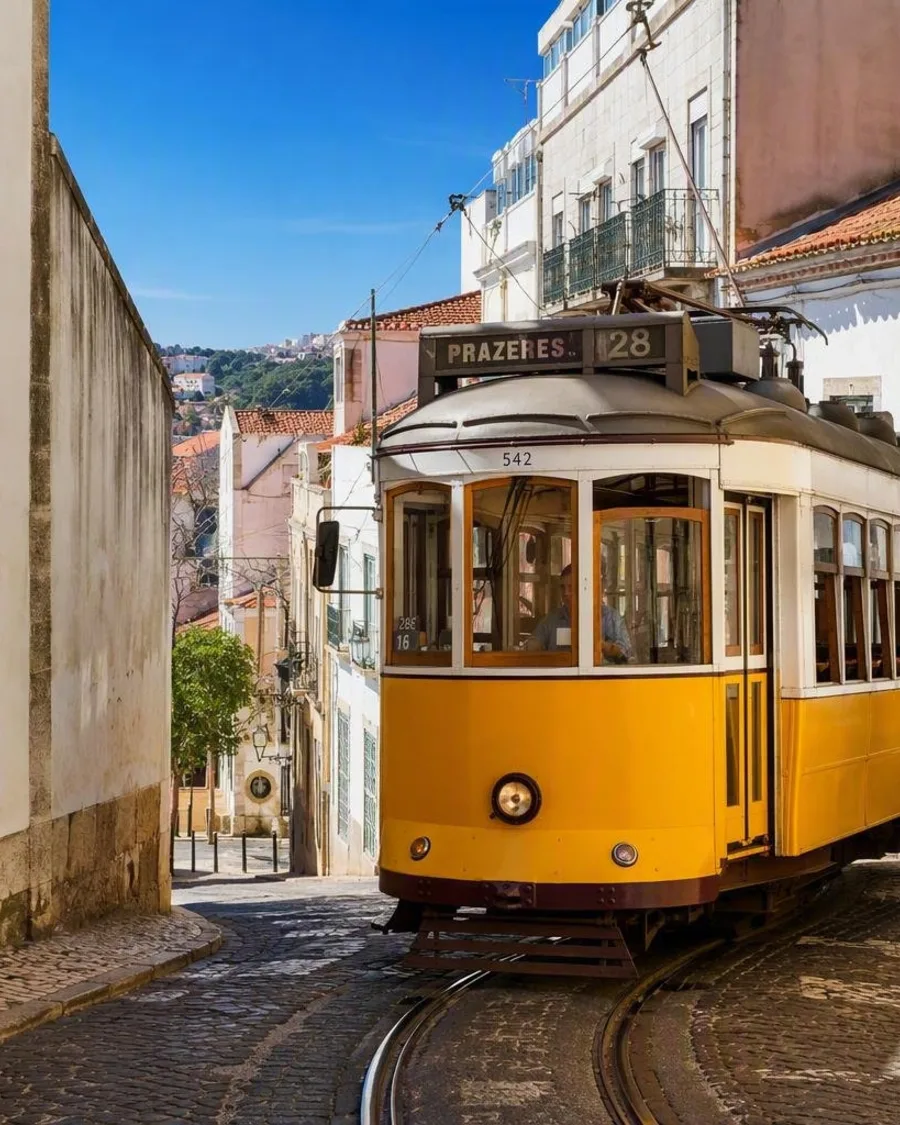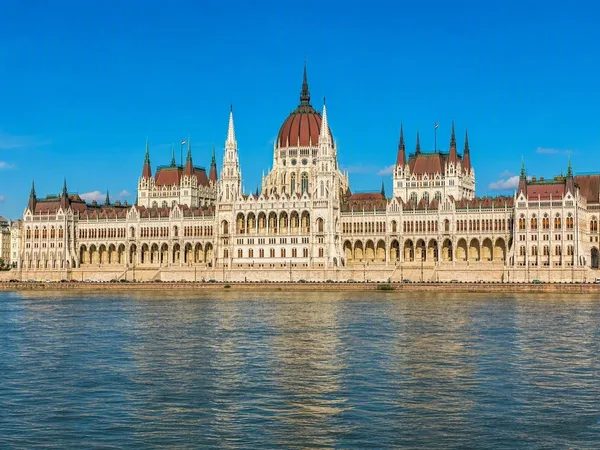
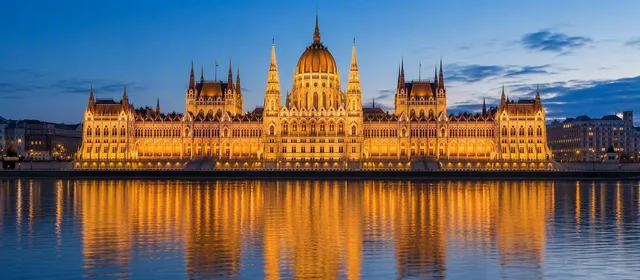
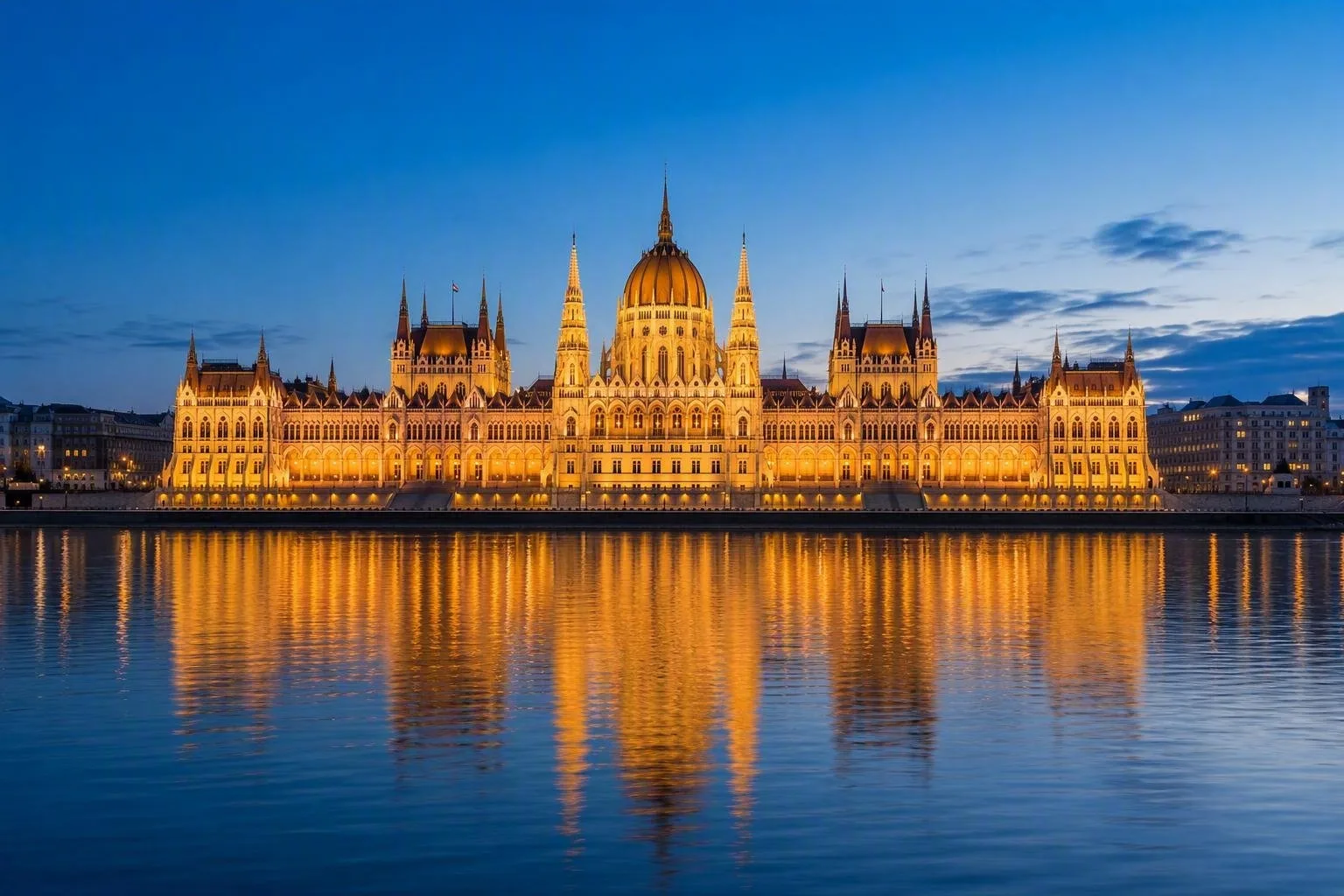
Start in Budapest, where the Danube separates Castle Hill from Pest’s broad boulevards. Yellow trams run along the river past Parliament, and thermal water feeds public baths across the city. At Széchenyi, people soak outdoors beneath Neo-Baroque domes and play chess on boards beside the pool. Roman ruins, Ottoman baths, Habsburg facades and socialist-era blocks stand a short tram ride from one another. People commute through this grand setting, meet friends in cafés and spend long afternoons at the baths.
West of Budapest, vines cover the volcanic slopes of Badacsony above Lake Balaton. Tihany Abbey looks across the water from the opposite shore. In the east, the Great Plain reaches to a low horizon. At Hortobágy National Park, herders keep Hungarian grey cattle and racka sheep near the old sweep wells.
Hungarian cooking relies on paprika, onions, sour cream and long, slow cooking. Order gulyás, pörkölt or fisherman’s soup, then stop at a pastry shop for a slice of Dobos cake. Tokaj and Eger cellars pour wines from two of the country’s best-known regions. Eger also holds an Ottoman minaret and a hilltop castle from the 16th-century wars. Leave Budapest for a few days, then come back with a fuller picture of Hungary’s towns, fields, food and baths.