Sight · Germany
Zollverein
Zollverein is the UNESCO-listed former coal mine and coking plant in northern Essen, Germany. Its Shaft XII complex, rail infrastructure and industrial machinery now form a large public heritage site with museums, tours and walking routes.
Why it matters
Zollverein preserves the working landscape of coal extraction and coke production rather than a single mine building. Coal was first raised here in 1851; coking began in 1857. The mine closed in 1986 and the coking plant in 1993, but shafts, conveyor systems, tracks, ovens and service buildings remain legible across the site.
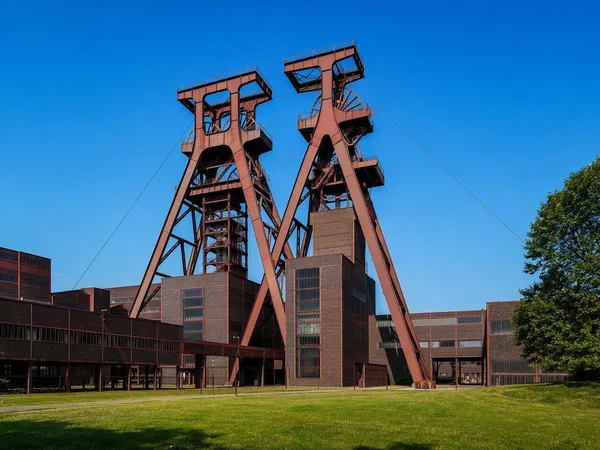
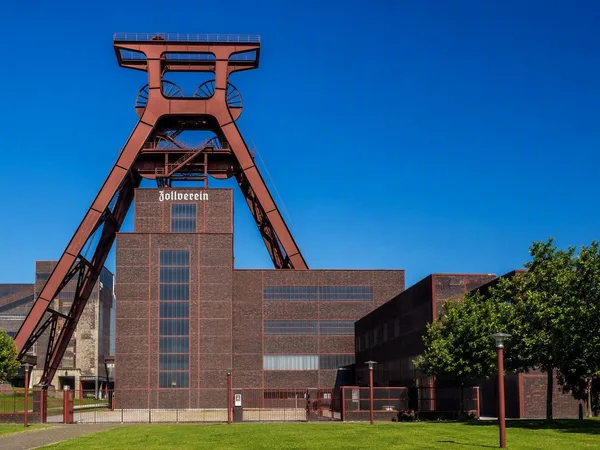
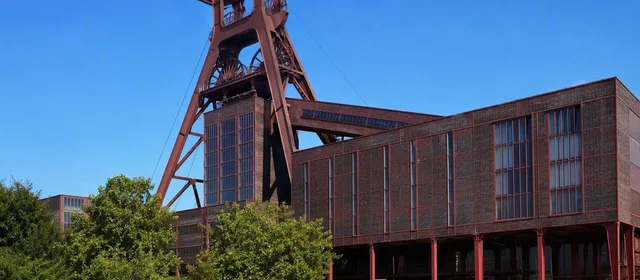
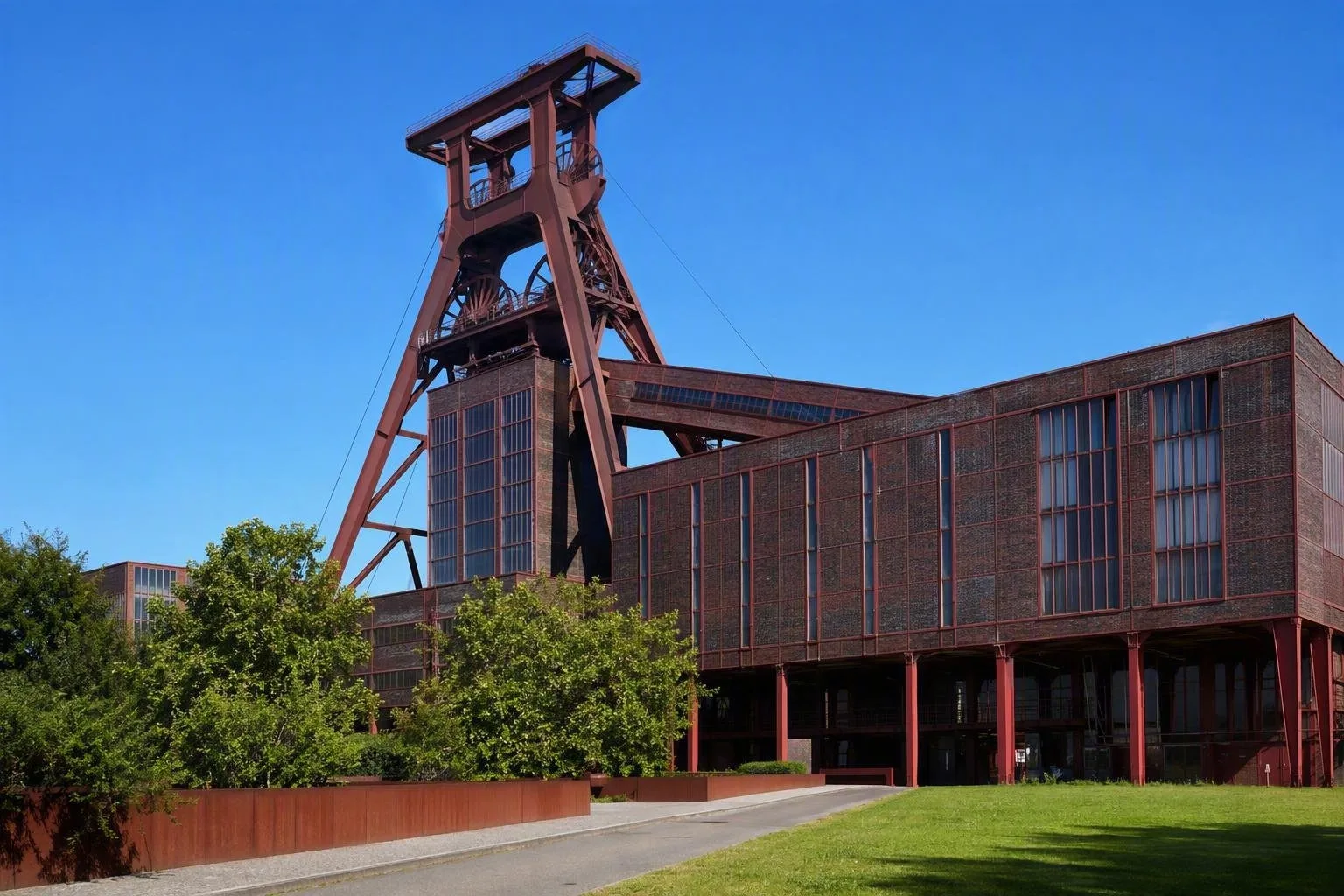
UNESCO listed the complex in 2001 for both its industrial history and its Modern Movement architecture. Shaft XII, designed by Fritz Schupp and Martin Kremmer and opened in 1932, is the defining ensemble: a disciplined composition of red brick, steel framing and cubic volumes built around the double winding tower.
Start at Shaft XII
Enter via the Ehrenhof and take time to read the site as a production system, not as a backdrop. The 55-metre Doppelbock winding tower stands over the shaft hall; behind it, the former Coal Washery is the largest above-ground building. Conveyor bridges and machinery link structures that once handled coal at industrial scale.
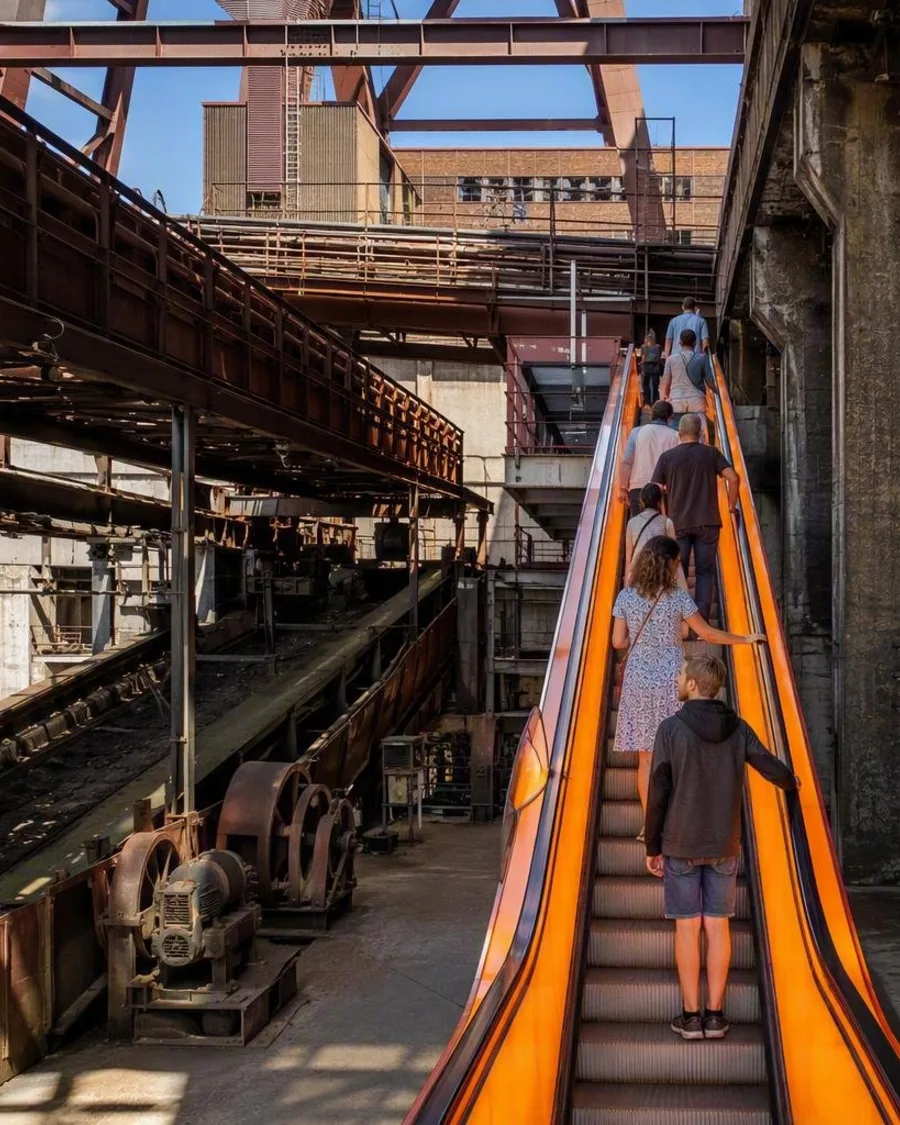
The Coal Washery now contains the Ruhr Museum, whose permanent displays cover the Ruhr region’s natural history, industrialisation and social change. The orange-lit escalator into the building is a deliberate contemporary intervention, not an original mining feature. The former boiler house holds the Red Dot Design Museum.
Mine, coking plant and open ground
Zollverein covers about 100 hectares and has two main areas: the Coal Mine and the Coking Plant. Do not treat the latter as an optional extra. Its long oven batteries, pipework, chimneys and rail lines show the next stage of the process: turning coal into coke for heavy industry.
Use the paved 3.5-kilometre Ring Promenade to connect the zones. Former tracks, sleepers and gentle changes in level are part of the industrial fabric. A site map from the visitor centre makes the distances and entrances clearer.
Access and orientation
The outdoor World Heritage site is free and open at all times. The Ruhr Museum and design museum charge admission; guided visits provide access to protected interior areas, which cannot be entered independently for safety reasons.
The Ruhr Visitor Centre is in the Coal Washery and is the practical starting point for tickets, tours and orientation. Tram 107 serves the Zollverein stop, around 500 metres from the visitor centre. Tram 107, bus 183 and local rail also serve Zollverein-Nord; bus 183 stops at the Coal Washery and the coking plant.
For drivers, use Fritz-Schupp-Allee for the mine and Arendahls Wiese for the coking plant. Free designated parking is available in both areas.
Practical footing and accessibility
The central outdoor area and the Ring Promenade are paved, and the visitor centre and Ruhr Museum are step-free. However, this is a former industrial site: expect rails, sleepers, uneven surfaces, stairs and slopes. Wheelchair users may need a companion, and standard interior heritage tours are not suitable for wheelchairs or walking aids.
Wear shoes with a firm sole and stay on marked routes. The grounds are private property as well as a monument; access restrictions can apply during works or major events.
From the magazine
Stories about Zollverein
Editorial stories linked directly to Zollverein.
Routes from our editors
Travel through Zollverein
Editorial routes connecting Zollverein with other countries, cities and hotspots.
No routes through Zollverein have been published yet.
More in Germany
Related hotspots
Other cities, nature areas and places within Germany.