Zollverein: Coal, Coke and Culture in Essen
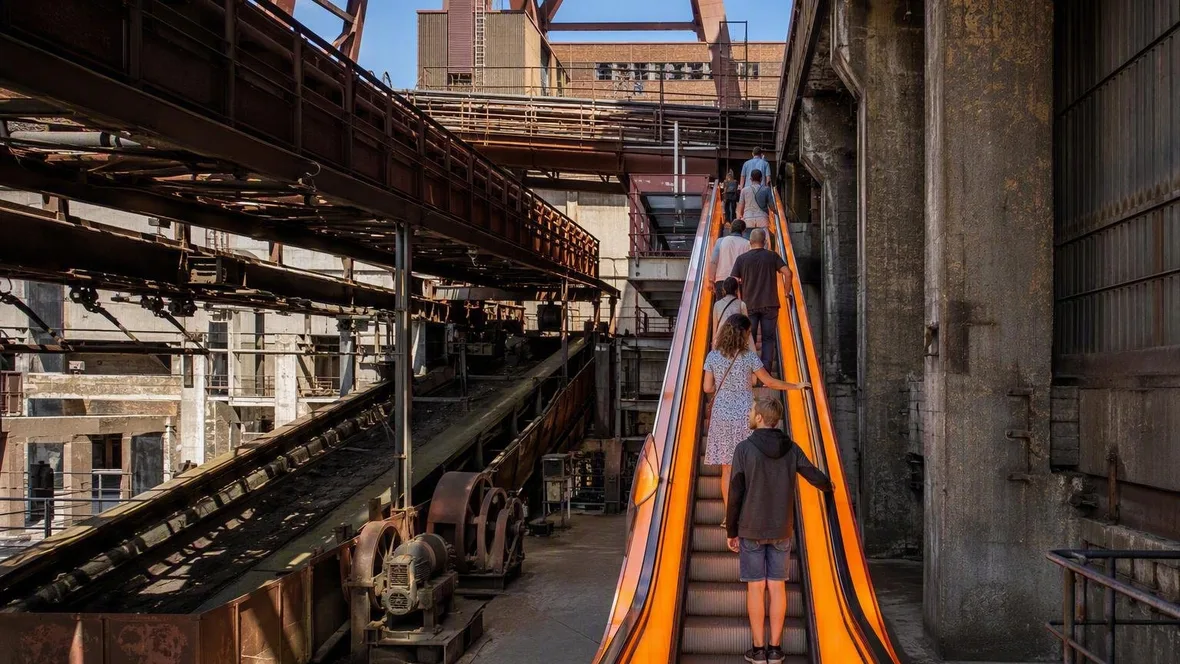
An orange-lit escalator rises through the former coal washery at Zollverein. It now carries museum visitors into the building where belts and heavy machinery once sorted coal from one of Europe’s largest industrial complexes.
The machine behind the monument
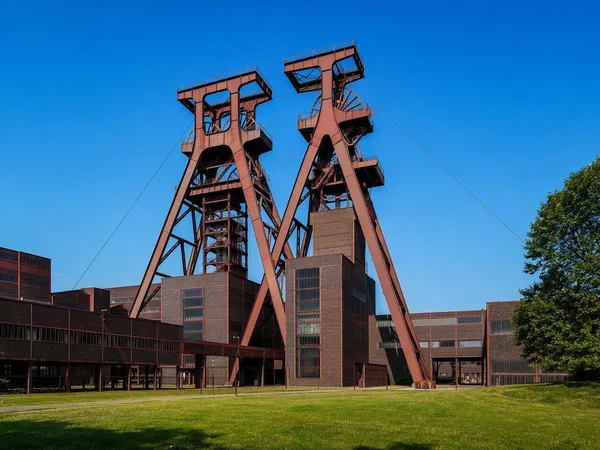
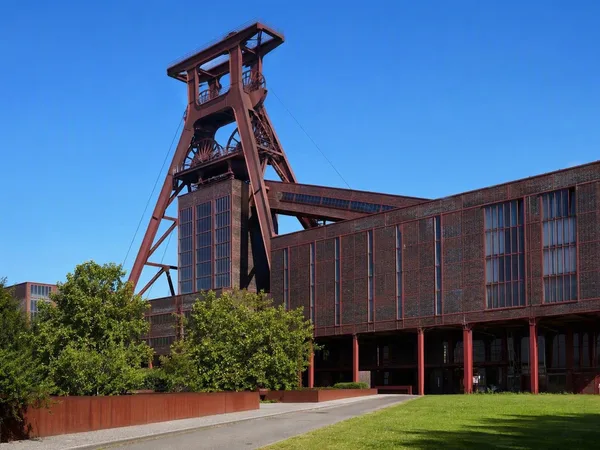
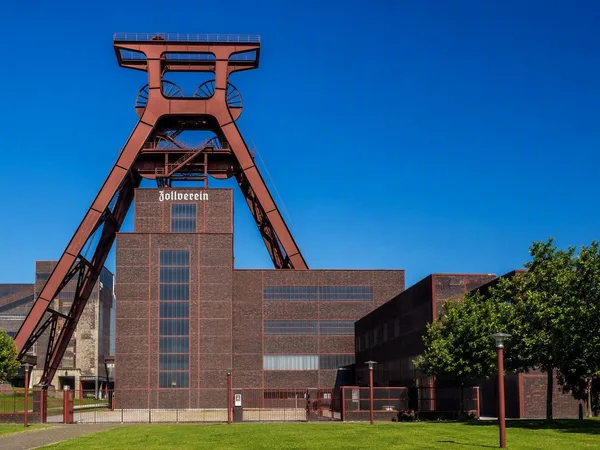
 Zollverein’s double headframe rises above red-brick workshops in Essen.
Coal lay deep beneath Essen’s Katernberg district, and the Köln–Minden railway ran nearby. Those two facts helped Zollverein grow: the first coal reached the surface in 1851, and a coking plant followed in 1857 to make fuel for iron and steel production.
Most of the landmark buildings date from a far larger rebuilding in 1928–32. Architects Fritz Schupp and Martin Kremmer designed central Shaft XII, which gathered production from the underground workings into one tightly organised surface operation. Its double headframe stands 55 metres above the shaft hall.
Rectangular workshops, compressor rooms and production halls sit in strict symmetry around it. Steel frames hold panels of red clinker brick; repeated vertical windows and straight lines give the complex the disciplined language of New Objectivity architecture. The absence of ornament was practical. The structure and the brick skin stood apart, which allowed new machinery or extensions without redesigning every hall.
This was architecture built around work. Older shafts carried miners, materials and ventilation underground, while Shaft XII lifted all extracted coal to the surface. Wagons tipped their loads. Machines separated stone from coal, washed it and sent it onwards by conveyor and rail. The bridges, halls and towers still show that sequence in brick and steel.
At its peak, Zollverein employed up to 8,000 miners above and below ground, working in shifts. Miners first cut coal with picks and later used mechanised cutters in the galleries. They brought it to the central transport system, which carried it to Shaft XII. The site’s handsome symmetry should not soften the scale of that labour.
Down through the coal washery
The coal washery now provides the main public entrance. Visitors take the orange escalator to the information level, passing rough concrete, conveyor belts and retained machinery. The Ruhr Museum occupies the floors below. Its permanent display leads down from the present-day Ruhr through the region’s history, reversing the old upward journey of coal through the building.
The museum covers industrialisation, labour migration and workplace conflict alongside the Ruhr’s more recent development. That material gives the machinery its human measure. Zollverein was not simply an efficient industrial design; thousands of people worked its shifts, while mining communities depended on the pits, steelworks and transport lines around them.
Other former workspaces now serve very different purposes. The boiler house contains the Red Dot Design Museum. Folkwang University students use studios and workshops around the site for wood, metal, textiles, ceramics, photography and digital media. A former switching house holds photography exhibitions. Museum visitors, students and passers-by now move through ground once restricted to workers and machinery.
Along the rails to the coke ovens
Former railway tracks run away from Shaft XII as crossing and parallel paths. Young birches grow at their edges. The Ring Promenade links the mine and coking plant, crossing ground whose rises and dips still reflect industrial use. Zollverein covers far more than a neat museum precinct. The distances between its buildings preserve the working scale of coal moved by rail, conveyor and machine.
The coking plant stretches out in a low, long line: oven batteries, coal towers, pipes, chimneys and brick-clad concrete volumes. It began production in 1961, after post-war demand for coke used in ironmaking had increased sharply. Coke workers mixed and loaded coal into ovens, then heated it without air for up to eighteen hours. Machines pushed the glowing coke out into wagons for quenching, followed by screening and dispatch.
The work ran continuously in three shifts, beside heat, heavy machines and 304 ovens after the plant’s 1970s expansion. At its peak, the coking plant employed about 1,000 people. Its great length had a purpose. On the so-called black side, coal became coke; on the white side, the plant processed released gases into ammonia, crude benzol and tar.
Guided visits now pass the oven batteries and enter an opened battery, where models and projections explain the movement of heat, material and exhaust gases. In summer, an outdoor pool made from two welded shipping containers operates beside the ovens. Residents and visitors use it. The blue water is a sharp, slightly absurd contrast to the furnace line overhead.
A Ruhr landscape after coal
Zollverein’s mine closed in 1986, the last of roughly 290 mines in Essen. The coking plant ran until 1993. Oil, natural gas and cheaper imported coal had already weakened local mining from the late 1950s onwards. UNESCO listed the mine and coking complex as World Heritage in 2001.
Culture did not replace the industrial economy on the same terms. Closed shafts, workers’ settlements, spoil heaps and abandoned transport routes still show the reach of extraction and the long consequences of closure. Across the Ruhr, some spoil heaps now serve as viewpoints, while paths and vegetation cover former industrial ground. At Zollverein, walkers, cyclists and joggers use old rail alignments, and museums and studios occupy selected buildings.
The conversion retains the evidence rather than hiding it. Conveyor bridges cross between halls, steel frames remain exposed, and the coke ovens keep their intimidating length. New black-and-white steel-and-glass structures stand apart from the original brickwork. The orange escalator does not pretend to be mining equipment either. Zollverein offers no cosy industrial nostalgia, which is one reason it works so well.
Planning a short visit
The outdoor grounds of both the mine and coking plant are free and always accessible. The Ruhr Museum opens daily from 10am to 6pm; museums and industrial guided tours charge admission. Tram 107 links Essen Hauptbahnhof directly with the Zollverein stop, while bus 183 serves the coal washery and coking plant. The site has two distinct zones, so collect a free map at the coal washery visitor centre.
Zollverein from the street
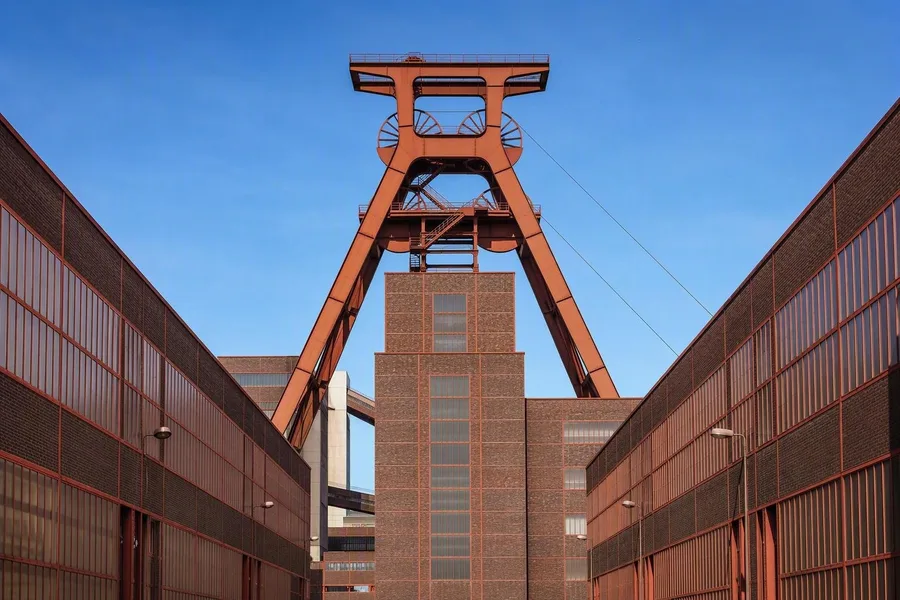
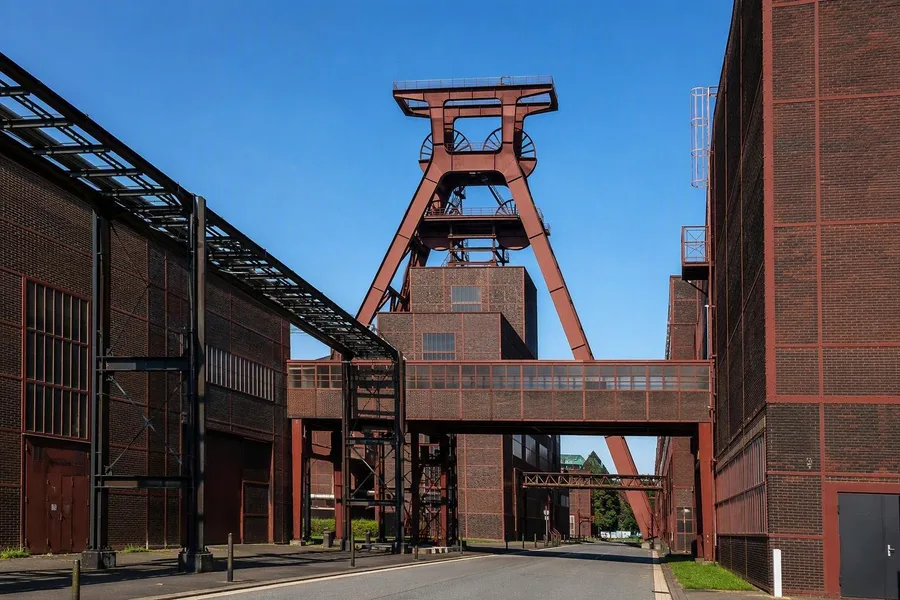 The double headframe rises above red-brick halls and conveyor bridges at Zollverein in Essen.
Tram 107 leaves central Essen and reaches the stop named simply Zollverein. At street level, the complex opens out in layers: the double headframe above the shaft hall, conveyor bridges between steel structures, and red-brick façades extending behind them. The tower, steelwork and brick do not form a backdrop. They remain the full-sized shell of a workplace where the last coal came up less than four decades ago.
Keep exploring