City · South Korea
Busan
Busan is South Korea’s major southeastern port city, spread between mountains, working harbors and the Korea Strait. Its districts pair seafood markets and older hillside neighborhoods with long beaches, coastal temples and bridge-lit waterfronts.
Get oriented
Busan is not a compact, single-centre city. Treat it as a set of distinct coastal and hillside districts linked by metro and bus. Nampo-dong and Jagalchi cover the historic port core; Seomyeon is a practical central interchange; Haeundae and Gwangalli are the main east-side beach bases; Yeongdo and the western coast suit slower, more rugged outings.
Do not try to cover both the old port and the far eastern coast in one short afternoon. Build days by area.
The old port: markets, film and views
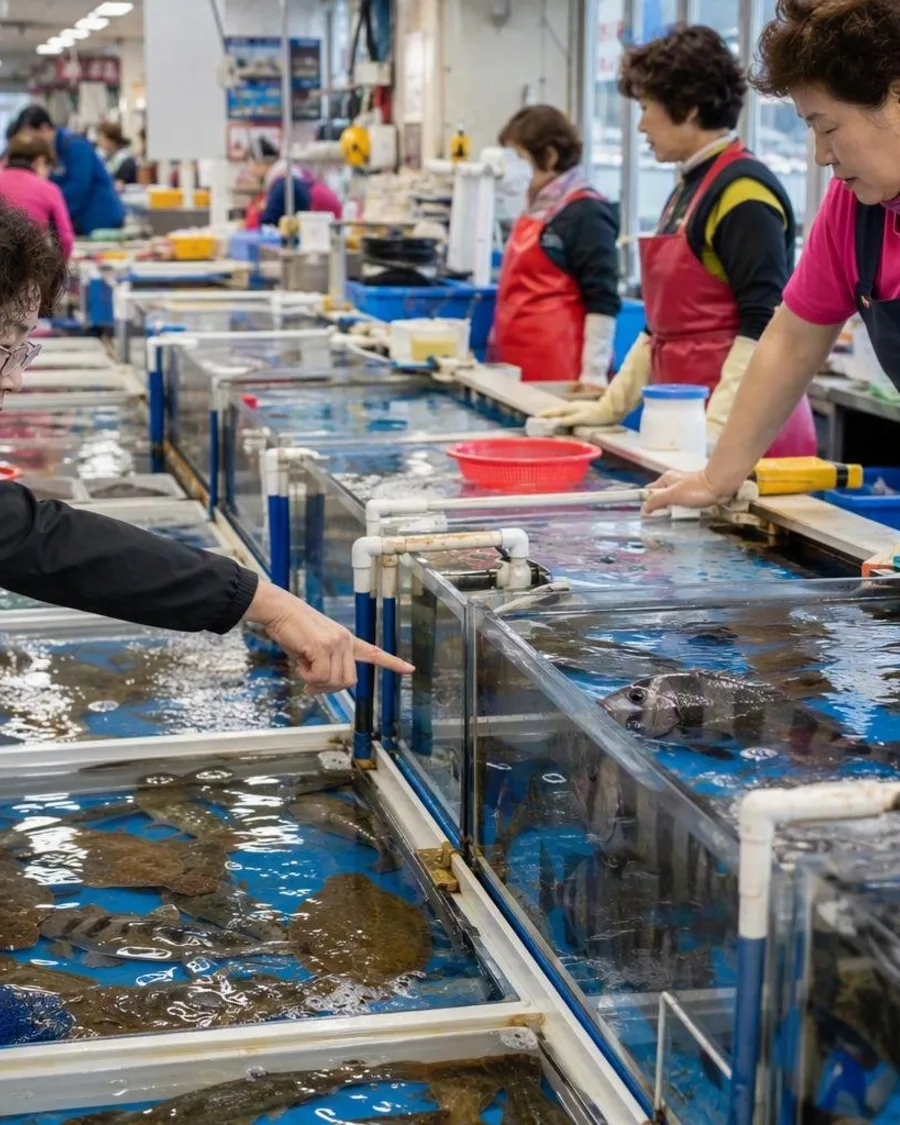
Start around Jagalchi Market, beside South Port. In the modern market building, live fish is selected on the first floor and prepared in second-floor restaurants. The rooftop observation deck looks across the water to Yeongdo Island.
Continue on foot through Nampo-dong:
- BIFF Square for film-industry traces and street food, including seed hotteok, tteokbokki and fish-cake skewers.
- Gwangbok-ro for shops and cafés.
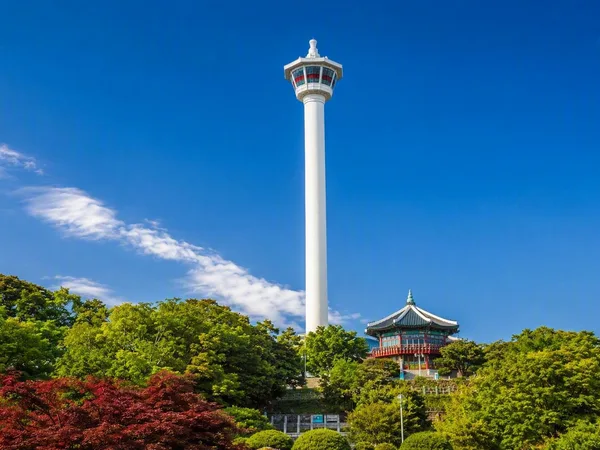
- Yongdusan Park and Busan Tower for a broad view over the port, market roofs and Yeongdodaegyo Bridge.
Jagalchi is a working market as well as a visitor stop; go early for its most active atmosphere. The market building closes on the first and third Tuesday of each month.
Coastlines worth the journey
Haeundae Beach is the city’s best-known sandy shore. Walk onward around Dongbaekseom on the coastal trail, where the route combines sea views with Haeundae’s high-rise edge.
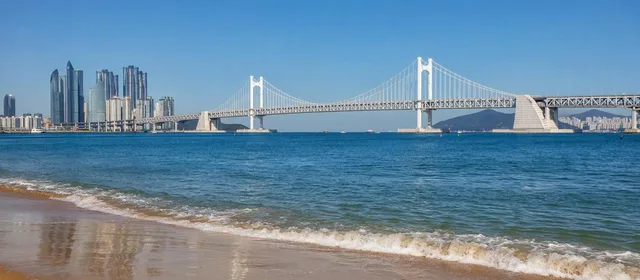
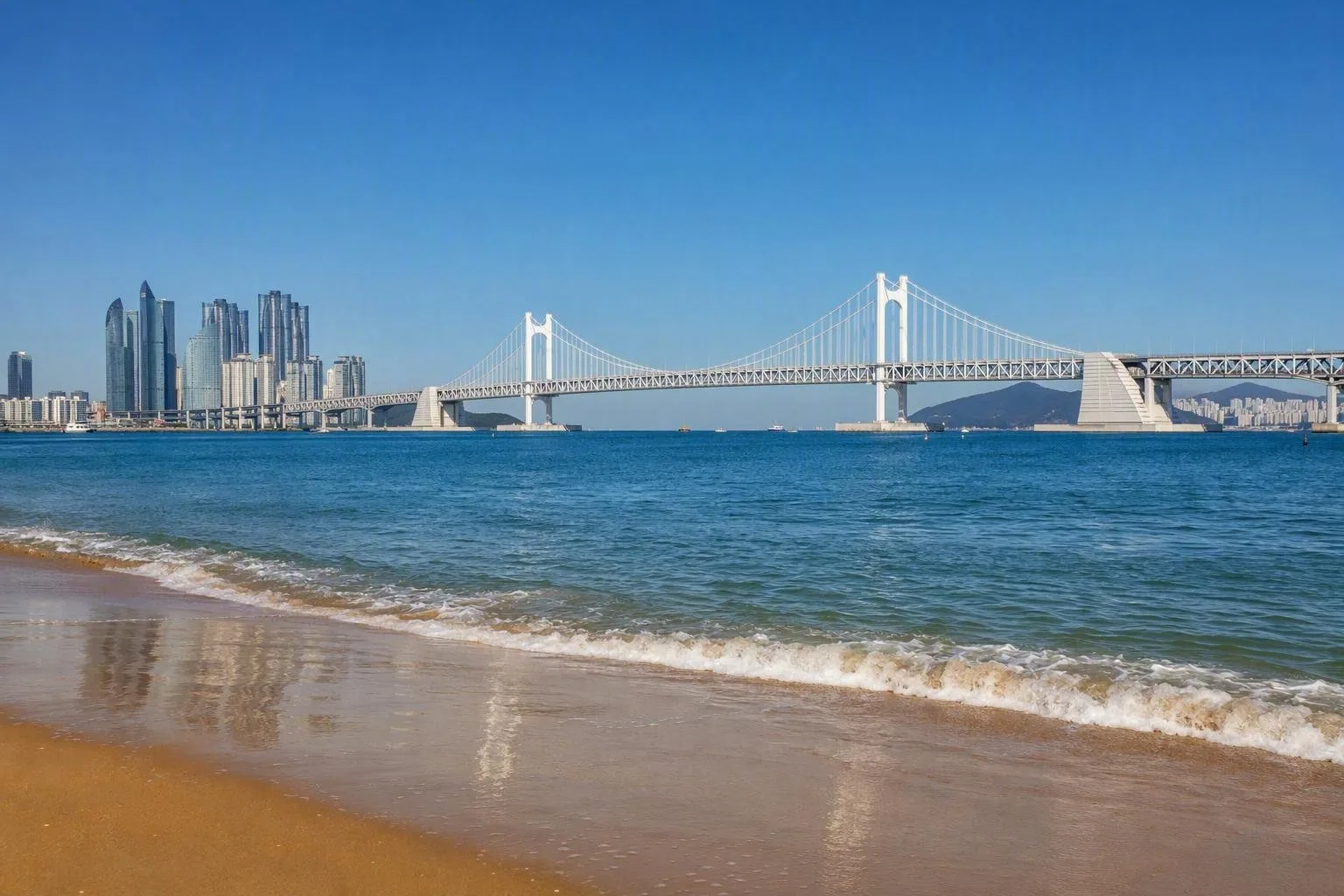
For evening, choose Gwangalli Beach. The beach faces Gwangandaegyo Bridge, making the shoreline a direct place to see the bridge lights after dark.
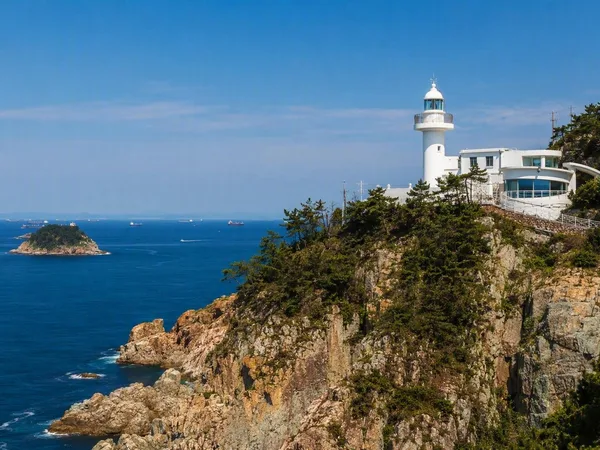
For a more dramatic coastal setting, head east to Haedong Yonggungsa, a Buddhist temple set against the sea, or south to Taejongdae on Yeongdo, where forest paths lead toward cliffs, rock formations and open water. West of the old centre, Songdo Beach adds an overwater cable car and the glass-floored Cloud Trail.
Hillside neighborhoods
Gamcheon Culture Village is a residential hillside settlement of tightly terraced houses and alleys. Refugees settled here during the Korean War; a 2009 village art project brought murals and installations into the neighborhood. Follow the marked lanes rather than treating it as a backdrop: people still live here. Keep noise down, do not fly drones, and avoid blocking doorways.
On Yeongdo, Huinnyeoul Culture Village follows a coastal cliff above the Jeoryeong Coastal Trail. Its narrow lanes and sea-facing houses work well with Taejongdae in the same half-day.
Getting around
The metro, Busan-Gimhae Light Rail Transit and Donghae Line connect major parts of the city and nearby Gimhae and Yangsan. Metro services generally run from 05:00 to 23:59, with first and last trains varying by station. Use a transit card for buses and metro transfers.
From Gimhae International Airport, take the light rail and transfer at Sasang for Metro Line 2 or at Daejeo for Line 3. Buses are useful for hillsides and coastal sights beyond rail coverage, but allow time: Busan’s terrain makes routes slow and winding.
From the magazine
Stories about Busan
Editorial stories linked directly to Busan.
Routes from our editors
Travel through Busan
Editorial routes connecting Busan with other countries, cities and hotspots.
No routes through Busan have been published yet.
More in South Korea
Related hotspots
Other cities, nature areas and places within South Korea.