City · Japan
Kyoto
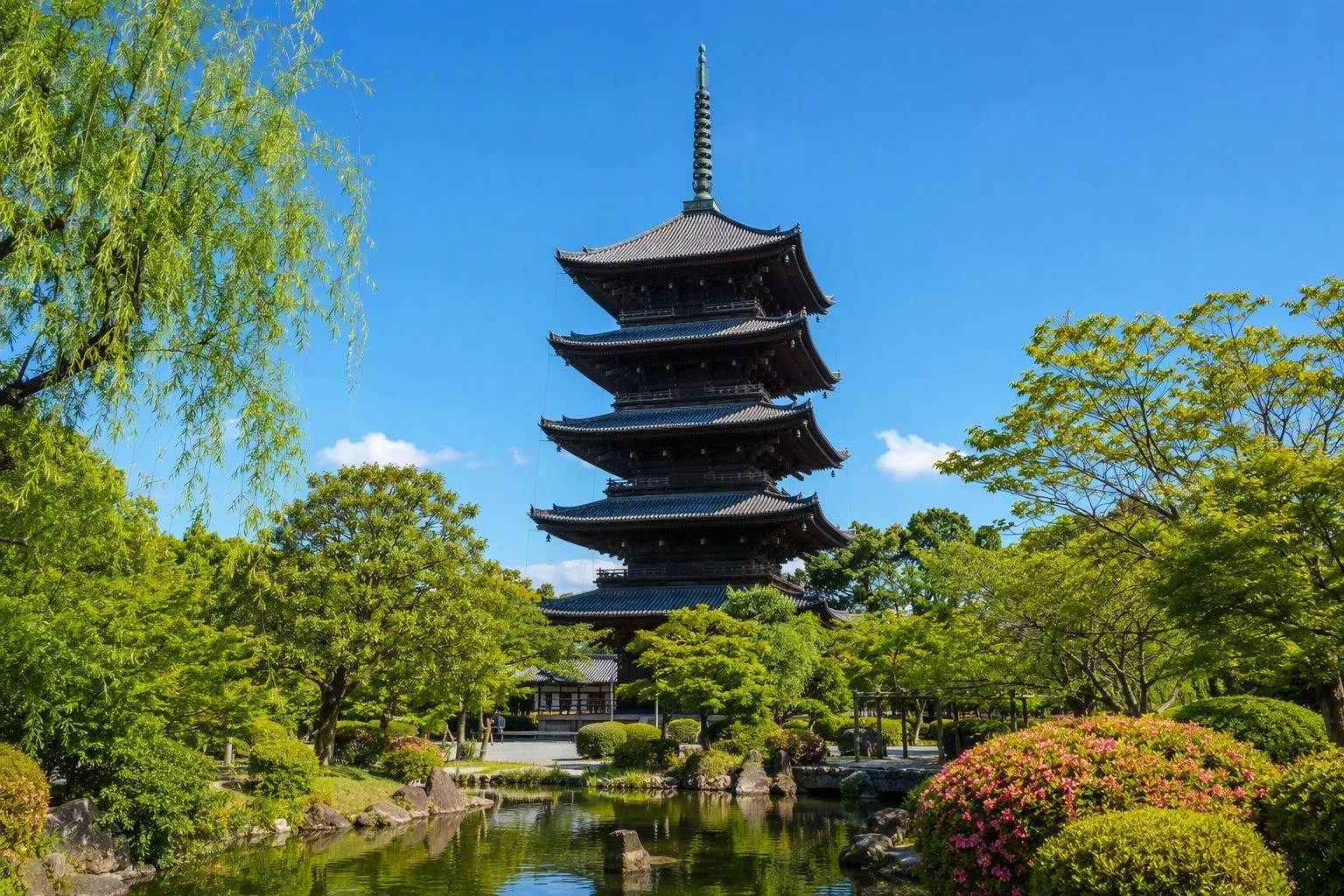
Kyoto is a historic city in Japan’s Kansai region, set in a basin between mountains. Its temples, shrines, gardens and older neighbourhoods reward an area-by-area approach rather than a citywide checklist.
Start with the city’s shape
Kyoto developed from the planned imperial capital established in 794. Its central grid is still legible, but major sights spread far beyond it: Higashiyama rises along the eastern foothills, Arashiyama lies to the west, northern temple districts sit beyond downtown, and Fushimi extends south.
Treat each as a separate day. Crossing the city repeatedly wastes time, especially when road traffic builds around popular temple approaches.
Choose a district, then walk it
Higashiyama and Gion combine temple slopes, traditional streets and the Yasaka Shrine area. Walk the lanes rather than trying to shuttle between every stop.
Central Kyoto is the practical core for markets, the Imperial Palace area, Nijo Castle and transport connections.
Arashiyama is a western district of river scenery, temple grounds and bamboo groves. Fushimi is best known for Fushimi Inari-taisha and also has canals and sake-brewing streets.
A strong day usually means one major site, a second nearby site and time on foot. Kyoto is a living city; many historic streets and religious precincts sit beside homes and businesses.
Move efficiently
Kyoto Station is the main rail hub, but do not make it the starting point for every outing. The city’s transport strategy is simple: use rail or subway for the long leg, then take a bus or walk for the final stretch.
- The JR Nara Line is useful for Fushimi Inari-taisha.
- The JR Sagano Line reaches the Arashiyama side of the city.
- The Karasuma and Tozai subway lines serve central north–south and east–west journeys.
- Buses fill the gaps to temple districts, but can be slowed by congestion.
A nationwide interoperable IC card works on major rail and bus services. The Subway & Bus 1-Day Pass covers the city subway and a broad group of bus routes; it makes sense on a transit-heavy day. Leave large luggage at Kyoto Station or send it to your accommodation before boarding crowded buses.
Winter: cold mornings, special access
Kyoto’s basin setting makes winter mornings sharply cold. Dress for unheated temple halls and removeable shoes; stone paths and wooden verandas can be slick after frost or rain.
Winter is also when selected temples, shrines and historic buildings open cultural properties not normally shown to visitors. The annual programme generally runs from January to March, but participating sites, opening periods and admission conditions differ. Build a winter day around one special opening rather than treating it as an add-on between distant sights.
Temple and street etiquette
At temples and shrines, follow signs and staff directions on photography. Some worship areas and cultural objects cannot be photographed. Do not eat, drink or smoke in restricted precincts, and keep backpacks close to avoid brushing fragile interiors.
On narrow streets, keep entrances and roadways clear. Kyoto’s celebrated districts are not open-air museums: they are working neighbourhoods as well as visitor destinations.
From the magazine
Stories about Kyoto
Editorial stories linked directly to Kyoto.
Routes from our editors
Travel through Kyoto
Editorial routes connecting Kyoto with other countries, cities and hotspots.
No routes through Kyoto have been published yet.
More in Japan
Related hotspots
Other cities, nature areas and places within Japan.