City · Japan
Kanazawa
Kanazawa is Ishikawa Prefecture’s castle city on Japan’s Sea of Japan coast, built around the legacy of the Maeda domain. Come for its garden, preserved chaya and samurai quarters, and the craft tradition that makes nearly all of Japan’s gold leaf.
Start with the castle city
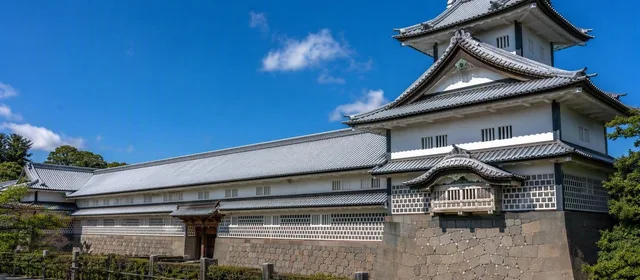
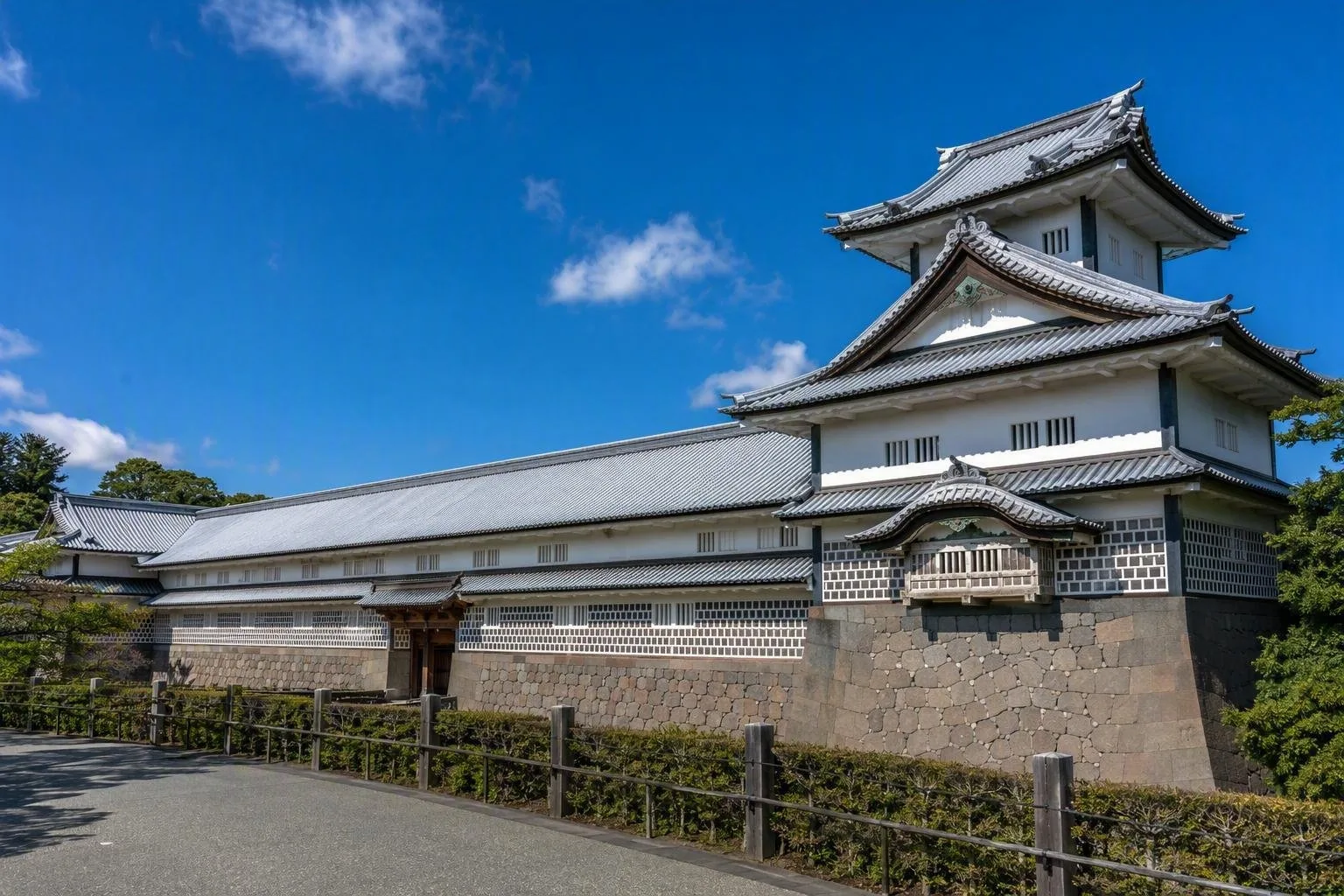
Kanazawa’s historic core radiates from Kanazawa Castle Park, the former seat of the Maeda family. The castle’s original tower is gone, but its stone walls and reconstructed buildings make the political scale of the old Kaga domain easy to read. Look for the long Gojikken Nagaya storehouse and the diamond-plan Hishi Yagura turret.
Across the road, Kenrokuen Garden is the essential companion visit. The 11.4-hectare former lordly garden is built around Kasumigaike pond, watercourses, planted slopes and deliberate views. Allow time to walk rather than treating it as a photo stop.
Gold leaf: the working signature
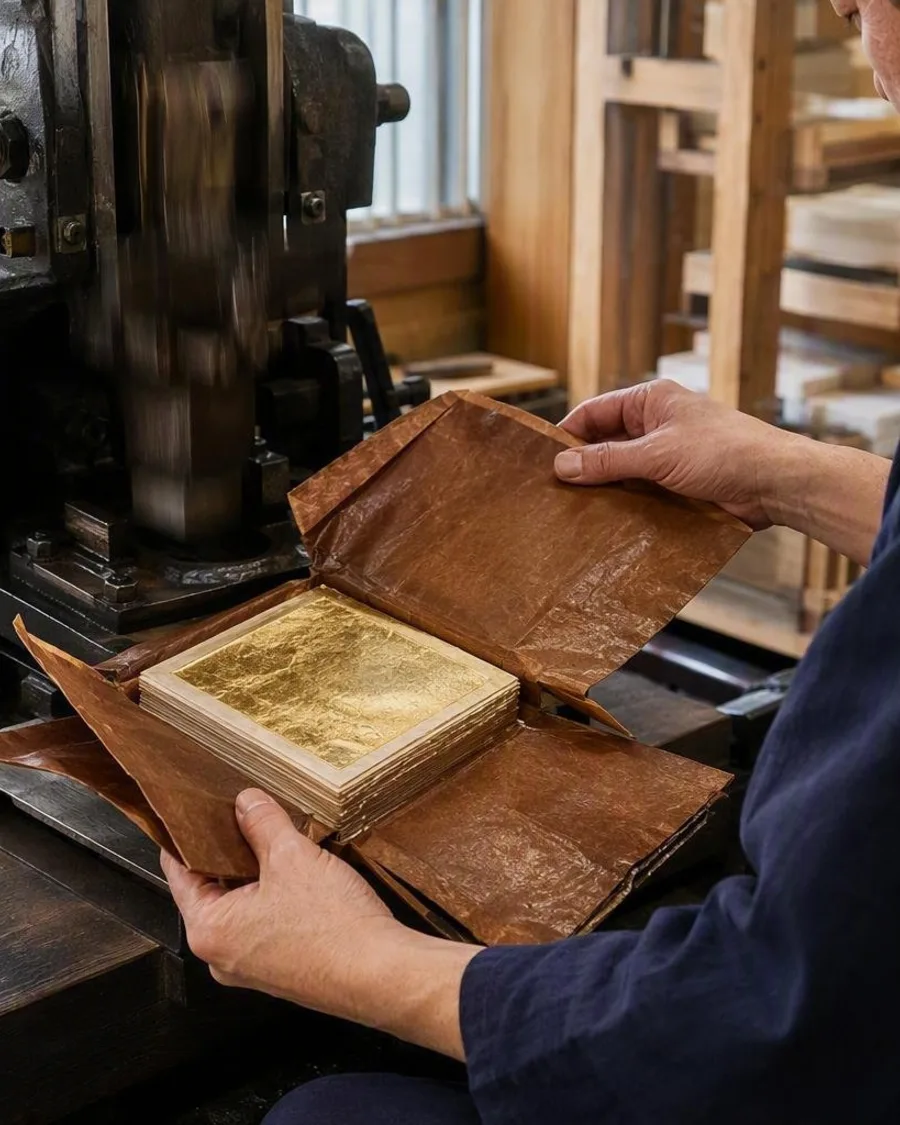
Kanazawa produces more than 98 percent of Japan’s gold leaf. Production began under Maeda Toshiie in the late 16th century, stopped under Edo-era guild controls, and revived when Kyoto goldbeaters came to help rebuild the fire-damaged castle. Mechanised hammers raised output from the 1910s, but handling, transferring and judging the exceptionally thin sheets still requires specialist work.
Gold is alloyed with small amounts of silver and copper, melted, cast and rolled into a strip before it is beaten into leaf. Traditional entsuke leaf remains important for restoration and fine craft; efficiently cut leaf serves newer uses including cosmetics and food. In Buddhist altars, gold leaf works with carved wood, black lacquer and maki-e decoration to create a luminous interior.
Where to see the craft
- Kanazawa Yasue Gold Leaf Museum, Higashiyama: the clearest introduction to gold-beating tools, production and gold-leaf work in screens, lacquerware, textiles, ceramics and Buddhist art. It is a short walk from Hashibacho bus stop.
- Higashi Chaya District: pair the museum with this preserved former entertainment district, where wooden chaya buildings now include craft shops, cafés and visitor spaces.
- Gold-leaf application workshops: several makers offer sessions to apply leaf to a small object. This shows why the material is handled with bamboo tools and controlled movements rather than fingers.
Getting around
Kanazawa Station is the practical arrival point. The central sights are concentrated around the castle, and the Kanazawa Loop Bus links the station with Higashi Chaya, the castle and Kenrokuen. Most major sights lie within roughly two kilometres of the castle, so combine bus hops with walking.
Use the clockwise loop from the station for Hashibacho and the chaya districts; continue toward the castle and Kenrokuen. The gold-leaf museum has no general visitor parking, making the bus the sensible choice.
Timing and weather
Spring brings plum and cherry blossom to Kenrokuen; autumn brings strong foliage; winter reveals the garden’s rope-and-pole yukitsuri supports on pine trees. Rain is common through the year, summer is humid, and winter can bring snow. Carry rain protection and allow extra time for outdoor routes.
From the magazine
Stories about Kanazawa
Editorial stories linked directly to Kanazawa.
Routes from our editors
Travel through Kanazawa
Editorial routes connecting Kanazawa with other countries, cities and hotspots.
No routes through Kanazawa have been published yet.
More in Japan
Related hotspots
Other cities, nature areas and places within Japan.