
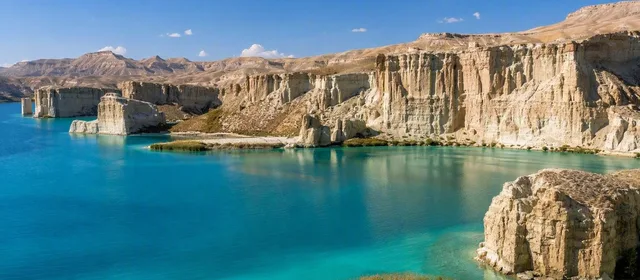
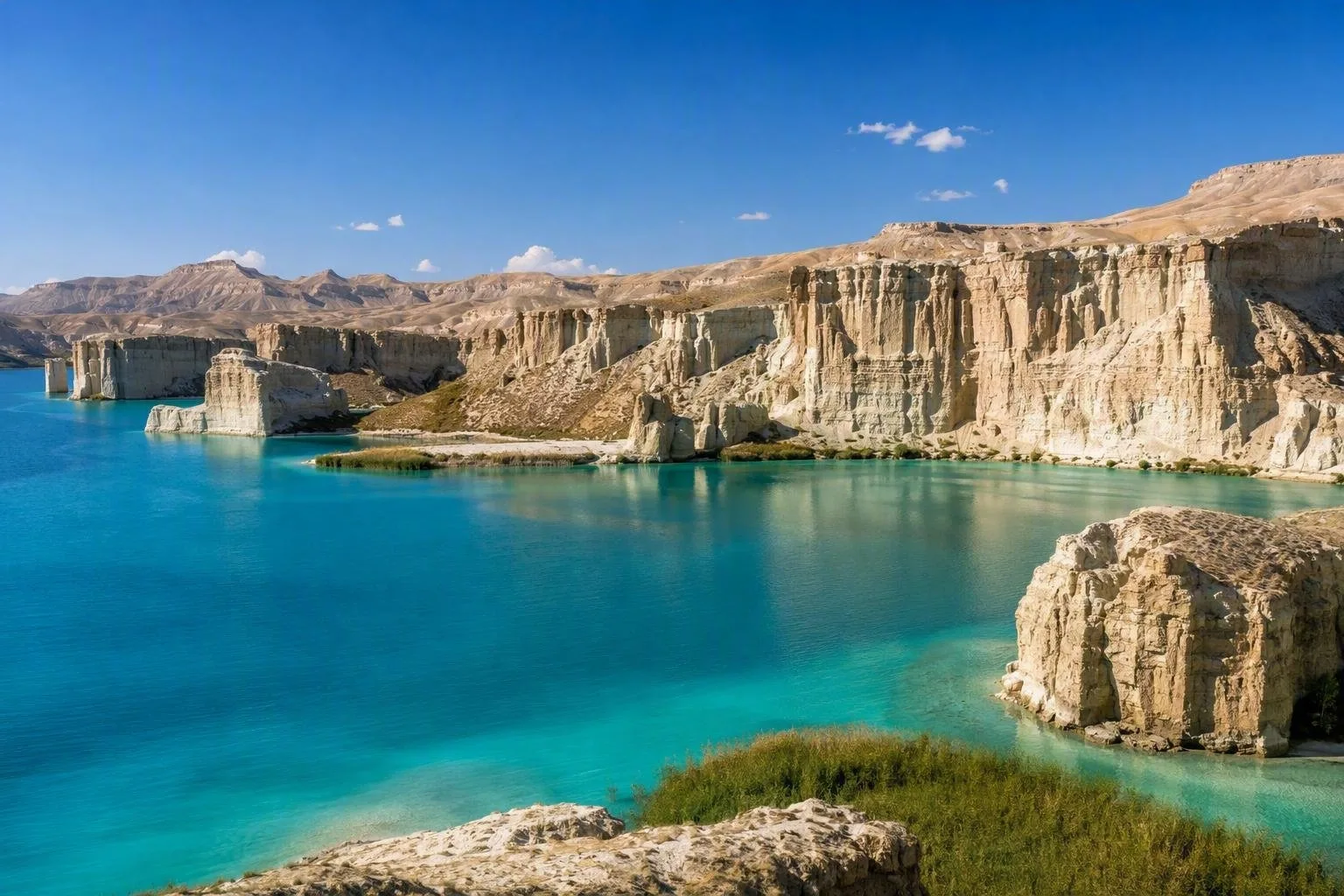
Afghanistan holds far more than the story carried in news reports. At Band-e Amir, turquoise water lies between pale limestone cliffs in the highlands of the Hindu Kush. In Bamiyan, the empty niches of the giant Buddhas show the reach of Buddhism along old trade routes and the damage done in 2001. Below the cliffs, farmers work fields in a broad valley edged by caves.
Herat preserves another chapter of that history. Glazed tiles cover the Friday Mosque, and the citadel and surviving minarets recall the Timurid period, when poets, painters and architects worked in the city. In Kabul, the restored Garden of Babur climbs a hillside around the grave of the first Mughal emperor, who chose the site for his burial.
Food and craft remain part of everyday life. Kabuli palaw brings together rice, meat, carrots and raisins. Mantu dumplings come with minced meat, yoghurt and lentils. Carpet weavers use geometric patterns, while potters in Istalif make ceramics with a turquoise glaze. Look closely at the mountains, gardens, mosques and markets, and make room for the people and skills that have endured here.


