
Sight · Afghanistan
Ai Khanum
Ai Khanum is the archaeological site of a Hellenistic city in Takhar Province, northeastern Afghanistan, at the confluence of the Kokcha and Amu Darya. Its excavated palace, theatre, gymnasium and sanctuaries made it the clearest material record of Greek rule in ancient Bactria.
Orientation
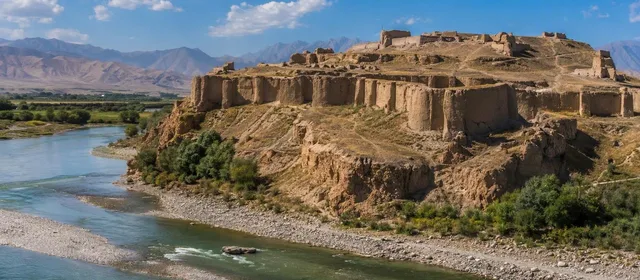
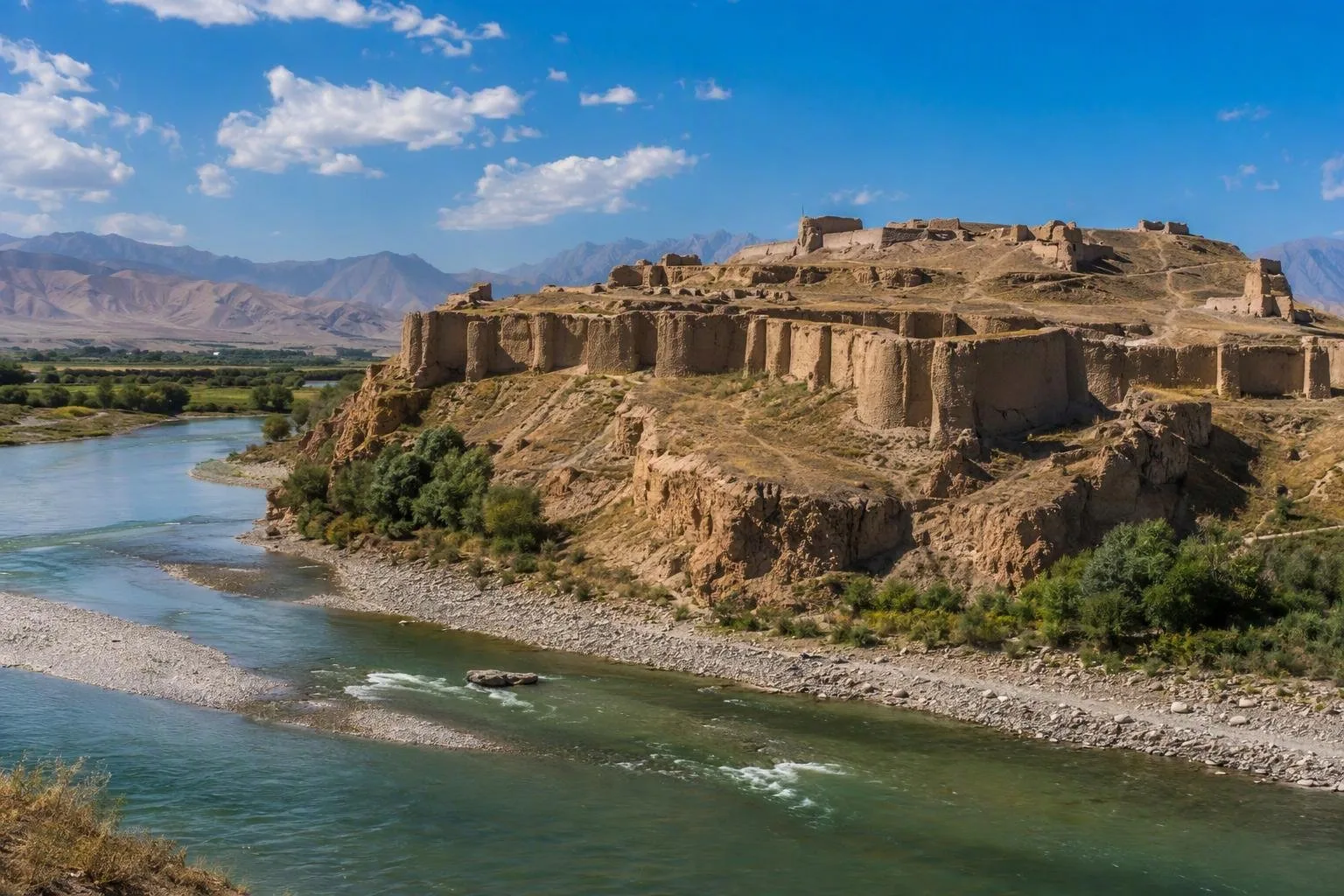
Ai Khanum occupies a triangular riverbank site where the Kokcha meets the Amu Darya, close to Afghanistan’s northern frontier. The ancient city combined a lower town with an elevated acropolis, or upper town, protected by substantial earthen ramparts. Its scale—nearly 200 hectares—explains why it was a royal and administrative centre rather than a minor outpost.
Why it matters
The city developed under the early Seleucids in the late 4th and early 3rd centuries BC, not as a securely proven foundation of Alexander the Great. It later became one of the residences of the Greco-Bactrian kings and may have been known as Eucratideia. Around the mid-2nd century BC, its Greek elite abandoned the city amid the collapse of Greco-Bactrian power.
Ai Khanum is important because its plan and finds show a Central Asian royal city using both Greek and regional traditions. A Greek theatre, gymnasium, inscriptions and Corinthian architectural elements stood alongside buildings whose planning and construction drew on local and Achaemenid precedents.
The excavated city
French excavations between 1964 and 1978 identified the principal parts of the city:
- Acropolis: the high, defended upper town overlooking the rivers and lower settlement.
- Palace complex: administrative and residential spaces, including a treasury, arranged around large courts.
- Main sanctuary: a monumental temple within a courtyard, repeatedly rebuilt during the city’s life.
- Civic buildings: an arsenal, gymnasium and theatre demonstrate the institutions transplanted and adapted by the Hellenistic rulers.
Inscriptions were among the most revealing discoveries. Texts carrying Delphic maxims demonstrate links with Greek intellectual culture, while coins, sculptures and administrative material document a court operating at the eastern edge of the Hellenistic world.
Read the landscape, not a reconstructed city
Ai Khanum is not an intact classical town. Its principal architecture was largely mud brick, and the site has been badly damaged by warfare, erosion and looting since excavations stopped. The meaningful view is therefore the whole setting: the acropolis, the low archaeological mounds, the river confluence and the defensive terrain that shaped the city.
Many portable discoveries are understood through archaeological records and museum collections rather than through objects remaining on the ground. Do not disturb soil, masonry or surface material; the site’s surviving context is irreplaceable.
Access and safety
This is a remote, vulnerable archaeological site in Afghanistan, not a routine independent excursion. The wider security situation makes travel to Afghanistan extremely dangerous, and foreign travel guidance advises against all travel. Do not make plans around assumed access, roads, permissions or services at the site. If research or authorised heritage work brings you to the area, follow local authority and security requirements and keep clear of river borders and any restricted zones.
From the magazine
Stories about Ai Khanum
Editorial stories linked directly to Ai Khanum.
No stories about Ai Khanum have been published yet.
Routes from our editors
Travel through Ai Khanum
Editorial routes connecting Ai Khanum with other countries, cities and hotspots.
No routes through Ai Khanum have been published yet.
More in Afghanistan
Related hotspots
Other cities, nature areas and places within Afghanistan.
Begram Archaeological Site
1 linked stories and routes
Hadda
1 linked stories and routes
Kabul
1 linked stories and routes
Darulaman, Kabul
1 linked stories and routes
Tillya Tepe
1 linked stories and routes
Tepe Fullol Archaeological Site
1 linked stories and routes